
Font size
 Worksheets
Stimuli and response
Total questions: 105
Worksheet time: 2hrs 40mins
Which is central nervous system
muscle and gland
brain and spinal cord
spinal nerve and cranial nerve
nose and mouth
what is voluntary action
action that we are aware
action that are automatic
occur immediately
unconscious control
voluntary action are controlled by the?
cranial nerve
spinal nerve
spinal cord
brain
which is peripheral nervous system
brain and spinal cord
cranial nerve and spinal nerve
muscle and gland
saliva and sweat
which response is voluntary action
eating
peristalsis in aesophagus
withdraw hand from hot pan
sneeze
which response is involuntary action
reading a book
surfing the internet
withdraw foot when it steps on a sharp object
eating during lunch time
which is the correct pathway of impulse in a voluntary action
stimulus > effector > brain > affector > response
stimulus .> affector > brain > effector > response
stimulus > affector > spinal cord > effector > response
stimulus > effector > spinal cord > affector > response
what is an effector ?
also known as nerve impulse
part of body that carry out response example muscle and gland
organ or cell that respond to stimuli example eyes and skin
the signal that travel along the nerve cell
what is an affector or receptor ?
the signal that travel along the nerve cell
also known as nerve impulse
organ or cell that respond to stimuli example eyes and skin
part of body that carry out response example muscle and gland
which organ is a sensory of taste
tongue
nose
ears
eye
Part of the eye that changes light into nerve impulse
Retina
Sclera
Iris
Aqueous Humor
The term stimulus refers to
Perkataan rangsangan merujuk kepada
the ability of an organism to respond
kebolehan organisma untuk bertindak balas
the extent of changes in the surrounding
takat perubahan pada keadaan sekeliling
a change in the environment
perubahan pada persekitaran
a change in the pH of the water
perubahan pH air
Humans have five sensory organs. Tick the organs.
Manusia mempunyai lima organ deria. Tandakan organ deria.
eyes
mata
ears
telinga
tongue
lidah
hand
tangan
nose
hidung


Name structure A
Pupil
Iris
Cornea
Retina

Name Structure B
Lens
Pupil
Sclera
Cornea

What will happen to your pupils if you are in a really bright room?
They will contract
They will expand
They will burst into flames
They will stay the same size

What structure of the eye controls the size of the pupils?
Ciliary Muscles
Iris
Lens
Retina

What is the function of the Lens?
Lining of the back of the eye that contains light receptor cells.
Regulates how much light enters the eye
Tough, transparent, protective coating that bends light as it enters the eye
Focuses light onto the retina

Name structure C
Ciliary Muscles
Retina
Optic Nerve
Iris

Name structure F
Sclera
Cornea
Optic Nerve
Lens

Which type of animals are likely to have binocular vision?
Insects
Prey
Predators
Mammals
Which of the given is not a layer of the eye
sclera
fovia
choroid
retina
Which of the following holds the lens and adjust its thickness?
pupil
iris
fovea
ciliary muscles
Which of the following is formed by sclera
iris
lens
cornea
fovea
Which of the following photoreceptor is responsible for black and white vision in dim light
rods
cones
fovea
lens
What is the name of the fluid that fills the cavity between cornea and lens
aqueous humor
vitreous humor
sclera fluid
choroid fluid
What is the name of the layer that contains blood vessels and black pigments
retina
choroid
sclera
fovea
Which of the following layer is tough and protects the inner structure of eye
sclera
choroid
retina
fovea
The part where optic nerves leave the eye called .........
blind spot
fovea
pupil
iris
When an image hits the retina it is viewed...
Right side up
Upside down
Blurry
Not there
Rods help us see...
in color
black, white, and grey
only in yellow
only in blue
Cones help us see...
color
black, white, and grey
only purple
only with glasses on
The ear plays a role in two sensory functions, hearing and:
Tasting
Locomotion
Balance
Vision
The organ of the inner ear that functions to transmit sound waves to nerve impulses is:
Semicircular Canals
Cochlea
Vestibule
Ossicles
The ear canal...
directs sound from the outer to middle ear
directs sound from the middle to inner ear
collects and shapes sound


What is #16?
Ear Canal
Semicircular Canals
Pinna
Stapes


What is #13?
Tympanic membrane
Anvil
Oval window
Cochlea
What is in the Semi-Circular canals?
Cilia (Tiny Hairs)
Liquid
Thin Skin
Where is the tympanic membrane located?
The Outer ear
The Inner Ear
The Middle Ear
When sound waves cause the tympanic membrane to vibrate, these vibrations are immediately passed on to the_________.
outer ear and ear canal
inner ear
tiny hairs
three small bones in the middle ear

What is this?
Ear Drum
Ear Canal
Pinna
Cochlea
Hearing Nerve

Which label of ear is not involved in hearing system and function for balancing of air pressure only?
Eardrum 3
Cochlea 5
Auditory nerve 6
Eustachian tube 4
Which label is correctly matched?
Eardrum 1
Cochlea 6
Pinna 1
Auditory canal 7
Why you can't hear an explosion or any other sound in space?
Space is very far from us
Space is vacuum (no air)
Space has no energy

Where does HEARING (interpreting the nerve impulses) take place?
in the outer ear
in the middle ear
in the inner ear
in the brain

Which structure of the ear is pointed by #2?
ear drum
auricle (pinna)
auditory canal
semi circular canals
ossicles
Which structure of the ear is pointed by #5?
ear drum
Eustachian tube
vestible
semi circular canals
auditory canal

Which structure of the nose is pointed by #3?
olfactory nerve
olfactory bulb
olfactory epithelium
nasal cavity

What is the name of the structures that cover your tongue and that contain many taste buds each?
papillea
taste buds
olfactory epithelium
taste epithelium

What other sensations can the tongue perceive?
temperature
touch
odour
pain
light
What nerves detect different smells and send them to the brain?
optic nerves
receptors
olfactory nerves
It makes our tongue feel rough.
(a)
Olfactory nerve is a part of the
Taste sense
Smell sense
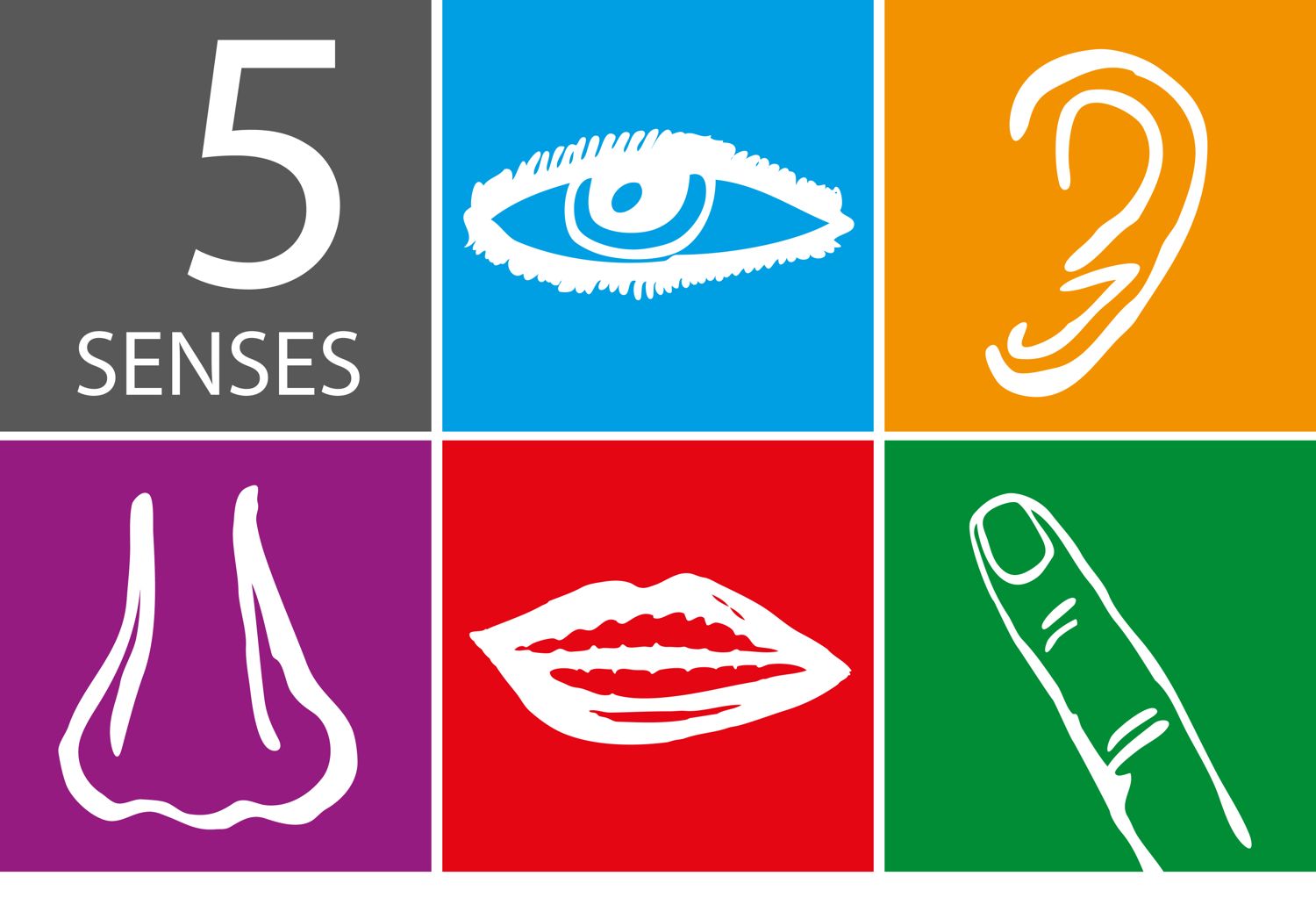
Which of the following senses are most closely related:
touch and smell
smell and taste
taste and hearing
hearing and smell

Plain Potato Chips taste:


give the 5 tastes that tongue can detect
(a)

Which is the outermost layer of skin called?
epidermis
dermis
hypodermis

What is the middle layer of skin called?
Hypodermis
Epidermis
Dermis
What layer of skin senses pain?
callus
epidermis
dermis
hypodermis

A= Reseptor ______/ ____ receptor
(a)

B= Reseptor_____ / _______ receptor
(a)

c= Reseptor______/ ________ receptor
(a)

D= Reseptor ________ / Reseptor ________
(a)

G=
(a)

H
(a)

I
(a)
Yang manakah bukan kecacatan penglihatan?
Which of these is not a vision disorder?
Rabun jauh/ Short-sightedness
Rabun dekat / Short-sightedness
Astigmatisme / Astigmatism
Geotropisme / Geotropism
Tidak dapat melihat objek jauh dengan jelas. /
Inability to see distant objects clearly
Astigmatisme / Astigmatism
Rabun jauh / Short=sightedness
Rabun dekat / Long-sightedness
Disebabkan oleh kanta mata terlalu tebal atau bebola mata terlalu panjang.
Caused by the eye lens being too thick or the eyeball being too long.
Astigmatisme / Astigmatism
Rabun jauh / Short-sightedness
Rabun dekat / Long-sightedness
Dapat dibetulkan dengan menggunakan kanta cekung
Can be corrected using concave lens.
Astigmatisme / Astigmatism
Rabun jauh / Short-sightedness
Rabun dekat / Long-sightedness
Tidak dapat melihat objek dekat dengan jelas.
Inability to see near objects clearly.
Astigmatisme / Astigmatism
Rabun jauh / Short-sightedness
Rabun dekat / Long-sightedness
Disebabkan oleh kanta mata terlalu nipis atau bebola mata terlalu pendek.
Caused by the eye lens being too thin or the eyeball being too short.
Astigmatisme / Astigmatism
Rabun jauh / Short-sightedness
Rabun dekat / Long-sightedness
Dapat dibetulkan dengan menggunakan kanta cembung/ Can be corrected using convex lens.
Astigmatisme / Astigmatism
Rabun jauh / Short-sightedness
Rabun dekat / Long-sightedness
Sebahagian objek lebih jelas daripada bahagian yang lain.
Seeing part of an object clearer than the rest of the object.
Astigmatisme / Astigmatism
Rabun jauh / Short-sightedness
Rabun dekat / Long-sightedness
Disebabkan oleh permukaan lengkungan kornea atau kanta yang tidak sekata.
Caused by the uneven curvature of the cornea or eye lens.
Astigmatisme / Astigmatism
Rabun jauh / Short=sightedness
Rabun dekat / Long-sightedness

Astigmatisme / Astigmatism
Rabun jauh / Short-sightedness
Rabun dekat / Long-sightedness

Astigmatisme / Astigmatism
Rabun jauh / Short-sightedness
Rabun dekat / Long-sightedness

Why vaccine injection on the shoulder ? (Please choose 2 correct answers)
because shoulder has thin epidermal layer.
because shoulder has thick epidermal layer.
because shoulder has many pain receptor.
because shoulder has less pain receptor.

The diagram shows one of the common vision defect in human eyes. Name the defect.
Long-sightedness
Short-sightedness
One of the common vision defect in human eyes is long-sightedness. This is because the image is formed ........ the retina.
behind
in front of
on the retina
One of the common vision defect in human eyes is short-sightedness. This is because the image is formed .......... the retina.
behind
in front of
on the retina

People with short- sightedness will see ..... (Please choose 2 correct answers)
near object clearly.
near object blurry.
distant object blurry.
distant object clearly.

People with long- sightedness will see ..... (Please choose 2 correct answers)
near object clearly.
near object blurry.
distant object blurry.
distant object clearly.

Diagram 2 shows a device. What is the function of the device?
to hear soft sound
to fix the hearing problem
to produce sound by vibration
to amplify the reflection of sound
When facing astigmatism, what type of lenses are needed to be used in order to correct it?
Concave lens
Convex lens
Cylindrical lens
Plane mirror
What will happen to the size of the pupil when we enter a dark room.
It will get bigger.
It will get smaller.
It will turn into black.
It will turn into white.

The PQ and RS lines in Diagram 7 have the same length but look different.
The phenomena is knowns as
Monocular vision
Optic illusion
Refraction of light
Astigmatism
Blind spot does not have
receptors
photoreceptors
iris
sclera

Long sightedness is caused by ..... (Please choose 2 correct answers)
Eye lens too thick
Eye lens too thin
Eye ball too short
Eye ball too long

Short sightedness is caused by ..... (Please choose 2 correct answers)
Eye lens too thick
Eye lens too thin
Eye ball too short
Eye ball too long

This eye defect can be corrected with which type of lense?


This eye defect can be corrected with which type of lense?

The following devices are used to overcome limitation of sight EXCEPT ...
Earphone
Binoculars
Microscope
X-ray

The following devices are used to overcome limitation of hearing EXCEPT ...
Loudspeaker
telephone
ultrasound scanner
Stethoscope

