
 Worksheets
Living Things Quiz
Total questions: 40
Worksheet time: 30mins
Vocabulary
Reproduction with two parents.
sexual
asexual
reproduction
offspring
Vocabulary
Needs to eat something for energy.
autotroph
heterotroph
human
carnivores
Vocabulary
Can make its own energy - usually using the sun.
autotroph
heterotroph
human
carnivores
Vocabulary
Made up of one cell.
made of cells
bacteria
unicellular
multicellular
Needs
Which one is not a need of living things?
water
energy
oxygen
homeostasis
living space

An organism that reproduces asexually ____________________.
must find a mate
must also be a heterotroph
Produces offspring with characteristics from both parents
Makes an identical copy of itself
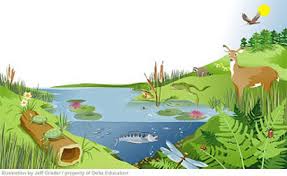
Organisms that eat other organisms (you may select more than one answer)
autotrophs
heterotrophs
producers
consumers
Organisms that make their own food using abiotic factors (you may select more than one answer)
autotrophs
heterotrophs
producers
consumers
What do you call organisms that can make their own food?
heterotophs
autotrophs
trophies
Select the HETEROTROPHS


Characteristic
A caterpillar turns into a butterfly.
reproduction
make and use energy
grow and develop
adapt to surroundings
Characteristic
The duck laid seven eggs on Tuesday.
reproduction
make and use energy
grow and develop
adapt to surroundings
Characteristic
The cat runs away when the dog barks.
reproduction
make and use energy
respond to stimulus
adapt to surroundings
Characteristic
Some animals change color to blend in and hide from predators.
reproduction
make and use energy
respond to stimulus
adapt to surroundings
Vocabulary
Reproduction with one parent.
sexual
asexual
reproduction
offspring
Vocabulary
Made up of more than one cell.
made of cells
bacteria
unicellular
multicellular
Vocabulary
Change in the environment.
change in temperature
stimulus
screaming
response

The mistaken idea that all living things come from nonliving things (like flies from rotting meat) is called:
Theory of Evolution
Spontaneous Generation
Redi's Experiment
Homeostasis
A deer moves out of its territory due to a wild fire. What is the stimulus?
moving out of its territory
A deer
it responds
wild fire
In order to be considered living an organism must have ________. pg. 18
blood
cells
brains
the ability to move
A worm turns away from light is an example of a worm __________________ . pg. 18
reproducing
doing cellular respiration
having cells
responding to its environment

A turtle burrows in the mud to avoid intense heat during the summer months in a process known as estivation. This allows the turtle to maintain its body temperature. Which answer is the best explanation for this behavior?
metabolism
adaptation
growth and development
homeostasis
Which BEST describes a difference between a unicellular organism and a multicellular organism? pg. 18
A unicellular organism is a plant and a multicellular organism is a human.
A unicellular organism has one cell that carries out all functions to survive. A multicellular organism has many specialized cells working together to keep the organism alive.
A multicellular organism is simple and a unicellular organism is complex.
A unicellular organism can only be found in certain biomes but a multicellular organism can be found anywhere on Earth.
Which is an example of a single-celled organism? pg. 18
bird
cricket
snake
bacteria
Which chemical provides energy to the cells
Lipid
Protein
Carbohydrates
Water
Asexual reproduction
creates offspring with a combination of DNA
creates identical offspring
creates no offspring
Pasteur and Francesco both proved that
organisms change over time
organisms do not adapt over time
spontaneous generation does not occur
spontaneous generation does occur
Plants, animals, and SOME fungi reproduce by
fission
budding
sexual reproduction
regeneration
Why is it necessary for organisms to maintain stable internal conditions?
Explain Redi's and Pasteur's experiments and how they contributed to proving spontaneous generation is a myth.

