Wayground logo

Free Printable Worksheets

Font size

S
M
L
XL
Worksheets

Biology Final Exam

Total questions: 85

Worksheet time: 3hrs 50mins

Name
Class
Date
1.
The type of polysaccharide which serves as a strengthening tissue in the cell wall of plants is 
a)
cellulose
b)
glucose
c)
lactose
d)
fructose
2.
Proteins are composed of what smaller building blocks?
a)
amino acids
b)
nucleic acids
c)
fatty acids
d)
nucleotides
3.
Which biomolecule is made of nucleotides and contain you DNA?
a)
Carbohydrate
b)
Lipids
c)
Protein
d)
Nucleic Acid
4.
What are the four biological molecules?
a)
proteins, carbohydrates, lipids, nucleic acids
b)
A, T, C, G
c)
water, air, earth, and fire
d)
Joe, Nick, and Kevin Jonas
5.

What does pH measure?

a)

the amount of hydrogen (H+) ions

b)

the amount of hydroxide (OH-) ions

c)

amount of water

d)

all of the above

6.
Enzymes are _________ that __________ chemical reactions.
a)
proteins, slow down
b)
proteins, speed up
c)
lipids, slow down
d)
lipids, speed up
7.
What happens when enzymes are heated to a high temperature?
a)
The enzymes die.
b)
The shapes of the enzyme are altered or denatured
c)
The enzymes' amino acid sequence changes.
d)
The enzymes remain the same
8.

This organelle is a rigid outer layer that protects plant cells.

a)

Cell Membrane

b)

Cell Wall

c)

Nucleus

d)

Chloroplast

9.

What is this structure?

a)

Mitochondria

b)

Nucleus

c)

Chloroplast

d)

Vacuole

10.
What is the function of the ribosome?
a)
site of digestive enzymes
b)
site of ATP (energy) production
c)
site of photosynthesis
d)
site of protein production
11.
What is the function of the cell membrane?
a)
to control the activities within the cell
b)
to package and ship cellular materials
c)
to store water and nutrients 
d)
to control the materials that pass into and out of the cell
12.

Organisms whose cells do not have a nucleus are called . . .

a)

Eukaryotes

b)

Multicellular

c)

Prokaryotes

d)

Unicellular

13.

Organisms with cells that have a nucleus are called . . .

a)

Archaea

b)

Bacteria

c)

Eukaryotes

d)

Prokaryotes

14.
Special proteins help move particles, but NO energy is needed. This is..
a)
facilitated diffusion
b)
exocytosis
c)
active transport
d)
equilibrium
15.
Osmosis is the movement of _____ across a membrane.
a)
food
b)
energy
c)
oxygen
d)
water
16.
The diagram is an example of 
a)
diffusion
b)
active transport
c)
osmosis
d)
equilibrium
17.
The cell below is in a _____________ solution.
a)
Hypertonic
b)
Hypotonic
c)
Isotonic
18.
The cell below is in a _________ solution.
a)
Hypotonic
b)
Hypertonic
c)
Isotonic
19.
This picture represents which type of cellular transport?
a)
passive transport
b)
endocytosis
c)
exocytosis
d)
osmosis
20.
Which is true about active transport?
a)
It requires energy
b)
it does not require energy
c)
It moves substances down the concentration gradient
d)
it moves material from high to low concentration
21.

Which stage of cellular respiration that occurs in the cytoplasm of the cell?

a)

Krebs cycle

b)

Glycolysis

c)

Calvin cycle

d)

ETC

22.
Which stage of cellular respiration produces the most ATP molecules for cells?
a)
Glycolysis 
b)
Pre-Krebs
c)
Krebs cycle
d)
Electron transport chain
23.
Glucose is a product of which process?
a)
Photosynthesis
b)
Cellular respiration
24.
Muscle cells can make ATP without oxygen by carrying out which process?
a)
aerobic cellular respiration
b)
photosynthesis
c)
alcoholic fermentation
d)
lactic acid fermentation
25.
What are the reactants (what's needed) for photosynthesis?
a)
glucose and oxygen
b)
light, water, and carbon dioxide
26.
Within the chloroplast, where do the light dependent reactions occur?
a)
Thylakoids
b)
Stroma
c)
Lumen
d)
Matrix
27.
Within the chloroplast, where do the light independent reactions occur?
a)
Thylakoids
b)
Stroma
c)
Lumen
d)
Matrix
28.
Which of the following correctly sequences the events of aerobic respiration?
a)
Glycolysis, Fermentation, Krebs Cycle
b)
Krebs Cycle, Electron transport, Glycolysis
c)
Glycolysis, Krebs Cycle, Electron Transport
d)
Krebs Cycle, Glycolysis, Electron Transport
29.
How many molecules of ATP are made from one molecule of glucose during aerobic respiration?
a)
2 ATP
b)
32-34 ATP
c)
36-38 ATP
d)
4 ATP
30.

The division of the cytoplasm is called:

a)

cytokinesis

b)

cytogenetics

c)

meiosis

d)

mitosis

31.

DNA replication occurs in phase:

a)

G1

b)

S

c)

G2

d)

M

32.

How is cancer related to cell division?

a)

Mutations can cause uncontrolled cell division which causes cancerous cells to spread rapidly and take nutrients from healthy cells.

b)

Cancer stops cell division from happening.

c)

Cell division causes viruses that spread around the body and cause cancer.

d)

Cancer is not related to cell division.

33.

Cells spend most of their lives in which phase?

a)

Interphase

b)

Prophase

c)

Telophase

d)

Metaphase

34.

What is the correct order of the phases of mitosis?

a)

Metaphase, Anaphase, Prophase, Telophase,

b)

Pelophase, Motophase, Anaphase, Trophase

c)

Prophase, Metaphase, Anaphase, Telophase

d)

Telophase, Anaphase, Prophase, Metaphase

35.

How many chromosomes does a human somatic (body) cell have?

a)

46

b)

23

c)

42

d)

26

36.

How many chromosomes does a human egg or sperm (gamete) cell have?

a)

23

b)

46

c)

42

d)

26

37.

What is "crossing over"?

a)

The exchange of genes between chromosomes during meiosis that results in genetic diversity.

b)

Programmed cell death (cell suicide) to prevent the spread of mutated/cancerous cells.

c)

A type of cell division that creates gametes (sperm and egg cells).

d)

A type of cell division that results in two daughter cells each having the same number of chromosomes as the parent cell.

38.

What are STEM cells?

a)

Cells that only cause cancer

b)

Cells that can specialize into any other cell

c)

Cells that divide uncontrollably and always cause tumors

d)

Cells that take cellfies

39.

Cells that do not go into Mitosis will stay is what phase?

a)

G0

b)

S

c)

Prophase

d)

Metaphase

40.

Instead of mitosis, prokaryotes use a process known as ______ to replicate.

a)

meiosis

b)

fusion

c)

diploid budding

d)

binary fission

41.
Choose the nucleotide sequence of the RNA strand that would be complementary to the following strand: 
GTAGTCA
a)
UATUAGA
b)
ACGACTG
c)
CAUCAGU
d)
CATCAGT
42.
The main function of tRNA is to...
a)
carry a message that, when translated, forms proteins
b)
form a portion of ribosomes
c)
string together complementary RNA and DNA strands
d)
bring amino acids from the cytoplasm to the ribosomes
43.
Which phrase best describes translation?
a)
converts mRNA into a polypeptide
b)
catalyzes bonds between amino acids
c)
produces RNA from DNA molecules
d)
recycles tRNA molecules for reuse
44.

A polypeptide is a sequence of ____________________ held together by a ______________ bond.

a)

amino acids; peptide

b)

fatty acids; ionic

c)

proteins; hydrogen

d)

fatty acids; covalent

45.

TRANSLATE this RNA sequence: AUGCAAUGA

a)

Met-Glu-Stop

b)

Met-His-Stop

c)

Thr-Glu-Stop

d)

Thr-Pro-Stop

46.

Which organelle is the location where protein is made?

a)

Ribosome

b)

Nucleus

c)

Cytoplasm

d)

Nucleotide

47.

Which of the following are differences in the structure between RNA and DNA

a)

DNA uses deoxyribose sugar, RNA uses sugar ribose

b)

DNA pairs Adenine with Uracil, RNA pairs Adenine with Thymine

c)

DNA is a double helix, RNA is a single helix

d)

DNA pairs Adenine with Thymine, RNA pairs Adenine with Uracil

48.
What is a phenotype?
a)
The expression of a trait; what you see.
b)
refers to the genetic makeup of an individual
c)
An organism that has the same genes for a trait (ex. TT or tt)
d)
the passing of traits from parent to offspring
49.
The inherited combination of alleles is known as the offspring's
a)
heredity
b)
phenotype
c)
genotype
d)
redigree
50.
If T=Tall & t=short, what is the genotypic ratio?
a)
1:3
b)
3:1
c)
1:2:1
d)
2:2
51.

The alleles of a gene pair in a heterozygote are both expressed with no blending.

a)

codominance

b)

incomplete dominance

c)

polygenic

d)

multiple alleles

52.

A trait associated with a gene that is carried on the X or Y chromosome.

a)

sex linked

b)

polygenic

c)

multiple alleles

d)

codomiance

53.

Neither allele is dominant. Heterozygote has a blended phenotype.

a)

incomplete dominance

b)

codominance

c)

multiple alleles

d)

sex linked

54.

What are the blood types of the possible children that a woman (type O) and man (type AB) can have?

a)

O and AB

b)

O and A

c)

O and B

d)

A and B

55.
Determine the sex of the individual whose karyotype is displayed in the image.
a)
female
b)
male
56.
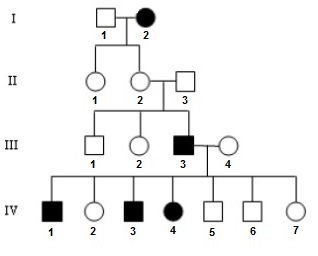
This pedigree represents the inheritance of hemophilia in this family. How many of the females have the hemophilia trait?
a)
8
b)
5
c)
2
d)
3
57.

Organisms that have two identical alleles for a particular trait are said to be...

a)

homozygous

b)

dominant

c)

heterozygous

d)

hybrid

58.
Genetic variation can arise from a random change in the DNA of a gene.  The change is called a(n)
a)
mutation
b)
gene flow
c)
gene pool
d)
allele
59.
Darwin theorized that individuals having an advantage due to their traits or abilities will be more likely to survive and reproduce.  This theory is known as
a)
evolution
b)
speciation
c)
adaptation
d)
natural selection
60.
Remains of ancient organisms are called
a)
Extinctions
b)
Fossils
c)
Mutations
d)
Variations
61.
If an organism has a vestigial structure, that structure likely once had a function in a(n)
a)
close relative
b)
early ancestor
c)
unrelated organism
d)
embryological stage
62.
What is the study of organisms at the early stages of development?
a)
DNA studies
b)
embryology 
c)
extinction
d)
fossil record
63.
Which layer is the oldest?
a)
1
b)
2
c)
3
d)
4
64.
Slow in steady change in a species
a)
Gradualism
b)
Punctuated Equilibrium 
65.

The average individuals in a population are favored in _____ selection.

a)

directional

b)

stabilizing

c)

disruptive

d)

natural

66.
This experiment was conducted by the scientists:
a)
Stanley Miller and Harold Urey
b)
Harold Urey and Albert Einstine
c)
Harrison Ford and Denzel Washington
d)
James Watson and Francis Crick
67.
Which question were the scientists trying to answer with this experiment?
a)
Where do cells come from?
b)
What came first the chicken or the egg?
c)
How are biomolecules formed?
d)
What gave rise to the Eukaryotic cell?
68.
The separation of a group of individuals from the rest of the population is referred to as 
a)
genetic drift
b)
natural selection
c)
geographic isolation
d)
survival of the fittest
69.

What is the greenhouse effect?

a)

It is a phenomenon where the sun’s rays are absorbed by clouds.

b)

It is a phenomenon that occurs when heat escapes into space.

c)

It is when heat is trapped by gases, then sent back to earth’s surface.

d)

It describes the atmosphere’s composition.

70.
Examples of a producer
a)
frog
b)
algae
c)
worm
d)
mouse
71.
The shrew provides energy for the _______?
a)
cricket
b)
grasshopper
c)
frog
d)
snake
72.
Which best describes what a food chain shows you?
a)
Energy flow through an ecosystem
b)
Food flowing through an ecosystem
c)
Consumers going into other consumers
d)
Who eats who
73.
Where an organism lives
a)
habitat
b)
niche 
c)
heterotrogh
d)
biosphere
74.
The amount of energy that usually transfers from one trophic level to the next...
a)
10%
b)
20%
c)
80%
d)
50%
75.
An illustration that uses arrows to show the MANY possible directions in which matter and energy can pass through the organisms in an ecosystem.
a)
Food chain
b)
Food web
c)
Energy Pyramid
d)
Succession Map
76.
A collection of organisms that make up a community as well as all of the nonliving aspects of the environment.
a)
Population
b)
Community
c)
Habitat
d)
Ecosystem
77.
Oxpeckers feed on the ticks found on rhinoceros. Both species benefit.
a)
commensalism
b)
parasitism
c)
mutualism
78.
A flea feeds on a mouse's blood to the mouse's detriment.
a)
commensalism
b)
parasitism
c)
mutualism
79.
Types of orchids grow high on the branches of the tall kapok trees of the jungle. This adaptation allows the orchid to get to the light. The tree is not harmed.
a)
parasitism
b)
commensalism
c)
mutualism
80.

An organism that hunts other animals is a _______.

a)

Predator

b)

Prey

81.

This is the largest number of individuals of a population that the environment can support...

a)

carrying capacity

b)

population crash

c)

lag phase

d)

mutualism

82.

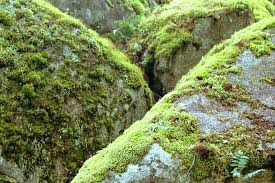
What are examples of pioneer species in a primary succession?

a)

Bushes and Shrubs

b)

Oak trees

c)

Mossess and Lichens

d)

A rose Bush

83.

Succession type?

a)

primary succession

b)

secondary succession

c)

tertiary succession

d)

variable succession

84.

Toxins accumulating in organisms through consumption is

a)

air pollution

b)

artificial eutrophication

c)

biological indicators

d)

biological magnification

85.
What is deforestation?
a)
Clearing Earth's forests on a massive scale
b)
Eating too much vegetables
c)
Going to a forest and pulling weeds
d)
Clearing the five trees in my backyard