Wayground logo

Free Printable Worksheets

Font size

S
M
L
XL
Worksheets

Levels of Organization

Total questions: 45

Worksheet time: 48mins

Name
Class
Date
1.
The basic unit of structure and function for the body.
a)
cell
b)
atom
c)
organelle
d)
nucleus
2.

A structure made up of different types of tissue and performs a specific job.

a)

cells

b)

tissue

c)

organ

d)

organ system

3.
A group of similar cells that perform the same function.
a)
tissue
b)
organelle
c)
mass
d)
tendon
4.
A group of organs that work together to perform a major function is an organ
a)
system
b)
column
c)
bank
d)
stack
5.
What is the difference between a cell and a tissue?
a)
cell is basic unit of life; tissue is group of cells that work as one
b)
cell is group of tissues; tissue is basic unit of life
c)
cell is basic unit of life; tissue is groups of different cells
d)
cell is group of organs; tissue is group of different cells
6.
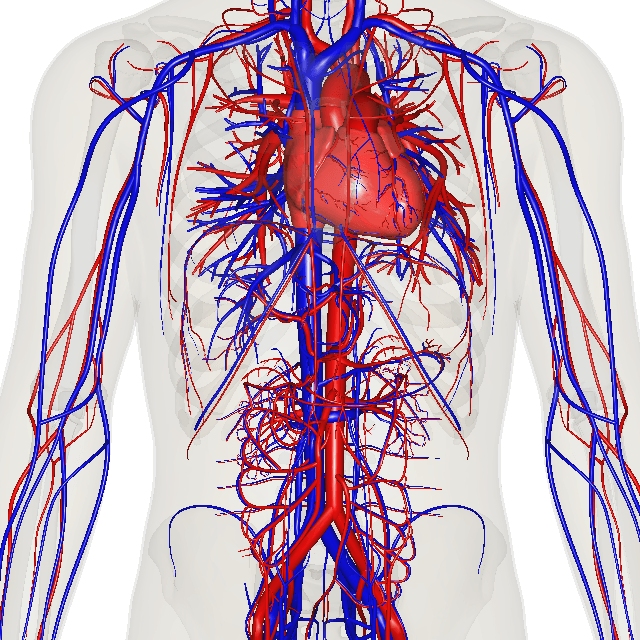
What do you have when organ systems work together?
a)
organs
b)
organism
c)
cells
d)
tissue
7.
This is a example of........ 
a)
organ system
b)
cells
c)
organ
d)
tissue
8.
This is a example of ........
a)
cell
b)
tissue
c)
organ 
d)
organ system
9.
This is a example of ........
a)
cell
b)
organ system
c)
organ
d)
tissue
10.
This is a example of ........
a)
organ
b)
organ system
c)
tissue
d)
cell
11.
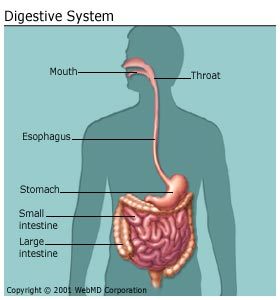
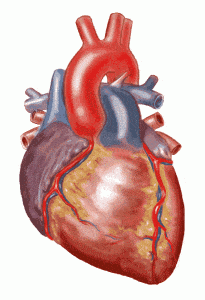
Examples include kidney, liver, heart, brain, stomach, bladder, intestines
a)
cell
b)
tissue
c)
organ
d)
organ system
12.
Which types of cells are not found in blood tissue?
a)
red blood cells
b)
white blood cells
c)
purple blood cells
13.
What is blood classified as?
a)
tissue
b)
organ
c)
organ system
14.
Describes an organism made of more than one (specialized) cell
a)
unicellular
b)
specialized
c)
interdependent
d)
multicellular
15.
Which statement is a part of the cell theory?
a)
all cells come from preexisting cells
b)
bacteria are prokaryotic cells
c)
eukaryotic cells are complex
d)
humans are multicellular
16.
The Cell Theory states...
a)
atoms create all matter
b)
living things evolve
c)
the cell is the backbone of all matter
d)
cells are the basic unit of structure and organization of organisms
17.
The ___________ is the basic unit of life
a)
organ
b)
cell
c)
atom
d)
tissue
18.

Which of the following correctly orders the levels of organization from lowest to highest level?

a)

atom, molecule, cell, tissue, organ, organ system, organism

b)

organ, organ system, tissue cell, molecule, atom, organism

c)

organism, atom, molecule, oran organ system, cell tissue

d)

atom, molecule, organ, tissue, cell, organ system, organism

19.

In plants, what are shoots and roots examples of?

a)

organs

b)

organ systems

c)

tissues

d)

organisms

20.

In plants what are leaves examples of

a)

organ

b)

organ system

c)

tissue

d)

organism

21.

Organs are two or more ___________________ coming together to perform a function.

a)

organs

b)

cells

c)

atoms

d)

tissues

22.

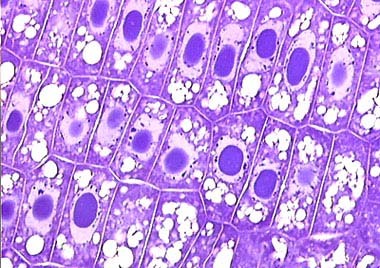
The image shows a group of plant cells. A group of similarly structured cells working together combine to form a:

a)

tissue

b)

atom

c)

organ system

d)

organism

23.

The image shows a human body with several different types of muscle tissues that work together in the human body. What option would best describe the level of organization for a group of muscle tissue?

a)

organ

b)

organ system

c)

organism

d)

cells

24.

The picture shows a cross-section of a plant stem viewed through a microscope. The encircled area "Y" identifies a specific tissue in the plant. Which option best identifies the hierarchical level of organization that tissue is made of?

a)

organelles

b)

cells

c)

molecules

d)

organisms

25.

Which diagram represents the most complex level of organization?

a)
b)
c)
d)
26.

The skin is an example of what level of biological organization?

a)

cell

b)

organ

c)

tissue

d)

organism

27.

Multicellular organisms and unicellular organisms can both reproduce, grow, and develope

a)

true

b)

false

28.

A specialized cell is a cell that has ---

a)

the ability to divide.

b)

a specific role to do.

c)

no specific function in the body.

29.

Typically, _____ are multicellular.

a)

Eukaryotes

b)

Prokaryotes

30.

In _____ organisms, the DNA is found in the nucleus.

a)

Prokaryotic

b)

Eukaryotic

31.
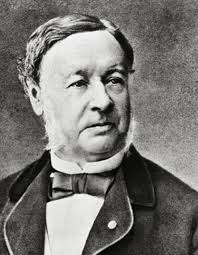
Who came up with the name "cells" after looking at cork under a microscope?
a)
Robert Hooke
b)
Anton Van Leevwenhoek
c)
Rudolf Virchow
d)
Theodor Schwann
32.
Which is NOT a part of cell theory?
a)
All organisms are composed of cells
b)
The cell is the basic unit of structure and function of organisms
c)
All cells come from pre-existing cells
d)
All cells come from free cell formation
33.

The basic building block of living things, made up of organelles.

a)

Tissue

b)

Organelle

c)

Cell

d)

Atom

34.

Organism

a)

Made up of organs that work together to prefrom a specific task

b)

Basic unit of life

c)

Made of organ systems that work together to sustain life

d)

Made up of cells that have the same shape and function

35.

Which of the following is NOT true about living things?

a)

All living things are made of cells.

b)

Some living things have no organization.

c)

Some living things are made of only one cell.

d)

Multicellular organisms have different types of cells.

36.

What is the level of organization?

a)

cell

b)

tissue

c)

organ

d)

organ system

e)

organism

37.

What is an example of an organ?

a)

pancreas

b)

blood

c)

insulin

d)

knee

38.
He discovered that all plants are made of cells:
a)
Anton van Leeuwenhoek
b)
Theordor Schwann
c)
Robert Hooke
d)
Mattias Schleiden
39.
According to cell theory, where did this cell come from?
a)
another living cell
b)
energy from sun
c)
a multicellular organism
d)
the nonliving environment
40.
Which of the following scientists concluded that all animals are made of cells?
a)
Rudolf Virchow
b)
Matthais Schleiden
c)
Robert Hooke
d)
Theodor Schwann
41.
How are unicellular organisms different from multicellular organisms? 
a)
There are no differences.
b)
They are made of many cells. 
c)
They are only classified as prokaryotes.
d)
They are made of only one cell. 
42.
Tissues are made up of a group of similar cells. The advantage of this type of organization is that the cells that make up a tissue:
a)
are coordinated to carry out one type of job.
b)
can do very different jobs at the same time.
c)
don't need any energy if they are part of an organ.
d)
don't need to have a nucleus or cytoplasm.
43.

The Xylem and Phloem of a plant is what helps transport water and other nutrients around the plant. It is most likely what level?

a)

Cell

b)

Tissue

c)

Organ

d)

Organ System

44.

The roots of plants have multiple sections, made of various tissues, some performing different functions. What level to the roots of plants belong to?

a)

Cell

b)

Tissue

c)

Organ

d)

Organ System

45.

A neurons job is to connect to one another and create an advanced neural network of connections. A neuron is most likely which level?

a)

Cell

b)

Tissue

c)

Organ

d)

Organ System