
 Worksheets
Tissue Review
Total questions: 60
Worksheet time: 31mins
Loose connective tissue like areolar contains many different fibers. The thick rope-like fibers are called:
Cellulose
Which of the following muscle types has a single nucleus in each cell, a branching shape, and intercalated discs?
Cardiac and Smooth

Alveoli (in the lungs)
Pancreas

Name the tissue type
Cardiac Muscle
Simple squamous epithelium
Simple cuboidal epithelium
Adipose
The small spaces in bone tissue that are holes in which osteocytes reside are called _______________.
Trabeculae
Canals
Lamellae
Lacunae
Select all below that describe the functions of connective tissues in the body:
bind structures together
provide support and protection
store energy or minerals
conduct electrical impulses
What is the space between connective tissue cells filled with fibers, molecules, and fluid?
tight cell junction
intracellular matrix
extracurricular space
extracellular matrix
What are the two types of connective tissue proper? (select all that apply)
blood
adipose
dense connective tissue
loose connective tissue
Which of the following are types of loose connective tissue (select all that appy):
areolar tissue
osseous tissue
adipose tissue
reticular tissue
What's the type of cartilage most common in the body?
fibrocartilage
elastic
hyaline
collagen
attaches bones to bones and muscles to bones
stratified columnar ET
areolar tissue
dense regular CT
elastic CT
fibrocartilage
Acts as a storage depot for lipids; insulates against heat loss
adipose tissue
areolar tissue
dense regular tissue
elastic tissue
fibrocartilage
Makes up the intervertebral discs
adipose tissue
areolar tissue
dense regular tissue
elastic tissue
fibrocartilage
Provides a flexible framework for the external ear
elastic cartilage
reticular tissue
dense irregular tissue
bone tissue
hyaline cartilage
Structure for lymphatic tissues. Has numerous white blood cells (WBC).
elastic cartilage
reticular tissue
dense irregular tissue
bone tissue
hyaline cartilage
Has a liquid matrix called plasma
areolar tissue
dense regular tissue
elastic tissue
fibrocartilage
blood tissue
Found in the walls of arteries
adipose tissue
elastic cartilage
reticular tissue
elastic connective tissue
fibrocartilage


Which epithelial tissue is this?
Hyaline Cartilage


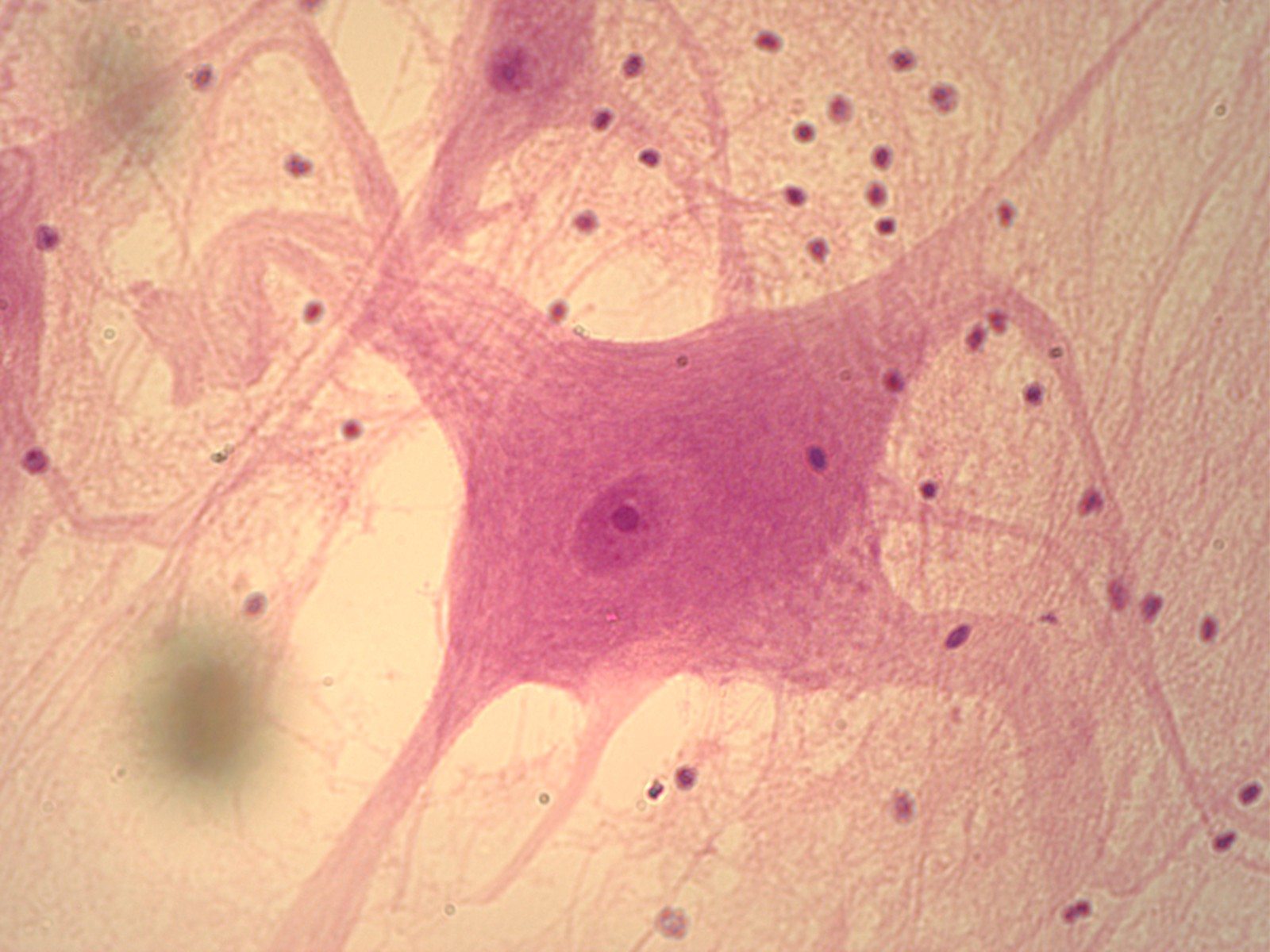


Cartilage repairs very slowly because it

Osseous

This connective tissue is found under the skin and provides cushioning. What tissue is this?
Transitional epithelium
Hyaline cartilage
Dense fibrous cartilage
Loose connective tissue (Areolar)
In parts of the body such as the urinary bladder, where considerable stretching occurs, one can expect to find which of these types of cells?
cubodial epithelium
pseudostratified epithelium
transitional epithelium
squamous epithelium
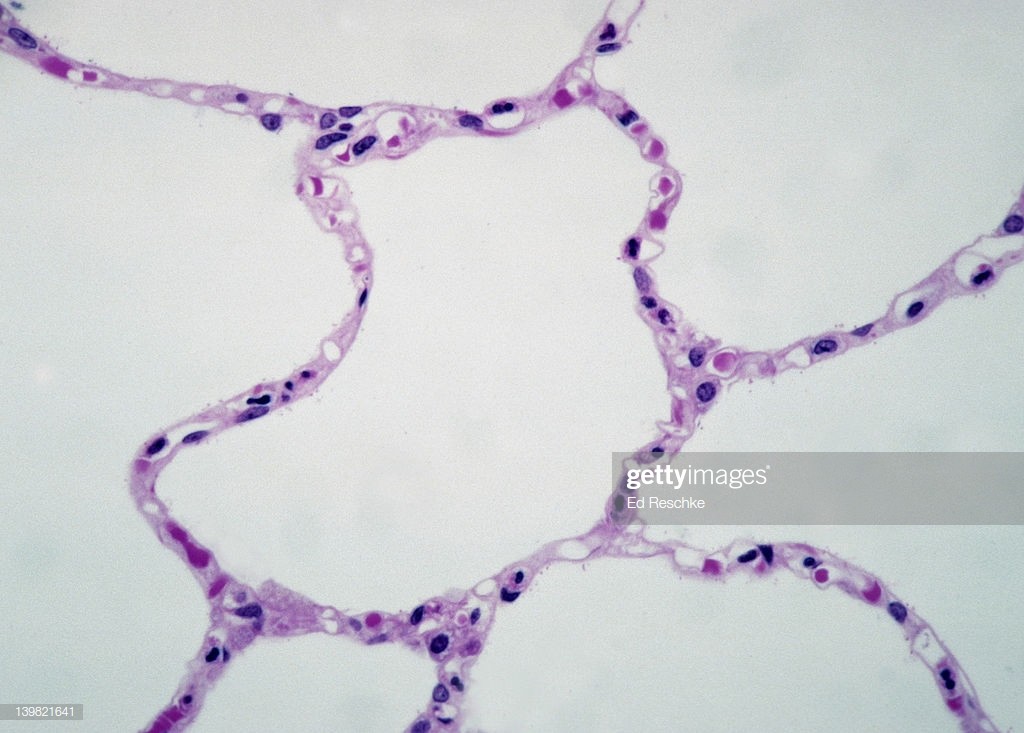
What type of epithelium lines the air sacs in this slide of lung tissue?
simple cuboidal
simple columnar
simple squamous
pseudostratified columnar

Which type of tissue is pictured?
Elastic
Dense regular
Adipose
Reticular

Which type of tissue is pictured?
Dense regular
Elastic
Reticular
Adipose

What tissue is pictured?
Cancellous bone
Transitional
Skeletal muscle
Osseous Bone

What tissue is pictured?
Smooth muscle
Skeletal muscle
Elastic CT
Aerolar

What tissue is pictured?
Simple columnar
Blood
Elastic CT
Simple cuboidal

What tissue is pictured?
Hyaline cartilage
Skeletal muscle
Smooth muscle
Transitional

Transitional epithelium is found in
Lining alveoli
In skin, mouth, anus, vagina
Lining glands
In bladder

Identify:
Simple squamous
Cuboidal
Transitional
Pseudostratified

What type of tissue is this?
Collagenous
Fibrocartilage
Reticular fiber
Hyaline Cartilage

What type of tissue is this?
Stratified columnar
Stratified squamous
Simple squamous
Stratified cuboidal
Function of simple cuboidal epithelium:
absorption
secretion
contraction
protection
communication
Difference between dense irregular and dense regular connective tissues?
amount and arrangement of elastic fibers
amount and arrangement of collagen fibers
amount and arrangement of adipose cells and fibroblasts
amount of vascularization
Which is incorrect? (: means "is to" and :: means "as", this is abbreviations for analogies)
golgi body : export :: mitochondria : energy
nucleus : control :: ribosome : creating proteins
cell membrane : communication :: mitochondria : energy
golgi body : import :: nucleus : control

