
 Worksheets
Anatomical Terminology
Total questions: 60
Worksheet time: 3600secs
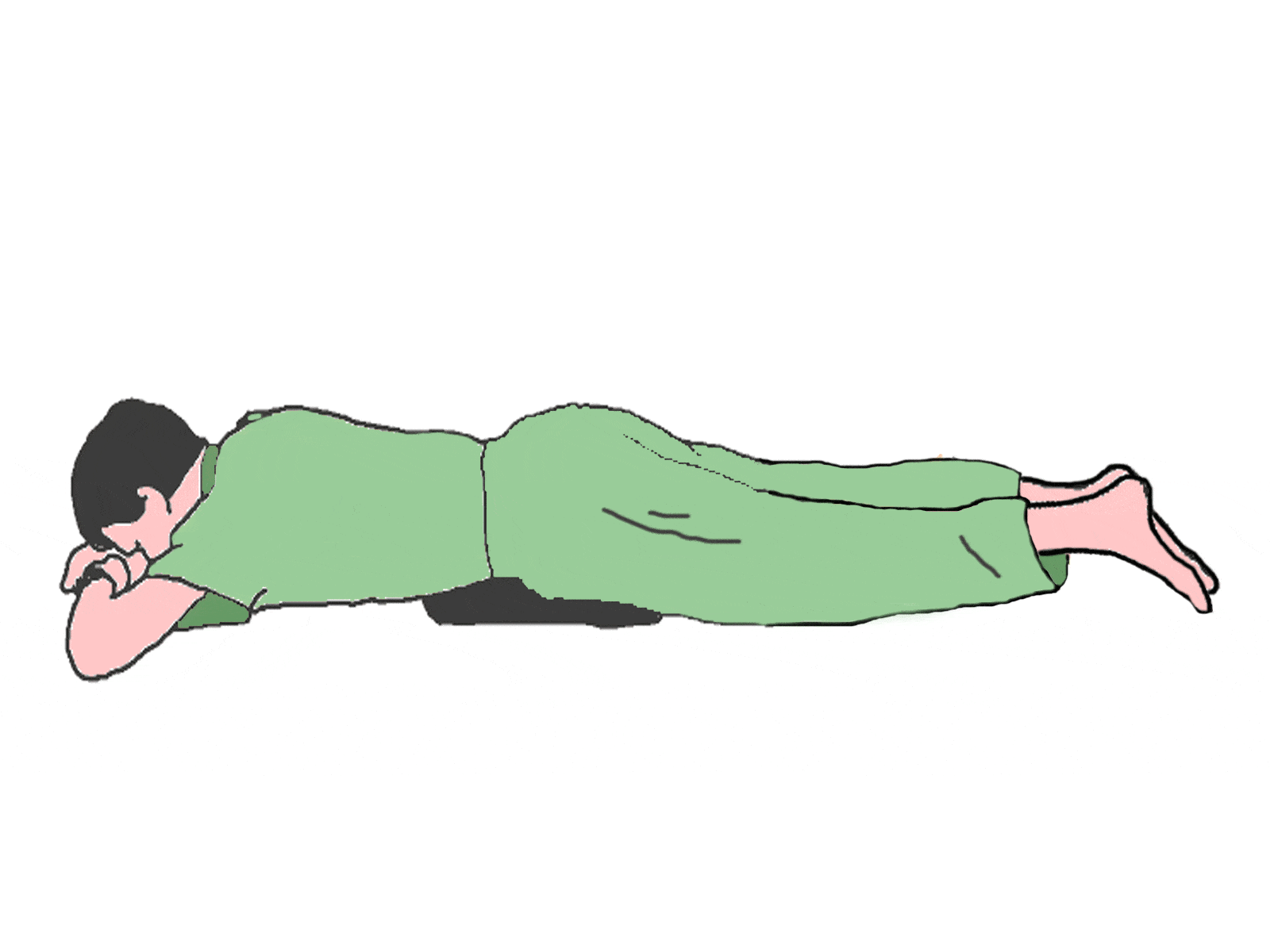
A patient's ventral side is lying on the operating table. This position is called:
Lateral
Anterior
Supine
Prone
How many organ systems are there in the human body?
10
8
14
11
Anatomical landmark describing the shoulder:
Acromial
Crural
Scapular
Axillary
Anatomical landmark describing the upper Arm:
Antebrachial
Brachial
Mental
Frontal
Anatomical landmark describing the Armpit:
Occipital
Umbilical
Patellar
Axillary
Anatomical landmark describing the Elbow:
Occipital
Umbilical
Patellar
Olecranon
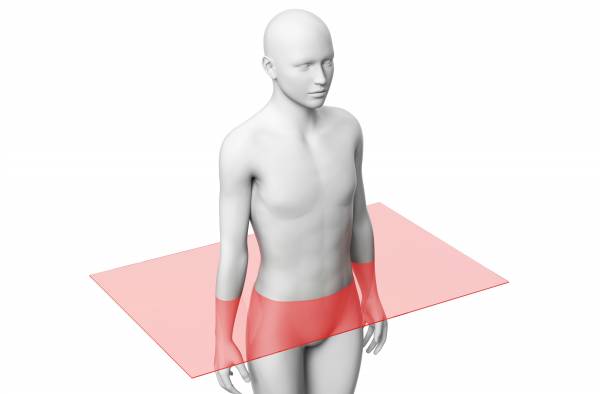
Identify the sectional plane:
frontal
lateral
transverse
sagittal
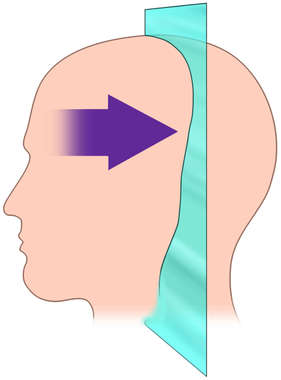
Identify the sectional plane:
transverse
sagittal
midsagittal
coronal
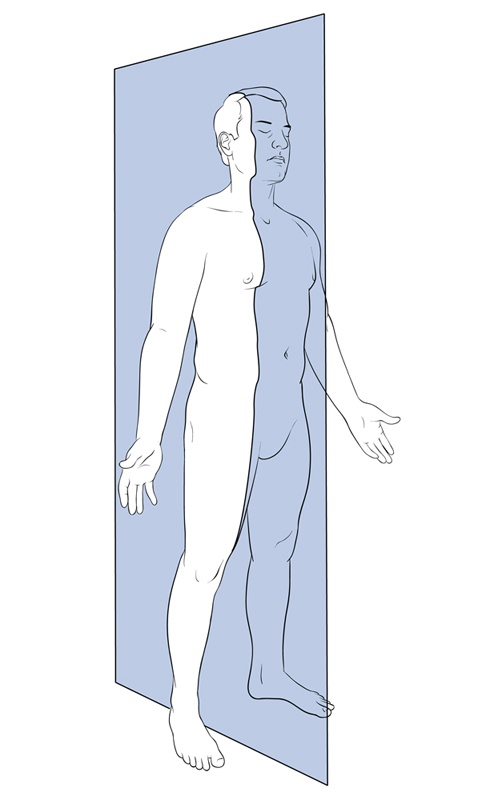
Identify the sectional plane:
frontal
cross
transverse
sagittal
The shoulder is _____ to the elbow.
proximal
dorsal
distal
ventral
Which term means "below" or "toward the feet?"
Inferior
Superior
Posterior
Lateral
A 47 year has fallen and is laying on her back, what position is this?
Lateral
Prone
Superior
Supine
Which medical term means "toward the front?"
Supine
Anterior
Lateral
Inferior
You find a 16 year old female on her right side, this is known as which position?
Lateral
Supine
Prone
Inferior
The cranial cavity is _____ to the thoracic cavity.
inferior
anterior
peripheral
superior
Oral means ________
Eyes
Ears
Mouth
Nose
Which large cavity describes the upper "chest" cavity?
Thoracic cavity
Cranial cavity
Abdominal cavity
Pelvic cavity
The type of sectional plane that divides the body into Dorsal and Ventral portions is:
Sagittal
Frontal
Transverse
Midsagittal
Directional term meaning "toward the mid-line?"
Lateral
Proximal
Rotation
Medial
Anatomical term meaning "toward the surface?"
Deep
Caudal
Superficial
Lateral
"Physiology" is the study of:
How living organisms perform functions
Labeling and naming body structures
Maintenance and repair of body tissues
The functions of internal body organs and structures
Which of the following options orders the structures from most simple to most complex?
tissues - cells - organ systems - organs
cells - tissues - organs - organ systems
cells - organs - tissues - organ systems
tissues - cells - organs - organelles
Amputation of a foot at the ankle would involve a cut in the _____ plane.
coronal
midsagittal
transverse
frontal
Which set of directional terms are opposites?
distal and proximal
medial and inferior
superior and ventral
anterior and deep

Which plane would make a slice right between your eyes dividing you into EQUAL left and right halves?
transverse
sagittal
midsagittal
frontal
Which landmark region is most Medial?
Nasal
Otic
Pollex
Femoral
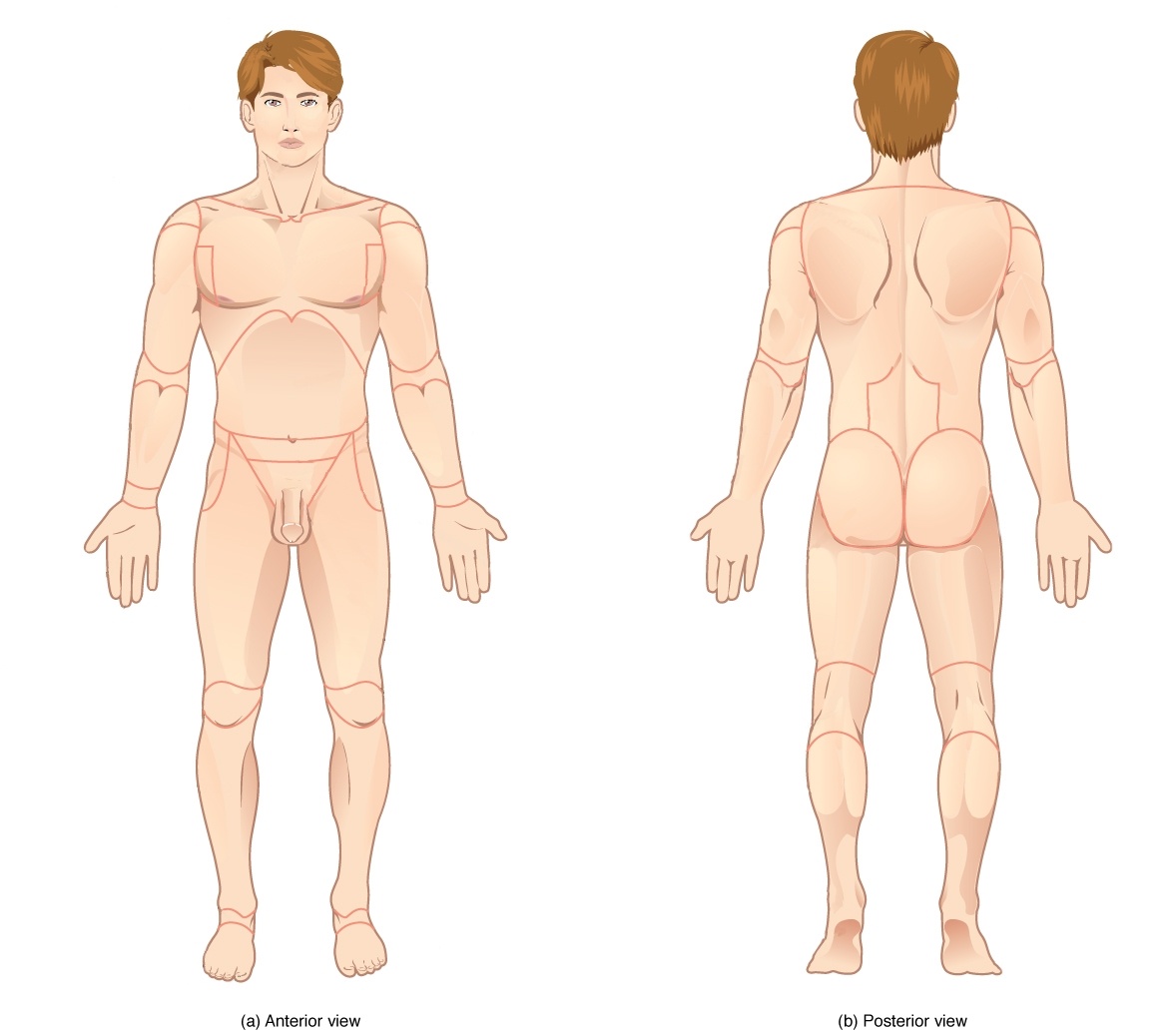
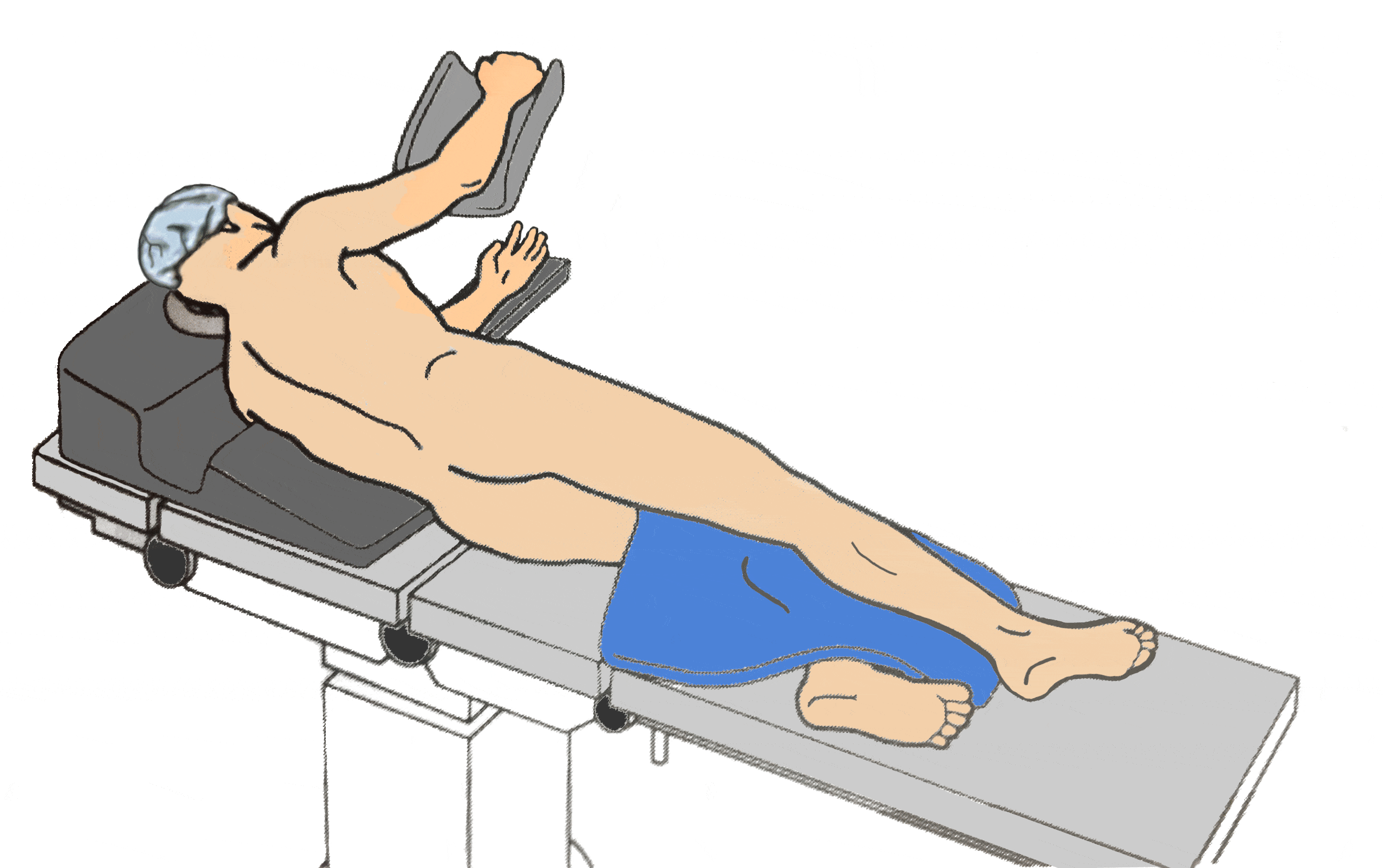
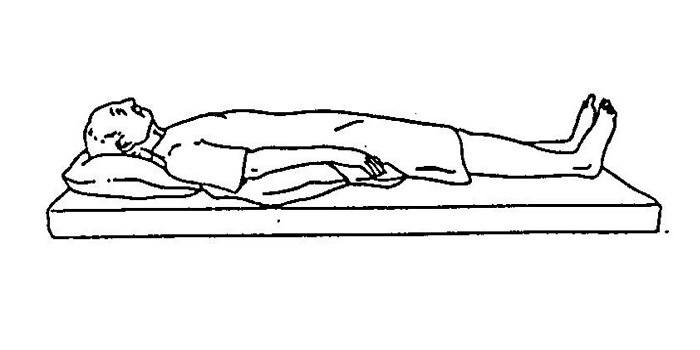
Which of the following represents the "Anatomical" position?
Which body cavity contains the lungs?
Abdominopelvic
Pleural
Mediastinum
Peritoneal


Reproductive organs are located within which cavity?
Pleural
Pelvic
Mediastinum
Thoracic

The lungs are located within this cavity:
pleural
mediastinum
brachial
pelvic
The brain is located in the:
spinal cavity
Hyperchondriac region
cranial cavity
umbilical region
Most of the digestive system and other internal organs is surrounded by a protective membrane called the:
Pericardium
Mediastinum
Osteoneum
Peritoneum

Identify body cavity #3:
pericardial cavity
pleural cavity
pelvic cavity
abdominal cavity

Identify the body cavity #4:
Pericardial cavity
Pelvic cavity
Pleural cavity
Cranial cavity
A group of similar cells work together to form a(n):
Organ
Tissue
Organelle
Organ system
The ears are __________ to the eyes.
Lateral
Medial
Superior
Posterior
A collection of tissues that work together to carry out a specialized function is defined as a(n):
Muscle
Cell
Organ System
Organ
The maintenance of a stable internal environment in the body is known as ____________.
Homeostasis
Meandering
Stabilization
Equalizing
Which of the following organs are NOT found in the abdominal cavity?
Small Intestine
Stomach
Bladder
Liver
Muscles are a collection of tissues. They can contract and relax which causes body movements. A muscle would be a(n):
Organ
Organelle
Organ System
Organism

The cavity surrounded by the box is:
Pleural
Pericardial
Pelvic
Mediastinum

What abdominal quadrant does "Number 2" represent?
Right Upper
Right Lower
Left Upper
Left Lower

Which abdominal region is "Section 1?"
Epigastric
Left Hypochondriac
Right Hypochondriac
Right Iliac
Which abdominal region is "Section 2?"
Epigastric
Left Hypochondriac
Right Hypochondriac
Right Iliac
Which abdominal region is "Section 7?"
Epigastric
Left Iliac
Right Hypochondriac
Right Iliac
Which abdominal region is "Section 5?"
Umbilical
Hypogastric
Right lumbar
Epigastric
Which abdominal region is "Section 4?"
Umbilical
Left lumbar
Right lumbar
Right Iliac
Which abdominal region is "Section 8?"
Epigastric
Umbilical
Hypogastric
Right lumbar
The abbreviation for "MRI" stands for:
medical resonance imaging
miraculous resonance imaging
magnetic resonance imaging
magnetic renaissance imaging
An x-ray and high-powered computers used to generate images of bones and tissue is known as a(n):
MRI
Mammogram
PET
CT
This scan is primarily used to diagnose broken bones or observe hard tissues:
CT Scan
MRI Scan
Basic X-ray
PET Scan
This scan uses harmless sound waves to generate images of soft tissues:
CT Scan
PET Scan
Ultrasound
MRI Scan
What does "CT" stand for?
computerized tomography
compound telography
computerized telepathy
connective tissue
Which of the following scans does NOT use potentially harmful forms of radiation that could mutate cells?
X-rays
PET
CT
MRI
Sonogram

This scan uses radioactive tracers to highlight specific tissues:
CT
MRI
CAT
PET
Which of these describes the branch of science that studies the name, location, and structure of human organs/tissues?
Physiology
Anatomy
Pathology
Histology
Which term below describes a body structure that can be observed with the naked eye?
Microscopic
Gross
Systemic
Physical
Which of the following is an example of a Negative Feedback loop?
The body chemically enhances muscle contractions during the labor process
The body maintains a steady heartbeat during REM sleep
The body sweats to stop the internal temperature from rising too high
The body sends more platelets to the site of an open wound to form a clot

