

wayground logo

Free Printable Worksheets

Font size

S
M
L
XL
Worksheets

Bio I Final Exam Review

Total questions: 60

Worksheet time: 47mins
Name
Class
Date
1.
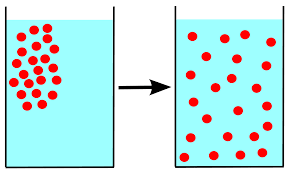
The picture below is an example of _________________.
a)
osmosis
b)
isotonic
c)
diffusion
d)
active transport
2.
Osmosis is the movement of _____ across a membrane.
a)
food
b)
energy
c)
oxygen
d)
water
3.
What is the definition of  Selective Permeability?
a)
The movement of materials across the cell membrane that requires NO ENERGY from the cell.
b)
The movement of materials through (or across) the cell membrane
c)
The ability of the cell membrane to allow some things to pass through while preventing other things from passing through.
d)
The movement of molecules from an area of high concentration to a area of low concentration 
4.
When both inside and outside of a cell have the same amount of water it is said that the cell has reached a state of
a)
Osmosis
b)
Diffusion
c)
Equilibrium
5.
_______ regulates what enters and leaves a cell.  
a)
Cell Membrane
b)
Nucleus
c)
Mitochondria
d)
Cytoplasm
6.

Which means of particle transport requires energy?

a)

diffusion

b)

osmosis

c)

facilitated diffusion

d)

active transport

7.

Which means of particle transport is shown in the picture?

a)

endocytosis

b)

exocytosis

c)

facilitated diffusion

d)

protein pump

8.
Functions in energy production, known as the energy factory of the cell
a)
mitochondria
b)
chloroplast
c)
vacuole
d)
cytoplasm
9.
Rigid, outermost layer of the plant cell
a)
nucleus
b)
cell membrane
c)
cell wall
d)
cytoplasm
10.
What type of cell has a nucleus? 
a)
eukaryotic
b)
prokaryotic 
11.
Where is the DNA found in a prokaryotic cell? 
a)
floating around in the cytoplasm 
b)
in the nucleus 
12.
Contains chlorophyll and is where photosynthesis takes place. Found in plant cells only.
a)
mitochondria
b)
chloroplast
c)
vacuole
d)
cytoplasm
13.

what is the function of ribosomes

a)

to assemble amino acids to create proteins

b)

to pack proteins

c)

to clean proteins

14.

Changes in pH and temperature can ___________________ an enzyme which causes it to lose its shape and affects its function.

a)

puncture

b)

denature

c)

double

d)

delete

15.
What are the two products of photosynthesis?
a)
Oxygen and Carbon Dioxide
b)

Oxygen and Sugar

c)
Sunlight and Sugar
16.

What is the pigment in chloroplasts that performs photosynthesis?

a)

Chlorosynthesis

b)

Chlorophyll

c)

Chloroplast

d)

Green

17.
The formula for glucose is...
a)
C12 H22 O11
b)
NaCl
c)
NaOH
d)
C6 H12 O6
18.

The products of photosynthesis are...

a)

glucose and oxygen

b)

carbon dioxide and water

19.
What is a substance called if it speeds up a chemical reaction?
a)
reusable
b)
catalyst
c)
specific
d)
fragile
20.

Alcoholic and lactic acid are two types of _________.

a)

energy molecules

b)

fermentation

c)

photosynthesis

21.

In the graph, which colors have the lowest absorption?

a)

blue and red

b)

green and yellow

c)

orange and green

d)

red and green

22.
What is the correct equation for cellular respiration?
a)
6O2 + C6H12O6 -> 6CO2 + 6H2O + Energy
b)
6O2 + C6H12O6 + Energy -> 6CO2 + 6H2O
c)
6CO2 + 6H2O -> 6O2 + C6H12O6 + Energy
d)
6CO2 + 6H2O + Energy -> 6O2 + C6H12O6
23.

Plants are an example of a(n)

a)

Autotroph

b)

Heterotroph

24.

Animals are an example of a(n)

a)

autotroph

b)

heterotroph

25.

In the lock and key model, the _________ is the lock, and the ______ is the key.

a)

enzyme/substrate

b)

enzyme/product

c)

substrate/product

d)

product/active site

26.
What makes an enzyme substrate specific?
a)
Size
b)
Shape
c)
Name
d)
Location it is found in
27.
Aerobic respiration is different from anaerobic respiration in that aerobic respiration needs...
a)
chlorophyll
b)
carbon dioxide
c)
glucose
d)
oxygen
28.
Which organisms perform CELLULAR RESPIRATION?
a)

Only Autotrophs

b)
Only Heterotrophs
c)
Autotrophs and Heterotrophs
29.
Plants need ________ for photosynthesis
a)
oxygen
b)
soil
c)
carbon dioxide
d)
sugar
30.

Yaara wants to determine if amount of fertilizer impacts grass growth

What is the Independent Variable?

a)

amount of fertilizer

b)

type of fertilizer

c)

grass growth

d)

type of grass

31.

Yaara wants to determine if amount of fertilizer impacts grass growth

What is the Dependent Variable?

a)

amount of fertilizer

b)

type of fertilizer

c)

grass growth

d)

type of grass

32.

Maintaining balanced and stable internal conditions

a)

Growth and Development

b)

Metabolism

c)

Organization

d)

Homeostasis

33.
Study of interactions between organisms and their environment 
a)
niche
b)
community 
c)
ecology
d)
ecosystem
34.
Members of a species in a defined area
a)
Ecosystem
b)
community
c)
biodiversity
d)
population
35.
Non-living factor that affects an ecosystem
a)
biotic factor
b)
abiotic factor
c)
food chain 
d)
biome
36.
A collection of organisms that belong to different populations but all live in the same area and interact with one another.
a)
Population
b)
Ecosystem
c)
Community
d)
Ecosphere
37.
All of the living and nonliving things in an area that interact with each other are called a/an ______.
a)
community
b)
habitat
c)
population
d)
ecosystem
38.
The living part of an ecosystem
a)
Biotic
b)
Abiotic
c)
Mother Earth
d)
Flowers
39.

An organism's place in the biotic environment and its role in an ecosystem is

a)

Habitat

b)

Habit

c)

Niche

d)

Community

40.

symbiotic relationship in which both organisms benefit

a)

competition

b)

mutualism

c)

predation

d)

commensalism

41.
What does a food web represent?
a)
All connections of energy flow throughout all organisms in a habitat.
b)
The specific ways that mutualism is carried out.
c)
A single pathway or energy flow between organisms. 
d)
How carnivores get their food. 
42.
The rabbit in this food web would be considered a:
a)
Decomposer
b)
Producer
c)
Secondary Consumer
d)
Primary Consumer
43.

What are plants that convert energy from the sun called?

a)

decomposer

b)

primary consumer

c)

secondary consumer

d)

producer

44.
In the energy pyramid here, how much of the energy in the producers gets passed to the herbivores?
a)
10%
b)
20%
c)
80%
d)
90%
45.
Which organism recieves the least amount of energy from the producer?
a)
Owl
b)
Grasshopper
c)
Lilypad
d)
Mouse
46.
An organism that needs to eat other organisms to obtain energy is known as a:
a)
Autotroph
b)
Producer
c)
Consumer
d)
Mutualist
47.
Organisms that obtains its energy from abiotic sources, such as sunlight or inorganic chemicals
a)
Autotroph
b)
Heterotroph
c)
Omnivore
d)
Carnivore
48.
A diagram that shows how food chains are connected
a)
Producer
b)
Limiting Factor
c)
Consumer
d)
Food Web
49.

The term ecologists use to describe the number of individuals moving into a population is

a)

Emigration

b)

Immigration

50.

The term ecologists use to describe the number of individuals moving away from a population is

a)

Emigration

b)

Immigration

51.
If the number of births in a population is the same as the number of deaths in a population, what will happen to the growth of the population?
a)
It will increase.
b)
It will decrease.
c)
It will stay the same.
d)
It will fluctuate.
52.

Factors that affect population size:

INCREASE: Number of ___________ & ____________


(Choose 2 answers)

a)

Birth

b)

Death

c)

Immigration

d)

Emigration

53.

Factors that affect population size:

DECREASE: Number of ___________ & ____________


Choose all that applies.

a)

Birth

b)

Death

c)

Immigration

d)

Emigration

54.

An ecosystem comprising the ENTIRE EARTH and the organisms that inhabit it.

a)

Biosphere

b)

Biome

c)

Abiotic

d)

Ecoregion

55.

Biodiversity is important to human society because it...

a)

increases the stability of our ecosystems

b)

provides food and goods

c)

increases the stability of our ecosystems

d)

all options

56.

Which chemical compound(s) do scientists believe are contributing to global climate change?

a)

methane

b)

carbon dioxide

c)

water vapor

d)

all options

57.

According to the 10% rule, only 10% of energy is passed onto the next trophic level. What happens to rest of the energy?

a)

stored as body fat

b)

digested

c)

lost as heat

d)

converted to proteins

58.
Most of the cell membrane is made of...
a)
Lipids
b)
Carbohydrates
c)
Proteins
d)
Nucleic acids
59.

What type of cell does a cell wall belong on?

a)

Plant Cell Only

b)

Animal Cell Only

c)

Both Plant and Animal Cell

60.

What type of cell does chloroplast belong in?

a)

Plant Only

b)

Both Plant and Animal

c)

Animal Only
