
 Worksheets
Welcome Back - Year 10 - GCSE PE
Total questions: 57
Worksheet time: 28mins
Which one of these is an immediate effect of exercise?
Improvement in muscular endurance
Improvement in stamina
Increase in aerobic fitness
Increase in heart rate
Which one of these performers relies most heavily on their cardiovascular endurance?
200m runner
10 000m runner
Discus thrower
Long jumper
Which one of these shows how to calculate the mechanical advantage of a lever?
Effort arm × weight (resistance) arm
Effort arm ÷ weight (resistance) arm
Effort arm + weight (resistance) arm
Effort arm − weight (resistance) arm
Which one of these describes flexibility?
Changing direction at speed with control
Combination of strength and speed
Range of movement possible at a joint
Supplying oxygen to the working muscles
Which one of these causes plantar flexion at the ankle?
Gastrocnemius
Hamstrings
Quadriceps
Tibialis anterior
Which bones are found at the shoulder joint?
Femur and tibia
Humerus and radius
Scapula and humerus
Tibia and fibula
Which of the following are the blood vessels that have a wall that is 1 cell thick?
Veins
Arteries
Capillaries
The drawing in of breath; inhalation.
Inspiration
Expiration
Breathing out; exhalation of breath.
Inspiration
Expiration
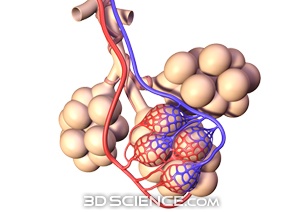
What is the site of gas exchange?
alveoli
nose
lung
bronchi
The division of the trachea forms
nose
main bronchi
lungs
alveoli
A capillary is a form of...
Gas exchange
Respiration
Blood vessel
Alveoli
Gaseous exchange happens because of...
Osmosis
Respiration
Diffusion
Semi-permeable membranes
Diffusion is...
Movement of gas from an area of high concentration to high
Movement of gas from an area of high concentration to low
Movement of gas from an area of low concentration to high
Movement of gas from an area of low concentration to low
Air arriving in the alveoli has a...
Higher concentration of carbon dioxide (CO2) and a lower concentration of oxygen (O2)
Higher concentration of oxygen (O2) and a lower concentration of carbon dioxide (CO2)
What is gaseous exchange?
The movement of Oxygen and Carbon Dioxide between the bronchi and pulmonary artery
The movement of Oxygen and Carbon Dioxide between the alveoli and bloodstream
The movement of Oxygen and Carbon Dioxide between the heart and lungs
The movement of Oxygen and Carbon Dioxide between the nasal cavity and heart

What is the bone highlighted called?
Clavicle
Humerus
Scapula
Collar Bone

What is the bone highlighted called?
Febur
Fibula
Fema
Femur

What is the correct name for the skull?
Head
Cranium
Jaw
Crane

What are the bones highlighted called?
Carpals
Metacarpals
Tarsals
Metatarsals

What is the bone highlighted called?
Humerous
Funny Bone
Humerus
Long Bone

What is this bone called?
Hips
Sacrum
Lumbar
Pelvis

What are the bones highlighted called?
Carpals
Metacarpals
Phalanges
Metatarsals

What are the bones highlighted called?
Shoulder Blades
Scapula
Ribs
Calvicle

What is the bone highlighted called?
Carpals
Radius
Ulna
Humerus

What are the bones highlighted called?
Phalanges
Metacarpals
Carpals
Metatarsals

What is the correct name for these bones?
Tibula and Fiblua
Tibula and Fibia
Shinbone and Fibia
Tibia and Fibula

What are these bones known as?
Spine
Vertebrae
Backbone
Sternum

What is the highlighted bone called?
Ulna
Radius
Humerus
Carpals

What is the bone highlighted called?
Ribs
Chest
Sternum
Cage

What is the bone highlighted called?
Kneecap
Elbow Cap
Shin
Patella

What are the bones highlighted called?
Tarsals
Metatarsals
Phalanges
Carpals

What are the bones highlighted called?
Tarsals
Metatarsals
Phalanges
Carpals

What are the bones highlighted called?
Tarsals
Metatarsals
Phalanges
Carpals
Which one of these describes flexibility?
Changing direction at speed with control
Combination of strength and speed
Range of movement possible at a joint
Supplying oxygen to the working muscles
What is the definition of aerobic exercise?
With oxygen. When exercise is not too fast and is steady, the heart can supply all the oxygen that the working muscles need. Summarised as: glucose + oxygen → energy + carbon dioxide + water.
Without oxygen. When exercise duration is short and at high intensity, the heart and lungs cannot supply blood and oxygen to muscles as fast as the respiring cells need them. Summarised as: glucose → energy + lactic acid.
What is the definition of anaerobic exercise?
Without oxygen. When exercise duration is short and at high intensity, the heart and lungs cannot supply blood and oxygen to muscles as fast as the respiring cells need them. Summarised as: glucose → energy + lactic acid.
With oxygen. When exercise is not too fast and is steady, the heart can supply all the oxygen that the working muscles need. Summarised as: glucose + oxygen → energy + carbon dioxide + water.
What is the definition of agility?
The maintenance of the centre of mass over the base of support. Reference can bemade to whilst static (still) or dynamic (whilst moving).
The ability of the heart and lungs to supply oxygen to the working muscles.
The ability to move and change direction quickly (at speed) whilst maintaining control.
The ability to use different (two or more) parts of the body together, smoothly and efficiently.
Which is not an example of an axis in the body?
Frontal
Longitudinal (or vertical)
Transverse
Sagittal
What is the job of the valves in veins?
Pump blood to the heart
Pump blood away from the hear
Prevent backflow
Vascular shunt
What are the articulating bones at the shoulder
humerus and scapula
radius and humerus
femur and tibia
pelvis and femur
Which one of these best describes coordination?
To change body position quickly
To exercise the body for long periods of time
To move two or more body parts together smoothly
To perform strength movements quickly
Which one of these is a long term benefit of exercise?
Higher resting heart rate
Reduced blood pressure
Reduced stroke volume
Reduced tidal volume
Which one of these is incorrect?
The skeleton provides oxygen for the working muscles
The skeleton provides protection for vital organs
The skeleton provides structural shape and points for attachment
The skeleton provides support
During inspiration, which one of these must air first pass through before entering the bronchi?
Alveoli
Bronchioles
Lungs
Trachea
Which one of these performers relies most heavily on agility?
100 m runner
Golfer
Rower
Tennis player

