wayground logo

Free Printable Worksheets

NEW

Font size

S
M
L
XL
Worksheets

ICP Unit 2 Review

Total questions: 60

Worksheet time: 2hrs 42mins

Name
Class
Date
1.
Which of these was not proposed by John Dalton in 1805?
a)
All matter is made of atoms
b)
Atoms are made of protons, neutrons and electrons
c)
During chemical reactions, atoms rearrange themselves
d)
The atoms of a particular element are all identical
2.
subatomic particles found on the outermost shell & responsible for the atom's reactivity
a)
neutrons
b)
valence electrons
c)
isotopes
d)
ions
3.
Value representing the number of protons in an element
a)
Atomic Mass
b)
Mass Number
c)
Valence Electrons
d)
Atomic Number
4.
Atoms of the same element with a different number of neutrons
a)
Ion
b)
Gluons
c)
Isotope
d)
Quarks
5.

Whose model suggested that negative particles were mixed in with positively charged material - like seeds in a watermelon?

a)

J.J. Thomson

b)

Ernest Rutherford

c)

Niels Bohr

d)

Albert Einstein

6.

Who discovered that the atom had an small, dense, positively charged center?

a)

Ernest Rutherford

b)

J.J Thomson

c)

Robert Millikan

d)

John Dalton

7.

Place the following atomic models in order, from earliest to latest:


A) Rutherford B) Thomson C) Dalton

a)

B, C, A

b)

C, A, B

c)

A, C, B

d)

C, B, A

8.

Which scientist believed that elements differed from one another because their atoms had different mass?

a)

Democritus

b)

Dalton

c)

Thomson

d)

Rutherford

9.
Where are electrons of an atom found?
a)
Nucleus
b)
Electron Cloud
c)
Some are in the nucleus and some in the electron cloud.
d)
They are moving everywhere.
10.
Which is the smallest?
a)
electron
b)
proton
c)
atom
d)
neutron 
11.
What is in the nucleus of an atom?
a)
Neutrons and protons 
b)
Protons
c)
Protons and Electrons
d)
Electrons and Nuetrons
12.
The positive particles of an atom are 
a)
electrons 
b)
positrons 
c)
neutrons 
d)
protons 
13.

Which particle carries no charge?

a)

Neutrons

b)

Electrons

c)

Protons

14.

A negative particle that moves around the nucleus is a(n)...

a)

Proton

b)

Neutron

c)

Electron

d)

Quark

15.

Niels Bohr added _______________ to the model of the atom.

a)

electrons.

b)

a nucleus.

c)

neutrons.

d)

energy levels.

16.

Which of the following is the best description of J.J. Thomson's model of the atom?

a)

a featureless, indivisible sphere

b)

a sphere of positive material with electrons embedded in it

c)

mostly empty space with electrons randomly orbiting around a positive nucleus

d)

mostly empty space with electrons located in set orbits around a positive nucleus.

17.

In terms of matter, the atom is almost entirely _____

a)

orbiting electrons

b)

charged protons

c)

heavy neutrons

d)

empty space

18.
Most of the mass in an atom is made up of _____________________?
a)
protons and electrons
b)
protons and neutrons
c)
neutrons and electrons
d)
electrons and quarks
19.
Calculation used to find the number of neutrons in an atom
a)
Atomic Mass - Atomic Number
b)
Atomic Number - Atomic Mass
c)
Atomic Mass - Electrons
d)
none of these
20.
Who stated that atoms cannot be divided?
a)
Democritus
b)
Dalton
c)
Thomson
d)
Bohr
21.
What contribution did John Dalton make to atomic theory? 
a)
He discovered that every atom was positively charged. 
b)
He discovered that every element consisted of one type of atom that couldn't be divided. 
c)
He discovered that atoms had nuclei. 
d)
He discovered that atoms could be divided into smaller parts. 
22.
The first person to propose a theory about an atom called the Atomos Theory was
a)
Democritus
b)
Rutherford
c)
Dalton
d)
Aristotle
23.
An atom's overall charge is ________.
a)
positive 
b)
depends
c)
neutral 
d)
negative 
24.
Contributes basically no mass to an atom.
a)
protons
b)
neutrons
c)
electrons
d)
protons and neutrons
25.
The word atom comes from a Greek word "atomos" that means
a)
Invisible
b)
Indivisible
c)
Undivided
d)
Indestructable 
26.
All atoms of a particular element have the same number of these
a)
electrons
b)
neutrons
c)
protons
27.

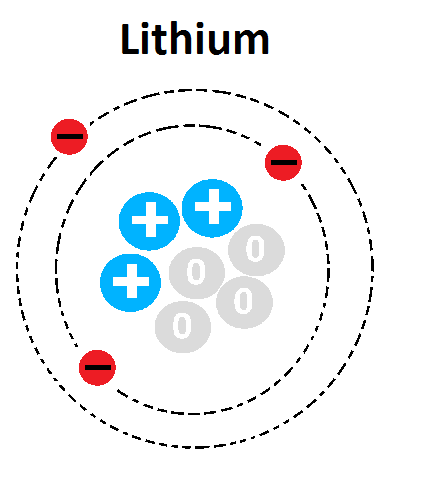
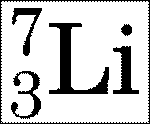
What is the atomic number of this atom?

a)

1

b)

3

c)

4

d)

7

28.

What is the mass number of this atom?

a)

1

b)

3

c)

4

d)

7

29.

What does the 6 represent?

a)

Atomic mass

b)

atomic number

c)

chemical symbol

d)

element name

30.
If an atom has 12 positively charged subatomic particles, which of the following must it also have to be considered a neutral atom?
a)
12 neutrons
b)
12 electrons
c)
12 protons
d)
24 protons and neutrons
31.

An atom has 10 protons, 15 neutrons and 10 electrons what is its mass number.

a)

20

b)

10

c)

35

d)

25

32.

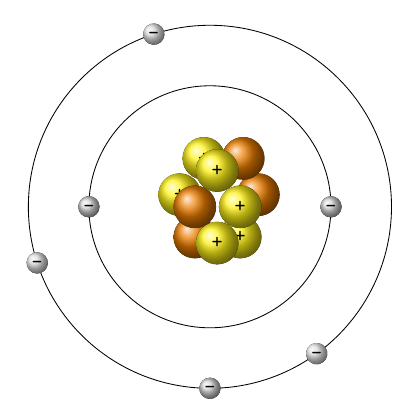
How many electrons does this atom have?

a)

2

b)

4

c)

6

d)

10

33.
The atomic number of an element that has 9 protons, 9 electrons, and 10 neutrons is _____.
a)
9
b)
10
c)
19
d)
28
34.
An element with a mass number of 11 and an atomic number of 5 has how many neutrons?
a)
11
b)
5
c)
6
d)
16
35.
An atom has an atomic number of 15 and a mass number of 31. How many protons are there in the atom?
a)
15
b)
31
c)
16
d)
47
36.
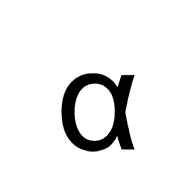
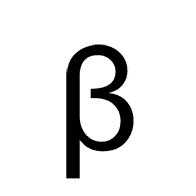
Has the symbol
a)
Alpha
b)
Beta 
c)
Gamma
37.
When an atom loses this particle, the atomic number of the product atom is lower by the two and its mass number is lower by four. 
a)
Alpha 
b)
Beta
c)
Gamma
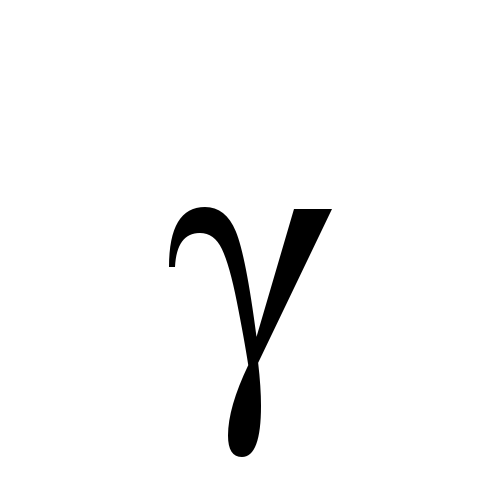
38.
Has the symbol
a)
Alpha
b)
Beta
c)
Gamma
39.
An energized electron resulting from the breaking apart of a neutron in an atom.
a)
Alpha
b)
Beta
c)
Gamma
40.
Electromagnetic radiation made of high-energy photons.
a)
Alpha 
b)
Beta
c)
Gamma
41.
Has the symbol
a)
Alpha
b)
Beta
c)
Gamma
42.
Has a mass of 4 and a charge of +2
a)
Alpha
b)
Beta
c)
Gamma
43.
Has the lowest penetrating power.  Can only penetrate 0.05 mm into the body and can be stopped by a piece of paper or clothing.
a)
Alpha
b)
Beta
c)
Gamma
44.
Has the highest penetrating power.  Can penetrate our body.  Even several cm thick of lead or several meters thick of concrete cannot stop all of it.
a)
Alpha
b)
Beta
c)
Gamma
45.
Has a moderate penetrating power.  It can penetrate 4 mm into body tissue and can be stopped by metal foil.
a)
Alpha
b)
Beta
c)
Gamma
46.
Uranium-238  decays into  Thorium-234  by emitting .........
a)
an alpha particle
b)
a beta particle
c)
gamma rays
d)
visible light
47.
If we start off with element 24X50 after an alpha decay we get another element Y that looks like
a)
22Y50
b)
22Y46
c)
20Y48
d)
26Y54
48.

The nucleus is held together by the ___________________________force.

a)

The Strong Nuclear Force

b)

The Weak Nuclear Force

c)

Electromagnetism

d)

Gravity

49.

24094Pu —› ____ + 42He

a)

23692U

b)

24796Cm

c)

24493Np

d)

24295Am

50.
How many protons are in this atom?
a)
3
b)
4
c)
6
d)
10
51.

In the equation, 146C --> 147N + 0-1B, the _______ decay of radioactive carbon-14 results in the creation of a new nitrogen-14 atom.

a)

Gamma

b)

Beta

c)

Alpha

52.
Solve this equation for beta decay.
614C = ___ + -10e
a)
410Be
b)
714N
c)
210He
d)
613C
53.
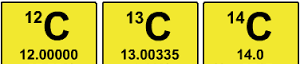
What do these isotopes of carbon all have in common?
a)
neutrons & mass number
b)
atomic number and neutrons
c)
atomic number and electrons
d)
protons, atomic number, and mass number
54.
Two isotopes of carbon are carbon-12 and carbon-14.  These isotopes differ from one another by two protons.
a)
true
b)
false
55.

Look carefully at the picture. It shows an electron in the excited state on the left, and the electron returning to its ground state on the right. When the electron return to the ground state it emits a_______________________.

a)

blast of cold air

b)

electrostatic charge

c)

proton

d)

photon (light)

56.

The picture shows an atom in the ground state absorbing energy and the electron jumps to the excited state. Which state has higher energy?

a)

Ground State

b)

Excited State

57.
Takes two small nuclei and combines them into a larger nucleus
a)
fission
b)
fusion
58.
The splitting of a nucleus into smaller nuclei is
a)
fusion
b)
fission
c)
half-life
d)
gamma radiation
59.
Where does fusion occur naturally?
a)
Underwater
b)
All around us
c)
In the radioactive waste
d)
On the sun
60.
_________ happens naturally due to an unstable nucleus.
a)
fission
b)
fusion
c)
radioactive decay
d)
K-capture