

wayground logo

Free Printable Worksheets

NEW

Font size

S
M
L
XL
Worksheets

7.12 Levels of Organization/Cell Theory/Organelles Quiz

Total questions: 40

Worksheet time: 22mins

Name
Class
Date
1.

A group of similar cells that perform a common function are:

a)

cells

b)

tissues

c)

organs

d)

organ systems

2.

A living thing that carries out life processes by itself are known as:

a)

cells

b)

organs

c)

tissues

d)

organisms

3.

A structure made up of a collection of tissues that carries out a specialized function is called an:

a)

organ system

b)

organism

c)

cell

d)

organ

4.

Plants also have ___________that are made up of different tissues working together.

a)

leaves

b)

organs

c)

arms

d)

roots

5.

Cell theory states that...

a)

cells are the basic building block of life

b)

cells are cool

c)

cells are microscopic

d)

cells cannot be destroyed

6.

Lastly cell theory states....

a)

cells don't do much

b)

cells are microscopic

c)

all living things are made up of cells (either unicellular or multicellular)

d)

bacteria aren't cells

7.

What kind of cell is this?

a)

virus

b)

animal

c)

plant

d)

bacteria

8.

What kind of cell is this?

a)

virus

b)

animal

c)

plant

d)

bacteria

9.

Prokaryotes DO NOT HAVE...

a)

DNA

b)

flagella

c)

a membrane bound nucleus

d)

ribosomes

10.

Eukaryotes DO HAVE

a)

a membrane bound nucleus

b)

a virus

c)

pili

d)

antibacterial protection

11.

Bacteria is

a)

Eukaryotic

b)

Prokaryotic

12.

A plant cell is

a)

Eukaryotic

b)

Prokaryotic

13.

A rock is a abiotic because

a)

it is made of cells, responds and grows

b)

it is made of cells, but does not responds and grows

c)

it is not living, it is not made of cells and can not grow

14.

Abiotic means

a)

living

b)

not living

c)

almost living

15.

The smallest unit of a living thing

a)

Cell

b)

Tissue

c)

organ

d)

Organ system

e)

Organism

16.

2 or more organs that work together.

a)

cell

b)

tissue

c)

organ

d)

organ system

e)

organism

17.

Which is the correct order for levels of organization from simple to complex?

a)

cell, organ, tissue, organ system, organism

b)

organism, organ system, tissue, cell, organism

c)

cell, tissue, organ, organ system, organism

d)

organ, tissue, cell, organism, organ system
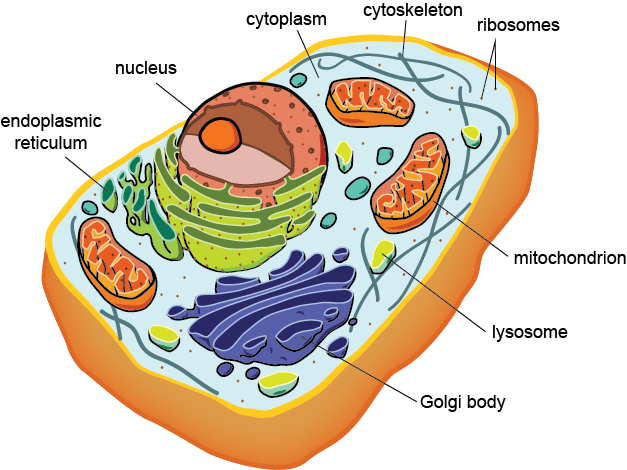
18.
Which of the following statements is not part of the cell theory?
a)
Cells are the basic unit of structure and function in all living things.
b)
All cells are produced from other cells.
c)
Only animal cells are composed of cells.
d)
All living things are composed of cells.
19.
The invention of the microscope made it possible for people to discover and learn about
a)
Plants
b)
Skin 
c)
Animals 
d)
Cells
20.
What is one way in which all living things on Earth are alike?
a)
All living things have hair.
b)
All living things are made of cells and come from other cells.
c)
The cells of all living things have chloroplast.
d)
All living things can move. 
21.
ALL organisms can be divided into two groups.
a)
Prokaryotes and Eukaryotes
b)
Plants and Animals
c)
Us and Them
d)
Hot blooded or Cold Blooded
22.

All cells extract energy from food.

a)

true

b)

false

23.

All cells maintain homeostasis (balance).

a)

true

b)

false

24.

We know more about cells because of the microscope.

a)

true

b)

false

25.

All cells come from other cells

a)

True

b)

False

26.
The ___ is the basic unit of structure and function of organisms.
a)
atom
b)
cell
c)
matter
d)
all other answers are correct
27.
Which organelle gives a cell structure and support
a)
Cell membrane
b)
Cell wall
c)
Nucleus
d)
Endoplasmic Reticulum
28.
Which organelle is a gelatin substance that helps fill out the cell
a)
Chloroplast
b)
Lysosomes
c)
Mitochondria
d)
Cytoplasm
29.
Which organelle releases the energy stored inside food
a)
Chloroplast
b)
Mitochondria
c)
Lysosomes
d)
Nucleus
30.
Which organelle takes sunlight and turns it into food?
a)
Lysosome
b)
Cell membrane
c)
Chloroplast
d)
Mitochondria
31.

Name two organelles that are only found in plant cells.

a)

Cell wall and chloroplasts

b)

Cell wall and nucleus

c)

Chloroplast and mitochondria

d)

Cell membrane and ribosome

32.

This organelle absorb sunlight and uses it to produce food for plant cells

a)

Ribosomes

b)

Endoplasmic Reticulum

c)

Mitochondria

d)

Chloroplasts

33.

This organelle converts energy into forms that are usable by the cell.

a)

mitochondria

b)

vacuole

c)

nucleus

d)

cell wall

34.

In what organelle is the genetic material found inside?

a)

cell membrane

b)

chloroplast

c)

nucleus

d)

ribosome

35.
Which of the following is the correct order of organization in living things from most basic (simple) to most complex?
a)
a.  Organism, cell, tissue, organ, organ system
b)
a.  Organ system, organ, tissue, cell, organism
c)
a.  Cell, tissue, organ, organ system, organism
d)
a.  Cell, organ, tissue, organ, organism, organ system
36.
A group of similar cells that come together to perform a specific function is a/an
a)
organ
b)
organism
c)
organ system
d)
tissue
37.
When a group of organs work together to perform a particular function they create a/an
a)
organ system
b)
organism
c)
tissue
d)
organ
38.
A group of organs that work together to perform big jobs for your body is an organ system.
a)
True
b)
False
39.
Which is an example of an organism?
a)
a beetle
b)
a lake
c)
a rock
d)
a shell
40.
which is another word for an organism?
a)
abiotic factor
b)
biotic factor
c)
nonliving thing
