wayground logo

Free Printable Worksheets

Font size

S
M
L
XL
Worksheets

Chemistry Review

Total questions: 78

Worksheet time: 1hrs 21mins
Name
Class
Date
1.
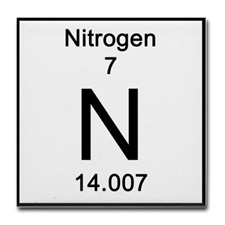
What is the number of protons that the element in this image contain?
a)
14
b)
7
c)
15
d)
18
2.
The positive particles of an atom are 
a)
Electrons 
b)
Positrons 
c)
Neutrons 
d)
Protons 
3.
The central region of an atom where its neutrons and protons are is its _______.
a)
Nucleus 
b)
Electron cloud
c)
Core 
d)
Center 
4.
An atom with atomic number 6 would have how many protons?
a)
6
b)
12
c)
3
d)
Cannot be determined 
5.
Particles in an atom that are neutral and have no charge are ______. 
a)
Negatrons 
b)
Electrons 
c)
Neutrons 
d)
Protons 
6.
An atoms overall charge is _____.
a)
Positive 
b)
Depends on its mood 
c)
Neutral 
d)
Negative 
7.
Which of the following is a negatively charged subatomic particle?
a)
Electron
b)
Proton
c)
Neutron
d)
Quark
8.
The particles that are found in the nucleus of an atom are _____.
a)
Neutrons and electrons
b)
Electrons only
c)
Protons and neutrons
d)
Protons and electrons
9.
The atomic number of an elements is the total number of which particles in the nucleus?
a)
Neutrons
b)
Protons
c)
Electrons
d)
Protons and electrons
10.
Where are electrons of an atom found?
a)
Nucleus
b)
Electron Cloud
c)
Some are in the nucleus and some in the electron cloud.
d)
They are moving everywhere.
11.
Most of the mass in an atom is concentrated in the _____.
a)
Electrons
b)
Nucleus
c)
Protons
d)
Empty space
12.
What are the 3 particles that make-up the atom?
a)
Protons, neutrons, and isotopes
b)
Neutrons, isotopes, and electrons
c)
Positives, negatives, and electrons
d)
Protons, neutrons, and electrons
13.
Which statement best describes an electron?
a)
Smaller mass than a proton and a negative charge
b)
Smaller mass than a proton and a positive charge
c)
Greater mass than a proton and a negative charge
d)
Greater mass than a proton and a positive charge
14.

How are the elements in the periodic table arranged?

a)

by the number of neutrons

b)

by the atomic number of an element

c)

by the atomic mass of an element

15.

The horizontal rows of elements in the periodic table are called

a)

Families

b)

Groups

c)

Periods

d)

Elements

16.
________ are the COLUMNS on the periodic table and are organized by similar properties.
a)
Classifications
b)
Groups
c)
Periods
d)
Elements
17.

Atoms with similar properties are most likely located...

a)

in the same period.

b)

in the same group or family.

18.
Elements in the same period have similar characteristics.
a)
True
b)
False
19.

What does the atomic number of an element tell you?

a)

the number of neutrons

b)

the number of valence electrons

c)

the number of electrons

d)

the number of protons

20.

Elements in a period

a)

are arranged alphabetically.

b)

have identical properties.

c)

belong to the same family.

d)

have the same number of electron shells.

21.

No two elements have the same atomic number.

a)

True

b)

False

22.

Which element has 2 valence electrons and is in period 6?

a)

O

b)

He

c)

Ba

23.

Which element has 5 valence electrons on the second electron shell?

a)

N

b)

P

c)

Sr

24.
Most of the nonmetals on the periodic table are located...
a)
on the left side
b)
at the bottom
c)
on the right side
d)
in the middle
25.
_______ are the ROWS on the periodic table.
a)
Families
b)
Groups
c)
Periods
d)
Elements
26.
Atoms with similar properties are most likely located...
a)
in the same period.
b)
in the same group.
c)
in different periods.
d)
to the right and left of each other.
27.
If an atom had the same properties as fluorine (F), it would probably be located in
a)
period 1.
b)
period 2.
c)
group 2.
d)
group 17.
28.
As you move from left to right across the periodic table, the atomic number increases. 
a)
True
b)
False
29.
Each element is unique based on its number of protons, also known as the...
a)
atomic mass
b)
valence number
c)
atomic symbol
d)
atomic number
30.
Each column in the periodic table is called a 
a)
period
b)
group
c)
cluster
d)
unit
31.
The yellow atoms are called 
a)
metals
b)
nonmetals
c)
metalloids
d)
noble gases
32.
An element's identity is determined by the number of
a)
electrons.
b)
protons.
c)
neutrons.
d)
valence.
33.
Elements in the same ________ are more chemically similar.
a)
group
b)
period
c)
club
d)
table
34.
Which elements have the most similar chemical properties?
a)
K and Na
b)
K and Ca
c)
K and Cl
d)
K and S
35.
Rows on the period table are called _____ while columns are called _____.
a)
groups, families
b)
groups, periods
c)
periods, groups
d)
families, groups
36.

Which of the following elements is a METAL?

a)

Na

b)

Ne

c)

As

37.

Which element has 4 energy levels?

a)

F

b)

Cl

c)

Br

d)

I

38.

Which element has 6 VALENCE electrons?

a)

C

b)

N

c)

O

d)

F

39.

Which element is located in Group 5, Period 6?

(a)  

40.

Which element is located in Group 18, Period 2?

(a)  

41.

Which element is in Period 2, Group 14?

(a)  

42.

Which element is in Period 5, Group 17?

(a)  

43.
How many elements are represented in the compound?
Na2CO3
a)
1
b)
2
c)
3
d)
4
44.
Which of the following is not a compound?
a)
HCl
b)
Cl
c)
NaCl
d)
CO2
45.
Does this picture show a compound?
a)
No
b)
Yes
46.
Which of the substances below is a compound?
a)
ink
b)
air
c)
oxygen
d)
salt
47.
Can compounds be found in the periodic table?
a)
Yes
b)
No
48.
How many carbon atom/s are present in the compounds CaCO3?
a)
1
b)
2
c)
3
d)
4
49.
Is sugar (C12H22O11) an element or a compound?
a)
Element
b)
Compound
50.
Is water an element or a compound?
a)
Element
b)
Compound
51.
A compound consists of two or more elements bound together.
a)
True
b)
False
52.
Is Iron (Fe) an element or a compound?
a)
Element
b)
Compound
53.

How many atoms of sulfur are in each molecule of H2SO4?

a)

1

b)

4

c)

2

d)

7

54.

Alanine is an amino acid with formula C3H7NO2. How many atoms in all are in each molecule of alanine?

a)

3

b)

7

c)

12

d)

13

55.

How many atoms of carbon are in a molecule of vinyl chloride (C2H3Cl)?

a)

1

b)

3

c)

6

d)

2

56.

How many atoms of hydrogen are in a molecule of glucose (C6H12O6)?

a)

12

b)

6

c)

18

d)

4

57.

Which of the following statements accurately describes the number of atoms in a molecule of ammonia (NH3)?

a)

Three atoms of nitrogen and three atoms of hydrogen

b)

One atom of nitrogen and three atoms of hydrogen

c)

Three atoms of nitrogen and one atom of hydrogen

d)

One atom of nitrogen and one atom of hydrogen

58.

Which of the following accurately describes the chemical formula of the molecule shown above?

a)

3CH8O

b)

C3H7O

c)

C4H8O2

d)

C3H8O

59.

Which of the following molecules has the formula CH2O?

a)
b)
c)
d)
60.

A diagram to a molecule is shown above. Based on the diagram, what is the identity of this compound?

a)

Water (H2O)

b)

Hydronium (H3O+)

c)

Hydrogen peroxide (H2O2)

d)

Hydroxide (OH-)

61.

Which elements are in the formula shown above?

a)

Tin and Chlorine

b)

Tin, Carbon and Lithium

c)

Sulfur, Nitrogen and Chlorine

d)

Sulfur, Nitrogen, Carbon and Lithium

62.

How many different elements are in an amino acid with the formula C5H11NO2S?

a)

5

b)

20

c)

18

d)

4

63.

How many atoms of hydrogen are in the formula CH3CH2Br?

a)

5

b)

3

c)

2

d)

7

64.

How many different elements are in the formula CH3CH2Br?

a)

3

b)

5

c)

6

d)

2

65.

Which of the following chemical formulas contains exactly 4 hydrogen atoms?

a)

CH3COONa

b)

NH4OH

c)

CH3CH2Cl

d)

CH3CHO

66.
Element or compound?
H2O
a)
element
b)
compound
67.
Which of the following is a compound?
a)
Co
b)
O2
c)
C
d)
CO2
68.
The red numbers in the image below represent ________
a)
subscripts
b)
coefficients
c)
I don't know, and don't want to try
d)
None of the answers are correct
69.
The blue numbers in the image below represent ________
a)
I don't know, and don't want to try
b)
coefficients
c)
subscripts
d)
none of the answers are correct
70.
How many atoms are there TOTAL in:
H2SO4
a)
6
b)
5
c)
7
d)
3
71.
How many Sodium (Na) are in 6NaCl?
a)
1
b)
12
c)
6
72.
Which of these is a property of metals?
a)
It's malleable
b)
It can't conduct electricity
c)
They are used in food
d)
It's very brittle
73.
Which of these grouping of elements could have the characteristic of brittle?
a)
Metal
b)
Nonmetal
74.
What side of the periodic table are metals on?
a)
left
b)
right
c)
top
d)
bottom
75.
What side of the periodic table are nonmetals on?
a)
left
b)
right 
c)
top
d)
bottom
76.
Is oxygen metal or nonmetal?
a)
metal
b)
nonmetal
77.
Is gold metal or nonmetal?
a)
metal
b)
nonmetal
78.
Where are metalloids located on the periodic table?
a)
to the right of nonmetals
b)
along the zig-zag line
c)
to the left of the zig-zag line
d)
to the right of the zig-zag line