Wayground logo

Free Printable Worksheets

Font size

S
M
L
XL
Worksheets

Weather & Climate Test Review

Total questions: 47

Worksheet time: 28mins

Name
Class
Date
1.

Which best describes the type of weather associated with low air pressure?

a)

clear and dry

b)

sunny and cold

c)

sunny with high winds

d)

cloudy with precipitation

2.

Which most likely produces clear, cool weather?

a)

zero air pressure

b)

stable air pressure

c)

a low pressure system

d)

a high pressure system

3.

What is the primary cause of wind?

a)

the uneven heating of Earth

b)

precipitation falling to Earth

c)

many gases released into the air

d)

water constantly evaporating into theatmosphere

4.

Which is an example of a local wind?

a)

polar easterlies

b)

trade winds

c)

jet streams

d)

sea breezes

5.

A continental polar air mass forms in

a)

the Pacific Ocean

b)

northern Canada

c)

the Gulf of Mexico

d)

the desert

6.

In which layer of the atmosphere does our weather take place?

a)

mesosphere

b)

troposphere

c)

stratosphere

d)

thermosphere

7.

What is the condition of the atmosphere at a certain time and place called?

a)

weahter

b)

climate

c)

humidity

d)

evaporation

8.

What makes global winds curve rather than move in a straight line?

a)

differences in air pressure

b)

differences in density

c)

differences in temperature

d)

the Coriolis effect

9.

What kind of weather would cumulonimbus clouds likely bring?

a)

clear and sunny

b)

Hurricane

c)

light rain

d)

Thunderstorm

10.

Areas of low-pressure usually have __________________.

a)

cloudy weather

b)

good weather

c)

descending air

d)

none of the above

11.

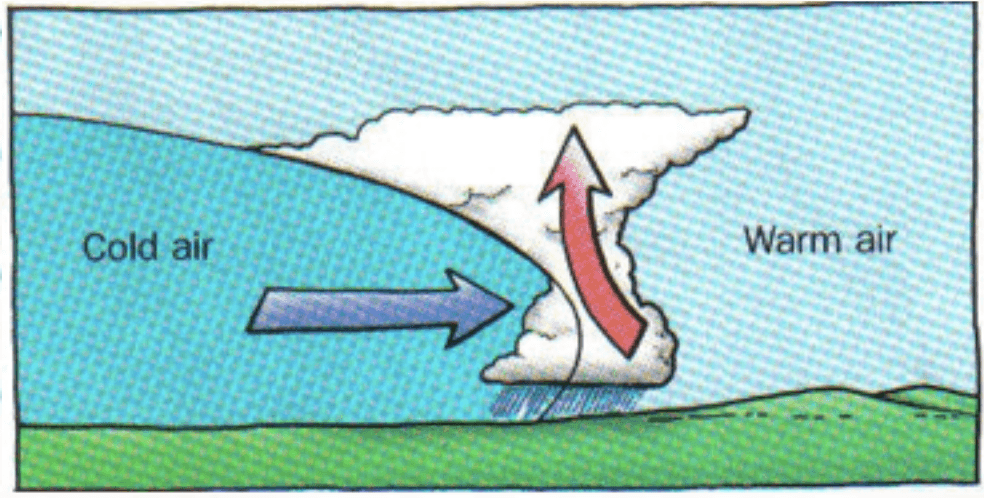
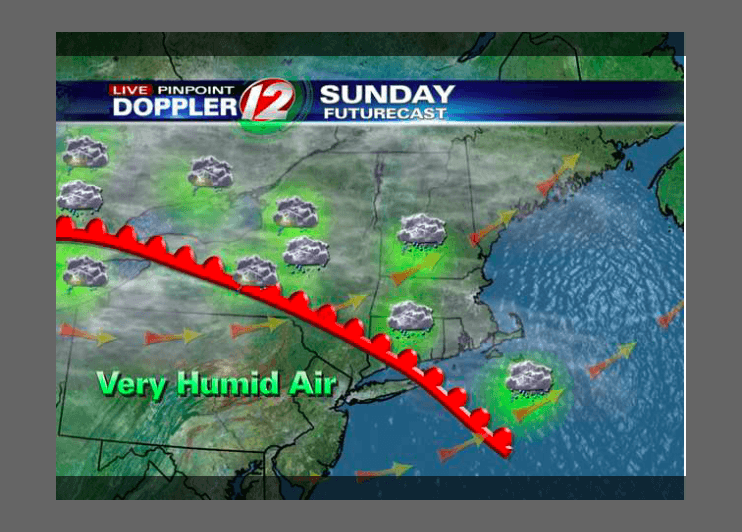
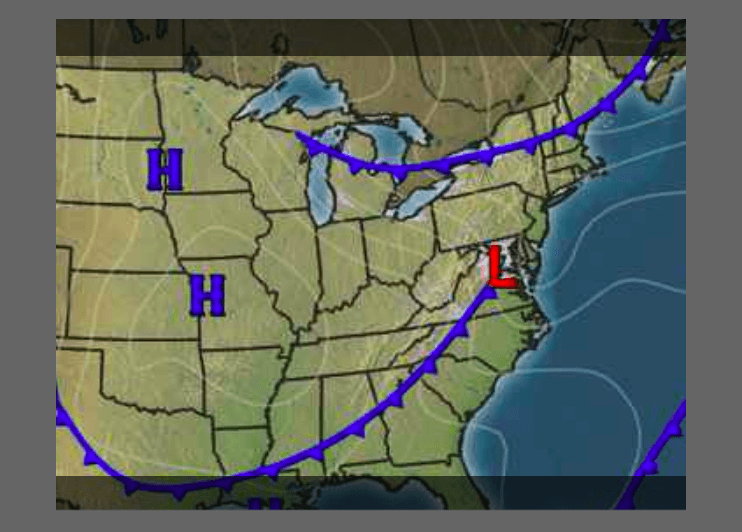
Name that front.

a)

Cold Front

b)

Warm Front

c)

Stationary Front

d)

Occluded Front

12.

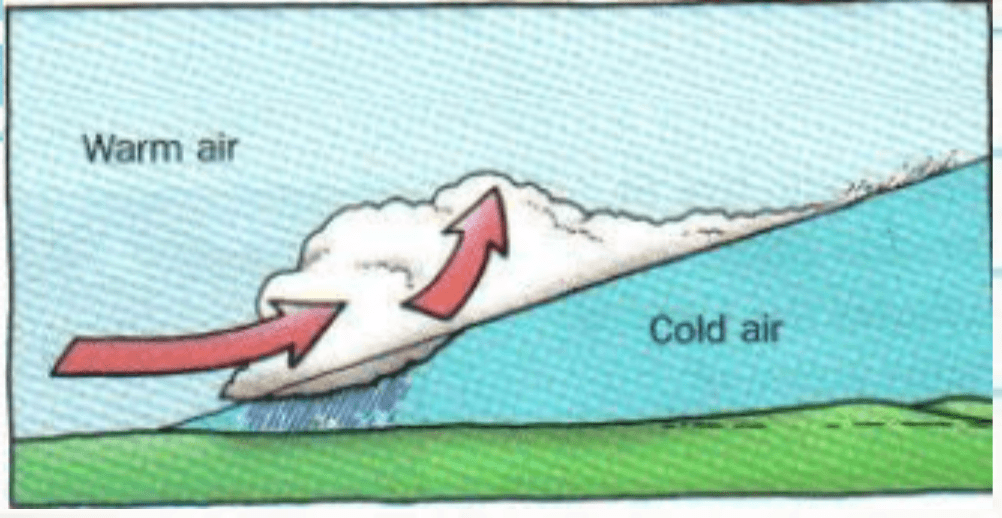
Name that front.

a)

Cold Front

b)

Warm Front

c)

Stationary Front

d)

Occluded Front

13.

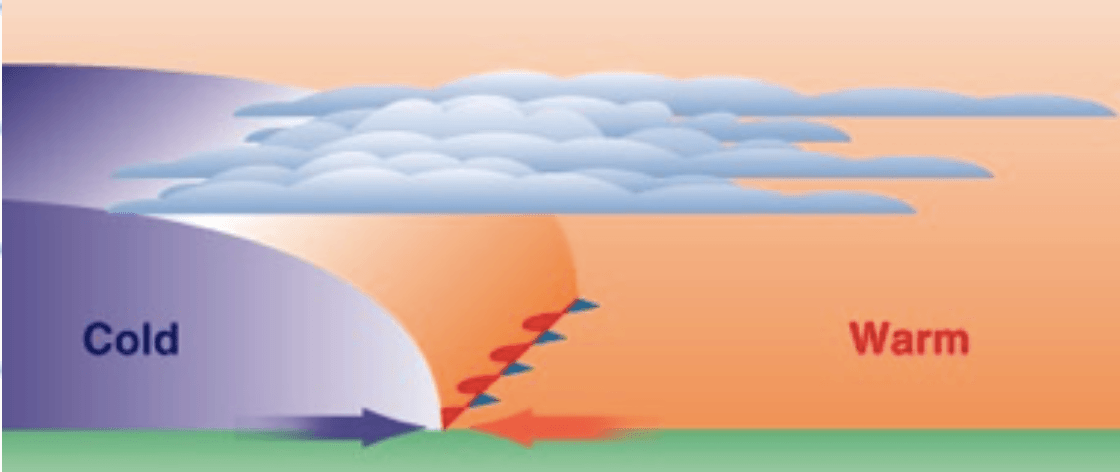
Name that front.

a)

Cold Front

b)

Warm Front

c)

Stationary Front

d)

Occluded Front

14.

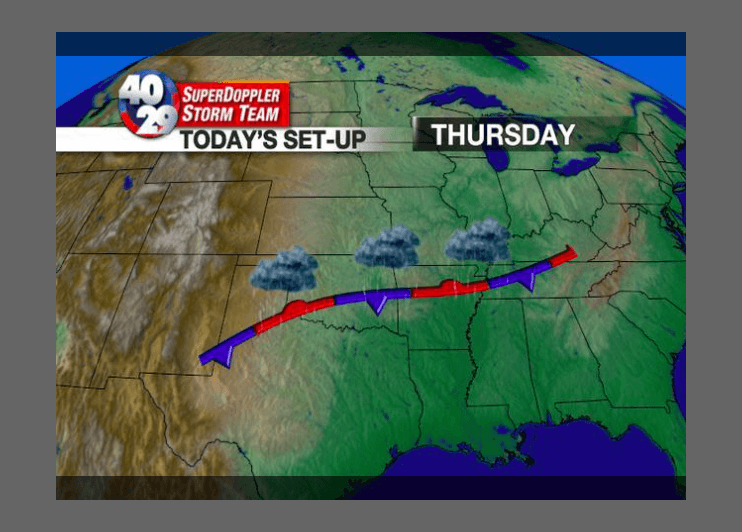
Name that symbol.

a)

Cold Front

b)

Warm Front

c)

Stationary Front

d)

Occluded Front

15.

Name that symbol.

a)

Cold Front

b)

Warm Front

c)

Stationary Front

d)

Occluded Front

16.

Name that symbol.

a)

Cold Front

b)

Warm Front

c)

Stationary Front

d)

Occluded Front

17.

Brings some clouds and gentle rains.

a)

Cold Front

b)

Warm Front

c)

Stationary Front

d)

Occluded Front

18.

Neither air mass really takes over the other.

a)

Cold Front

b)

Warm Front

c)

Stationary Front

d)

Occluded Front

19.

Cold dense air slides underneath warm air. The warm air is forced up, cools, and condenses.

a)

Cold Front

b)

Warm Front

c)

Stationary Front

d)

Occluded Front

20.
How do we name air masses?
a)
Water and temperature
b)
Air pressure
c)
Humidity and temperature
d)
Cold and warm
21.
How do we characterize an air mass that forms over the ocean?
a)
Dry
b)
Wet
c)
Cold
d)
Warm
22.
How do we characterize an air mass that forms over land?
a)
Dry
b)
Wet
c)
Cold
d)
Warm
23.
How do we characterize an air mass that forms over near the equator?
a)
Dry
b)
Wet
c)
Cold
d)
Warm
24.
How do we characterize an air mass that forms near the poles?
a)
Dry
b)
Wet
c)
Warm
d)
Cold
25.
What types of air masses form over oceans?
a)
Maritime
b)
Continental
c)
Polar
d)
Tropical
26.
What's the humidity and temperature of a continental tropical air mass?
a)
Wet and cold
b)
Dry and warm
c)
Wet and warm
d)
Dry and cold
27.
What's the humidity and temperature of a maritime tropical air mass?
a)
Wet and cold
b)
Dry and warm
c)
Wet and warm
d)
Dry and cold
28.
A wet and cold air mass would be a...
a)
Maritime polar
b)
Continental polar
c)
Maritime tropical
d)
Continental tropical
29.
A dry and cold air mass would be...
a)
Maritime polar
b)
Continental polar
c)
Maritime tropical
d)
Continental tropical
30.
What part of the water cycle does this picture show?
a)
condensation
b)
precipitation
c)
evaporation
31.
Which of these is an example of precipitation?
a)
snow
b)
air
c)
clouds
d)
vapor
32.
During which stage do clouds form?
a)
condensation
b)
evaporation
c)
precipitation
33.
What is C?
a)
Evaporation
b)
Condensation
c)
Precipitation
d)
Runoff
34.
What is A?
a)
Evaporation
b)
Condensation
c)
Precipitation
d)
Runoff
35.

The main source of energy is

a)

Wind

b)

Nuclear

c)

Sun

d)

Geothermal

36.
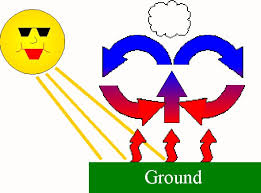
Warm air rises and the cool air sinks demonstrates this type of heat transfer. 
a)
conduction
b)
convection
c)
radiation
d)
Insolation 
37.
What is the original source of most of the energy that people use?
a)
Energy that reaches Earth by radiation from the sun.
b)
Energy that reaches the earth by convection from the sun.
c)
Energy that reaches the earth by radiation from the core.
d)
Energy that reaches the earth by conduction from the core.
38.
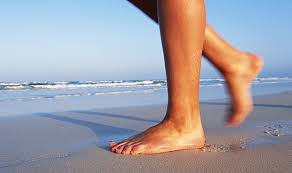
Walking on the warm sand sand with your bare feet demonstrates this type of heat transfer. 
a)
conduction
b)
convection
c)
radiation
39.

A chair is placed several feet from a fireplace. The fireplace has a glass screen. The side of the chair facing the fireplace gets warm because of

a)

conduction

b)

convection

c)

radiation

40.

You get sunburned due to __________ from the sun.

a)

conduction

b)

convection

c)

radiation

41.

A pot is placed directly on a stove. The pot gets hot due to

a)

conduction

b)

convection

c)

radiation

42.

Near the ceiling of a room the air is warmer. The warm air rises because of

a)

conduction

b)

convection

c)

radiation

43.
What is climate?
a)
What's happening in space at a time and place.
b)
What's happening in our atmosphere at a time and place
c)
The average weather over many years
d)
The average temperature over many years.
44.
What is weather?
a)
What's happening in space at a time and place.
b)
What's happening in our atmosphere at a time and place.
c)
The average weather over many years
d)
The average temperature over many years.
45.
What kind of precipitation is formed when water falls from the clouds and lands on the ground as liquid water?
a)
Hail
b)
Sleet
c)
Rain
d)
Snow
46.

Which two conditions are required for cloud formation?

a)

high humidity & warm temperatures

b)

high humidity & cool temperatures

c)

warm temperatures & the presence of particles

d)

cool temperatures & the presence of particles

47.

What is precipitation?

a)

solids falling from the sky

b)

precipitation

c)

any form of water that falls from clouds and reaches earth's surface

d)

liquids falling from the sky