
NEW
Font size
 Worksheets
Unit 2 - Motion - Test Review
Total questions: 55
Worksheet time: 1hrs 7mins
To report the ____ of an object, we must specify both its speed and its direction .
Speed
Velocity
Displacement
Acceleration
The speedometer in your car tells you the ____ of your car.
acceleration
average speed
instantaneous speed
velocity
inertia
The rate of change of an object’s velocity is
Speed
Acceleration
Constant speed
Displacement
An object that is neither speeding up nor slowing down is travelling at a
Negative speed
Constant speed
Accelerating speed
vector
In which of the following conditions does a car NOT accelerate?
A car moves at 80km/hr on a flat, straight highway.
The car slows from 80km/hr to 35 km/hr.
The car turns a corner
The car speeds up from 35 km/hr to 80 km/hr.

This is a graph of a student riding to school. What can you tell about the motion of the bike rider from point B to C?
The rider is accelerating.
The rider is returning at a constant speed.
The rider is stationary.
The rider has negative acceleration.

What can be said of the rider from point C to D?
The rider is accelerating.
The rider is moving back toward the start.
The rider is moving forward at a constant speed.
The rider is moving forward at a faster speed than from A to B.

What is the average speed of the rider?
0.18 km/min
5 km/min
45 km/min
50 km/min^2

What can you tell about the motion of the object from point B to point C?
The object is moving at constant speed.
The object is moving back toward the start.
The object is experiencing positive acceleration.
The object is experiencing negative acceleration.

Which of the following represents a stationary object on this graph?
Point A-B
Point B-C
Point C-D
Point D-E
A car approaches a red light. The car would have a negative acceleration when
The driver applies the brakes
When the driver is at a complete stop
Before the driver applies the brakes
Only when the driver is in reverse.

Which pair of graphs show acceleration ?
B and C
B and D
C and D
D and E
B and F

Which graph shows constant (non 0) speed?
A
B
D
E

Which graph shows a stationary object?
A
B
C
D

Which graph shows an object experiencing unbalanced forces?
A
B
C
D
None of the graphs

Which graph shows constant speed ?
A
B
C
D
E

Which graph shows a stationary object?
A
B
D
E
None of these

Which graph shows an object experiencing balanced forces?
A
B
D
E
F

Ben makes five paper helicopters with different wing lengths. He drops them the same way from a height of two meters for five trials each. He records the amount of time it takes for each helicopter to fall to the ground.
What is the independent variable?
Dropping the same way
Wing Length
Amount of time it takes the helicopter to hit the floor
Dropping from the same height
Ben makes five paper helicopters with different wing lengths. He drops them the same way from a height of two meters for five trials each. He records the amount of time it takes for each helicopter to fall to the ground.
What is the dependent variable?
Dropping the same way
Wing Length
Amount of time it takes the helicopter to hit the floor
Dropping from the same height

Velocity is speed with __________________________.
a unicycle helmet
direction
fight
Jose wandered 4 km at 2 km/hr. How long did Jose wander?
2 hours
8 hours
0.5 hours
2 km
A vehicle travels 2345 m in 315 s toward the evening sun. What is its speed?
7.44 m/s
0.13 m/s
738,675 m/s
7.44m
How long will it take to go 150,000 m traveling at 50 km/hr?
3000 hours
3000 sec
3 hours
3 sec
It took Shawn 6 hours to walk to Susan's house at 2 km/hr. How far is it between Shawn's house and Susan's house?
12 km
3 km
12 hours
3 hours
Which of these is a way that an object might accelerate?
What two variables are needed to calculate the speed of an object?
s = tdDistance and direction
Distance and time
Direction and time

Which of the following describes a measurement that has both magnitude and direction?
Scalar quantity
Vector quantity
What would be the displacement of a Nascar Driver who just crossed the finish line at the Daytona 500?
500 miles
500 meters
1000 miles
0 meters
On a Saturday afternoon, you drive 30 miles directly east to visit grandma. You then drive 20 miles back the way you came to stop at a friend’s house. What is your displacement at your friends house?
10 meters East
10 meters West
20 meters West
50 meters East

What is the object doing from 4s to 8s?
Moving backwards at a constant speed
Speeding Up
Slowing Down
20 m/s

How could you describe the object's motion after 9.0s?
It isn't moving
It is moving backwards
It is slowing down
It has 0 acceleration

What is the object's speed at 9.0 seconds?
0 m/s
20 m/s
- 20 m/s
Not enough info

Which of the following does the object NOT do up until 4 seconds?
Speed up
Change Accelerations
Move forward
Slow Down
In which situation would a bicycle rider NOT be accelerating?
If her direction and speed were unchanged.
If her direction changed and speed was constant.
If her speed increased and direction was unchanged.
If her speed decreased.

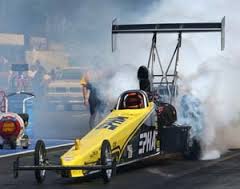
In 1970, Don “Big Daddy” Garlits set what was then the world record for drag racing. He started at rest and accelerated at 16.5 m/s2 (about 1.68 times free-fall acceleration) for 6.5 s. What was Garlits’s final speed?
107 m/s
107 m/s2
59 m/s
59 m/s2
If someone runs a mile at 5 m/s the whole time, what is his acceleration?
0 m/s2
5 m/s2
2.5 m/s2
1 m/s2

