
 Worksheets
Unit 2: Biomolecules and Enzymes Study questions
Total questions: 48
Worksheet time: 34mins

The substrates in green are considered to be...
Reactants
Products

When the Enzyme and Substrate combine at the Active site this is known as the...
Subtrate entering active site
Enzyme/Product Complex
Enzyme Substrate Complex
Products leaving active site of enzyme

What is the ideal pH for Salivary Amylase?
4
8
9
6

What happens to the Enzyme Pepsin when the pH reaches 4?
Which chemical reaction is responsible for using enzymes to put monomers together while releasing water?
Dehydration Synthesis
Hydrolysis
Check all the correct items regarding Hydrolysis
Releases water as a by product
Breaks Polymers up into monomers
Water is a reactant and used to break up the polymer
A catabolic reaction that breaks molecules apart.
True or False: An enzyme only has 1 job.
True
False
True or False: There is only 1 type of enzyme in the human body
True
False

Look at the graph, why is the graph line flat? What happened to the enzyme?

What is happening to the enzyme at the circle spot?
The Enzyme denatured
The Enzyme is saturated. There are no more spots for the substrates to bind.
The Rate of reaction increases
The saturation concentration decreases
Which factors denature an enzyme?
Temperature
Substrate Concentration
pH
Which factors affect the rate of the reaction of the enzyme?
Temperature
Substrate Concentration
pH


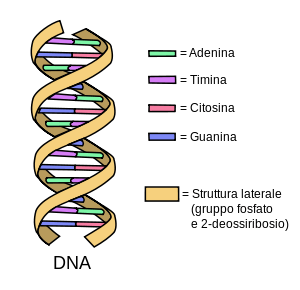
Which of the following is represented in the image?
Nucleotide
Carbohydrate
Lipid
Protein
What biomolecules are NOT used for energy (two answers, choose both before continuing)?
Carbohydrates
Lipids
Proteins
Nucleic acids
Which of the following is NOT a lipid?
Fats
Oils
Waxes
Proteins
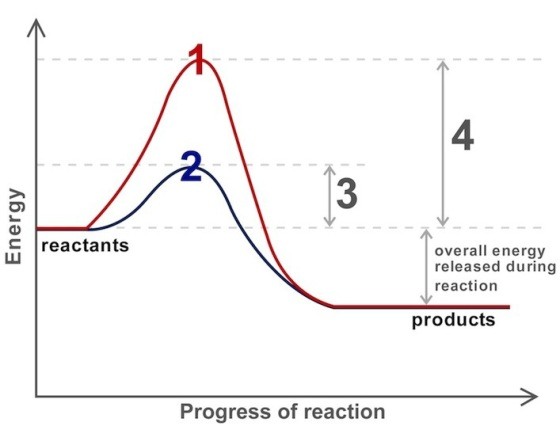
Which color line represent a reaction with an enzyme present?
Blue
Red
Both
Neither
The specific location where the substrates bind to the enzyme is called the
specific site
appropriate site
active site
ignition site


If enzyme 4 is denatured (stops working), the levels of which substance will increase?
In living cells, enzymes act as catalysts, which may reduce the amount of activation energy required for a chemical reaction to occur. In the graphs below, pathway x is a solid line representing the uncatalyzed reaction. The dotted line shows the catalyzed reaction. Which graph best illustrates the changes in a reaction when the catalyst reduces the amount of energy required?


The diagram below shows the general structure of an amino acid. Which type of molecule is formed from amino acids?
lipids
proteins
carbohydrates
nucleic acids
What will most likely happen if an appropriate enzyme is added to a chemical reaction?
The reaction rate will increase.
The equilibrium of the reaction will be maintained.
The reaction rate will decrease.
The reaction will stop.
The human body maintains a temperature of around 98.6 degrees at all times. Enzymes are involved in almost every chemical reaction in the body. Which of the following describes the connection between these two statements?
Enzymes function best at a specific temperature.
The body needs to be warm to prevent hypothermia.
The body is kept relatively warm to prevent too much enzyme action.
There is no connection between the two statements.

The enzyme ____________ breaks down the sugar_____________
Lactase, Lactose
Lactose, Lactase
The enzyme Lipase breaks down__________
Proteins
Sugars
Lipids
Lactose

When the temperature increases about 40 degrees Celcius, what happens to the enzyme reaction rate?
The enzyme reaction rate decreaes
The enzyme reaction rate increases
The enzyme denatures at 50 degrees celcius
The enzyme reaction rate stays the same

The Es are Enzymes. If E2 is denatured which product would be effected?
A
B
C
D
Which is the substrate for Enzyme 3 (E3)?
A
B
C
D
Which is the product for Enzyme 3 (E3)?
A
B
C
D
Which of the following are sugars? (look at the root word and endings)
Maltase
Maltose
Lactose
Lactase
An example of a monosaccharide would be glucose. What does "Saccharide" mean?
Glucose
Protein
Lipid
Sugar
When you see the ending "-ose" that means we are looking at a....
sugar
Lipid
Protein
nucleic acid.
Lysosomes are organelles that clean up inside the cell. What does Lys mean?
To put together
To break down
To build up
To encourage.

