
 Worksheets
ICP Unit 3 Review
Total questions: 60
Worksheet time: 1hrs 2mins

Rows on the periodic table are called ___________.
Periods
Sentences
Groups
Families

The columns in the periodic table are called ___________.
Towers
Periods
Groups
Clans
What do all elements in the same period have?
same number of shells
same number of electrons
belong in the same family
Elements in the same group have __________
Similar Properties
Same number of shells
Similar Mass
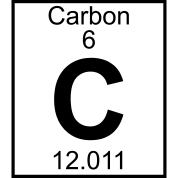
Elements in the same group have the same
Properties
Number of electrons
Number of protons
Nucleus
Which of the following elements are in Group 18 in the Periodic Table of elements?
Helium and oxygen
Helium and neon
Hydrogen and oxygen
Helium, hydrogen and oxygen

Name group 1 on the periodic table.
alkali metals
alkaline earth metals
noble gases
noble gases
halogens

Name group 2 on the periodic table.
alkali metals
alkaline earth metals
noble gases
transition metals

Name group 18 on the periodic table.
alkali metals
alkaline earth metals
transition metals
noble gases

Name groups 3 - 12 on the periodic table.
noble gases
halogens
metalloids
transition metals

Name group 17 on the periodic table.
transition metals
metalloids
halogens
alkali metals


What are the three main groups of the periodic table?
groups
metal
nonmetals
metalloids
periods
This element has two valence electrons and two energy levels?
Beryllium (Be)
Lithium (Li)
Zinc (Zn)
not able to conduct heat or electricity, little to no metallic luster
Non-metals
noble gases
atomic mass
Neutron
The electrons in the outermost shell (main energy level) of an atom; these are the electrons involved in forming bonds
alkali metals (group 1)
Halogens (Group 17)
atomic number
valence electrons
metalloids (semimetals)
Elements that occur in vertical columns on the periodic table.
an element that has both metallic and nonmetallic properties
not able to conduct heat or electricity, little to no metallic luster
found in group one of the periodic table; highly reactive
The atomic mass of an element is the ___.
average of the mass number and the atomic number for the element
weighted average of the masses of the isotopes of the element
total mass of the isotopes of the element
total number of subatomic particles in the nucleus
one-twelfth the mass of a carbon-12 atom
atomic mass
atomic mass unit (amu)
metalloid
atomic number
Why are Noble Gases unreactive?
They are colorless gases.
They have very high atomic masses.
They have very few electrons.
They have 8 electrons in their valence shell.

Which of the following metals is the LEAST reactive?
Rb
Sr
Al
Fe
Which of the following nonmetals is the MOST reactive?
C
I
F
S

On the periodic table, elements on the right side of the "stair-step" line are classified as:
nonmetals
metals
gases
Halogens
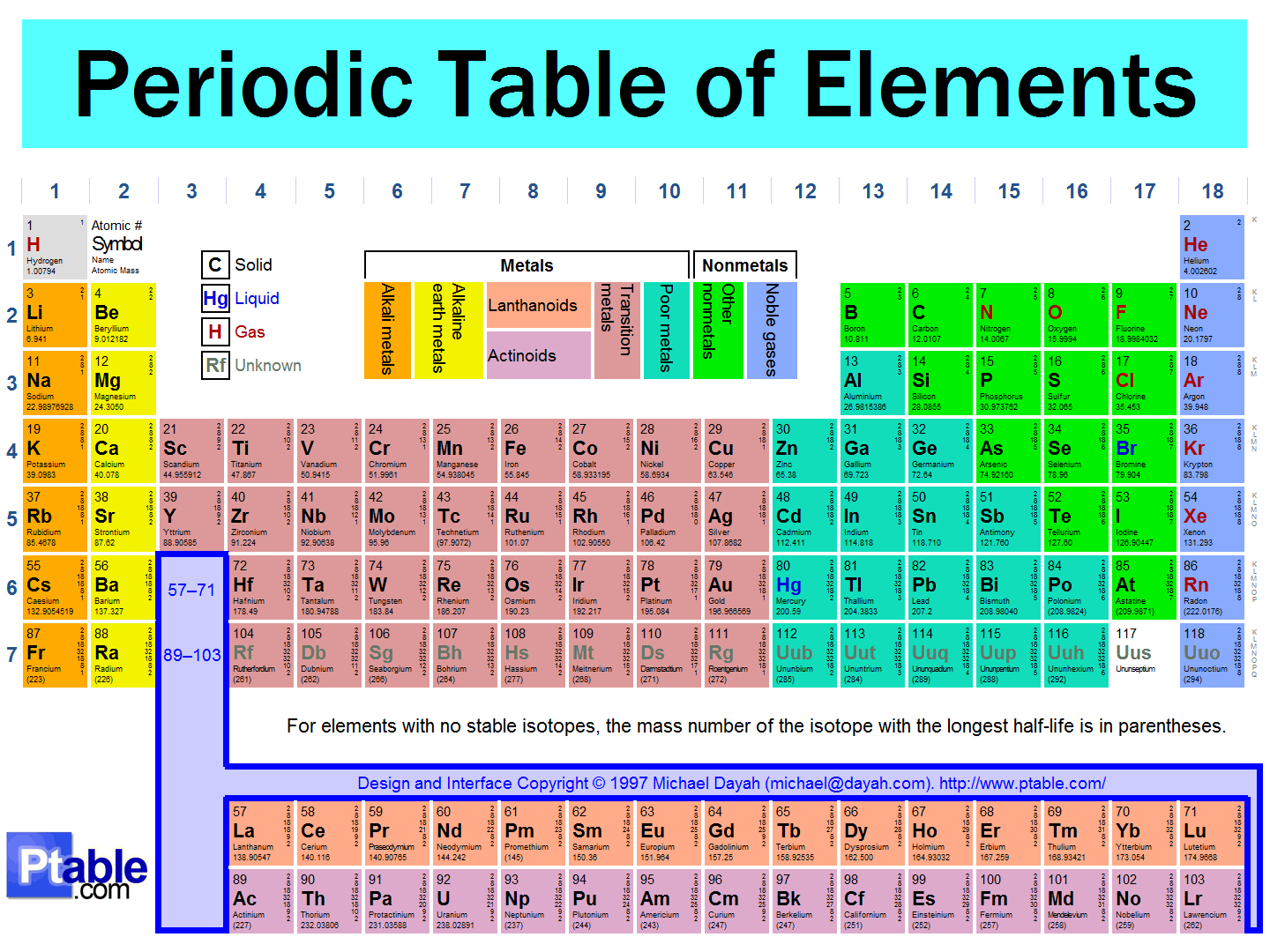
These elements located on the "stair-step" line are sometimes called "semiconductors."
Metals
Nonmetals
Metalloids
Groups


Elements in the same group or family have the same number of
neutrons
valence electrons
electrons
energy levels
Which two elements are in the same period?
Boron and Carbon
Potassium and Sodium
Lithium and Magnesium
Zinc and Nitrogen

Which element listed below is a nonmetal?

Out of all the lists below, which list contains the three elements that are most alike in their chemical properties?
Fluorine, chlorine, bromine, iodine, and astatine make up Group 17, the halogens. Why are these elements grouped together?
They all have the same atomic number.
They are all nonreactive gases with similar physical properties.
Their atoms all have eight electrons in their outer energy levels.
They are all very reactive nonmetals with similar chemical properties.
Look at the periodic table. Which of the following lists of elements form a group on the periodic table?
Li, Be, B, C, N, O, F, and Ne
He, Ne, Ar, Kr, Xe, and Rn
B, Si, As, Te, and At
Sc, Ti, V, Cr, Mn, Fe, Co, Cu, Ni, and Zn

If an element is in group number 15 you know it has _____ valence electrons.
1
2
5
15

You read the periodic table from left to right starting at the top left corner with Hydrogen, increasing the number of _______ by 1 each time you move over a square.
protons
neutrons
electrons

The most reactive group of non-metals is group ____.
1
2
17
18

The most reactive group of metals is in group number _____.
1
2
17
18

The only stable group on the periodic table is group ____.
1
2
17
18
In their outermost energy levels, sodium has 1 electron, carbon has 4 electrons, fluorine has 7 electrons, and neon has 8 electrons. Which two elements are the most reactive?
sodium and fluorine
sodium and carbon
fluorine and neon
neon and carbon
At room temperature, none of the metals are
solids
liquids
gases
liquids or gases

