
 Worksheets
Earth Science Final Exam
Total questions: 60
Worksheet time: 3600secs

The graph shows the observed water levels, in feet (ft), for a tide gauge located at Montauk, New
York, on the easternmost end of Long Island, from January 24, 2008 to noon on January 25, 2008.
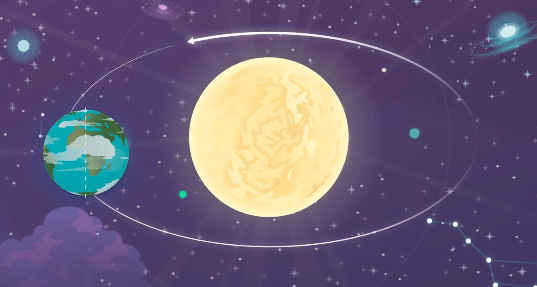
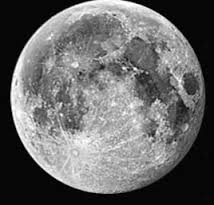
What causes the water-level variation pattern shown by the graph?
Earth's rotation and the gravitational pull of the Moon
changes in wind velocity produced by coastal storms
changes in magnetic orientation of the North American Plate
Earth's revolution and the distance from the equator


What's the main cause of most earthquakes?
Pressure from within Earth's crust
Hurricanes
Human activity
Changes in temperature within the earth's mantle

Around what time did the first P wave get detected?
100 sec
120 sec
150 sec
160 sec

Which location is farther from the epicenter?
Seismogram B (top)
Seismogram C (bottom)
What is magma?
pieces of the Earth's crust
molten rock inside of a volcano
small rock
plates that meet


Identify this coastal feature formed by erosion and deposition.
Sandbar
Barrier Island
Seacliff
Dune

What is a carbon sink?
Something that adds to the atmosphere.
Something that removes carbon from the atmosphere.
Something that adds carbon to the earth's crust.
Something that removes carbon from the earth's crust.

The warm, strong current off the coast of North Carolina is the
Gulf Stream
California Current
North Equatorial Current
Brazil Current

The image shows various stages in the water cycle. During which stage does water flow back towards the sea as runoff?
W
X
Y
Z
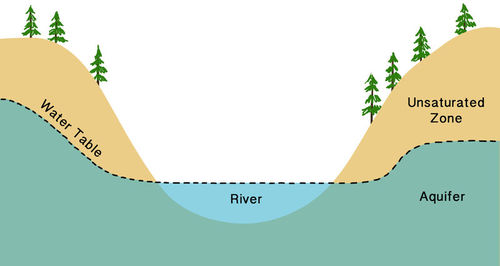
What is the best definition of a water table?
The level to which a river rises when it floods
The boundary between the land and the ocean
The top of the saturated zone in an aquifer
The bottom of the saturated zone in an aquifer
The top of the unsaturated zone in an aquifer
What is infiltration?
The process by which water sinks into the ground
The zone where there are still air spaces left between the particles.
The process by which water vapor turns into liquid water and forms fog or clouds.
The process by which water does not sink into the ground, but rather travels along the surface.

What process causes liquid water to evaporate from plant leaves and enter the atmosphere as water vapor?
evaporation
infiltration
precipitation
transpiration
condensation

Which soil would have the greatest permeability rate after a rainstorm?
sand (0.02 cm)
silt (0.002 cm)
clay (0.0002 cm)
What is a river basin?
the water in a river
land that water flows across or under on its way to a river
land around smaller streams, lakes, or ponds
the channel that a river flows in
What are the 3 main fossil fuels?
Coal, Oil, and nuclear fuel
Coal, Oil, and Natural Gas
Electricity, Gas, Petroleum
Coal, Oil, Non-renewable Resources

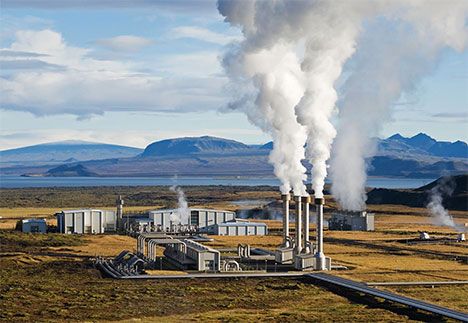
Which one of these is NOT a type of renewable energy?
solar
wind
biomass
nuclear

1 – generator converts mechanical energy into electrical energy
2 – wind turns the wind turbine blade
3 – the gear box transfers mechanical energy to the generator
4 – electricity is transferred to the grid


What is climate?
the condition of the atmosphere at any given time and place
cloud cover and temperature
precipitation and humidity at a given time and place
weather conditions in an area over a long period of time
At which latitude would you expect to find the warmest air temperatures?
23.5° S
0°
66.5°N
66.5°S
The areas located between 23.5°N and 66.5°N and 23.5°S and 66.5°S. These zones have hot summers and cold winters and usually have four seasons.
Polar Climate Zones
Temperate Climate Zones
Tropical Climate Zones
Oceanic Climate Zones
What are the three main climate zones?
tropical, thermal, polar
tropical, temperate, polar
cold, super hot, blah
polar, tropical, humid

Which of the following are greenhouse gases?
Carbon dioxide
Methane
Water vapor
All answers are correct

The difference between weather and climate is that climate is:
The average, year-to-year conditions
The day-to-day conditions
Described in terms of months at a time
B and C are both correct

In the woods, there are ducks and mice. They both compete for grasshoppers as the only source of food in that area at that time. The ducks outcompete the mice, and the mice die out in that area. This is an example of:
Neutralism
Commensalism
The competitive exclusion principle
Mutualism

In an ecosystem, there are populations of moose, rabbits, grass, and pine trees. Suddenly, a fire blazes through the area, which kills all of the populations. As the months go on, new species of grass begin to take root. This attracts animals, and eventually the ecosystem is restored.
What type of ecological succession happened?
Primary succession
Secondary succession
Tertiary succession
None of the above

In this photo, what is an abiotic factor?
Deer
Grass
rain

What is this picture describing?
It is describing natural selection.
It is describing direct competition between flamingos and ducks.
It is describing abiotic factors of the tundra.
It is describing the niche of each bird.

What Biome is also known as the grasslands?
Tropical Rain Forest
Desert
Tundra
Tropical Savanna


What is the correct order for this food chain?
Owl, Mouse, Grasshopper, Grass
Grass, Mouse, Owl, Grasshopper
Grass, Owl, Grasshopper, Mouse
Grass, Grasshopper, Mouse, Owl
What do omnivores eat?
Animals
Plants and Animals
Plants
Dead Animals

