
 Worksheets
Weather Concepts Review
Total questions: 37
Worksheet time: 34mins
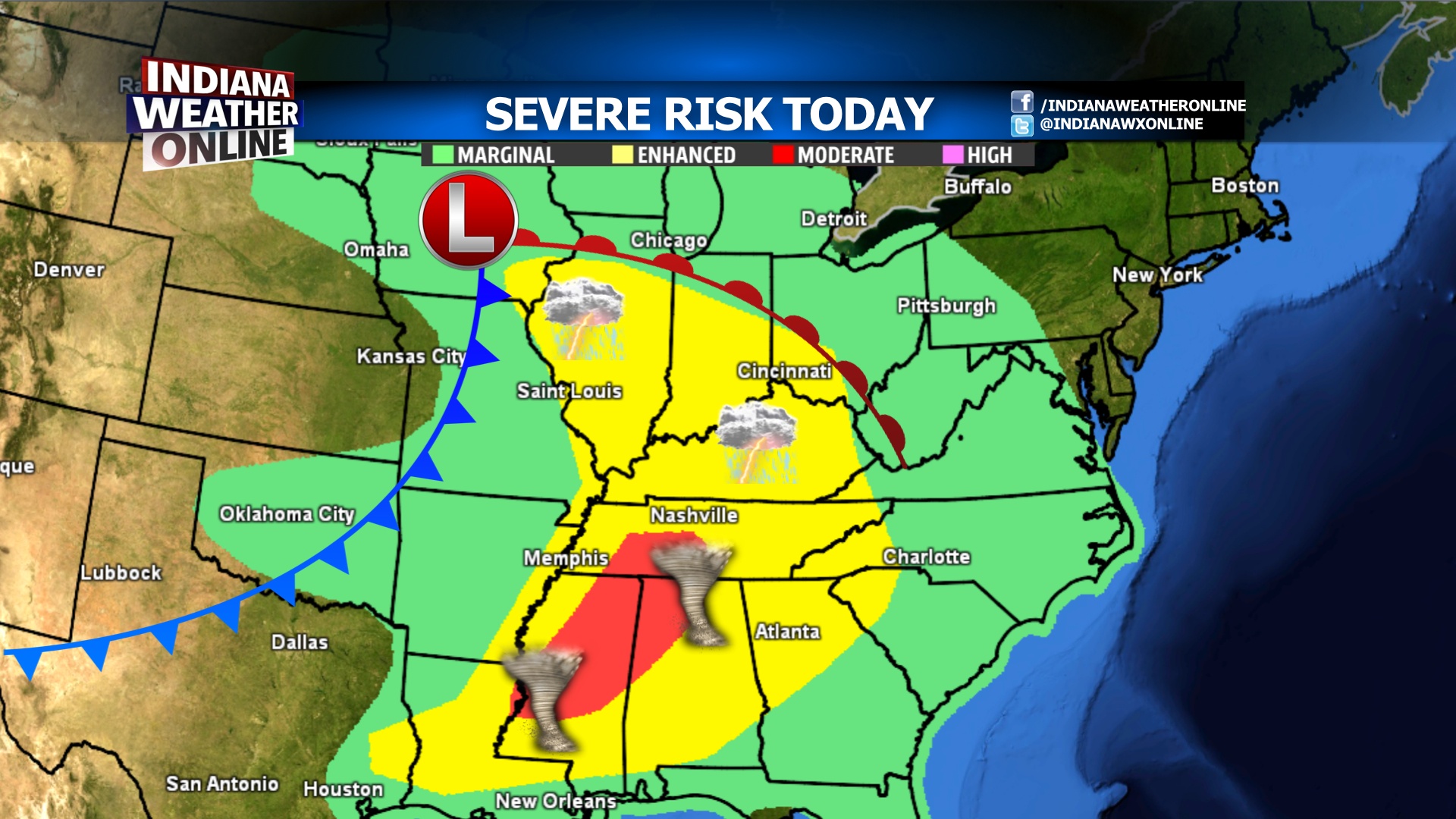
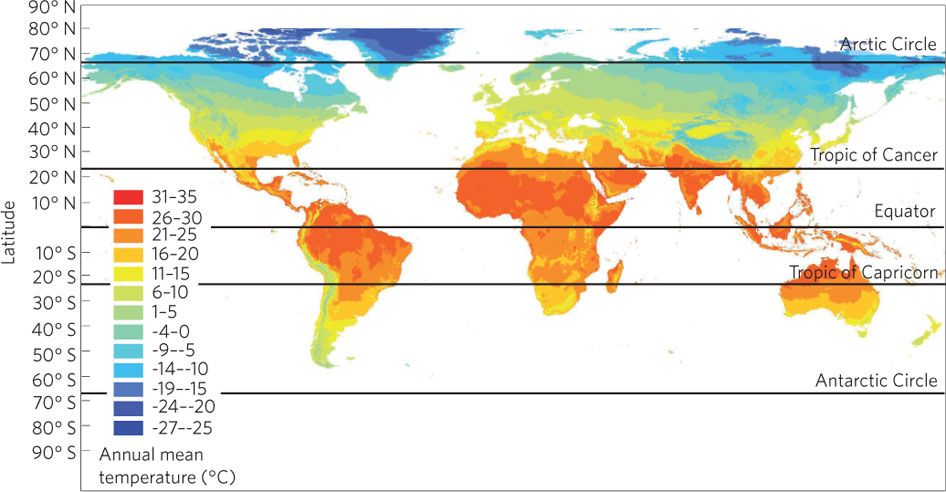
Weather or climate statement? Over the last decade average rainfall has increased in our area.
weather
climate
Weather or climate statement? There is a 60% chance of rain today.
weather
climate

There are 6 weather factors. Humidity is...
Amount of water vapor in the air
How fast molecules are moving
How the density changes due to the weather
Form of water that falls from the clouds
There are 6 weather factors. What is the horizontal movement of air that moves from areas of high air pressure to areas of low air pressure?
air pressure
wind
temperature
forecast

Clouds are one of the 6 weather factors. How do clouds form?
Liquid water is heated and evaporates and becomes water vapor in the atmosphere.
Water vapor in the atmosphere cools and condenses to become tiny liquid or frozen water droplets in the atmosphere.
Liquid water droplets float upwards and gather together in the atmosphere to form a cloud.
There are 6 weather factors. What do we call any form of water that falls from the clouds?
rain guage
humidity
acid rain
precipitation
There are 6 weather factors. ___________is a measure of the weight of air pushing on an area.
air pressure
density
volume
none of the above
What is the definition of RADIATION?
When heat is transferred through electromagnetic waves, like sunlight (UV) and heat (infrared).
When a hot liquid or gas heats up and expands, it becomes less dense and rises. When it cools down then it will sink.
When heat transfers from objects that are touching.
What kind of heat transfer happens when the sun is heating the surfaces of the Earth?
Conduction
Radiation
Convection
Density

Which term best describes how the Earth is heated because of the planet's shape?
Spirally
Unevenly
Circularly
Kinetically

Around 1/3 of the Sun's radiation is reflected while around 1/2 of the Sun's radiation is absorbed by the Earth's Surface.
True
False

Which of the following will gain and lose heat the fastest?
Water
Land
Both heat at equal rates

Which of the following will gain and lose heat the slowest?
Water
Land
Both heat at equal rates

In 1816 New England had the "Year Without Summer" where particles trapped in the atmosphere from a immense volcanic eruption blocked _____________ from the sun.
Conduction
Convection
Radiation
What is the definition of CONDUCTION?
When heat is transferred through electromagnetic waves, like sunlight (UV) and heat (infrared).
When a hot liquid or gas heats up and expands, it becomes less dense and rises. When it cools down then it will sink.
When heat transfers from objects that are touching.
A sun warmed ground will heat the air its touching above it through ______________.
Conduction
Convection
Radiation
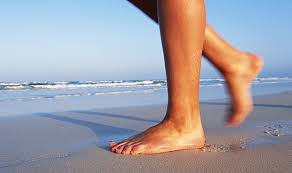
Walking on the warm sand with your bare feet demonstrates this type of heat transfer.
conduction
convection
radiation

Which direction is heat flowing in the picture?
from the hand to the ice (heat flows from hot to cold)
from the ice to the hand (heat flows from cold to hot)

In which layer of Earth’s atmosphere does most weather occur?
mesosphere
stratosphere
thermosphere
troposphere

Air masses are large bodies of air that form over surfaces. How do we describe air masses?
Temperature, like cold or warm
Measure air pressure
Both humidity and temperature
How do we characterize an air mass that forms over the ocean?
Dry (continental)
Wet (maritime)
Cold (polar)
Warm (tropical)
How do we characterize an air mass that forms over land?
Dry (continental)
Wet (maritime)
Cold (polar)
Warm (tropical)
How do we characterize an air mass that forms over near the equator?
Dry (continental)
Wet (maritime)
Cold (polar)
Warm (tropical)
How do we characterize an air mass that forms near the poles?
Dry (continental)
Wet (tropical)
Warm (tropical)
Cold (polar)
What is the definition of CONVECTION?
When heat is transferred through electromagnetic waves, like sunlight (UV) and heat (infrared).
When a hot liquid or gas heats up and expands, it becomes less dense and rises. When it cools down then it will sink.
When heat transfers from objects that are touching.
The measure of how closely packed atoms are in a substance.
mass
pressure
volume
density

Which statement is true?
Molecules speed up and spread out when they are cooler
Molecules slow down and compact when they are warmer
Molecules speed up and spread out when they are warmer
Temperature does not affect the movement of molecules
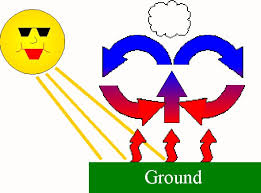

The Gulf Stream is a large ocean current that brings warm ocean water from the south to the north. What type of heat transfer is this?
conduction
convection
radiation
Which is not an example of convection in weather?
the land and sea breezes by the ocean
the decrease in temperature on cloudy days
the water cycle
the wind

Summarize the convection that occurs in the water cycle
Precipitation falls to the ground; clouds form from evaporation, the sun condenses water from the ocean and it sinks
The sun warms the ocean; water evaporates, rises, and then cools and condenses into clouds; precipitation falls to the ground.

Which best describes why there are land and sea breezes at the beach?
The temperatures of the air above the water and the land are different. As warm air rises the cool air will swoop in.
The heat of the day, the wind speed and the temperature change from day to night causes the wind to blow from the land to the ocean.

