
 Worksheets
oxygen-carbon cycles
Total questions: 35
Worksheet time: 35mins

Which type of organism gets its energy directly from the Sun?
algae
mushrooms
cows (herbivore)
decomposer
All of the carbon in existence is continually recycled in the carbon cycle.
Carbon can be found in...(check all that apply)
The atmosphere
Soil
Fossil fuels
Producers
Bodies of all living things
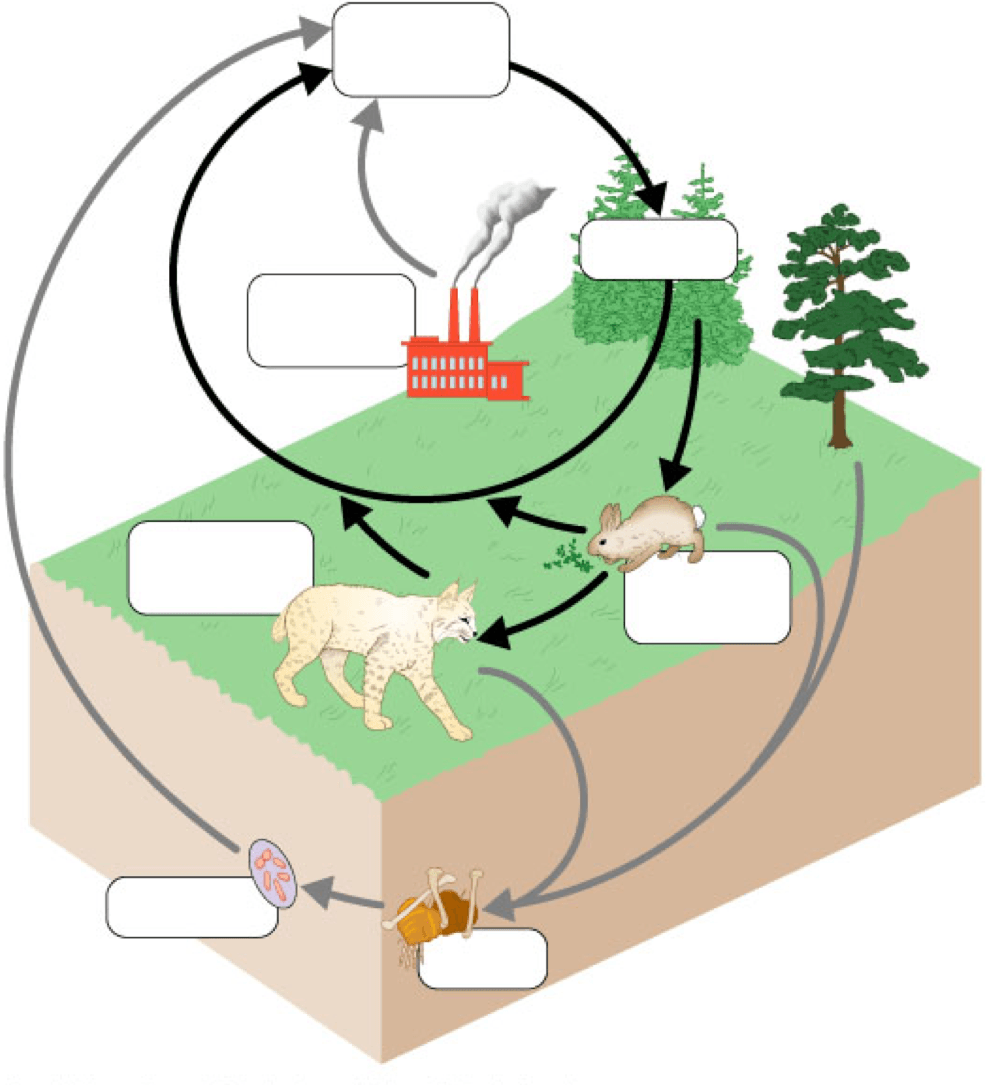
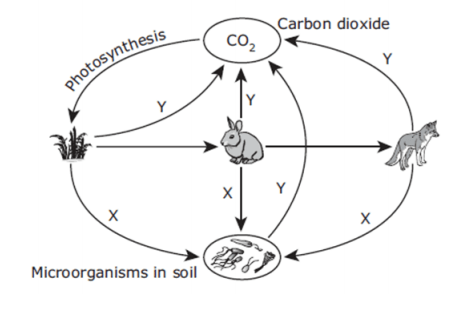
Y : Predation
Y : Decomposition
Y : Nitrogen Fixation
Y : Respiration
Plants and animals are interdependent of each other.
True
False
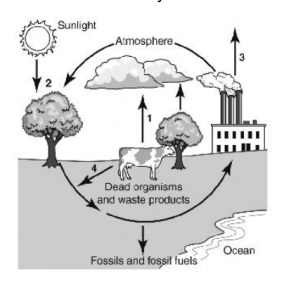
What is happening at 2?
respiration: releasing CO2
decomposing CO2 in the soil
photosynthesis: absorbing CO2
turning CO2 from the atmosphere into organic molecules
What is happening at 4?
respiration: releasing CO2
decomposing CO2 in the soil
photosynthesis: absorbing CO2
turning CO2 from the atmosphere into organic molecules
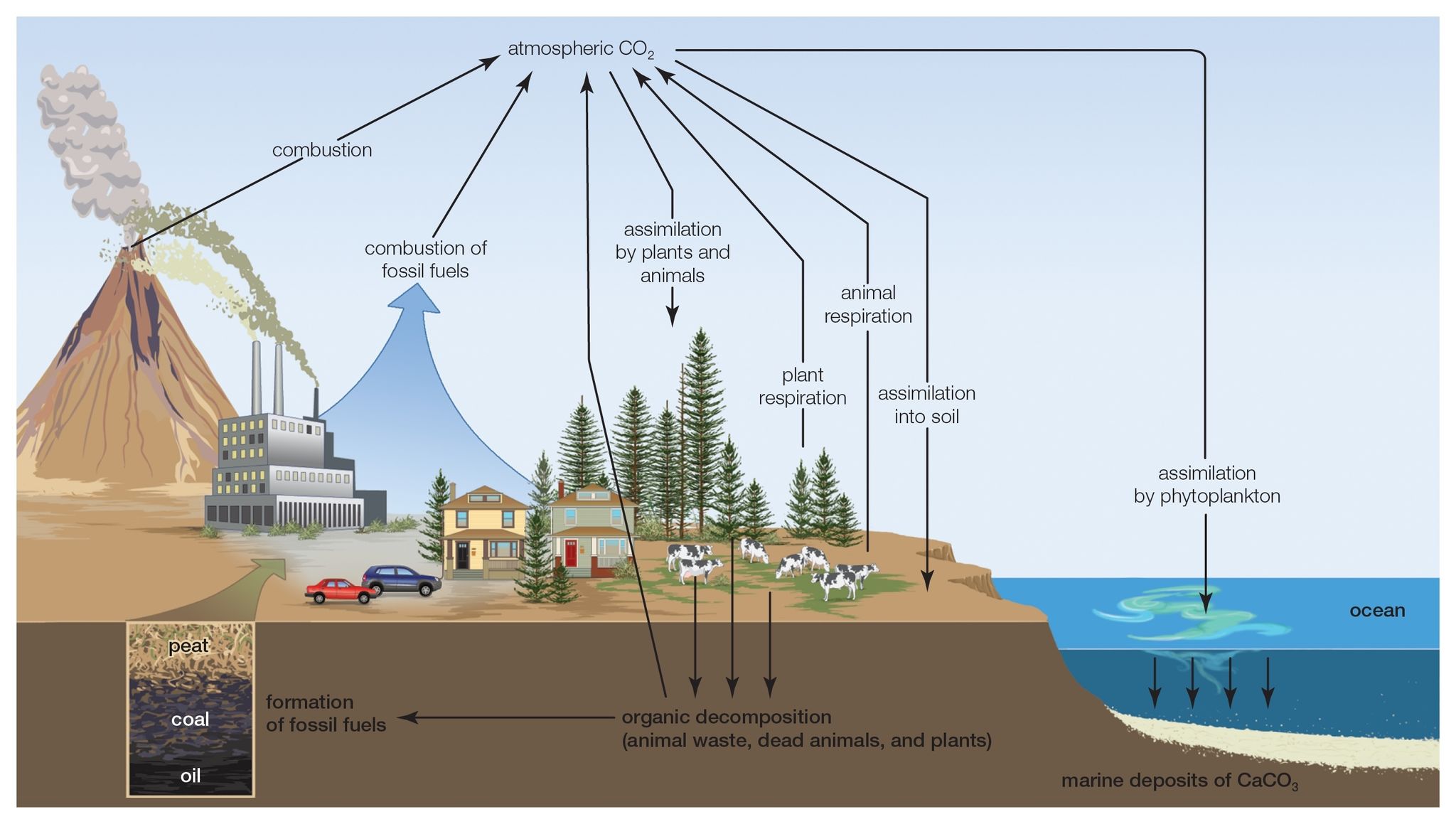
Organisms that do not decompose can be buried and become what?
water
nutrients
air
fossil fuels
Which of the following are fossil fuels?
Coal, water, oil
Oxygen, coal, oil
Coal, Oil, Natural Gas
None of the above
Which of the following organisms required oxygen for respiration? Check all that apply
fungi
trees
grass
humans
spiders
Which organisms require carbon dioxide to make their energy molecules?
algae
grass
pine tree
spider
fungi
When plants die, they can sequester (store) carbon for eons in the form of:
oil
gas
coal
limestone
When animals die, their decay under sediments can sequester (store) carbon in the form of:
oil
limestone
coal

Which of the following is true about the greenhouse effect? you can choose more than one
It is a natural process
It is caused by gasses trap heat from infrared radiation
It makes life on Earth possible
It is the cause of global warming
Identify greenhouse gases: check all that apply
water
carbon dioxide
methane gas
nitrogen dioxide (nitrous oxide)
The thin layer of gas that protects life from harmful gamma rays and X-rays is the:
ozone layer
greenhouse gas layer
lithosphere
hydrosphere

Oxygen molecules can react with solar radiation to form this three-oxygen atom molecule:
carbon dioxide
oxygen molecule
ozone molecule
Which of the following nutrients are referred to as MACRONUTRIENTS?
carbon
hydrogen
copper
nitrogen
oxygen
TRACE NUTRIENTS are...(check all that are true)
copper, calcium, iron
elements required in very small amounts for plant health
elements that may or may not be needed for plant health
elements needed in high amounts gotten from the atmosphere gases
MACRONUTRIENTS are...(check all that are true)
copper, calcium, iron
elements required in very large amounts for plant health
elements that may or may not be needed for plant health
elements needed in high amounts, gotten from the atmosphere gases and lithosphere mostly
The biosphere is made up of (check all that apply)
lithosphere
hydrosphere
heliosphere
atmosphere
Lithosphere refers to __
the Earth's gases above the crust
the Earth's areas of water
the Earth's crust
the magnetic field generated by Earth's molten iron core
Hydrosphere refers to __
the Earth's gases above the crust
the Earth's areas of water
the Earth's crust
the magnetic field generated by Earth's molten iron core
Biogeochemical means
life earth chemicals
living chemicals
earth chemical
Biosphere means
everything abiotic and biotic from the core of Earth to the surface of Earth
the atmosphere
everything abiotic and biotic from the core of Earth to the moon
area where living things on Earth are found

