Wayground logo

Free Printable Worksheets

Font size

S
M
L
XL
Worksheets

Cell Test Practice

Total questions: 38

Worksheet time: 55mins

Name
Class
Date
1.
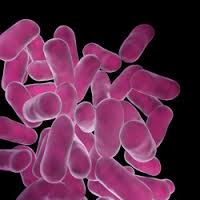
Bacteria are what type of organisms? 
a)
Prokaryotes
b)
Eukaryotes
2.
How are unicellular organisms different from multicellular organisms? 
a)
There are no differences.
b)
They are made of many cells. 
c)
They are only classified as prokaryotes.
d)
They are made of only one cell. 
3.
What is a major difference between plant cells and animal cells? 
a)
Plant cells contain mitochondria, but animal cells do not. 
b)
Plant cells have a cell wall and chloroplast, but animal cells do not. 
c)
Plant cells have a cell membrane, but animal cells do not.
d)
Plant cells contain a nucleus, animal cells do not. 
4.
Which of the following is NOT a part of cell theory? 
a)
All cells come from other cells. 
b)
Cells are the basic unit of life. 
c)
Living things are made of cells.
d)
Atoms are the basic unit of life. 
5.

Which microscope creates a 3D image of the surface of specimens?

a)

Compound Light Microscope

b)

Scanning Electron Microscope

c)

Transmission Electron Microscope

d)

None of the above

6.
Most of the cell membrane is made of...
a)
Lipids
b)
Carbohydrates
c)
Proteins
d)
Nucleic acids
7.

What forms the channels and pumps in the phospholipid bilayer?

a)

carbohydrates

b)

proteins

c)

hydrophilic heads

d)

lipids

8.

Hydrophobic means...

a)

water-loving

b)

water-fearing

c)

nonpolar

d)

lipid soluble

9.
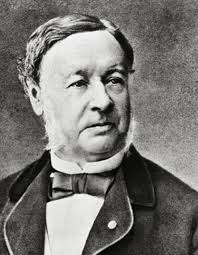
Which of the following scientists concluded that all animals are made of cells?
a)
Rudolf Virchow
b)
Matthais Schleiden
c)
Robert Hooke
d)
Theodor Schwann
10.
Which of the following scientists was the first to observe bacteria?
a)
Anton van Leuwenhoek
b)
Matthais Schleiden
c)
Robert Hooke
d)
Theodor Schwann
11.
Which of the following statements is not part of the cell theory?
a)
Cells are the basic unit of structure and function in all living things.
b)
All cells are produced from other cells.
c)
Only animal cells are composed of cells.
d)
All living things are composed of cells.
12.
The invention of the microscope made it possible for people to discover and learn about
a)
Plants
b)
Skin 
c)
Animals 
d)
Cells
13.
The ___ is the basic unit of sturucture and function of organisms
a)
atom
b)
cell
c)
matter
d)
all other answers are correct
14.

When cells are damaged, new cells are created by cell a process called cell division. How does the cell theory support this fact?

a)

It states that all cells have a nucleus which divides.

b)

It states that all living things are made up of one or more cells.

c)

It states that cells come from previously existing cells.

d)

It states that the basic units of structure and function are cells.

15.
Has membrane bound organelles
a)
Prokaryote
b)
Eukaryote
c)
both
16.
Where is the DNA found in a eukaryotic cell? 
a)
floating around in the cytoplasm 
b)
in the nucleus 
17.

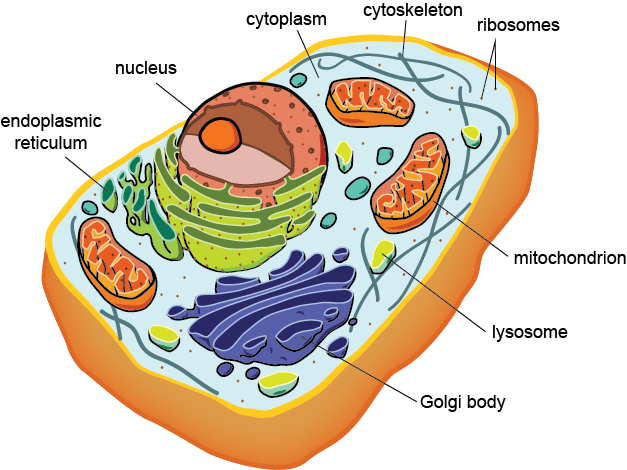
I provide structure from within the cell so it doesn't collapse inwards upon itself. I am made of micro-filaments. I am the...

a)

Cytoskeleton

b)

Cytoplasm

c)

Baconidis

d)

Cell Wall

18.
The brain or "control center" of the cell. 
a)
Mitochondria
b)
Cell Membrane
c)
Cytoplasm
d)
Nucleus
19.
The watery liquid that fills the cell: 
a)
Chromatin
b)
Nucleolus
c)
Cytoplasm
d)
Cell Membrane
20.
The "power plant" of the cell that produces energy. 
a)
Mitochondria
b)
Cytoplasm
c)
Centrioles
d)
Lysosomes
21.
"Garbage collectors" of the cell that remove waste: 
a)
Cell Membrane
b)
Centrioles
c)
Lysosomes
d)
Nucleus
22.
Sac within the cytoplasm that is full of fluid; plants have one large; stores food, water, etc.
a)
vacuole
b)
cell wall
c)
lysosome
d)
ribosome
23.
Gives the cell a rigid, box-like shape; outside of the cell membrane; in plants.
a)
cytoplasm
b)
chromatin
c)
cell wall
d)
cell membrane
24.

Cells spend most of their lives in which phase?

a)

Interphase

b)

Prophase

c)

Telophase

d)

Metaphase

25.

Cells of organisms must replicate for?

a)

Growth

b)

Replacement of dying cells

c)

Repair of damaged cells

d)

All of the above

26.

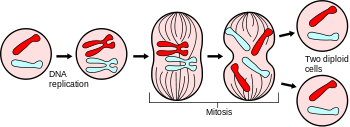
What is the correct order of the phases of mitosis?

a)

Metaphase, Anaphase, Prophase, Telophase,

b)

Pelophase, Motophase, Anaphase, Trophase

c)

Prophase, Metaphase, Anaphase, Telophase

d)

Telophase, Anaphase, Prophase, Metaphase

27.

The G1, S, and G2 are parts of which phase of the cell cycle?

a)

Prophase

b)

Interphase

c)

Telophase

d)

Anaphase

28.

How many chromosomes does a human somatic (body) cell have?

a)

46

b)

23

c)

42

d)

26

29.

How many chromosomes does a human egg or sperm (gamete) cell have?

a)

23

b)

46

c)

42

d)

26

30.

What is "crossing over"?

a)

The exchange of genes between chromosomes during meiosis that results in genetic diversity.

b)

Programmed cell death (cell suicide) to prevent the spread of mutated/cancerous cells.

c)

A type of cell division that creates gametes (sperm and egg cells).

d)

A type of cell division that results in two daughter cells each having the same number of chromosomes as the parent cell.

31.
What happens during Interphase?
a)
Mitosis and Meiosis
b)
Growth and DNA synthesis
c)
DNA synthesis and mitosis
d)
Growth and mitosis
32.
The division of the nucleus is known as:
a)
Synthesis
b)
Mitosis
c)
G1
d)
G2
33.
Uncontrollable cell growth is known as _____
a)
obesity
b)
cancer
c)
diabetes
d)
hepatitis
34.
Crossing over helps promote 
a)
male genotype
b)
genetic variation
c)
DNA replication
d)
mitosis
35.
This produces 2 identical cells.
a)
mitosis
b)
meiosis
36.
Which of the following is the correct equation for PHOTOSYNTHESIS?
a)
CO2 + light + H2O --> O2 + Sugar
b)
CO2 + sugar + H2O --> O2 + light
c)
O2 + light + H2O --> CO2 + Sugar
d)
CO2 + O2 + H2O --> Light+ Sugar
37.
Which organelle performs PHOTOSYNTHESIS?
a)
Chloroplast
b)
Mitochondria
38.

Which of the following equation explains cellular respiration?

a)

sugar+water -> salt+sunlight

b)

sugar+oxygen -> water+carbon dioxide+energy

c)

water+carbon dioxide+sunlight -> sugar+oxygen

d)

Sugar+energy -> water+carbon dioxide+oxygen