
 Worksheets
Cell Membrane, Phospholipids, Diffusion and Solutions
Total questions: 44
Worksheet time: 1hrs 28mins
Name
Class
Date
1.
What macromolecules help to make the cell membrane?
a)
Proteins
b)
Carbohydrates
c)
Phospholipids
d)
All of the above
2.
What is an isotonic solution?
a)
When solutions are in equilibrium
b)
When the solution has more solute
c)
When the solution has less solute
d)
Has a greater pressure
3.
What are the 2 parts of a phospholipid?
a)
Hydrophobic head, hydrophilic tails
b)
Hydrophobic heads, hydrophobic tails
c)
Hydrophilic heads, hydrophobic tails
d)
Hydrophilic heads, hydrophilic tails
4.
Molecules using simple diffusion move from
a)
high to low concentrations
b)
low to high concentrations
c)
no concentrations
d)
both concentrations
5.
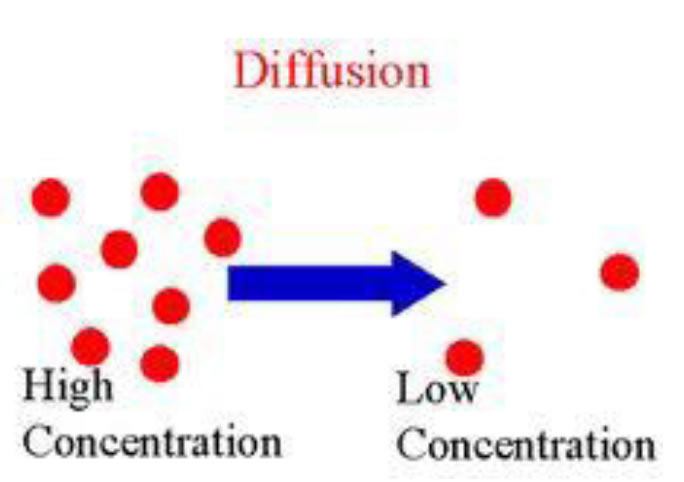
Movement of particles from high to low concentration.
a)
Passive Transport
b)
Active Transport
6.

what type of solution causes the blood cells to swell and burst.
a)
hypotonic solution
b)
hypertonic solution
c)
isotonic solution
d)
active transport
7.
What kind of transport does not require energy?
a)
Active
b)
Vacuole
c)
Passive
d)
Na/K Pump
8.
What is the significance of the cell membrane?
a)
Provides protection
b)
Maintains homeostasis
c)
Give a cell hydrophobic ends
d)
Provides cholesterol
9.
The movement of water across the cell membrane from areas of high concentration of water to areas of low concentration of water
a)
endocytosis
b)
osmosis
c)
facilitated diffusion
d)
pinocytosis
10.
The movement of molecules from an area of high concentration to areas of low concentration until equilibrium is reached.
a)
osmosis
b)
diffusion
c)
plasmolysis
d)
cytolysis
11.
What type of solution is a cell in when too much water moves into the cell and the cell bursts?
a)
hypotonic
b)
hypertonic
c)
isotonic
d)
proteotonic
12.
Will allow some molecules to pass while restricting others
a)
penetrate
b)
actively permeable
c)
selectively permeable
d)
passive transport
13.
Something is ___________ ____________
when some molecules can cross the membrane while others cannot.
when some molecules can cross the membrane while others cannot.
a)
Selectively (or Semi) Permeable
b)
Totally Transparent
c)
Liquid Licorice
d)
Heavily Patrolled
14.

What type of solution is this cell in?
a)
Isotonic
b)
Hypertonic
c)
Hypotonic
d)
diffused
15.
The substance being dissolved is called the ________
a)
solvent
b)
solid
c)
solute
d)
solvate
16.
What is a solvent?
a)
The substance that does the dissolving in a solution.
b)
The substance that is being dissolved in a solution.
c)
The mixing of different substances.
d)
The process in which neutral molecules lose or gain electrons
17.
Kool-Aid - Powder, sugar, and water
Identify the solvent
Identify the solvent
a)
water
b)
powder
c)
sugar
d)
powder and sugar
18.

The cell below is in a _________ solution.
a)
Hypotonic
b)
Hypertonic
c)
Isotonic
19.

The cell below is in a _____________ solution.
a)
Hypertonic
b)
Hypotonic
c)
Isotonic
20.

This egg has shrunk, what type of solution was it placed in?
a)
hypotonic solution
b)
hypertonic solution
c)
isotonic solution
d)
active transport
21.

What type of solution allows water to enter the plant cell?
a)
hypotonic solution
b)
hypertonic solution
c)
isotonic solution
d)
active transport
22.
An ISOTONIC solution has a(n) ______________ concentration of solute (dissolved stuff) than inside the cell.
a)
lower
b)
equal
c)
higher
23.
If a cell is placed in a HYPOTONIC solution, water will move _________ of the cell, causing it to ___________.
a)
into, swell
b)
out of, shrivel
c)
in and out of the cell, stay the same
24.

What type of solution is this cell in?
a)
Isotonic
b)
Hypertonic
c)
Hypotonic
d)
diffused
25.

What type of solution is this cell in?
a)
Isotonic
b)
Hypertonic
c)
Hypotonic
d)
diffused
26.

What type of solution is this cell in?
a)
Isotonic
b)
Hypertonic
c)
Hypotonic
d)
diffused
27.
The movement of water across the membrane for a high concentration to a low concentration.
a)
endocytosis
b)
osmosis
c)
facilitated diffusion
28.
A balance that an organism maintains by regulating what goes into and out of the cell.
a)
love
b)
peace
c)
homeostasis
d)
happiness
29.
This cell organelle helps organisms maintain homeostasis by controlling what substances may enter or leave cells.
a)
vacuole
b)
nucleus
c)
cell membrane
d)
cell wall
30.
An animal cell placed in a hypertonic (salty) solution will
a)
Stay the same
b)
Shrink- get smaller
c)
Swell- get bigger
31.
Osmosis is the movement of _____ across a membrane.
a)
food
b)
energy
c)
oxygen
d)
water
32.
What type of solution allows water to enter the plant cell?
a)
hypotonic solution
b)
hypertonic solution
c)
isotonic solution
d)
active transport
33.
The spreading of molecules from a high concentration to a low concentration.
a)
diffusion
b)
osmosis
c)
active transport
34.
Movement across the cell membrane that does not require energy is called
a)
active transport
b)
passive transport
35.

The cells seem to be swelling and about to burst what type of solution are they most likely in?
a)
Hypertonic
b)
Isotonic
c)
Hypotonic
36.

The cells seem to be shriveled and dehydrated what type of solution are they most likely in?
a)
Hypertonic
b)
Isotonic
c)
Hypotonic
37.

The cells seem to be of normal size in what type of solution are the cells most likely in?
a)
Hypertonic
b)
Isotonic
c)
Hypotonic
38.

The image indicates what type of solution the cell is in?
a)
Isotonic
b)
Hypertonic
c)
Hypotonic
39.
During diffusion
a)
substances (things) moves from high to low concentration
b)
water moves when energy is used
c)
large or oddly shaped molecules move across a cell membrane
d)
water moves from high to low concentration
40.
Ideally, your cells should be in a(n) _______ solution
a)
isotonic
b)
hypertonic
c)
hypotonic
d)
isometric
41.
When both inside and outside of a cell have the same amount of water it is said that the cell has reached a state of ___________.
a)
osmosis
b)
equilibrium
c)
diffusion
d)
hypertonic
42.
In a solution, salt is considered the _______.
a)
solvent
b)
solute
c)
solution
43.
In a scenario, salt is placed into a bowl of water. What is the solvent?
a)
salt
b)
water
c)
saltwater
44.
What does selectively-permeable mean?
a)
The cell controls what passes in and out of the cell
b)
Nothing gets through
c)
The cell lets only large substances through
100 %

