wayground logo

Free Printable Worksheets

Font size

S
M
L
XL
Worksheets

Unit 1 Final TEST

Total questions: 45

Worksheet time: 52mins

Name
Class
Date
1.

Matter is defined as anything that has

a)

mass and volume.

b)

mass and density.

c)

weight and density.

d)

volume and weight.

2.

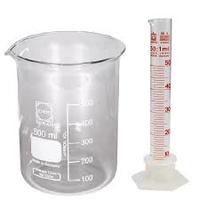
What property do these tools measure?

a)

volume

b)

mass

c)

length

d)

temperature

3.

Volume is _____________.

a)

how much matter in an object

b)

how much something weighs

c)

the amount of space a substance takes up

d)

how many atoms

4.

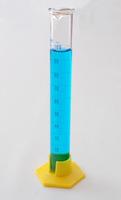
What is this?

a)

measuring tube

b)

test tube

c)

graduated cylinder

d)

pipette

5.

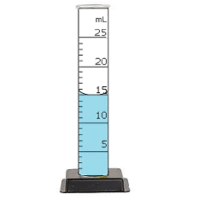
What is the volume of the water?

a)

10mL

b)

15mL

c)

20mL

d)

25mL

6.

What tool measures liquid volume?

a)

test tube

b)

beaker

c)

balance scale

d)

graduated cylinder

7.

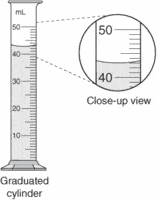
What is the volume of liquid in this graduated cylinder?

a)

43mL

b)

40mL

c)

44mL

d)

45mL

8.

The amount of matter in an object is the

a)

volume.

b)

density.

c)

mass.

d)

matter.

9.

What is the atomic number of Rhodium?

a)

4d

b)

45

c)

102.906

d)

147.906

10.

How many protons does Rhodium have?

a)

45

b)

4

c)

102.906

d)

147.906

11.

How many electrons does Rhodium have?

a)

45

b)

4

c)

102.906

d)

57.906

12.

What is the atomic weight of Rhodium?

a)

4

b)

45

c)

102.906

d)

57.906

13.

132mm = ________cm

(10mm=1cm)

a)

1320cm

b)

13.2cm

c)

1.32cm

d)

13200cm

14.

Where do we find the protons and the neutrons?

a)

In the orbital cloud around the nucleus

b)

Both are in the nucleus

c)

Protons are in the nucleus but neutrons are not

d)

Neutrons are in the nucleus but protons are not

15.

What is the charge of a proton?

a)

positive

b)

negative

c)

neutral

16.

The protons, neutrons, and electrons are known as :

a)

subatomic particles

b)

matter

c)

quarks

d)

subprotonic matter

17.

What is the charge of an electron?

a)

positive

b)

negative

c)

neutral

18.

A crate holds 140 kilograms of potatoes and 132 kilograms of carrots. What is the total mass of the potatoes and carrots?

a)

272

b)

183

c)

80

d)

200

19.
The water is ______ dense than the boat
a)
more
b)
less
20.

What is more dense than the corn oil, but less dense than the water?

a)

glycerin

b)

wood

c)

plastic

d)

copper wire

21.
Molecules spread out and move FAST!
a)
solid
b)
gas
c)
liquid
22.
Molecules are tightly packed together
a)
solid
b)
liquid
c)
gas
23.
If you poured 3 liquids that do not mix how could you tell which one is the most dense?
a)
The liquid on top
b)
The liquid in the middle
c)
The liquid at the bottom
24.
The ability of a substance to dissolve is called...
a)
malleability
b)
ductility
c)
solubility
25.
What is the boiling point of water?
a)
0 degrees Celcius
b)
32 degrees Celcius
c)
100 degrees Celcius
d)
I have no idea.
26.
Which physical property will change if you visit the moon?
a)
mass
b)
volume
c)
density
d)
weight
27.
Which property describes the property of a liquid?
a)
It tastes really good.
b)
water
c)
It takes the shape of the container.
d)
It is invisible.
28.
At what temperature must water reach before it will boil?
a)
0 degrees Celsius
b)
1,000 degrees Celsius
c)
23 degrees Celsius
d)
100 degrees Celsius
29.
If an ice cube is left out in  room it will change from one state of matter to another.  Which is the correct order of State of Matter that the ice cube will go through?
a)
Gas, Solid, Liquid
b)
Liquid, Solid, Gas
c)
Liquid, Gas, Solid
d)
Solid, Liquid, Gas
30.

Mass divided by volume is the formula for calculating----

a)

Mass

b)

Volume

c)

Density

d)

Matter

31.
All mixtures are defined as "heterogeneous." 
a)
TRUE
b)
FALSE
32.
What are the two types of mixtures? 
a)
element and sub-atomic
b)
atoms and compounds
c)
homogeneous and heterogeneous
d)
element
33.

A glass of Kool Aid can be classified as

a)

element

b)

homogeneous

c)

heterogeneous

d)

suspension

34.
A solution consists of two parts. One part is the substance that is dissolved. What is the name of this part of a solution?
a)
solute
b)
solvent
c)
dissolution
d)
mixture
35.
The other component of a solution is the part that does the dissolving. What is the name of this component?
a)
solvent
b)
dissolution
c)
element
d)
mixture
36.
The most common solvent on Earth is...
a)
gasoline
b)
water
c)
turpentine
d)
soda
37.
What is a homogeneous mixture?
a)
a mixture that is the same throughout.
b)
a mixture that is made up of one type of atom.
c)
a mixture that is made up of one type of compound
d)
a mixture that cannot be separated through physical changes
38.
A mixture that is NOT evenly distributed is called ....
a)
Compounded
b)
Homogenous
c)
Heterogenous
d)
Salty
39.
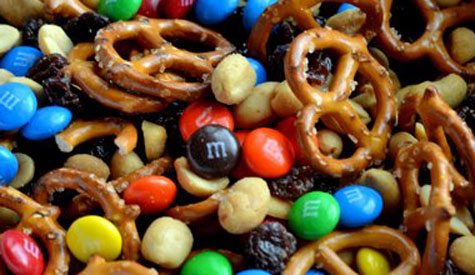
What type of mixture is this?
a)
homogenous mixture
b)
chemical
c)
heterogeneous mixture 
d)
solid mix
40.

Lucky Charms - what type of mixture?

a)

Heterogeneous

b)

Homogeneous

41.

Which of these steps comes first in the Scientific Method?

a)

Create a hypothesis

b)

Ask a Question

c)

Conclusion

d)

Observe a Problem

42.

Which TWO of the following is included in the study of physical science?

a)

matter

b)

oceans

c)

energy

d)

animals

43.

What is all of the "stuff" that exists in the universe?

a)

energy

b)

matter

c)

animals

d)

gravity

44.

What gives matter the ability to move or change?

a)

animals

b)

energy

c)

chemicals

45.

Who is known for developing the Scientific Method, creating the three laws of motion, and investigated light and sound?

a)

Barack Obama

b)

Isaac Newton

c)

George Washington

d)

Charles Darwin