
 Worksheets
P3 Particle model of matter AQA (Combined)
Total questions: 45
Worksheet time: 23mins
What is density?
The mass of a substance compared to it's volume
How heavy an object is
The size of an object
The volume of the object divided by mass
Which equation links density, mass and volume?
Density = mass ÷ volume
Density = volume ÷ mass
Density = mass2 ÷ volume
Density = volume2 ÷ mass
Which change is state takes place when a solid turns to a liquid?
Melting
Freezing
Boiling
Evaporating
Which change is state takes place when a liquid turns to a solid?
Melting
Freezing
Boiling
Evaporating
Which change is state takes place when a liquid turns to a gas?
Melting
Freezing
Boiling
Evaporating
Which change is state takes place when a liquid turns to a gas at the fastest rate possible?
Melting
Freezing
Boiling
Evaporating
Which change is state takes place when a solid turns to a gas?
Melting
Sublimation
Boiling
Evaporating
Which type of change produces new products?
Chemical change
Physical change
Which type of change can be reversed?
Chemical change
Physical change
Which type of change are changes in state?
Chemical change
Physical change
What is internal energy?
The total potential and kinetic energy in a system
The total kinetic energy in a system
The total potential energy in a system
The total potential and chemical energy in a system
Which state of matter has the greatest internal energy?
Solid
Liquid
Gas
Which state of matter has the lowest internal energy?
Solid
Liquid
Gas
How can we describe the particles in materials with high internal energy?
Spread apart
Tightly packed
How can we describe the particles in materials with high internal energy?
Faster movement
Slower movement
What is the definition of specific heat capacity?
The energy required to change the temperature of 1kg of material by 1⁰C
The energy required to change the state of 1kg of a material
The energy required to change the temperature of a material
What is potential energy?
The energy stored in particles because of their position
The energy stored in particles because of their motion
The energy stored in particles because of their temperature
What is the specific latent heat of fusion?
The energy required to change the state of 1kg of a material from solid to liquid, without a change in temperature
The energy required to change the state of 1kg of a material from liquid to gas, without a change in temperature
The energy required to change the temperature of 1kg of a material by 1⁰C, without a change in state
The energy required to change the temperature of a material without changing state
Which change in state occurs when we add internal energy to a solid?
Melting
Freezing
Evaporating
Condensing
Which change in state occurs when we decrease the internal energy of a solid?
Melting
Freezing
Evaporating
Condensing
Which change in state occurs when we decrease the internal energy of a gas?
Melting
Freezing
Evaporating
Condensing
Which change in state occurs when we increase the internal energy of a liquid?
Melting
Freezing
Evaporating
Condensing
Which change in state occurs when we decrease the internal energy of a liquid?
Melting
Freezing
Evaporating
Condensing
State the equation that links specific heat capacity, energy, mass and temperature
Energy = mass x specific heat capacity x change in temperature
Specific heat capacity = energy x mass x temperature
Change in temperature = energy x mass x specific heat capacity
Mass = change in temperature x specific heat capacity x energy
What is the specific latent heat of vaporisation?
The energy required to change the state of 1kg of a material from liquid to gas, without a change in temperature
The energy required to change the state of 1kg of a material from gas to liquid, without a change in temperature
The energy required to change the temperature of 1kg of a material by 1⁰C, without a change in state
The energy required to change the temperature of a material without changing the state
State the units of density
kg/m3
kgm
kg/m
kg3/m
What is the relationship between pressure in a gas and volume?
Pressure in a gas is inversely proportional to volume
Pressure in a gas is directly proportional to volume
Pressure in a gas and volume show a positive correlation
There is no relationship between pressure in a gas and volume
What is gas pressure?
The force exerted by a gas when particles collide with a surface
How often gas particles collide with a surface
How easily gas particles collide with a surface
The speed of gas particles colliding with a surface
State the units of volume
m3
kg
kg/m3
M3
Why doesn't temperature change during melting?
Energy is transferred to weaken the forces between particles
Energy is transferred the strengthen the forces between particles
Energy is dissipated to the surroundings
Energy is dissipated, heating up the object holding the solid material
Why doesn't temperature change during evaporation?
Energy is transferred to weaken the forces between particles
Energy is transferred the strengthen the forces between particles
Energy is dissipated to the surroundings
Energy is dissipated, heating up the object holding the solid material
How are particles arranged in a solid?
Regularly
Randomly
Which state of matter is most dense?
Solid
Liquid
Gas
Which state of matter is least dense?
Solid
Liquid
Gas
What is the density of water?
1kg/m3
0.1kg/m3
10kg/m3
100kg/m3
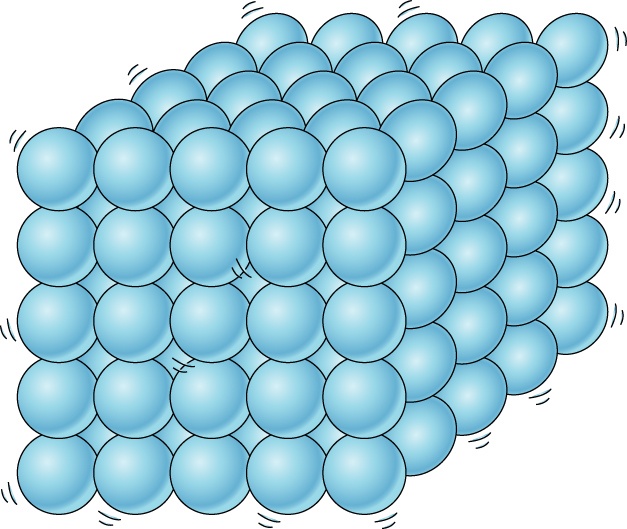
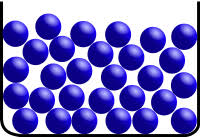
Which description best matches this particle model?
Particles are closely packed, move around each other, strong/medium intermolecular forces
Particles are loosely packed, move around each other, strong/medium intermolecular forces
Particles are closely packed, move randomly around each other and have weak intermolecular forces.
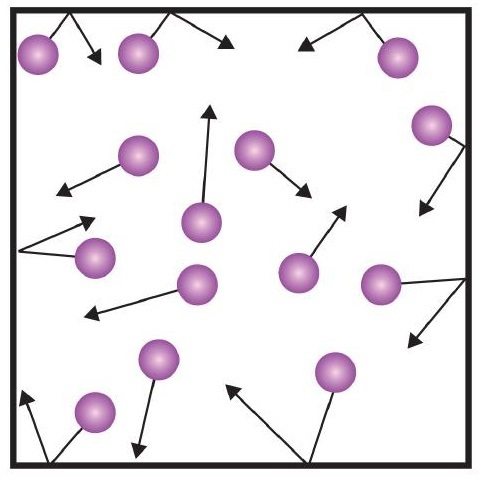
Which description best matches this particle model?
Particles move fast in specific directions, weak intermolecular force
Particles have a lot of space between them and move at different speeds in random directions.
Particles have lots of energy and have a medium intermolecular forces between them.
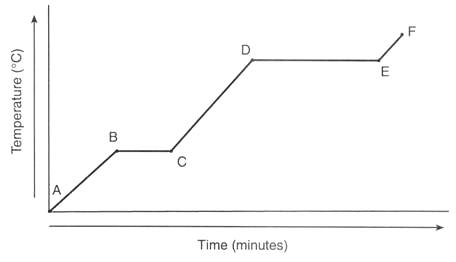
What happens to the internal energy when a substance is heated?
Decreases
Stays the same
Increases

