
 Worksheets
DIAGNOSTIC - Unit 4 - QCAA ATAR Biology - 2019
Total questions: 61
Worksheet time: 47mins
4.1.1 a - The DNA of prokaryotes as well as that found in chloroplasts and mitochondria is best described as:
a single-stranded, finger like molecule found in the cytosol.
a circular, double-stranded molecule bound around a set of eight histone proteins.
a circular, double-stranded molecule not bound by histone proteins or a double membrane
a double-stranded molecule bound by histone proteins and a double membrane
4.1.1 a - PAST EXAM 2020 MC 12 - In the structure of DNA, adenine pairs with which other base?
uracil
guanine
cytosine
thymine

4.1.1 b - Recall the subunits that compose a nucleotide.
a ribose sugar, a phosphate group and one of four nitrogenous bases.
deoxyribose sugar, a phosphate group and one of four nitrogenous bases.
deoxyribose sugar, a phosphate group and one of four nucleic acids.
deoxyribose sugar, phosphorus and one of four nitrogenous bases.

4.1.1 b - What is the correct complementary strand for the following strand of DNA:
AATCATGGA
AATCATGGA
TTAGTACCT
UUAGUACCU
GGATAUCUA
4.1.1 b - The hydrogen bonds between nitrogenous bases that connect the two strands in a double helix are considered?
weak and base specific
weak and non-base specific
strong and base specific
strong and non-base specific
4.1.1 c - The following sentence describes the function of which enzyme in the process of DNA replication. 'This enzyme unwinds the DNA double helix and separates the strands to prepare for replication'.
synthase
replicase
polymerase
helicase
4.1.1 c - The following sentence describes the function of which enzyme in the process of DNA replication. 'This enzyme is responsible for assembling nucleotides to generate new DNA strand that is complementary to the original template strand'.
(a)
4.1.2 a - PA MOCKEXAM 2020 MC 13 - During meiosis II, what is the role of homologous chromosomes?
pairing
separation
duplication
recombination
4.1.2 a - Identify which of the following paragraphs best demonstrates how crossing over and recombination contributes to genetic variation?
When a male gamete and a female gamete finally meet, each is the result of an immense number of genetic possibilities created during independent assortment and crossing over. The random nature of this process occurring in the development of both gametes results in almost infinite potential variation in the resulting progeny. The random meeting of these two diverse groups of genes further diversifies the resulting gametes
Chromosome segments are exchanged between nonsister chromatids of homologous chromosomes during the prophase of meiosis I. This exchange between chromosomes from different parents, creates new combinations of alleles in the gametes that are not found in either parent that had previously been on opposing homologous chromosomes. This recombination contributes to genetic diversity in the gametes.
When cells divide during meiosis, homologous chromosomes are randomly distributed during anaphase I, separating and segregating independent of each other. This results in gametes that have unique combinations of chromosomes that may come from different parents. This means that while all gametes will carry one of each homologous chromosome pair these will be a mix of chromosomes providing new groups of alleles not found in the parent.
4.1.2 a - Identify which of the following best compares the processes of spermatogenesis and oogenessis (with reference to haploid and diploid cells).
Both processes involve meiosis in the formation of two haploid daughter cells. Significantly this results in eggs and sperm with half the genetic material of the parents diploid somatic cells.
While in spermatogenesis, 4 functioning gametes are produced in oogenesis, only 1 gamete and 3 non-gamete polar bodies are produced. Therefore 4 times as many sperm are produced as eggs for each stem cell resulting less reproductive opportunities for successful fertilisation of eggs. In spermatogenesis, sperm are continuously produced whilst in oogenesis, eggs are generated before birth. Significantly this means that sperm are produced throughout a male lifespan whilst egg maturation often does not continue into menopause.
Both processes involve meiosis in the formation of two haploid daughter cells. While in spermatogenesis, 4 functioning gametes are produced in oogenesis, 1 only one gamete and 3 non-gamete polar bodies are produced. In spermatogenesis, spermatocytes are continuously produced whilst in oogenesis, oocytes are generated before birth.
Both processes involve meiosis in the formation of two haploid daughter cells. Significantly this results in eggs and sperm with half the genetic material of the parents diploid somatic cells.
While in spermatogenesis, only 1 gamete and 3 non-gamete polar bodies are produced, in oogenesis, 4 functioning gametes are produced. Therefore 4 times as many eggs are produced as sperm for each stem cell resulting less reproductive opportunities for successful fertilisation of eggs.
In spermatogenesis, sperm are generated before birth, while in oogenesis, eggs are continuously produced. Significantly this means that sperm are produced throughout a male lifespan whilst egg maturation often does not continue into menopause.
Both processes involve meiosis in the formation of two haploid daughter cells. While in spermatogenesis, only 1 gamete and 3 non-gamete polar bodies are produced, in oogenesis, 4 functioning gametes are produced. In spermatogenesis, sperm are generated before birth, while in oogenesis, eggs are continuously produced.
4.1.2 b -Identify which of the following paragraphs best demonstrates how independent assortment contributes to genetic variation?
When a male gamete and a female gamete finally meet, each is the result of an immense number of genetic possibilities created during independent assortment and crossing over. The random nature of this process occurring in the development of both gametes results in almost infinite potential variation in the resulting progeny.
This term is used to name the exchange of chromosome segments between nonsister chromatids during the prophase of meiosis I. It creates new combinations of genes in the gametes that are not found in either parent as they may group alleles that had previously been on opposing homologous chromosomes. This recombination contributes to genetic diversity in the gametes.
When cells divide during meiosis, homologous chromosomes are randomly distributed during anaphase I, separating and segregating independent of each other. This results in gametes that have unique combinations of chromosomes that may come from different parents.
4.1.2 b -Identify which of the following paragraphs best demonstrates how random fertilisation contributes to genetic variation?
When a male gamete and a female gamete finally meet, each is the result of an immense number of genetic possibilities created during independent assortment and crossing over. The random nature of this process occurring in the development of both gametes results in almost infinite potential variation in the resulting progeny.
This term is used to name the exchange of chromosome segments between nonsister chromatids during the prophase of meiosis I. It creates new combinations of genes in the gametes that are not found in either parent as they may group alleles that had previously been on opposing homologous chromosomes. This recombination contributes to genetic diversity in the gametes.
When cells divide during meiosis, homologous chromosomes are randomly distributed during anaphase I, separating and segregating independent of each other. This results in gametes that have unique combinations of chromosomes that may come from different parents.
4.1.3 a - PA MOCKEXAM 2020 SA2 Q 1 -Identify the correct definition for the term gene
a type of molecule that helps decode a messenger RNA sequence into a protein.
region/s of DNA that are made up of nucleotides; the molecular unit of heredity
all the genetic material in the chromosomes of an organism, including its genes and DNA sequences
a self-replicating material which is present in nearly all living organisms as the main constituent of chromosomes. It is the carrier of genetic information.
4.1.3 b - The following sentence describes the function of a form of non-coding DNA. What does it refer to?
'a specialized structure on the chromosome, appearing during cell division as the constricted central region where the two chromatids are held together and form an X shape'.
(a)
4.1.3 b - a polynucleotide sequence in a nucleic acid that does not code information for protein synthesis and is removed before translation of messenger RNA, is referred to as a/an?
noncoding DNA
intron
noncoding RNA
exon
4.1.3 c - Which statement best explains the process of protein synthesis in terms of transcription?
The double-stranded DNA is unwound by DNA helicases ahead of polymerases, forming a replication fork containing two single-stranded templates. The enzyme DNA polymerase now starts moving along generating new DNA strands that are complementary to the ‘original’ template strands. The strand is synthesised in a 5’ to 3’ direction. The result is the formation of two identical and separate double stranded helical DNA molecules.
The double-stranded DNA is unwound by DNA polymerase ahead of RNA helicase, forming a replication fork containing two single-stranded templates. The enzyme DNA polymerase now starts moving along generating new DNA strands that are complementary to the ‘original’ template strands. The strand is synthesised in a 5’ to 3’ direction. The result is the formation of two identical and separate double stranded helical DNA molecules.
The unzipped double helical DNA of a gene in the nucleus, serves as a template to synthesize a complementary strand of RNA bases. The enzyme called RNA polymerase binds to the single stranded DNA, moving along the strand it catalyzes the formation of a pre-mRNA molecule, binding each complementary RNA base to its corresponding DNA base (replacing Thymine with Uracil). The non-coding introns are removed and the remaining coding exons are spliced to form mature mRNA. The resulting mRNA leaves the nucleus.
Single stranded mature mRNA moves out of the nucleus and is "read" by ribosomes. At the ribosome each group of three bases, called a condon, found in the mRNA, specifies a complimentary anit-codon on tRNA molecules which then attaches. Each tRNA molecule is attached to a specific amino acid. The mRNA sequence is thus used as a template to assemble—in order—the chain of amino acids that form a protein.
4.1.3 c - Which statement best explains the process of protein synthesis in terms of translation?
The double-stranded DNA is unwound by DNA helicases ahead of polymerases, forming a replication fork containing two single-stranded templates. The enzyme DNA polymerase now starts moving along generating new DNA strands that are complementary to the ‘original’ template strands. The strand is synthesised in a 5’ to 3’ direction. The result is the formation of two identical and separate double stranded helical DNA molecules.
The double-stranded DNA is unwound by DNA polymerase ahead of RNA helicase, forming a replication fork containing two single-stranded templates. The enzyme DNA polymerase now starts moving along generating new DNA strands that are complementary to the ‘original’ template strands. The strand is synthesised in a 5’ to 3’ direction. The result is the formation of two identical and separate double stranded helical DNA molecules.
The unzipped double helical DNA of a gene in the nucleus, serves as a template to synthesize a complementary strand of RNA bases. The enzyme called RNA polymerase binds to the single stranded DNA, moving along the strand it catalyzes the formation of a pre-mRNA molecule, binding each complementary RNA base to its corresponding DNA base (replacing Thymine with Uracil). The non-coding introns are removed and the remaining coding exons are spliced to form mature mRNA. The resulting mRNA leaves the nucleus.
Single stranded mature mRNA moves out of the nucleus and is "read" by ribosomes. At the ribosome each group of three bases, called a condon, found in the mRNA, specifies a complimentary anit-codon on tRNA molecules which then attaches. Each tRNA molecule is attached to a specific amino acid. The mRNA sequence is thus used as a template to assemble—in order—the chain of amino acids that form a protein.
4.1.3 d - The purpose of gene expression is, best described as being, to?
Transcribe and translate an allele present in the DNA at a particular loci, into a functioning protein.
the process by which information from a gene is used in the synthesis of a functional gene product.
is a tightly regulated process that allows a cell to respond to its changing environment. It acts as both an on/off switch to control when proteins are made and also a volume control that increases or decreases the amount of proteins made.
synthesise a functional gene product (protein or functional RNA).
4.1.3 e - A Transcription Factor is best described as?
factors that restrict, coordinate and catalyze the synthesis of polypeptides from mRNA templates by ribosomes.
any of various proteins that bind to DNA and play a role in the regulation of gene expression by promoting or restricting formation of mRNA.
the study of heritable phenotype changes that do not involve alterations in the DNA sequence. These may result from external or environmental factors, or be part of normal development.
the process whereby the DNA sequence of a gene is "rewritten" in RNA for export from the nucleus.
4.1.3 e - Which of the following does not describe a factor that regulates the phenotypic expression of genes?
any of various proteins that bind to DNA and play a role in the regulation of gene expression by promoting or restricting formation of mRNA.
the code the body uses to convert the instructions contained in the DNA into the proteins essential for life.
environmental exposure or epigenetics resulting in a set of factors that affect which part of the DNA is activated.
factors that restrict, coordinate and catalyze the synthesis of polypeptides from mRNA templates by ribosomes.
4.1.3 f - Differential gene expression, controlled by transcription factors,
regulates cell differentiation for tissue formation and morphology.
contains the genetic instructions used in the development and functioning of all known living organisms (with the exception of RNA viruses).
are used in the synthesis of functional extra cellular proteins such as hormones which regulate morphological development.
are used to synthesis important hormones which result in cellular differentiation.
4.1.3 g - PA MOCKEXAM 2020 MC 11 - A group of genes that control the pattern of body formation in humans is being investigated. A gene that would be part of this group is the
HOX (homeotic sub-group) gene.
TDF (testis-determining factor) gene.
SRY (sex-determining region Y) gene.
PAX6 (regulatory gene of eye and brain) gene.
4.1.3 g - Correctly identify an example of a transcription factor gene that regulates cell differentiation.
HOX genes
Sex-determining region Y (SRY) genes
NADH dehydrogenase gene
hepatocyte nuclear factors gene
4.1.4 a - Recall the term used to identify a change in a single nucleotide (that does not affect the sequence of the surrounding DNA) in a gene sequence.
Point Mutation
Frameshift Mutation
Deletion Mutation
Isolated Mutation

4.1.4 a - The failure of homologous chromosomes
to separate during meiosis, resulting in gametes with an abnormal chromosome number, is referred to as?
Translocation
Nondisjunction
Crossing over
Chromosomal Block Mutation
Independent assortment
4.1.4 a - Mutagens can break or bend the structure of DNA resulting in errors called mutations. Which of the following is not an example of a potential mutagen?
UV Radiation
Chemicals
Viruses
Non-disjunction
4.1.4 b - Identify which of the following best explains how non-disjunction leads to aneuploidy.
Having missing or extra chromosomes is a condition called aneuploidy. Trisomy is the most common aneuploidy. In trisomy, there is an extra chromosome. A common trisomy is trisomy 21 (Down syndrome). Other trisomies include trisomy 13 (Patau syndrome) and trisomy 18 (Edwards syndrome). Monosomy is another type of aneuploidy in which there is a missing chromosome. A common monosomy is Turner syndrome, in which a female has a missing or damaged X chromosome.
In non-disjunction, one or more pairs of homologous chromosomes or sister chromatids fails to separate during nuclear division, resulting in an abnormal distribution of chromosomes in the daughter nuclei. The resulting gametes will gain or lose one or more chromosomes and thus the resulting offspring can inherit an abnormal number of chromosomes. As aneuploidy is the condition of having an abnormal number of chromosomes it is caused by the process of non-disjunction.
Aneuploidy disturbs the delicate balance of gene products in cells. By definition, aneuploid cells have an abnormal number of chromosomes. Because each chromosome contains hundreds of genes, the addition or loss of even a single chromosome disrupts the existing equilibrium in cells, and in most cases, is not compatible with life. Non-disjunction is the failure of one or more pairs of homologous chromosomes or sister chromatids to separate normally, usually resulting in an abnormal distribution of chromosomes in the daughter nuclei.
Nondisjunction means that a pair of homologous chromosomes has failed to separate or segregate at anaphase so that both chromosomes of the pair pass to the same daughter cell. This probably occurs most commonly in meiosis, but it may occur in mitosis to produce a mosaic individual. Having missing or extra chromosomes is a condition called aneuploidy.

4.1.4 c - PAST EXAM 2020 MC 17 - The table identifies the condition associated with a variety of ploidy changes. For a person with XXY sex chromosomes, which condition would they have?
Cri du chat syndrome
Down syndrome
Klinefelter syndrome
Turner syndrome
4.1.4 d - Identify which of the following best describes how inherited mutations can alter the variations in the genotype of offspring.
The term "genotype" refers to the genetic makeup of an organism; in other words, it describes an organism's complete set of genes. In a more narrow sense, the term can be used to refer to the alleles, or variant forms of a gene, that are carried by an organism. Genetic variation can be caused by mutation (which can create entirely new alleles in a population), random mating, random fertilization, and recombination between homologous chromosomes during meiosis (which reshuffles alleles within an organism's offspring).
Genetic variation is the presence of differences in sequences of genes between individual organisms of a species. It enables natural selection, one of the primary forces driving the evolution of life. Mutations, the changes in the sequences of genes in DNA, are one source of genetic variation. Mutations that change the genetic composition of gametes (germline mutation leads leads to characteristics in offspring
Genetic variation is an important force in evolution as it allows natural selection to increase or decrease frequency of alleles already in the population. Genetic variation can be caused by mutation (which can create entirely new alleles in a population), random mating, random fertilization, and recombination between homologous chromosomes during meiosis (which reshuffles alleles within an organism’s offspring). Genetic variation is advantageous to a population because it enables some individuals to adapt to the environment while maintaining the survival of the population
Any mutation that results in alteration of germline DNA and is thus heritable is both present across all cells with nuclear DNA in an organism and through each subsequent generation, making it permanent. These variations can result in; no change, a small change or a large change in the genotype of subsequent organisms, potentially resulting in entirely new alleles in a population. Changes in regulatory or control genes in particular can result in major changes in body morphology.

4.1.5 a - Long tongues (T) are dominant to short tongues (t) in green tree frogs. If two heterozygous green frogs mate, predict the genotypic frequency, as a percentage, of the resulting offspring?
Heterozygous dominant (Tt) = 25 %, Heterozygous recessive (Tt) = 25 % Homozygous (TT) = 50 %
Homozygous dominant (TT) = 25 %, Heterozygous (Tt) = 25 % Homozygous recesssive (tt) = 25 %
Homozygous dominant (TT) = 25 %, Heterozygous (Tt) = 50 % Homozygous recesssive (tt) = 25 %
Homozygous dominant (TT) = 25 %, Heterozygous dominant (Tt) = 25 %, Homozygous recesssive (tt) = 25 %, Heterozygous recessive (tT) = 25 %

4.1.5 a - (EDITED) PA MOCKEXAM SA1 Q 26c- Predict the next generation's phenotype fequency.
Phenotype 1 = 75% Phenotype 2 = 25%
Phenotype 1 = 25% Phenotype 2 = 75%
TT = 25% Tt = 75% tt = 25%
TT = 25% Tt = 25% tt = 25%
Autosomal Dominant Trait

4.1.5 a - A roan cow shows co-dominance in fur color (orange & white). What is the phenotype ratio expected if a roan cow and a roan bull mate?
4: Orange and White
1: Orange : 1 White
2 Orange: 2 Orange and White: 0 White
1: Orange: 2 Orange and White: 1 White

4.1.5 a - Blood type is an example of multiple allele inheritance patterns, that is to say it is a gene that contains several different allele variants on the same locus.
Taking this into consideration, if Tom has the genotype IAIB and Angela has the genotype IBIi, what are the possible phenotypes of their children?
Group A, Group B, Group AB only
Group A, Group B, Group AB, and Group O
Group A and Group AB only
Group A and Group B only

4.1.5 b - In polygenic inheritance, alleles do not display dominance over others, rather, each contributing allele gives an additive effect rather than a masking effect. In human skin colour for example the additive effect means that each dominant allele present in a genotype produces one unit of colour.
In an example using two parents, heterozygous for each of the melanin-producing genes (AaBbCc x AaBbCc), correctly identify the number of skin colours potentially resulting from the possible allele combinations.
7 from 64 possible combinations
64 from 64 possible combinations
16 from 64 possible combinations
14 from 64 possible combinations
4.1.5 b - In polygenic inheritance, alleles do not display dominance over others, rather, each contributing allele gives an additive effect rather than a masking effect. In human skin colour for example the additive effect means that each dominant allele present in a genotype produces one unit of colour.
In an example using two parents, one heterozygous for each of the melanin-producing genes AaBbCc and homozygous dominant for melanin-producing genes AABBCC, predict the frequency of the of the phenotype for darkest skin tone.
0.125
0.50
0.75
0.25
4.1.5 b - PAST EXAM 2020 MC 2 - Which form of inheritance usually determines traits that display continuous phenotypic variation?
polygenic
sex-linked
multiple allele
incomplete dominance
4.1.6 a - Identify which of the following best describes the process of making recombinant DNA.
1. isolation of DNA,
2. cutting of DNA (restriction enzymes)
3. joining of DNA (DNA ligase)
4. insertion of DNA fragment (into plasmid vector)
5. amplification of recombinant DNA (bacterial transformation)
1. amplification of recombinant DNA (bacterial transformation)
2. cutting of DNA (restriction enzymes)
3. insertion of DNA fragment (into plasmid vector)
4. joining of DNA (DNA ligase)
5. isolation of DNA,
1. isolation of DNA,
2. cutting of DNA (restriction enzymes)
3. insertion of DNA fragment (into plasmid vector)
4. joining of DNA (DNA ligase)
5. amplification of recombinant DNA (bacterial transformation)
1. cutting of DNA (restriction enzymes)
2. insertion of DNA fragment (into plasmid vector)
3. joining of DNA (DNA ligase)
4. amplification of recombinant DNA (bacterial transformation)
5. isolation of DNA.
4.1.6 b - Identify which of the following best describes the applications of the biotechnological process of DNA sequencing.
to determine the order of nucleotides within a DNA molecule and map species' genomes. This has applications in the identification of genes, use in medicine or agriculture, or tracking evolutionary relationships.
to introduce genetic material into cells to compensate for abnormal genes or to make a beneficial protein.
production of DNA that has been formed artificially by combining constituents from different organisms.
process of determining DNA characteristics through the breaking of DNA into short sections to identify the unique genetic information in a species or individual's DNA. This has applications in paternity testing, food security and forensic investigation.
to generate large numbers of copies of a specific section of single stranded DNA. This is required because significant amounts of sample are needed for effective DNA analysis.
4.1.6 b - Identify which of the following best describes the application of DNA profiling (DNA finger printing).
the process of determining the precise order of nucleotides within a DNA molecule. This enables the mapping of a species genome and gives information useful for researchers in understanding the type of genetic information that is carried in the DNA, which may affect its function in the body.
removal and purification of DNA from other cellular components.
to generate large numbers of copies of a specific section of single stranded DNA. This is required because significant amounts of sample are needed for effective DNA analysis.
process of determining DNA characteristics to identify the unique genetic information in a species or individual's DNA. This can then be used for comparison with other samples and has applications in paternity testing, food security and forensic investigation.
4.1.6 c - Identify which of the following best describes the purpose of polymerase chain reaction (PCR).
to recombine DNA artificially using constituents from different organisms genomes. This enables scientist to manipulate DNA to give organisms a desired trait.
to separate molecules of cut DNA based on their size. This is done to enable comparison of patterns of banding in DNA that represent differences in organisms genotypes.
to identify and eliminate undesirable traits in genomes.
to generate large numbers of copies of a specific section of single stranded DNA. This is required because significant amounts of sample are needed for effective DNA analysis.
to amplify a segment of DNA, the sample is first heated so the DNA denatures, or separates into two pieces of single-stranded DNA. Next, an enzyme synthesizes - builds - two new strands of DNA, using the original strands as templates. This process results in the duplication of the original DNA, with each of the new molecules containing one old and one new strand of DNA. Then each of these strands can be used to create two new copies, and so on, and so on.

4.1.6 d - An experiment was conducted to test how variation in the length of target DNA sequences affected the rate of successful uptake by the amplification bacteria (bacterial transformation).
The graph shows the number of colonies that were successfully impregnated with the varying lengths of recombinant (target DNA plus plasmid vector).
Identify a conclusion that could be made in terms of effectiveness of uptake of target DNA and fragment length.
As number of colonies increases to a maximum of 80 colonies per (1/4) transformation, the size of the target sequence increases. Therefore it can be concluded that larger numbers of colonies produce larger lengths of target DNA providing efficient amplification in the making of recombinant DNA.
As size of target sequence increases there is a steep increase in rate of uptake by the bacteria colonies, to an optimum rate of 80 colonies per (1/4) transformation at around 600 bp's. After this point there is a reduction in uptake to around 65 colonies per (1/4) transformation as target length reaches around 1200 bp's.
As can be seen in the given graphic, lengths of DNA of around 600 bp's would provide the best size for efficient amplification in the making of recombinant DNA.
The greatest rate of uptake of target DNA fragments, 80 colonies per (1/4) transformation, appears to be achieved at around 600 bp's of length. Therefore, lengths of DNA of around 600 bp's would provide the best size for efficient amplification in the making of recombinant DNA.
4.2.1. a - Microevolution is defined as?
the variation of allele frequencies at or above the level of species over geological time. These variations result in the divergence of taxonomic groups, in which the descendant is in a different taxonomic group to the ancestor.
the change in the genetic composition of a population during successive generations, which may result in the development of a new species.
small-scale variations in gene frequency within a species or population, in which the descendant is of the same taxonomic group as the ancestor.
pressures ‘select for’ the best-suited individuals in the population. The individuals that have the phenotypes best adapted to the environment are more likely to survive and produce offspring
4.2.1. a - Macroevolution is defined as?
the variation of allele frequencies at or above the level of species over geological time. These variations result in the divergence of taxonomic groups, in which the descendant is in a different taxonomic group to the ancestor.
the change in the genetic composition of a population during successive generations, which may result in the development of a new species.
small-scale variations in gene frequency within a species or population, in which the descendant is of the same taxonomic group as the ancestor.
pressures ‘select for’ the best-suited individuals in the population. The individuals that have the phenotypes best adapted to the environment are more likely to survive and produce offspring

4.2.1. b - Using the given figure determine which of the following geological periods experienced the largest extinction event (in terms of percentage of organisms lost).
The late Ordovician
The Cretaceous Cenozoic boundary
The late Triassic
The Permian Triassic boundary
4.2.1. b - Using the given figure, determine in which of the following geological periods of life on earth experienced the fastest rate of apparent evolutionary radiation.
Ordovician
Cenozoic
Triassic
Cretaceous

4.2.1. c - The DNA sequence of part of the mitochondrial DNA for five primate species is shown in the given table. Select the statement that is most consistent with the data.
The data is incomparable and it is invalid to draw a conclusion
The sequence of Pan paniscus reflects Gorilla gorilla more closely than Nomascus concolor
Homo sapiens reflects Pan paniscus as equivalently as Gorilla gorilla reflects Pongo abelii.
Nomascus concolor and Pongo abelii sequences are as equivalent as Gorilla gorilla and Pan paniscus

4.2.1. c - The given table shows the differences between the DNA of a human and four other species of primate. Select the tree that best shows the relationships portrayed in the table


4.2.2. a - Natural selection occurs when?
variation of allele frequencies at or above the level of species
over geological time, result in the divergence of taxonomic
groups, in which the descendant is in a different taxonomic group to the ancestor
the pressures of environmental selection confer a selective advantage on a specific phenotype to enhance its survival (viability) and reproduction (fecundity)
small-scale variation of allele frequencies within a species or
population, result in a descendant of the same taxonomic
group as the ancestor
an animal or plant group changes over time into a wide variety of types adapted to specialized modes of life.

4.2.2 b - SO MOCKEXAM 2020 MC - QUESTION 6
The graph shows allele frequency changes in a gene pool of fish (guppies) over a 10 year period after a mutation event which gave rise to allele b.
The frequency changes for allele b can be explained by which process?
positive selection
negative selection
stabilising selection
disruptive selection
4.2.2. c - The process of 'stabilising selection' is best described as?
a form of natural or phenotypic selection in which a single curve splits into two; occurs when individuals at the upper and lower ends of a distribution curve have higher fitness than individuals near the middle
a form of natural or phenotypic selection that favours one phenotypic extreme causing the allele frequency to shift over time in the direction of that phenotype.
a form of natural or phenotypic selection where environmental conditions favours the mean of the distribution because the extremes are at a selective disadvantage - frequency of mean phenotype increases
a process of natural or phenotypic selection that increases the frequency of a favorable allele.

4.2.2. c - The given diagram shows the range of phenotypes in a population before and after natural selection (the red arrow showing the phenotypes selected against). Which type of phenotypic selection is shown in the figure?
negative
disruptive
stabilising
directional
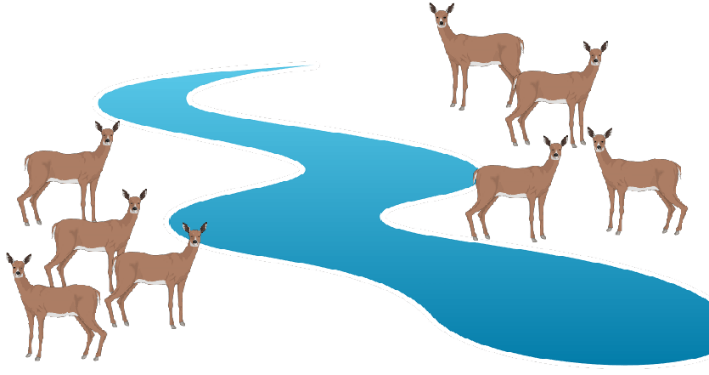
4.2.2. d - Identify which of the following accurately 'explains the process of microevolution through genetic drift'.
Microevolution is the small scale changes in allele frequency in a population over time. Genetic drift, that naturally occur across a population provides new alleles. If these new alleles result in a selective advantage as a result of environmental pressure and over multiple generations (over time), this may result in change or variation in allele frequencies across a population.
Microevolution is the small scale changes in allele frequency in a population over time. Genetic drift describes changes in the gene pool, and thus the relative frequencies of different alleles, in a population due to chance. This process is generally common in small and or isolated populations where gene frequencies can change rapidly due to random events that are more likely to significantly change gene frequencies in small population. An example of this would be 'Founder Effect'.
Microevolution is the small scale changes in allele frequency in a population over time. Genetic drift describes the mixing of genes from previously isolated populations that have diverged, this can rapidly change gene frequencies in the newly merged population. This change may not be a consequence of environmental pressure and thus natural selection. An example of this would be 'Migration'.
Microevolution is the small scale changes in allele frequency in a population over time. Genetic drift describes what occurs when some alleles are more beneficial than others to survival and/or reproduction, those alleles tend to increase in frequency in the population over generations.
4.2.2. d - Identify which of the following accurately 'explains the process of microevolution through gene flow'.
Microevolution is the small scale changes in allele frequency in a population over time. Gene flow, that naturally occurs across a population provides new alleles. If these new alleles result in a selective advantage as a result of environmental pressure and over multiple generations (over time), this may result in change or variation in allele frequencies across a population.
Microevolution is the small scale changes in allele frequency in a population over time. Gene flow, describes changes in the gene pool, and thus the relative frequencies of different alleles, in a population due to chance. This process is generally common in small and or isolated populations where gene frequencies can change rapidly due to random events that are more likely to significantly change gene frequencies in small populations. An example of this would be 'Founder Effect'.
Microevolution is the small scale changes in allele frequency in a population over time. Gene flow, describes the mixing of genes from different populations of the same species. In isolated populations that have diverged, this can rapidly change gene frequencies in the newly merged populations. This change may not be a consequence of environmental pressure and thus natural selection. An example of this would be 'Migration'.
Microevolution is the small scale changes in allele frequency in a population over time. Gene flow describes what occurs when some alleles are more beneficial than others to survival and/or reproduction, those alleles tend to increase in frequency in the population over generations.
4.2.3 a - Speciation and macroevolutionary changes result from
microevolutionary changes in a generation
an accumulation of microevolutionary changes over time
a change in allele frequency between generations
the flow of alleles between previously isolated populations
4.2.3 b - Two species of mammals that are geographically isolated but experience similar selection pressures. They look relatively similar, share similar phenotypic features and niche. Identify which pattern of diversification these species follow.
Convergent evolution
divergent evolution
parallel evolution
coevolution
4.2.3 b - Two organisms, a mammal and a reptile who evolved at different times across the geological time scale, looked relatively similar, shared similar phenotypic features and niche requirements. Identify which pattern of diversification these species follow.
Convergent evolution
divergent evolution
parallel evolution
coevolution
4.2.3 c - The mode of speciation that's described as 'when two populations of the same species become isolated from each other due to geographic changes' is referred to as
Sympatric speciation
Allopatric speciation
Parapatric speciation
Divergent
4.2.3 c - Sympatric speciation can be described as
when two populations of the same species become isolated from each other due to geographic changes
when new species evolving from a single ancestral species while inhabiting the same geographic region.
when a smaller population is isolated, usually at the periphery of a larger group, and becomes differentiated to the point of becoming a new species
when two subpopulations of a species evolving in reproductive isolation while continuing genetic exchange.
4.2.3 d - reproductive isolation mechanisms influence gene flow by?
forming a physical barrier preventing interactions between species, through geographic barriers such as rivers, mountains, stretches of water, or impassable habitat types. It acts to maintain the integrity of a species by reducing or preventing gene flow between related species.
a process by which large and contiguous habitats get divided into smaller, isolated patches of habitat. This process is a form of geographic isolation that can act to separate otherwise connnected subpopulations of species into remaining habitat fragments, preventing gene flow between related populations.
occurs between populations that are separated by great distances, but it can also take place between populations that inhabit different parts of the same area, such as different habitats within an ecosystem. This acts to isolate separate species across a habitat even if they overlap geographically.
preventing the members of different species, or subspecies, from producing offspring, or ensure that any offspring are sterile. They act to maintain the integrity of a species by reducing gene flow between related species.
4.2.3 e - Identify which of the following best 'explains how population with reduced diversity face an increased risk of extinction'.
Populations may sometimes be reduced to low numbers by predation, disease, periods of climatic change or through geographic isolation from the greater population (reduced gen flow). These large scale reductions are called population (genetic) bottlenecks. Population bottlenecks often result in the loss of large numbers of alleles once present in the population. This consequently reduces the genetic diversity of the subsequent gene pool.
Genetic diversity is the total number of genetic characteristics in the genetic makeup of a species. It is distinguished from genetic variability, which describes the tendency of genetic characteristics to vary. Genetic diversity serves as a way for populations to adapt to changing environments. With more variation, it is more likely that some individuals in a population will possess variations of alleles that are suited for the environment.
It results in increased levels of inbreeding leading to lower levels of individual viability and fecundity. The decrease in the variety of inheritable alleles across the population decreases its ability to adapt to environmental changes, as the required alleles may not be present. Therefore population with reduced genetic diversity have an increased likelihood of experiencing extinction due to catastrophic environmental events.

4.2.3 f - Identify which of the subpopulations in the given diagram is most likely to have a selective advantage if there is a dramatic change in environmental conditions.
F
G
E
D
A

