
NEW
Font size
S
M
L
XL
 Worksheets
Chemistry Test 1 -EXTRA CREDIT IPC
Total questions: 40
Worksheet time: 25mins
Name
Class
Date
1.
Subatomic particles with a negative charge
a)
Electrons
b)
Neutrons
c)
Protons
d)
Quarks
2.
subatomic particles found on the outermost shell & responsible for the atom's reactivity
a)
neutrons
b)
valence electrons
c)
isotopes
d)
ions
3.
Subatomic particles with a positive charge
a)
neutrons
b)
atomic mass
c)
protons
d)
isotopes
4.
Measure mainly of the nuclear particles: protons + neutrons
a)
Subatomic Particles
b)
Atomic Number
c)
Atomic Mass
d)
Gluons
5.
Value representing the number of protons in an element
a)
Atomic Mass
b)
Mass Number
c)
Valence Electrons
d)
Atomic Number
6.
Subatomic particles that are neutral in charge
a)
Neutrons
b)
Protons
c)
Nucleus
d)
Electrons
7.
Atoms of the same element with a different number of neutrons
a)
Ion
b)
Gluons
c)
Isotope
d)
Quarks
8.
A charged atom
a)
Ion
b)
Isotope
c)
Electron Cloud
d)
Quark
9.
The smallest particle of an element that shows all the properties of that element.
a)
Subatomic Particles
b)
Atom
c)
Quarks
d)
Gluons
10.
A tiny but very dense, positively charged portion of the atom that holds most of the atomic mass
a)
Electron Shells
b)
Orbitals
c)
Electron Cloud
d)
Nucleus
11.
Where electrons are likely to be found as they travel around the nucleus
a)
Nucleus
b)
Electron Cloud
c)
Within a Proton
d)
Within a Neutron
12.
Calculation used to find the number of neutrons in an atom
a)
Atomic Mass - Atomic Number
b)
Atomic Number - Atomic Mass
c)
Atomic Mass - Electrons
d)
none of these
13.
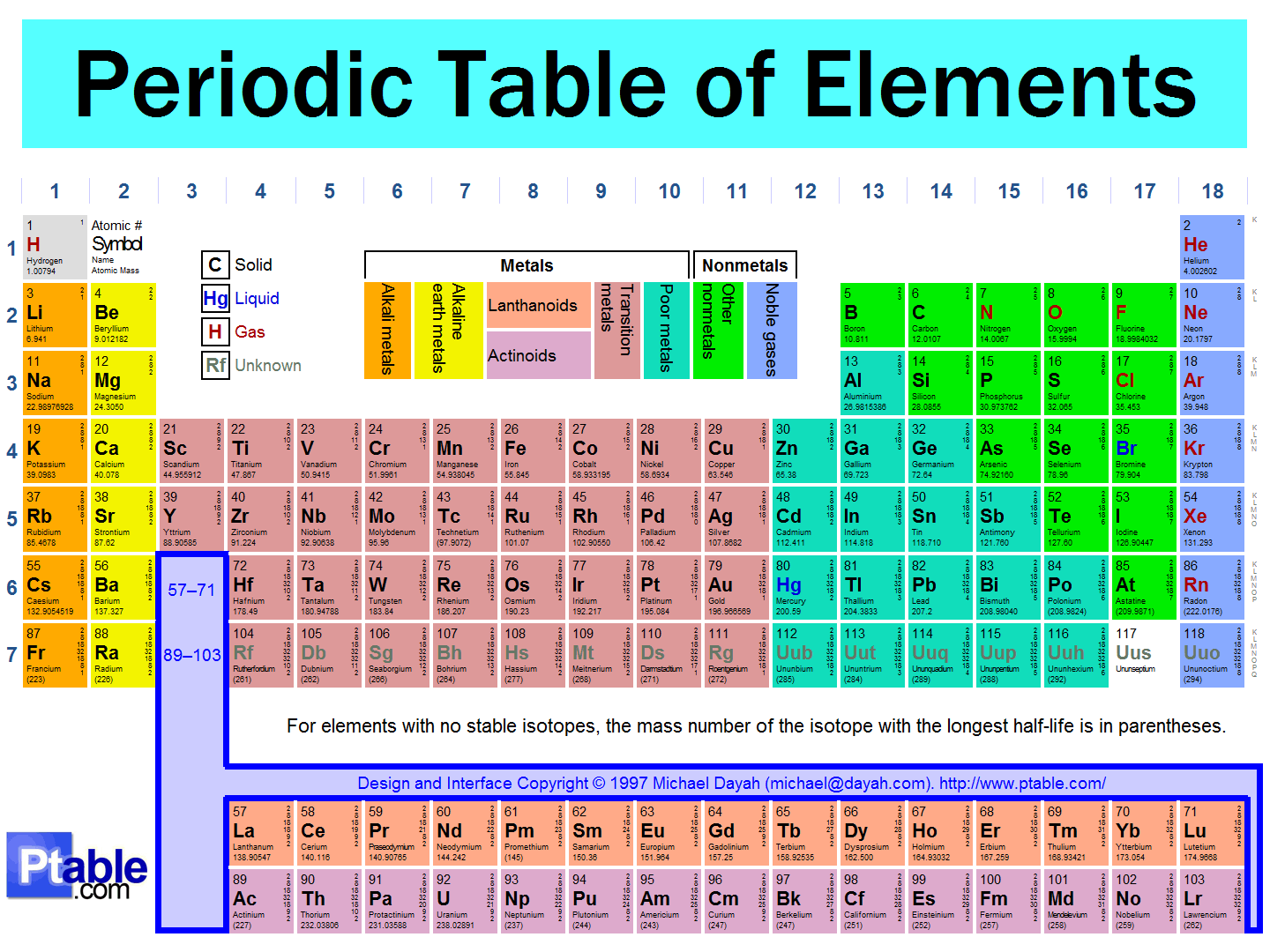
The vertical (up and down) columns in the Periodic Table are called
a)
groups
b)
towers
c)
periods
d)
atomic numbers
14.
The Modern Periodic Table of Elements is arranged by
a)
atomic mass
b)
atomic number
c)
valence electrons
d)
number of isotopes
15.
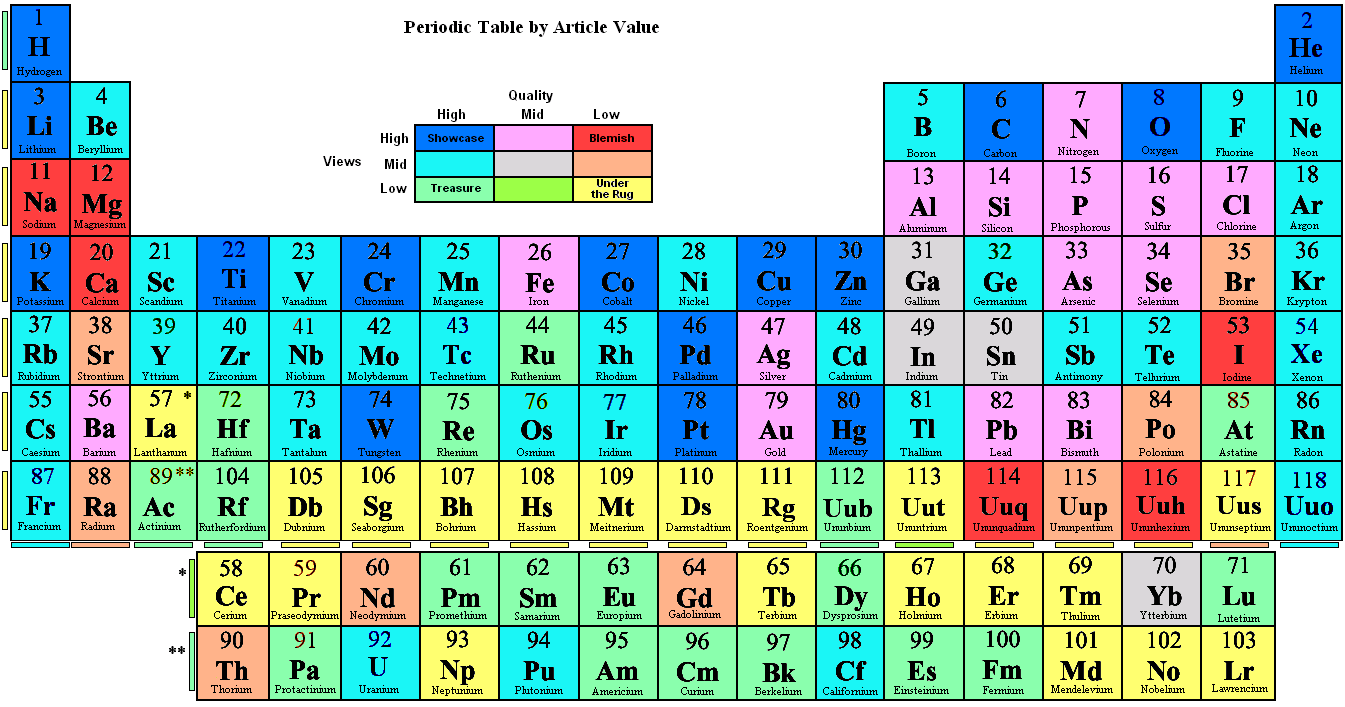
Sodium (Na) is found in period
a)
3
b)
2
c)
4
d)
1
16.
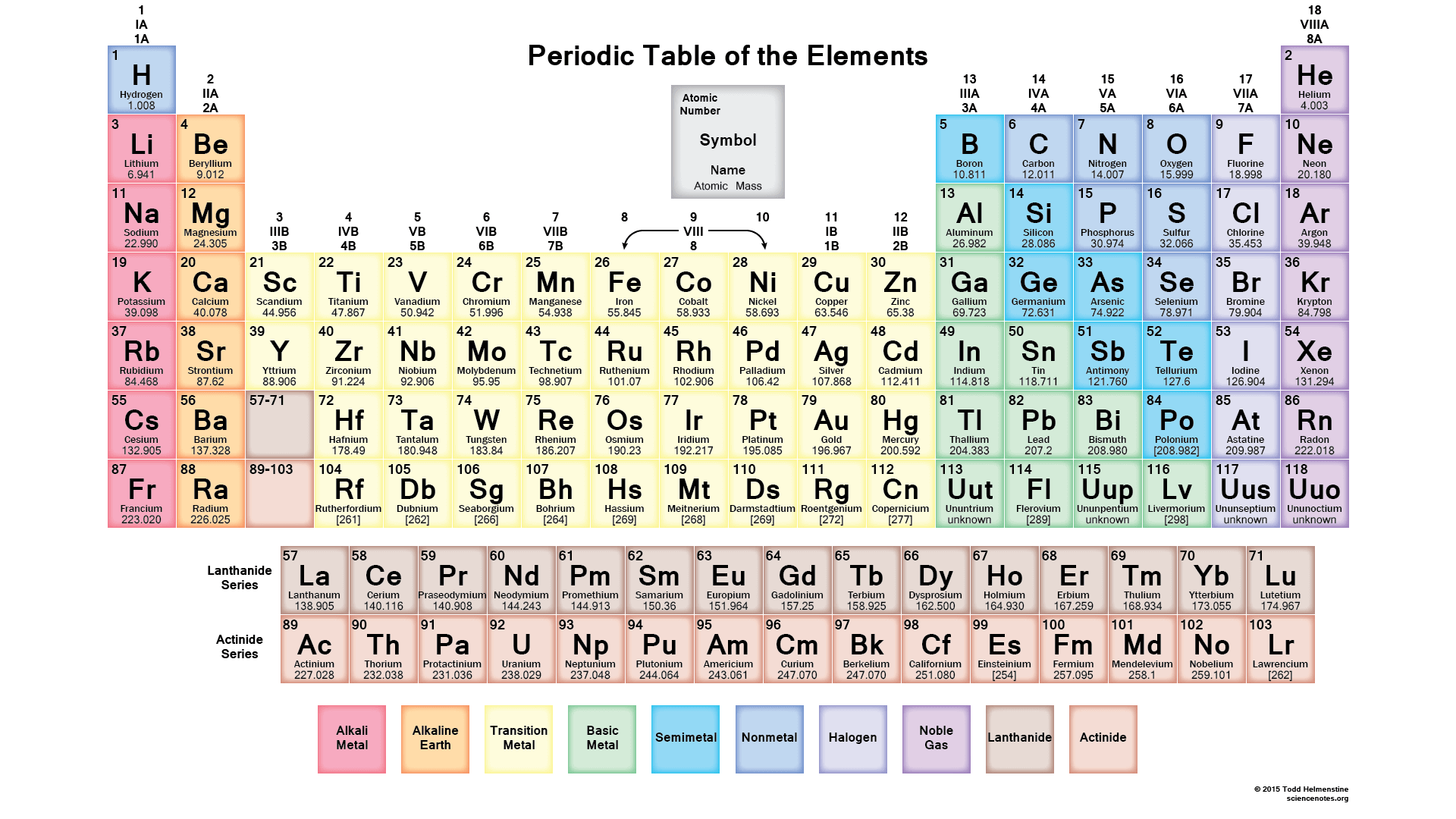
Sodium (Na) is found in group
a)
1
b)
2
c)
3
d)
4
17.
The atoms we study in 6th grade are neutral, which means they have the same number of
a)
protons and electrons
b)
protons and neutrons
c)
electrons and neutrons
18.
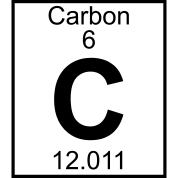
What does the 6 represent?
a)
atomic mass
b)
atomic number
c)
element name
d)
chemical symbol
19.
What does 12.011 represent?
a)
atomic mass
b)
atomic number
c)
element name
d)
chemical symbol
20.
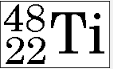
How many protons does this isotope of titanium have?
a)
48
b)
22
c)
26
d)
70
21.

How many neutrons does the isotope of lithium have?
a)
8
b)
3
c)
4
d)
5
22.
An element is defined by its number of
a)
protons
b)
electrons
c)
neutrons
d)
protons + electrons
23.
Isotopes are atoms of the same element that have the same number of __________ but different number of __________ . Therefore, isotopes of the same element have different masses.
a)
protons, neutrons
b)
protons, electrons
c)
neutrons, protons
d)
electrons, protons
24.
The state of matter having no definite shape or volume.
a)
solid
b)
liquid
c)
gas
25.
The ability or tendency to float.
a)
viscosity
b)
buoyancy
c)
kinetic theory
26.
The amount of energy needed to change a material from a solid to a liquid state.
a)
Heat of Solids
b)
Heat of Liquids
c)
Heat of Fusion
d)
Heat of Vaporization
27.
The state of matter with definite volume but no definite shape.
a)
solid
b)
liquid
c)
gas
28.
A measure of the average kinetic energy of the particles in a sample of matter.
a)
temperature
b)
meter
c)
second
29.
Which of these grouping of elements could have the characteristic of brittle?
a)
Metal
b)
Nonmetal
30.
If a material can easily be drawn into the shape of a wire, it is
a)
Ductile
b)
Magnetic
c)
Malleable
d)
Reactive
31.
Iron is a good conductor, malleable and magnetic. What type of element is Iron?
a)
Metal
b)
Nonmetal
c)
Metalloid
d)
Pretty
32.
Silicon is a semiconductor and has properties of both metals and nonmetals. What type of element is Silicon?
a)
Metal
b)
Nonmetal
c)
Metalloid
d)
Pretty
33.
How many neutrons does Beryllium (Be) have?
a)
4
b)
2
c)
9
d)
5
34.
An elements is
a)
a substance that cannot be split into simpler substances
b)
a substance that can be split into simpler substances
35.
A pure substance that is a compound is made out of
a)
particles of more than one type of atom
b)
particles of the same type of atom
c)
a mixture of two or more substances that can be physically separated
36.
Signs of a chemical change include;
a)
change of colour, change of temperature, precipitate (solid) formed, gas released.
b)
change of colour, reversing back to original form, precipitate (solid) formed, gas released.
37.
Elements in the same ________ are more chemically similar.
a)
group
b)
period
c)
club
d)
table
38.
Which elements have the most similar chemical properties?
a)
K and Na
b)
K and Ca
c)
K and Cl
d)
K and S
39.

a)
energy levels
b)
valence electrons
c)
protons
d)
neutrons
40.
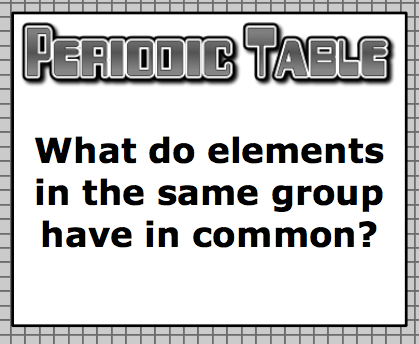
a)
energy levels
b)
valence electrons
c)
protons
d)
neutrons
Reset

