wayground logo

Free Printable Worksheets

NEW

Font size

S
M
L
XL
Worksheets

Quarter 1 Test Review

Total questions: 45

Worksheet time: 2hrs 30mins

Name
Class
Date
1.
What do elements in group 1 have in common?
a)
Number of valence electrons 
b)
Melting point of the element
c)
Possible number of bonds formed
d)
Metallic characteristics of the element
2.
I which location on the Periodic Table are nonmetals found?
a)
Location 1
b)
Location 2
c)
Location 3
d)
Location 4
3.
According to the Law of Conservation of Mass,
a)
matter is always created in a chemical reaction.
b)
matter is always destroyed in a chemical reaction.
c)
matter is created and then destroyed in a chemical reaction
d)
matter is not created or destroyed in a chemical reaction.
4.
Trail mix is a mixture because ....
a)
the ingredients ARE chemically bonded
b)
the ingredients ARE NOT chemically bonded
5.
Mass is measured in the base unit of _________.
a)
grams
b)
gramps
c)
pounds
d)
newtons
6.
What is the chemical symbol of Oxygen?
a)
H
b)
O
c)
H2O
d)
OH
7.
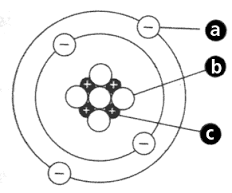
B and C are found in the ______ of an atom.
a)
electron cloud
b)
Space
c)
Nucleus
d)
Outside
8.
What charge does an electron have?
a)
Negative
b)
Positive
c)
Neutral
d)
Contrated
9.

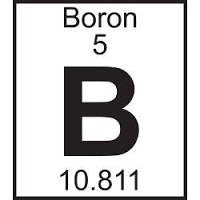
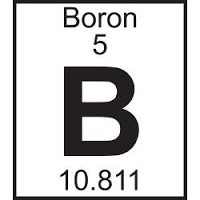
Using the information provided, determine how many electrons the a Boron atom contains.

a)

2.5

b)

5

c)

6

d)

10.81

10.
How many protons does this atom have?
a)
2.5
b)
6
c)
5
d)
10.811
11.

Who invented the Periodic Table?

a)

Gregor Mendel

b)

Dmitri Medeleev

c)

Henry Moseley

d)

Michelle Goode

12.

Horseplay or practical jokes in the laboratory are

a)

always against the rules.

b)

okay.

c)

not dangerous.

d)

okay if you are working alone.

13.

Hot glass looks the same as cold glass.

a)

True

b)

False

14.

If a laboratory fire erupts, immediately

a)

notify your instructor.

b)

run for the fire extinguisher.

c)

throw water on the fire.

d)

open the windows.

15.

The following footwear is best in the laboratory

a)

sandals.

b)

open-toed shoes.

c)

closed-toed shoes.

d)

shoes appropriate for the weather.

16.

How close a measurement is to the accepted value is called..

a)

Accuracy

b)

Precision

c)

Significant

d)

Estimate

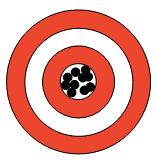
17.
?
a)
High Accuracy & High Precision
b)
High Accuracy & Low Precision
c)
Low Accuracy & High Precision
d)
Low Accuracy & Low Precision
18.
What is the chemical symbol for the element hydrogen
a)
H
b)
He
c)
h
d)
he
19.
What is the chemical symbol for the element Nitrogen
a)
Ni
b)
N
c)
No
d)
Nb
20.
What is the chemical symbol for the element oxygen
a)
O
b)
Oxy
c)
ox
d)
Oy
21.
How many protons are in Beryllium?
a)
4
b)
9
c)
5
d)
2
22.

What is the atomic mass of Copper?

a)

63.546

b)

29

c)

29.546

d)

92

23.

How many protons are in Silicon?

a)

7

b)

42

c)

28

d)

14

24.
An electron cloud
a)
represents a 50% probability of finding an electron
b)
has uniform density
c)
can be called an orbital
d)
can only show where the electron is not located
25.

Subatomic particles with a negative charge

a)

Electrons

b)

Neutrons

c)

Protons

d)

Quarks

26.
Value representing the number of protons in an element
a)
Atomic Mass
b)
Mass Number
c)
Valence Electrons
d)
Atomic Number
27.
Atoms of the same element with a different number of neutrons
a)
Ion
b)
Gluons
c)
Isotope
d)
Quarks
28.
Created the Planetary Model of the atom
a)
Bohr
b)
Dalton
c)
Rutherford
d)
Chadwick
29.
Calculation used to find the number of neutrons in an atom
a)
Atomic Mass - Atomic Number
b)
Atomic Number - Atomic Mass
c)
Atomic Mass - Electrons
d)
none of these
30.
What is this tool to get mass?
a)
triple beam balance
b)
ruler
c)
thermometer
d)
graduate cylinder
31.

In a solid, particles ________________

a)

move freely

b)

slide past one another

c)

have large amount of energy

d)

do not have much room to move

32.

How do particles act in a liquid?

a)

Every particle stays in one spot.

b)

Particles spread far apart from one another.

c)

Particles slide past one another

d)

Particles squeeze together to fit into small spaces.

33.

If you __________ liquid, it becomes a gas.

a)

boil

b)

freeze

c)

melt

d)

thaw

34.

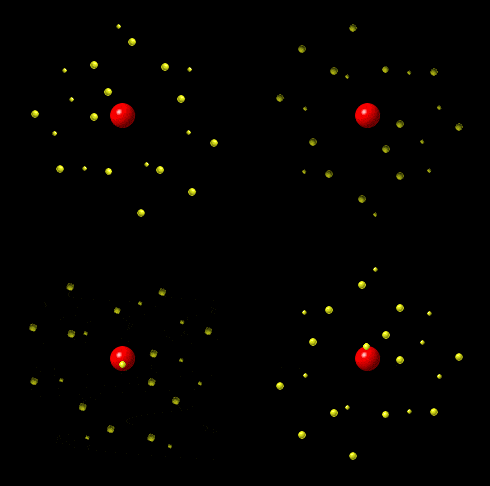
Identify the particles.

a)

solid

b)

liquid

c)

gas

d)

none

35.

Identify the particles.

a)

solid

b)

liquid

c)

gas

d)

none

36.

_______________ is anything that has mass and takes up space.

a)

Volume

b)

Mass

c)

Matter

d)

Particles

37.
Which form of matter does not take the shape of its container?
a)
liquid
b)
gas
c)
solid
d)
air
38.

(2x10^3) x (3x10^5)

a)

5x10^8

b)

6x10^15

c)

6x10^8

d)

6

39.

What is the plan when converting Mg to mg?

a)

Mg-->mg

b)

mg--> Mg

c)

mg-->m-->Mg

d)

Mg-->m-->mg

40.

Write in scientific notation. 0.000024

a)

2.4 x 10⁴

b)

2.4 x 10⁵

c)

2.4 x 10⁻⁴

d)

2.4 x 10⁻⁵

41.

Write in scientific notation. 59000

a)

5.9 x 10⁴

b)

5.9 x 10⁻⁴

c)

5.9 x 10³

d)

5.9 x 10⁵

42.

Air is:

a)

An element

b)

A compound

c)

A mixture

d)

None of these

43.
A mixture that is uniform and well mixed is _____.
a)
homogeneous
b)
hetergeneous
c)
pure substance
d)
compoud
44.

What is this?

a)

Element

b)

Compound

c)

Homogeneous Mixture

d)

Heterogeneous Mixture

45.
Milk
a)
Heterogeneous mixture
b)
Homogeneous mixture