

Wayground logo

Free Printable Worksheets

Font size

S
M
L
XL
Worksheets

Atoms & Water

Total questions: 40

Worksheet time: 27mins
Name
Class
Date
1.
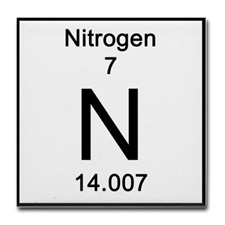
What is the number of protons that the element in this image contain?
a)
14
b)
7
c)
15
d)
18
2.
What number indicates the nucleus?
a)
1
b)
2
c)
3
d)
4
3.
What number indicates an electron?
a)
1
b)
2
c)
3
d)
4
4.

Why is the overall charge of an atom neutral (0)?

a)

They have the same number of protons and neutrons.

b)

They have the same number of protons and electrons.

c)

They have the same number of electrons and neutrons.

5.

Atomic number is

a)

Number of protons or electrons

b)

Number of protons and neutrons

c)

Your phone number

6.
How do covalent bonds form?
a)
Donating & receiving valence e- between atoms.
b)
Opposite slight charges attract each other between compounds.
c)
Scientists are still not sure how they form.
d)
Sharing valence e- between atoms.
7.
What type of bond forms when 2 or more electrons are SHARED?
a)
Covalent bond
b)
Incomplete bond
c)
Ionic bond
d)
Metallic bond
8.
What type of bond forms between two or more atoms that are charged (+/-)?
a)
Covalent bond
b)
Incomplete bond
c)
Ionic bond
d)
Metallic bond
9.

Electrons involved in chemical bonding.

a)

valence

b)

ionic

c)

covalent

d)

metallic

10.
A small particle in the nucleus of the atom with no electrical charge
a)
ion
b)
proton
c)
neutron
d)
electron
11.
Why do elements bond?
a)
To be friends
b)
To create a new element
c)
To become stable
12.

TRUE OR FALSE:

Hydrogen bonds are very strong interactions between two atoms.

a)

True

b)

False

13.

Hydrogen bonds are VERY important in determining the many properties of this very important molecule

a)

Water

b)

Carbon Dioxide

c)

Oxygen Gas

14.

Which type of bond is formed between Potassium (K) and Chlorine (Cl)?

a)

Covalent Bond

b)

Ionic Bond

c)

Hydrogen Bond

d)

Atomic Bond

15.

Which type of bonds are formed within a molecule of NH3 (ammonia).

a)

Covalent Bond

b)

Ionic Bond

c)

Hydrogen Bond

d)

Atomic Bond

16.

Which type of bond is formed in a molecule of Nitrogen (N2)?

a)

Single Covalent Bond

b)

Double Covalent Bond

c)

Triple Covalent Bond

d)

Ionic Bond

17.

The picture shows the Bohr model of Neon. How many valence electrons does Neon have?

a)

2

b)

5

c)

8

d)

10

18.

Is Neon a stable or unstable atom?

a)

Stable

b)

Unstable

19.

When an atom gains electrons, it becomes a

a)

positive ion

b)

negative ion

c)

neutral ion

d)

neutral atom

20.

Atoms want

a)

a full outer shell of electrons

b)

one electron short of a full shell

c)

kit kats

d)

to be loved

21.

Which of the following its the correct order of the biological hierarchy from simple to complex?

a)

Atom --> Macromolecules --> Organelle --> Cell

b)

Cell --> Organelle --> Macromolecule --> Atom

c)

Atom --> Macromolecule --> Cell --> Organelle

d)

Macromolecule --> Organelle --> Atom --> Cell

22.
What happens when the sodium atom loses an electron?
a)
It become negatively charged 
b)
It become positively charged
c)
none
23.
What word describes when water is attracted to other substances?
a)
cohesion
b)
adhesion
c)
capillary action
d)
surface tension
24.
Why does water move from the roots to the leaves of plants?
a)
Water is pushed by solutes
b)
Capillary action pulls the water molecules like a chain
c)
Water is pulled by gravity
d)
Water’s cohesion causes it to “pull” towards the leaves
25.
Why does ice float?
a)
As water freezes, it expands and its density decreases.
b)
As water freezes, it takes up more hydrogen from the atmosphere, causing it to have a greater buoyancy.
c)
As water freezes, air becomes trapped between the hydrogen bonds of water molecules.
d)
As water freezes, it takes up more oxygen from the atmosphere, causing it to have a greater buoyancy.
26.
The property where water molecules are attracted to other water molecules.
a)
adhesion
b)
capillary action
c)
cohesion
d)
universal solvent
27.
The property where water can dissolve almost all substances on Earth.
a)
adhesion
b)
capillary action
c)
cohesion
d)
universal solvent
28.
Why can some insects walk on water?
a)
The water sticks to the insect.
b)
The insect is too light to break the surface tension.
c)
The insect has hydrophobic oils on its legs.
d)
Insects can't walk on water.
29.
How does capillary action happen?
a)
water is polar
b)
it drags other water molecules up the tubes
c)
it sticks to the tubes
d)
ALL OF THESE REASONS
30.
Attractions between water molecules are called
a)
Covalent bonds
b)
Ionic bonds
c)
Polar bonds
d)
Hydrogen bonds
31.
Acids have more what? 
a)
OH ions 
b)
OH- ions
c)
H+ ions 
d)
All of the above 
32.
Water is polar because...
a)
The unequal sharing of electrons gives the water molecule a slight negative charge near its oxygen atom and a slight positive charge near its hydrogen atoms.
b)
The molecule has two poles, at which the it is colder than other regions of the molecule.
c)
The unequal sharing of electrons gives the water molecule a slight negative charge near its hydrogen atoms and a slight positive charge near its oxygen atom.
d)
The water molecule is neutral.
33.
The pH scale is a range from:
a)
1-7
b)
0-14
c)
1-14
d)
1-20
34.
A(n) ______ is a substance with a pH less than 7
a)
Acid
b)
Alkaline
c)
Base
d)
Buffer
35.
A(n) _______ is a substance with a pH greater than 7.
a)
Base
b)
Acid
c)
Buffer
d)
Water
36.
If you dissolve blue paint powder into water, the paint powder is the...
a)
ion
b)
solute
c)
solution
d)
solvent
37.
Which statement best describes an effect of the low density of frozen water on a lake?
a)
When water freezes it contracts, decreasing the water level in the lake.
b)
Water in a lake freezes from the bottom up
c)
Water removes thermal energy from the land, causing the lake to freeze
d)
When water in a lake freezes, it floats and provides insulation for the organisms below
38.
What property of water is being shown?
a)
specific heat
b)
surface tension
c)
polarity
d)
solution
39.

Which of the following can water NOT dissolve?

a)

Salt

b)

Sugar

c)

Oil

d)

Baking Soda

40.
Large bodies of water, such as lakes and oceans, do not quickly fluctuate in temperature. What is the reason for this phenomenon?
a)
Water is an acid.
b)
Water is a versatile solvent.
c)
Water has a high heat capacity.
d)
 Water acts as a buffer.
