wayground logo

Free Printable Worksheets

Font size

S
M
L
XL
Worksheets

Unit 2: Industrialization/Immigration/Urbanization Review

Total questions: 137

Worksheet time: 1hrs 21mins

Name
Class
Date
1.
Most immigrants on the East Coast were processed where?
a)
Washington, D.C.
b)
Ellis Island
c)
Angel Island
d)
Baltimore
2.
What is the term for the mixture of people of different cultures and races together into Americans?
a)
Mixing Bowl
b)
Angel Food Cake
c)
Fish Tank
d)
Melting Pot
3.
19th century Chinese immigrants are known for what?
a)
Work in building the Transcontinental Railroad
b)
Work in New York factories
c)
Contributions to the steel industry
d)
Contributions to John D. Rockefeller
4.
What processing station did Immigrants go through on the WEST coast?
a)
Ellis Island
b)
Angel Island
c)
Devil Island
d)
Alcatraz
5.
During the period from 1880 to 1910, why did the majority of immigrants to the United States settle in urban areas in the North?
a)
The Populists were successful in preventing immigrants from buying farmland.
b)
Rapid industrialization had created many job opportunities.
c)
Labor unions gave financial help to immigrants willing to work in the factories.
d)
Most immigrants had lived in cities in their native countries.
6.
Which idea led to a rise in anti-immigrant groups and a demand for immigration restrictions?
a)
Melting Pot
b)
Birds of Passage
c)
Nativism
d)
All of the above
7.
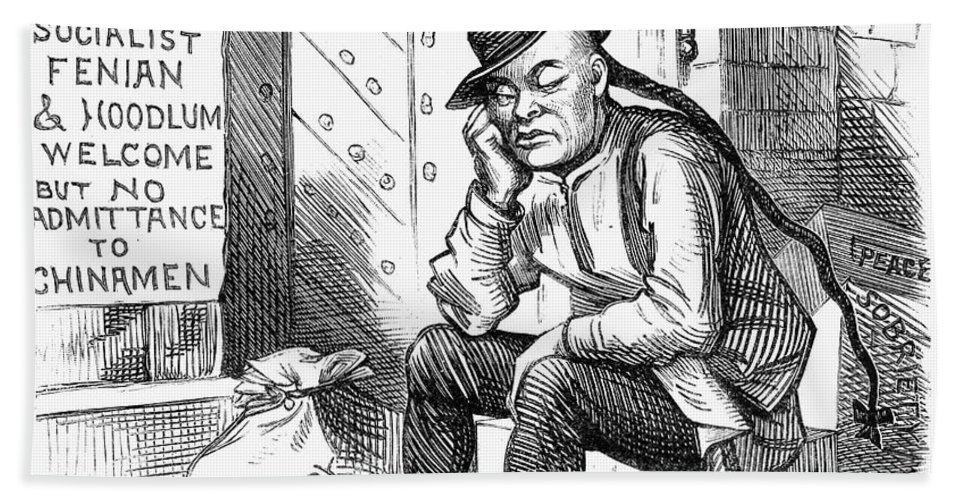
What was the Chinese Exclusion Act?
a)
Letting Chinese in America with open arms
b)
Banning Chinese people from immigrating to the United States for 10 years
c)
The Europeans taking over China
d)
Italians Immigrating to China
8.
 Which factor contributed to the shifting of population from rural to urban areas from 1870-1900?
a)
Not enough families took advantage of the Homestead Act
b)
Great Plains Indians left their reservations to buy new farmland
c)
Houses in cities were less expensive than those in the counttryside
d)
 Better jobs in industry attracted farmers and laborers to cities
9.
How did immigrants decide to settle where they did?
a)
They settled in warmer climates
b)
They settled near water
c)
They settled by people of similar ethnic backgrounds
d)
They settled where immigrant officials sent them
10.
Immigrants came to America to escape
a)
religious persecution
b)
famine
c)
poor economies
d)
all of the above
11.

What did Nativists believe?

a)

Immigrants threatened the American way of Life and Democracy.

b)

White Protestants were superior to other immigrant groups.

c)

Immigrants stole jobs from native born Americans.

d)

All of the above.

12.
When Japan raised an angry protest at the segregation in schools of its emigrants, President Theodore Roosevelt worked out a deal called...
a)
National Agreement Act
b)
Japanese Agreement act
c)
Gentleman's Agreement 
d)
Civil Rights Act
13.
What is a main reason immigrants came to the US in the late 1800s and early 1900s?
a)
Did NOT want religious freedom
b)
Hoped for economic opportunity (to make money)
c)
Wanted LESS diversity
d)
Wanted to live more simply
14.
Why did immigrants often live in neighborhoods with others from their homelands?
a)
It was illegal to live anywhere else
b)
They didn't want to be in the US
c)
It made their adjustment to their new life easier
d)
No other housing was avaliable
15.
What challenges did immigrants face in the US?
a)
They caught diseases
b)
Had trouble learning the language/faced prejudice
c)
Uncomfortable in the large homes in the US
d)
Difficult to study for the citizenship test
16.

This prevented Japanese people from leaving Japan to come to the US

a)

Gentlemen's Agreement

b)

Immigration and Nationality Act (1952)

c)

Emergency Quota Act

d)

14th Amendment

17.

Give examples of immigrant "push" factors.

a)

Promise of a better life

b)

War or religious persecution

c)

Religious Freedom

d)

Better opportunities

18.
How were the "new" immigrants who came to the U.S. in the late 1800s and early 1900s different from the "old" immigrants who came previously?
a)
The new immigrants were more widely accepted into American culture. 
b)
The new immigrants mainly settled in the southern states and became farmers. 
c)
Most of the new immigrants came from eastern and southern Europe. 
d)
Most of the new immigrants came for a short time to earn money.
19.
Which institutions helped immigrant children learn to be more like native-born Americans? 
a)
neighborhood churches
b)
foreign language newspapers 
c)
public schools
d)
political machines
20.
Immigration from which nation was limited due to a "Gentleman's Agreement" between the United States and that country?
a)
China 
b)
Japan 
c)
Poland
d)
Russia 
21.

I am the motto of the United States that is found on the back of all U.S. coins. What am I?

a)

"We the people"

b)

"Participate with your Vote,"

c)

"e pluribus unum"

d)

¨United we stand, divided we fall¨

22.

An increase in political corruption, big business, immigration, and urbanization took place during the-

a)

Progressive Era

b)

Gilded Age

c)

Roaring 20's

d)

Great Depression

23.

Americans who were anti-immigration due to the fear of losing jobs to immigrants were called-

a)

Bootlegger

b)

Monopolies

c)

Communists

d)

Nativists

24.

New __________________ like the light bulb made manufacturing processes more efficient.

a)

Innovations

b)

Manufactoring

c)

Ideas

d)

Infrastructure

25.

This type of economic system during the Gilded Age allowed for the growth of big business and monopolies-

a)

Monopolies

b)

Nativism

c)

Laissez-faire (hands off)

d)

New Deal

26.

During the Gilded Age there was an increase in ____________________ and ___________________ as people moved to U.S. cities looking for economic opportunities.

a)

Work and Infrastructure

b)

Corruption and Laissez-Faire

c)

Urbanization and Immigration

d)

Monopolies and Political Bosses

27.

During the Gilded Age, the expansion of ___________________ led to corruption in government, but also improvements in basic services and urban infrastructure.

a)

Infrastructure

b)

Nativists

c)

Monopolies

d)

Political Machines

28.

Which group of immigrants came to the U.S. as a result of famine and were discriminated against for being Catholic?

a)

Irish

b)

Mexican

c)

Russian

d)

Israeli

29.

The government encouraged Native Americans and immigrants to adopt white culture in a process called ___________________.

a)

Assimilation/Americanization

b)

Nativistism

c)

Communism

d)

Vietnamization

30.

What innovation helped people settle the Great Plains and opened new markets in the west?

a)

Cars

b)

Transcontinental Railroad

c)

AC

d)

Industrialization

31.

This law was made to reduce competition for jobs on the West Coast because it prohibited immigration from China-

a)

Pendleton Act

b)

Homestead Act

c)

Mexican Repatriation Act

d)

Chinese Exclusion Act

32.

Which law caused people to move to the Great Plains by giving free federal land grants.

a)

Dawes Act

b)

Homestead Act

c)

Chinese Exclusion Act

d)

Free Lands Act

33.

One of the most influential political machines was -

a)

Upton Sinclair and the FDA

b)

Samuel Gompers and the American Federation of Labor

c)

W.E.B. DuBois and the NAACP

d)

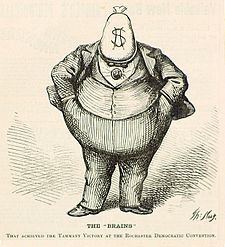
Boss Tweed and Tammany Hall

34.

What is another name for a Big Business that controls an entire market?

a)

Nativist

b)

Political Machine

c)

Monopoly

d)

Boss Tweed

35.

John D. Rockefeller had a monopoly over which in industry?

a)

Steel

b)

Railroads

c)

Oil

d)

Banking

36.
This is the social & political commitment & freedom to start their own businesses & compete
a)
free enterprise system
b)
free response system
c)
free travel system
d)
freedom of choice
37.
True or False: The government can't take your property without just compensation.
a)
True
b)
False
38.
The concept that people have the right and privilege to control their possessions as they wish.
a)
legal equality
b)
open opportunity
c)
private property
d)
profit incentive
39.
What is the best measure of the economic well-being of a country?
a)
net worth
b)
GDP
c)
open market value of goods
d)
the daily stock market performance
40.

In a free enterprise system __________________.

a)

A.individuals must have government approval to start businesses

b)

B.only groups may start their own businesses

c)

C.businesses are heavily regulated by the government

d)

D.individuals and groups can start their own businesses

41.

the total value of goods and services produced by a country during a year

a)

entrepreneur

b)

corporation

c)

gross national product

d)

monopoly

42.

policy that government should interfere as little as possible in the nation’s economy

a)

corporation

b)

gross national product

c)

monopoly

d)

laissez-faire

43.

one who organizes, manages, and assumes the risks of a business or enterprise

a)

entrepreneur

b)

laissez-faire

c)

Andrew Carnegie

d)

Leland Stanford

44.

an organization that is authorized by law to carry on an activity but treated as though it were a single person

a)

monopoly

b)

laissez-faire

c)

entrepreneur

d)

corporation

45.

the combining of companies that supply equipment and services needed for a particular industry

a)

vertical integration

b)

horizontal integration

c)

upward integration

d)

downward integration

46.

combining of many firms engaged in the same type of business into one corporation

a)

vertical integration

b)

horizontal integration

c)

upward integration

d)

downward integration

47.

total control of a type of industry by one person or one company

a)

corporation

b)

monopoly

c)

entrepreneur

d)

industry

48.

Invented the telephone

a)

Alexander Graham Bell

b)

Thomas Alva Edison

c)

Andrew Carnegie

d)

Samuel Gompers

49.

Invented the phonograph, and improved the lightbulb

a)

Alexander Graham Bell

b)

Thomas Alva Edison

c)

Samuel Gompers

d)

Andrew Carnefgie

50.

Signed by President Lincoln which provided for the construction of a transcontinental railroad by two companies

a)

Atlantic Railway Act

b)

Central Railway Act

c)

Western Railway Act

d)

Pacific Railway Act

51.

Steel tycoon who began the vertical integration of steel.

a)

Samuel Gompers

b)

Thomas Alva Edison

c)

Leland Stanford

d)

Andrew Carnegie

52.

Organization of trade unions that preferred to negotiate or boycott instead of striking

a)

American Federation of Labor

b)

United Federation of Labor

c)

National Federation of Labor

d)

Columbia Federation of Labor

53.
After his/her work with the Cigar Makers' International Union he/she was chosen to lead the American Federation of Labor due to his strong leadership.
a)
a.  Eugene Debs 
b)
b.   Andrew Carnegie 
c)
c.   Samuel Gompers
d)
d.   Eugene Gompers
54.
This is when one company buys out all of the competition (HORIZONTALLY) that sell the SAME products & merge to become one company.  
a)
a. Social Darwinism
b)
b. Horizontal Integration
c)
c. Labor Unions
d)
d. Vertical Integration
55.
These are Groups of Workers who gathered to unite for protection against corporate exploitation & unsafe working conditions AND in favor of fair pay for work & political influence.  
a)
a. Eugene Debs
b)
b. Thomas Edison
c)
c. Labor Unions
d)
d. Trust
56.
This is when a business gains control over everything involved with the process of making a product available from bottom to top (Vertically).
a)
a.   Labor Unions 
b)
b.   Vertical Integration 
c)
c.   Horizontal Integration  
d)
d. Social Darwinism 
57.
They faced all kinds of discrimination and abuse by railroad companies that paid them lower wages than white workers and had them work longer hours than white workers.  
a)
 a. Horizontal Integration
b)
b. Chinese Immigrant Railroad Workers
c)
c. European Immigrant Railroad Workers
d)
d. Vertical Integration 
58.
The U.S. GOVT. passed this making all forms of trusts & monopolies illegal.  
a)
a. Vertical Integration
b)
b. Interstate Commerce Act of 1887
c)
c. Horizontal Integration 
d)
d. Sherman Antitrust Act of 1890 
59.
He/She made his wealth in the production of oil. His company was called Standard Oil Company of Ohio and he grew to control nearly 90% of oil production in the entire United States.  
a)
a. Eugene Debs
b)
b. Christopher Sholes
c)
c. Andrew Carnegie
d)
d.   John D. Rockefeller 
60.
In this law the U.S. GOVT. gained the power to regulate & supervise all Railroad activities.  
a)
a. Interstate Commerce Act of 1887 
b)
b. Sherman Antitrust Act of 1890
c)
c. Mother Mary Harris Jones
d)
d. Bessemer Process 
61.
He/She was born in poverty, he rose to become a multi-millionaire because of his business in the steel industry.  
a)
a. Clara Ward
b)
b. Edwin Drake
c)
 c. Samuel Gompers
d)
d. Andrew Carnegie 
62.
He/She was a union leader who later became the spokesperson for the Socialist Party of America.  
a)
a. Henry Bessemer
b)
b. Charles Darwin 
c)
c. Mary Harris Jones
d)
d.  Eugene Debs
63.
This is when a Monopoly is gained in a certain industry by entering into agreements and sharing profits from investments & one company gaining control.  
a)
a. Labor Unions
b)
b. Merger 
c)
c. Trust
d)
d. Monopoly
64.
Involved privately hired Pinkerton detectives who became involved in an altercation with strikers
a)
The Great Strike of 1877
b)
The Haymarket Affair
c)
The Homestead Strike
d)
The Pullman Strike
65.
Occurred after a stock market crash and wages were cut
a)
The Great Strike of 1877
b)
The Haymarket Affair
c)
The Homestead Strike
d)
The Pullman Strike
66.
Involved the stoppage of US mail and required President Cleveland to send in troops to suppress it
a)
The Great Strike of 1877
b)
The Haymarket Affair
c)
The Homestead Strike
d)
The Pullman Strike
67.
One protester threw a bomb into a crowd, killing police officers
a)
The Great Strike of 1877
b)
The Haymarket Affair
c)
The Homestead Strike
d)
The Pullman Strike
68.
Strike took place on the Baltimore and Ohio Railroad, later spread to San Francisco
a)
The Great Strike of 1877
b)
The Haymarket Affair
c)
The Homestead Strike
d)
The Pullman Strike
69.
Andrew Carnegie was a central figure that strikers were fighting against
a)
The Great Strike of 1877
b)
The Haymarket Affair
c)
The Homestead Strike
d)
The Pullman Strike
70.
Eugene V. Debs was the leader
a)
National Labor Union
b)
Knights of Labor
c)
American Federation of Labor
d)
American Railway Union
71.
Samuel Gompers was the leader
a)
National Labor Union
b)
Knights of Labor
c)
American Federation of Labor
d)
American Railway Union
72.
Were the most radical and socialist union of the time period
a)
National Labor Union
b)
American Federation of Labor
c)
American Railway Union
d)
The Wobblies (IWW)
73.
For for an equal distribution of wealth
a)
National Labor Union
b)
American Federation of Labor
c)
American Railway Union
d)
The Wobblies (IWW)
74.

What were the new employees hired to replace the striking workers called?

a)

Replacements

b)

Alternate workers

c)

Strike Breakers

d)

Scabs

75.

What types of union activists were in attendance of the protest in the Haymarket Square?

a)

Robber-barons

b)

ex-employees

c)

Captains of industry

d)

Radicals

76.

What started the riot at the Haymarket Square protest?

a)

The mayor showed up.

b)

A bomb was hurled in the air.

c)

The police fired on the protestors.

d)

The union activists ordered workers to riot.

77.

Based on this poster, which is an accurate statement?

a)

Immigrants were encouraged to learn and to speak English

b)

Granite City had laws prohibiting immigrants from moving there

c)

The people in the poster were native-born Americans

d)

Granite City encourged diversity in its immigrant population

78.

The Homestead Act (1862) promoted the development of western lands by -

a)

creating a system of dams for crop irrigation

b)

providing land for $10 to settlers

c)

removing all restrictions on immigration

d)

Moving Native American Indians to reservations

79.

How did passage of the Dawes Act affect Native American Indians?

a)

It supported their existing cultural traditions

b)

It started a series of Indian Wars on the Great Plains

c)

It attempted to assimilate them into mainstream American culture

d)

It forced their removal from areas east of the Mississippi River

80.

How did passage of the Dawes Act affect Native American Indians?

a)

It supported their existing cultural traditions

b)

It started a series of Indian Wars on the Great Plains

c)

It attempted to assimilate them into mainstream American culture

d)

It forced their removal from areas east of the Mississippi River

81.

a group of people joined together to fight for fair working conditions

a)

labor union

b)

capitalism

c)

immigration

d)

tenements

82.

process of teaching immigrants to become Americans (English, thriftiness, punctuality, and cleanliness)

a)

americanization

b)

assimilation

c)

horizontal integration

d)

vertical integration

83.

merger of companies in the same industry, controlling one part of the production process

a)

horizontal integration

b)

vertical integration

c)

laissez faire

d)

Bessemer process

84.

when a company controls all parts of production from raw materials to distribution

a)

vertical integration

b)

horizontal integration

c)

americanization

d)

laissez faire

85.

specific point of entry for Asian immigrants

a)

Angel Island

b)

Ellis Island

c)

Easter Island

d)

Los Angeles

86.

specific point of entry for most Europeans

a)

Ellis Island

b)

Angel Island

c)

San Francisco

d)

Los Angeles

87.

to blend in or completely adapt the American culture

a)

assimilation

b)

Americanization

c)

John Cena

d)

Bessemer process

88.

the right to life, liberty, and property

a)

natural rights

b)

artificial rights

c)

social contracts

d)

3 rights make a left

89.

The assimilation of immigrants into American society, a goal of some patriotic groups who feared that increased immigration threatened American society and values

a)

Americanization

b)

Push Factors

c)

Pull Factors

d)

Chinese Exclusion Act

90.

An 1882 law prohibiting immigration of Chinese laborers for 10 years and preventing Chinese already in the country from becoming citizens; the first US immigration restriction based solely on nationality or race.

a)

Nativism

b)

Pull Factors

c)

Chinese Exclusion Act

d)

Americanization

91.

The policy of favoring the interests of native-born Americans over those of immigrants.

a)

Pull Factors

b)

Chinese Exclusion Act

c)

Nativism

d)

Push Factors

92.

Which of the following was an important pull factor that drew European immigrants to the US after the Civil War?

a)

Population growth

b)

Religious pogroms

c)

Availability of farmland

d)

Mechanization of agriculture

93.
Which word describes preference for native-born Americans?
a)
Americanization
b)
Nativism
94.
What term describes wanting  immigrants to assimilate in to American culture?
a)
nativism
b)
Americanization
95.
Tweed and the Tammany Hall Machine are examples of
a)
Political Bosses
b)
Patronage
96.
The idea that immigrants combine to enhance American culture is called 
a)
Melting pot
b)
Salad bowl
97.
Most immigrants lived in
a)
the city 
b)
the country
98.

The growth of cities due to immigration and migration from rural areas is known as-

a)

Urbanization

b)

Ruralization

c)

Monopolization

d)

Industrialization

99.

The Interstate Commerce Act established a commission that would be in charge of monitoring and regulating the-

a)

Steel industry

b)

Petroleum industry

c)

Railroad industry

d)

Subway system

100.

The Americanization movement of the late 1800s offered educational programs in attempt to assimilate-

a)

Nativists

b)

Native Americans

c)

Immigrants

d)

Children

101.

Southern and Eastern European immigrants who arrived in the US in a great wave between 1880 and 1920

a)

"New" Immigrants

b)

Rural to Urban Migrant

c)

Mass Culture

d)

Guided Age

102.

Belief that assimilating immigrants into American society would help make them more loyal citizens

a)

Urbanization

b)

Melting Pot

c)

Americanization

d)

Colonization

103.

Society in which people of different nationalities assimilate to form one culture

a)

Nationalization

b)

Melting Pot

c)

Nativism

d)

Urbanization

104.

Belief that native born white Americans are superior to newcomers

a)

Steerage

b)

Nativism

c)

Mass Culture

d)

Urbanization

105.

1882 Law that prohibited the immigration of Chinese laborers

a)

Chinese Exclusion Act

b)

Rural Migrant Act

c)

Asian American Compact

d)

You Cant Come Here Law

106.

Expansion of cities and / or an increase in the number of people living in them

a)

Urbanization

b)

Mass Culture

c)

Americanization

d)

Tenement

107.
regions where the same time is kept
a)
land grants
b)
time zones
c)
Land Grant Law.
d)
cities.
108.

This industry created TIME ZONES in order to increase productivity and safety

a)

Steel

b)

Railroads

c)

Textiles

d)

Cattle ranching

109.

The belief that the rich were chosen by god to be rich and should therefore share their wealth.

a)

Gospel of Wealth

b)

laissez faire

c)

capitalism

d)

Social Darwinism

110.

the control of an entire or most of an industry by one company

a)

laissez faire

b)

capitalism

c)

monopoly

d)

patent

111.

In which industry did Andrew Carnegie earn his fortune?

a)

steel

b)

railroad

c)

gold

d)

oil

112.

Which industry did Rockefeller dominate?

a)

oil

b)

steel

c)

communication

d)

railroad

113.

When a combination of companies control an industry to reduce competition

a)

monopoly

b)

trust

c)

laissez faire

d)

patent

114.

an effect of industrialization

a)

urbanization

b)

growth in economy

c)

political corruption

d)

all of the above

115.

the idea that industrialists exploited workers, the environment, and corrupted the gov't

a)

captains of industry

b)

robber barons

c)

horizontal merger

d)

trusts

116.
This person invented the telephone and revolutionized communication.
a)
Guglielmo Marconi
b)
Alexander Graham Bell
c)
Steve Jobs
d)
Thomas Edison
117.
This person invented the phonograph, audio recorder, battery, and electric lightbulb.
a)
Thomas Edison
b)
Nicolai Tesla
c)
Alexander Graham Bell
d)
Andrew Carnegie
118.
What was Thomas Edison's nickname?
a)
Big Tommy the Inventing Machine
b)
The Wizard of Menlo Park
c)
Ole Light Bulb Tom
d)
Thomas Edison, First of His Name, Bringer of Light
119.
Which industry stimulated the other three?
a)
Coal
b)
Oil
c)
Steel
d)
Railroads
120.
This man controlled the steel industry during the Gilded Age
a)
Andrew Carnegie
b)
John D Rockefeller
c)
JP Morgan
d)
Cornelius Vanderbilt
121.
This man owned Standard Oil and controlled most of the oil industry during the Gilded Age
a)
Andrew Carnegie
b)
Cornelius Vanderbilt
c)
John D Rockefeller
d)
JP Morgan
122.
This is another word for monopoly
a)
Trust
b)
Corporation
c)
Merger
d)
Subsidiary
123.
This type of monopoly involves companies buying all of the similar companies (Standard Oil)
a)
Horizontal Integration
b)
Vertical Integration
124.
This type of monopoly involves buying each step of the production process (Carnegie Steel)
a)
Vertical Integration
b)
Horizontal Integration
125.
Wealthy monopolists believed that God's will gave them wealth and power so they could serve society.
a)
Social Gospel
b)
Gospel of Wealth
c)
Social Darwinism
d)
Gospel of Trusts
126.
This is a term for when one company controls the majority of an industry
a)
Monopoly
b)
Merger
c)
Corporation
d)
Company
127.
The government took this philosophy when dealing with monopolies during the Gilded Age
a)
Laissez Faire
b)
Heavy Regulation
c)
Busted the Trusts
d)
Broke up Monopolies
128.
This was created as a result of the widespread use of trains in the US during the Gilded Age
a)
Time Travel
b)
Speed Limits
c)
Airplanes
d)
Time Zones
129.

After 1880 many of those who moved to the US came from countries such as

a)

Germany and Scandanavia

b)

Britain and Ireland

c)

Italy and Poland

d)

Mexico and Canada

130.

Where did the majority of the new immigrants settle?

a)

small towns

b)

rural areas

c)

suburbs

d)

big cities

131.

Arrived after 1880

a)

old immigrant

b)

new immigrant

132.

Included many who spoke English

a)

Old immigrants

b)

New Immigrants

133.

Mostly Protestant

a)

Old immigrants

b)

New immigrants

134.

Mostly from Britain, Ireland, Germany, and Scandinavia

a)

Old immigrants

b)

New immigrants

135.

Included many different religions

a)

Old immigrants

b)

New immigrants

136.

Large percentage from eastern and southern Europe

a)

Old immigrants

b)

New immigrants

137.

Some seeking to escape religious and political persecution

a)

Old immigrants

b)

New immigrants