
 Worksheets
Seismology
Total questions: 32
Worksheet time: 37mins

What causes earthquakes?
Millions of people jumping at once
The earth rotating
The movement of rock
Gravity
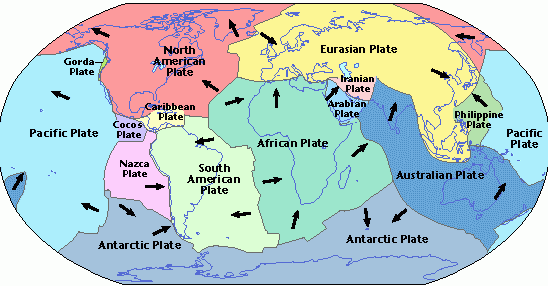

What is the fastest moving type of seismic wave?
P-wave
S-wave
Surface waves
All seismic waves travel at the same speed

What seismic feature is located on the Earth's surface?
Epicenter
Fault
Seismograph Station
The earthquake itself

Which body waves cause particles of rock material to move at right angles (perpendicular) to the direction in which the waves are traveling?
Body Waves
P Waves
S Waves
Surface Waves

Which wave has the highest amplitude on a seismograph AND does the most structural damage?
P Wave
S Wave
Surface Wave


Which is NOT True about the triangulation (compass arc drawings) in the picture?
Station 3 is closest to the epicenter
The epicenter is where all three circles intersect.
The Earthquake was the same Magnitude at all stations
Station 2 is the furthest from the epicenter

Which of the following is TRUE?
A shows the arrival of P-waves
B shows the arrival of S-waves
C shows the arrival of surface waves
The picture is of a seismogram
All answers are true


What are the two types of earthquake BODY waves?
P and S waves
Surface and Underground waves
Fast and Slow waves

Which of the following is TRUE about P-wave shadow zones?
There is 1 large shadow zone
There are 2 smaller shadow zones (due to refraction of waves)
There are NO P-wave shadow zones
P-waves do not travel through the Earth
Which of the following is TRUE about S-wave shadow zones?
There is 1 large shadow zone (since transverse waves cannot travel through the Earth's liquid outer core)
There are 2 smaller shadow zones (due to refraction of waves)
There are NO P-wave shadow zones
P-waves do not travel through the Earth
What is a numerical scale used measure the magnitude or energy release of an earthquake?
ricter scale
seismograph
siesmogram
mercalli scale


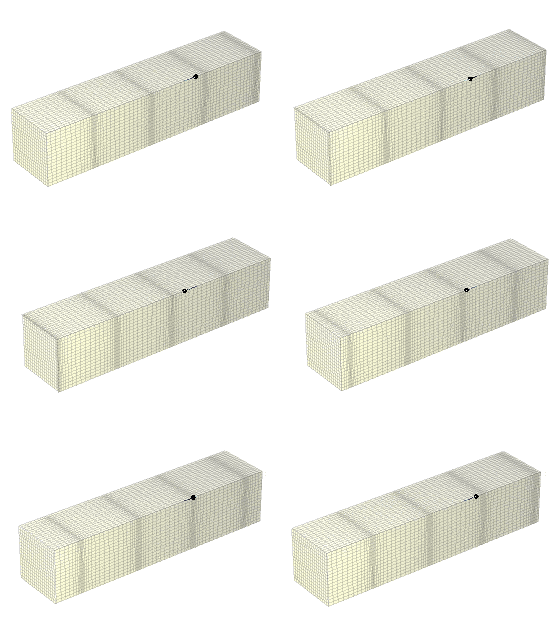

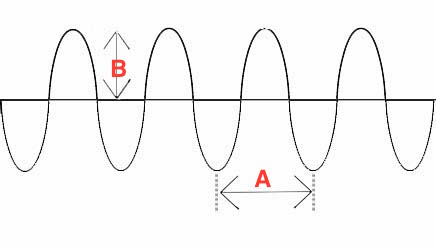


What is an earthquake wave that follows the main shock of an earthquake?
body wave
P wave
aftershock
S wave
What is the point on the surface of the earth directly above the focus of an earthquake?
epicenter
fault
focus
intensity
What is the location where the rupture of an earthquake begins and energy is released called?
epicenter
focus
intensity
S wave
What is a measure of the damage done by an earthquake called?
epicenter
magnitude
intensity
focus
What is a measure of the total amount of energy released at the focus of an earthquake called?
intensity
magnitude
seismic wave
epicenter
What is a series of sea waves caused by underwater earthquakes called?
storm surge
rip current
tsunami
massive flooding

