
 Worksheets
Global Patterns
Total questions: 47
Worksheet time: 30mins

Although the Sun is millions of miles away, the Sun's heat and light travel to Earth as waves. Which type of heat transfer is this an example of?
conduction
convection
radiation
reflection

Which of the following describes the part the Sun plays on a windy day at the beach?
The Sun stops the wind throughout the afternoon as everything warms up.
The Sun causes waves to be larger by directing solar energy into the water
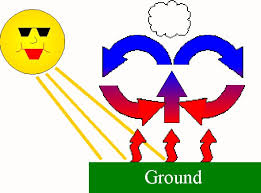
The Sun heats land quickly and as the warm air rises, cool air comes in from the water.
The Sun reflects off the water, making the air above the water unstable and more likely to move

Which statement BEST describes how the jet stream affects weather?
It makes storms heavier and more severe.
It makes weather harder for meteorologists to predict.
It causes water to evaporate resulting in drier weather.
It moves weather patterns from one location to another.

Wind is the movement of air caused by differences in air pressure. What is the ultimate energy SOURCE for wind?
the sun
the water cycle
ocean surface currents
the curvature of the Earth
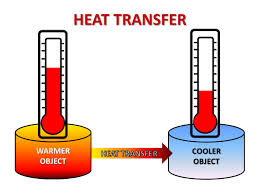
The transfer of heat is responsible for many of the events that occur on Earth. Which of the following events is MOST directly caused by radiation?
the circulation of air
the movement of the Earth's crust
the warming of the Earth's surface
the movement of the ocean currents
What type of heat transfer MOST directly causes wind?
conduction
convection
evaporation
sublimation

The way the steam is moving from the hot coffee is called...
convection
radiation
insulation
conduction
If you wanted to visit an area with no wind, where might you go?
The doldrums around the equator
The jet stream in the northern hemisphere
The North or South Pole
The area around the Mediterranean Sea
Cool air sinking causes an area of ____ pressure
Low
Medium
High
Which of the following is an area of calm (weak winds)?
Prevailing westerlies
Trade winds
Horse latitudes
Polar easterlies

What is wind?
The movement of water due to pressure differences
The movement of air due to pressure differences.
The movement of air due to pollution differences
The movement of water deep in the ocean

Cold air is _______ dense than warm air.
more
less
the same as

Warm air is _____ dense than cold air.
more
less
the same as

Warm air _______ and cold air _______.
sinks, rises
rises, sinks

Winds that blow steadily from specific directions over long distances are called
Sea breezes
Land breezes
Jet streams
Global Winds

Winds that blow over short distances are called
Local winds
Global winds
Doldrums
Coriolis Effect

The flow of air from an ocean or lake to the land is called a
Sea breeze
Land Breeze

The flow of air from land to a body of water is called a
Sea Breeze
Land Breeze

A narrow belt of high speed winds that blow from west to east, between 7 km and 16 km above Earth’s surface is called
a jet stream
the doldrums
the Coriolis effect
global winds

Which absorbs heat the fastest?
Land
Water



Energy transfer during which hot fluid rises and cold fluid sinks, creating a cycle, is called...
Heat
Convection
Radiation
Conduction

what is the main cause of the coriolis effect?
earth’s rotation
trade winds
the sun and ocean
temperature
The salt content of a substance
density
temperature
convection
salinity
Movements of ocean water located far below the surface.
Ocean Currents
Convection Currents
Deep Currents
Surface Currents
The Gulf Stream carries _____________ water from the east coast of The United States to the West coast of Europe.
Cold
Warm
Freezing
Fresh
Winds on the surface cause the warm surface water to be replaced with the colder more nutrient rich water.
Ocean Currents
Continental Deflections
Coriolis Effect
Upwelling

Ocean currents affect climates around the world. Based on the map, which area MOST likely has a warmer climate than expected?
1
2
3
4
Which best describes the Gulf Stream?
A cold ocean current that cools the weather off near Australia.
A cold ocean current that helps decrease global warming.
A warm ocean current that influences weather along the east coast of the U.S. and up toward Europe.
A warm ocean current that influences weather in Cuba and moves toward Antarctica.

