wayground logo

Free Printable Worksheets

NEW

Font size

S
M
L
XL
Worksheets

cells

Total questions: 47

Worksheet time: 24mins

Name
Class
Date
1.
Every living organism is made up of one or more cells
a)
True
b)
False
2.
A cell is...
a)
the basic unit of structure and function in living organism
b)
an organism
c)
a basic part of everything that we see
d)
found only in animals, not plants
3.
Which of the following are NOT found in animal cells
a)
chloroplasts and cytoplasm
b)
chloroplasts and cell wall
c)
cell wall and cell membrane
d)
mitochondria and nucleus
4.
The nucleus is like the ____________ of the cell.
a)
foot
b)
hand
c)
stomach
d)
brain
5.

Which of the following converts food into energy for the cell?

a)

vacuole

b)

mitochondria

c)

cytoplasm

d)

cell membrane

6.

The fluid that surrounds the organelles is... (hint... "Try to pull a fast one and..."

a)

chloroplast

b)

cytoplasm

c)

vacuole

d)

cell wall

7.
What do vacuoles do? 
a)
They actually do not have an important role
b)
They protect the cell
c)
They are the brain of the cell
d)
storage area for cells; water storage in plants 
8.

Which organelle takes in "sun showers" and helps plants with the process or photosynthesis?

a)

Vacuole

b)

Mitochondria

c)

Cytoplasm

d)

Chloroplast

9.
If you were some bad guy trying to sneak into an animal cell, who would be there to stop you?
a)
nucleus
b)
mitochondria
c)
cell membrane
d)
cell wall
10.
Which of the following, found ONLY in plant cells, provides structure?
a)
cell wall
b)
chloroplast
c)
mitochondria
d)
vacuole
11.
Which of the following is the smallest unit of life that can carry out all life functions?
a)
the mitochondria
b)
the vacuoles
c)
the nucleus
d)
the cell
12.
Which structures are found in every living cell?
a)
cell membrane and cytoplasm
b)
chloroplasts and mitochondria
c)
a cell wall and nucleus
d)
chloroplasts and cell wall
13.
Which cell structure is found in plant and animals cells and controls what can come into or leave a cell?
a)
cell membrane
b)
cytoplasm
c)
nucleus
d)
vacuole
14.
What is the function of the cell nucleus found in both plant and animal cells?
a)
to produce energy
b)
to control cell activity
c)
to remove waste products
d)
to allow molecules to enter the cell
15.
What is one basic function of the vacuoles?
a)
circulating oxygen
b)
producing food
c)
controlling cell processes
d)
storing water
16.
Chloroplasts in plant cells allow the plant to perform a function that animal cells cannot do.  What is the main function of the chloroplasts found in plant cells?
a)
to absorb light energy and manufacture food
b)
to remove waste materials by active transport
c)
to manufacture chemical energy from food
d)
to control the shape of the cell
17.
All cells need energy to function.  Which cell organelle is responsible for producing energy in the cell?
a)
chloroplasts
b)
mitochondria
c)
nucleus
d)
vacuoles
18.
What is the function of a cell wall?
a)
to protect and support the cell
b)
to perform different functions in each cell
c)
to prevent water from passing through it
d)
to prevent oxygen from entering the cell
19.
In what part of the plant cell does the process of photosynthesis take place?
a)
nucleus
b)
mitochondria
c)
chloroplasts
d)
vacuoles
20.
 Starch and water molecules in potato cells are stored in what organelle?
a)
mitochondria
b)
nucleus
c)
cell wall
d)
vacuole
21.
Who was the first  person to see cells under the microscope and give them their name?
a)
Mattias Schleiden
b)
Robert Hooke
c)
Theordor Schwann
d)
Anton van Leeuwenhoek
22.
The basic unit of structure and function in a living things.
a)
chloroplast
b)
nucleus
c)
cell
d)
cell membrane
23.
The ____________ regulates what enters and leaves the cell.
a)
mitochondria
b)
cell membrane
c)
golgi bodies
d)
cytoplasm
24.
This organelle creates the energy for the cell
a)
mitochondria
b)
cell membrane
c)
ribosome
d)
endoplasmic reticulum
25.
Jelly-like material that makes up most of the cell
a)
cytoskeleton
b)
cytoplasm
c)
cyclops
d)
cytoliquid
26.
This organelle is stores food, water and waste.
a)
Ribosome
b)
Cytoplasm
c)
Vacuole
d)
Mitochondria
27.
Animal cells have chloroplasts for photosynthesis
a)
True
b)
False
28.
Rocks are not living because
a)
they never move
b)
they aren't needed for humans
c)
they are not made of cells
d)
they don't break down
29.
An organism made of one cell is called
a)
unicellular organism
b)
multicellular organism
30.
Which best describes the main job of most cells in multicellular organisms?
a)
Cells work to keep themselves alive.
b)
Cells work to keep the organism alive.
c)
Cells work to release needed materials.
d)
Cells work to store unneeded materials.
31.
Which organisms are capable of surviving as a single cell?
a)
bacteria
b)
humans
c)
plants
d)
fish
32.
Why do humans require many different types of cells to survive?
a)
Human cells are identical and work together to perform the same function.
b)
Human cells are specialized and work together to perform the same function.
c)
Human cells are identical and work independently to perform different functions.
d)
Human cells are specialized and work independently to perform different functions.
33.

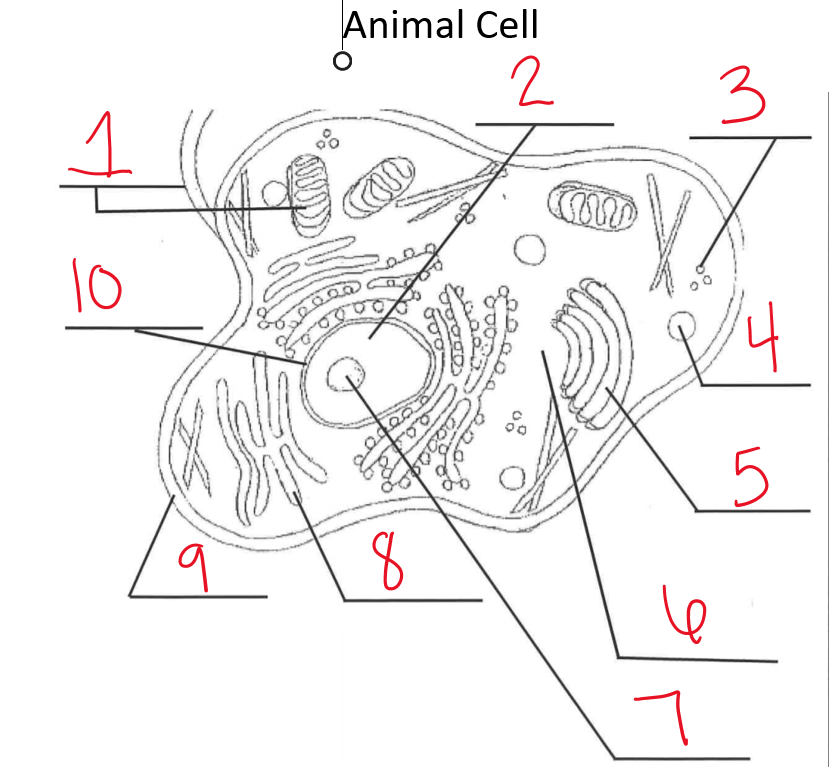
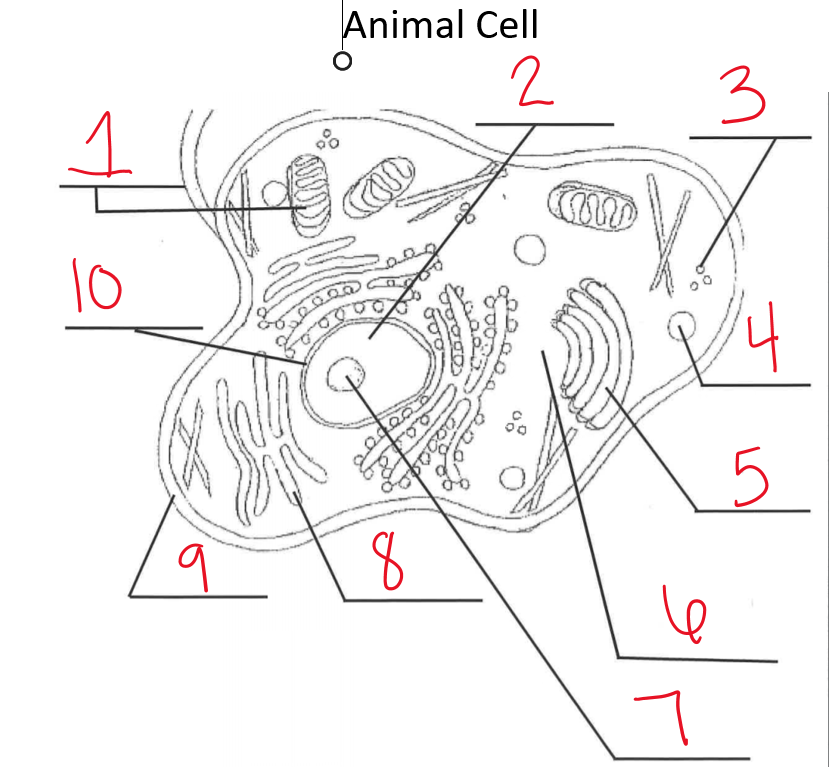
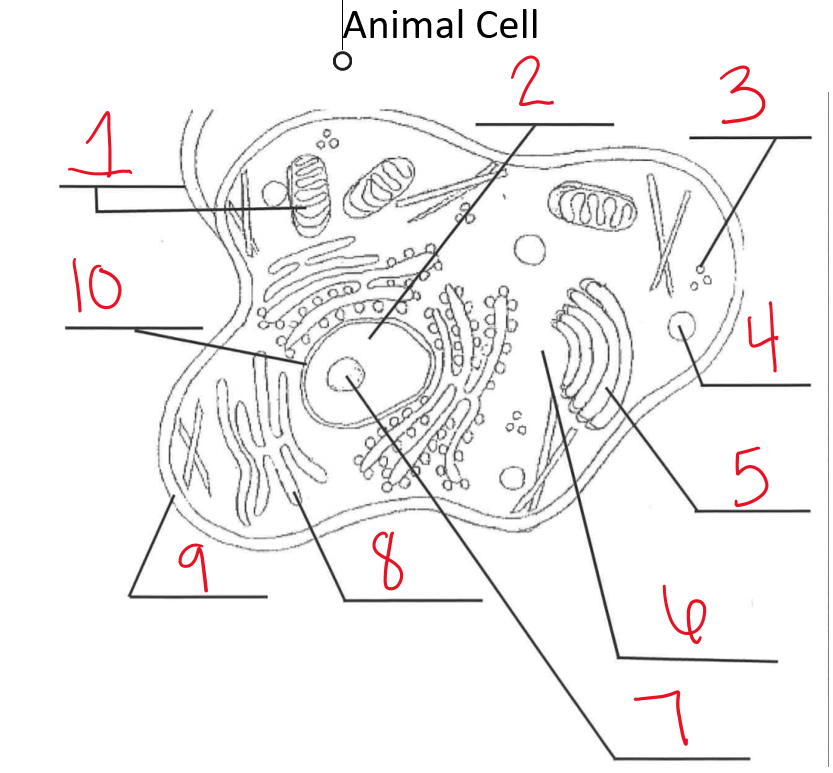
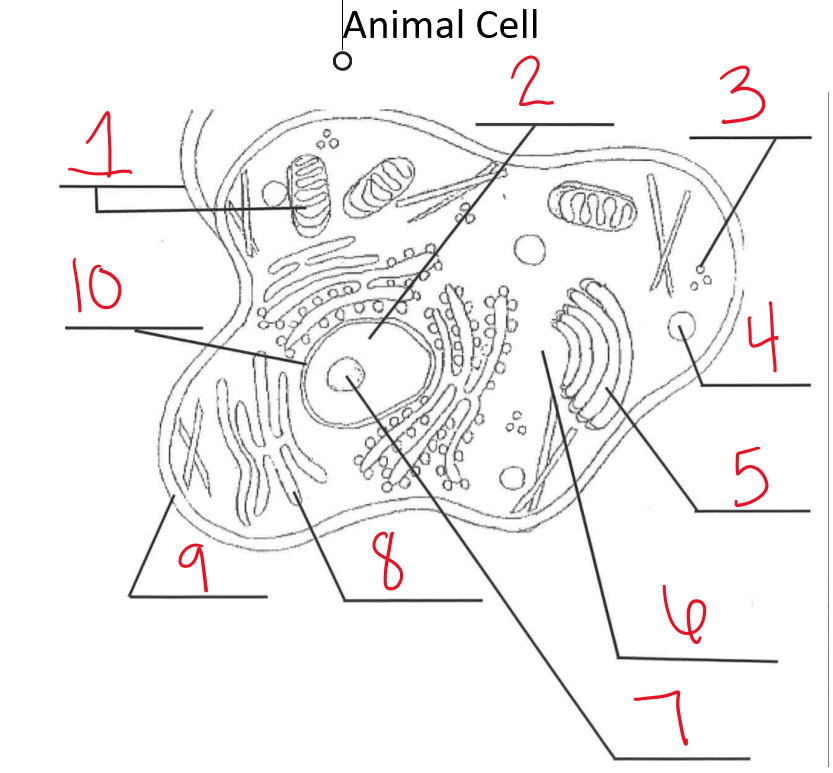
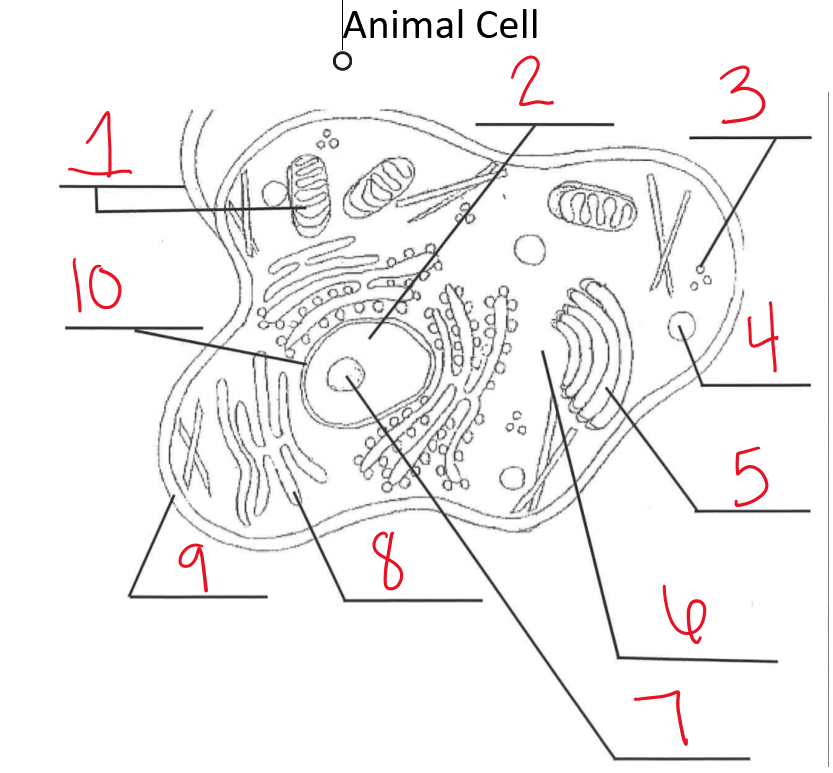
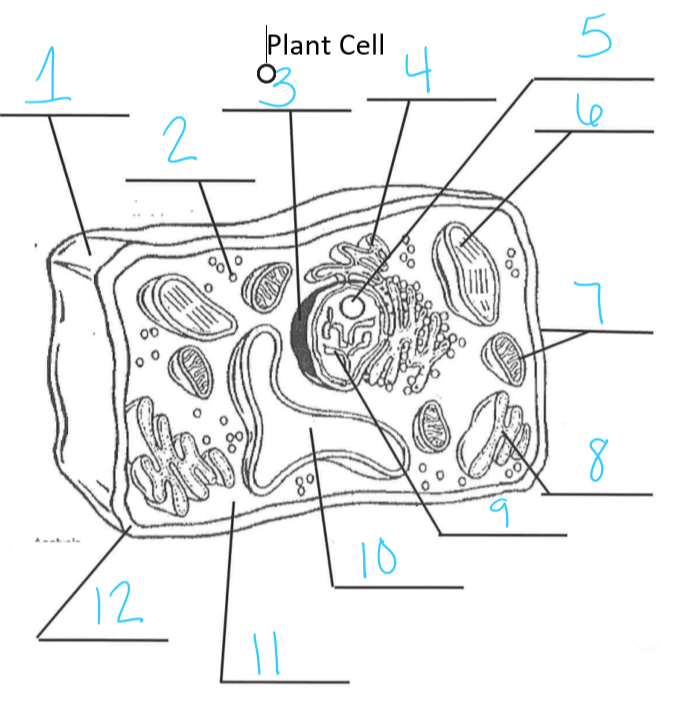
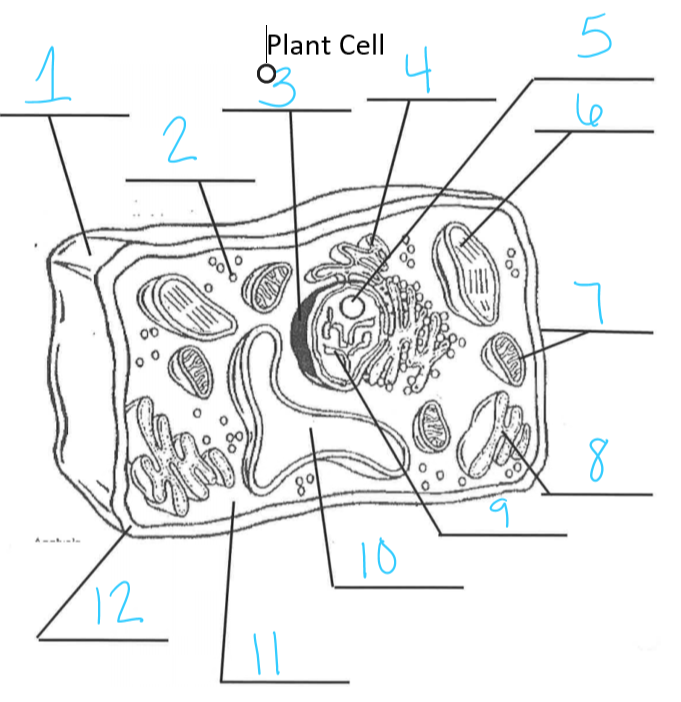
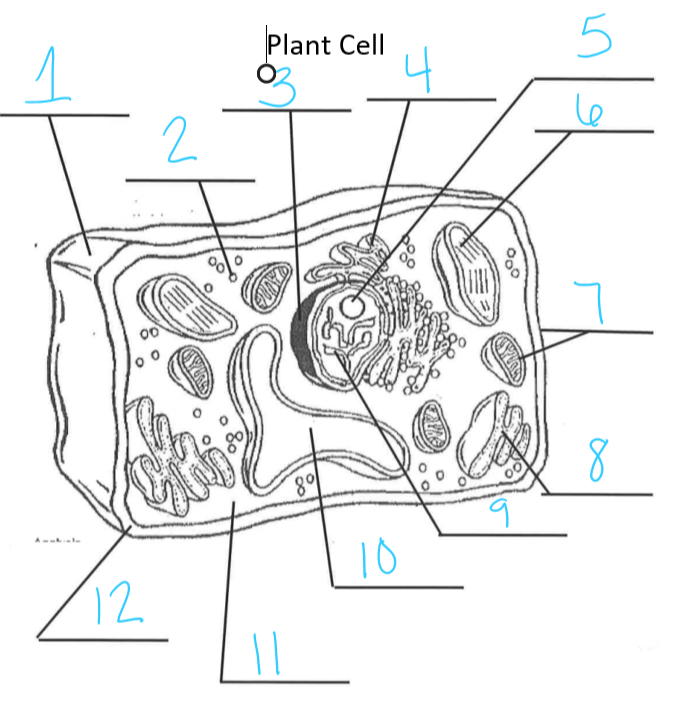
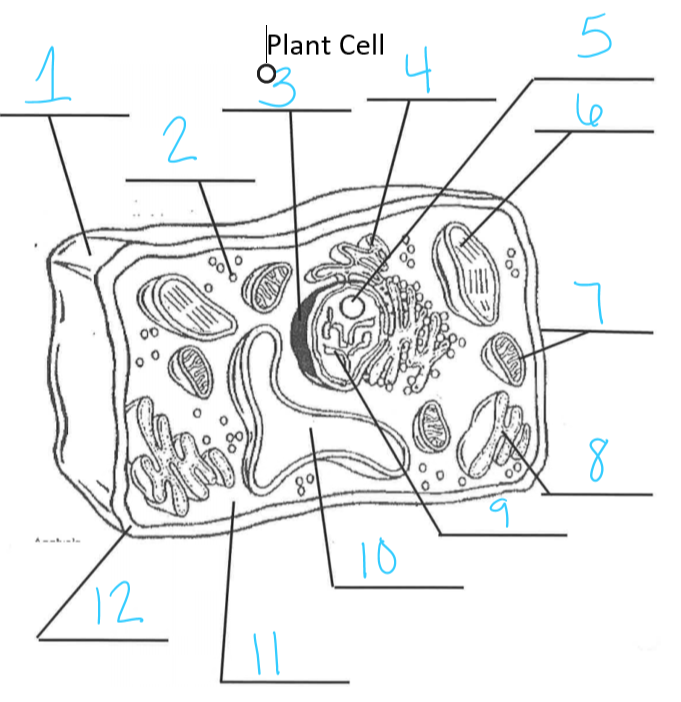
What organelle is labeled #1?

a)

Mitochondria

b)

Vacuole

c)

Chloroplast

d)

Nucleus

34.

What organelle is labeled #2?

a)

Nucleus

b)

Nuclear membrane

c)

Nucleolus

d)

Cell membrane

35.

What organelle is labeled #4?

a)

DNA

b)

ER

c)

Golgi body

d)

Vacuole

36.

What organelle is labeled #6?

a)

Nucleolus

b)

Cell membrane

c)

Cytoplasm

d)

Mitochondria

37.

What organelle is labeled #9?

a)

Cell wall

b)

Cell membrane

c)

Nuclear membrane

d)

DNA

38.

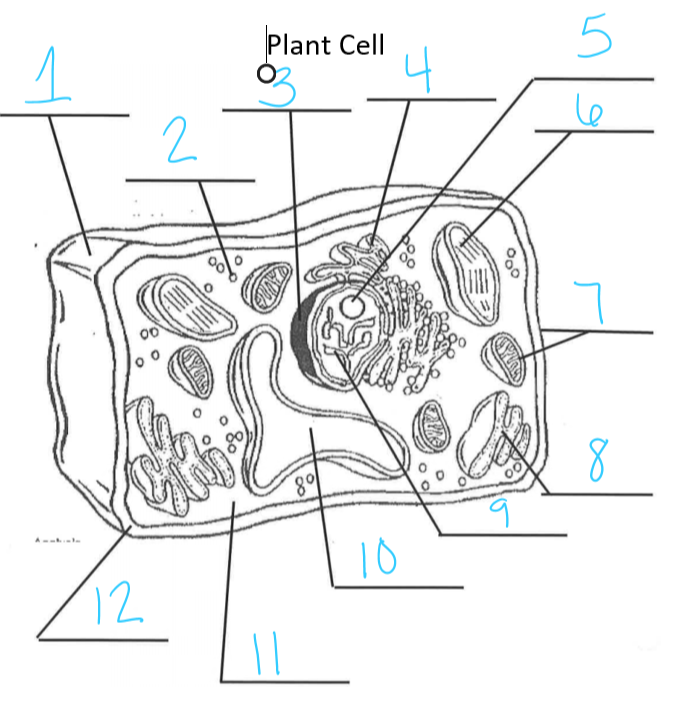
What organelle is labeled #1?

a)

Cell wall

b)

Cell membrane

c)

Cytoplasm

d)

Nuclear membrane

39.

What organelle is labeled #3?

a)

Nucleolus

b)

Nucleus

c)

DNA

d)

Cytoplasm

40.

What organelle is labeled #6?

a)

Chloroplasts

b)

Mitochondria

c)

Vacuole

d)

Ribosomes

41.

What organelle is labeled #7?

a)

Chloroplasts

b)

Vacuole

c)

Mitochondria

d)

Golgi body

42.

What organelle is labeled #10?

a)

Cytoplasm

b)

Vacuole

c)

Mitochondria

d)

ER

43.

What organelle is labeled #11?

a)

Cell wall

b)

Cell membrane

c)

Cytoplasm

d)

Chloroplast

44.

What organelle is labeled #12?

a)

Cell wall

b)

Nuclear membrane

c)

Cell membrane

d)

Ribosome

45.

What is letter A pointing to?

a)

Cell Wall

b)

Cell Membrane

c)

Vacuole

d)

Chloroplast

46.

What is letter B pointing to?

a)

Cell membrane

b)

Cell wall

c)

Mitochondria

d)

Nucleus

47.

What does letter h point to

a)

mitochondria

b)

nucleus

c)

vacuole

d)

cytoplasm