Wayground logo

Free Printable Worksheets

Font size

S
M
L
XL
Worksheets

cells tissues organs- year 7 revision

Total questions: 80

Worksheet time: 40mins

Name
Class
Date
1.
What is an organism that consists of one cell?
a)
unicellular
b)
multicellular
c)
nucleus
d)
organelle
2.
What is an organism that consists of more than one cell?
a)
unicellular
b)
multicellular
c)
nucleus
d)
Organelle
3.
This picture is a good example of
a)
Growth
b)
Development
c)
Organelle
d)
Cell
4.
Which one of these is NOT one of the characteristics of living things?
a)
All living things eat.
b)
All living things reproduce.
c)
All living things require energy for life processes.
d)
All living things respond to the environment/stimuli.
5.
Which one of these is NOT one of the characteristics of living things?
a)
All living things drink water.
b)
All living things are composed of one or more cells.
c)
All living things grow develop and have life spans.
d)
All living things reproduce.
6.
Cells make
a)
tissues.
b)
organs.
c)
systems.
d)
organelles.
7.
Tissue makes
a)
cells.
b)
organs.
c)
systems.
d)
organelles.
8.
Organs make 
a)
cells.
b)
tissues.
c)
systems.
d)
organelles.
9.
Systems make 
a)
cells.
b)
tissues.
c)
organisms.
d)
organelles.
10.
Cells from 2 parents unite to form a new individual.
a)
asexual reproduction
b)
sexual reproduction
c)
biosphere
d)
stimulus
11.
Which one of the following is a characteristic of life?
a)
Growth
b)
Breathing
c)
Expelling toxins
d)
Photosynthesis
12.
The basic unit of life is called a (n)
a)
atom
b)
compound
c)
cell
d)
energy
13.
A worm turns away from light is an example of a worm
a)
reproducing
b)
doing cellular respiration
c)
having cells
d)
responding to its environment
14.
Which of the following characteristics of living things best explain a cat having a litter of kittens?
a)
living things respond to their environment
b)
living things maintain homeostasis
c)
living things reproduce
d)
living things are based on a genetic code
15.
During Respiration carbon dioxide gas (CO2) is produced.  When we exhale(breathe out) we expel(get rid of) the carbon dioxide gas from our bodies.  This is an example of
a)
Excretion
b)
Development
c)
Nutrition
d)
Movement
16.
A fox is chasing a rabbit to catch and eat it.  The rabbit is running away so it can survive.
Both animals are showing examples of
a)
Nutrition
b)
Reproduction
c)
Movement
d)
Sensitivity
17.
Respiration (breathing) is needed for........
a)
energy production
b)
getting rid of waste
c)
reproduction
d)
wind
18.
What do living things use energy for?
a)
To do things like grow, repair, replace cells, and digest.
b)
To find friends
c)
To succeed in school
d)
To reach their goal
19.
When you shade your eyes (a response) from a bright light (a stimulus), you are demonstrating which characteristic
a)
Respiration
b)
Sensitivity
c)
Movement
d)
Growth
20.
What is known as the production of offspring?
a)
Reproduction
b)
Growth
c)
Development
d)
Homeostasis
21.
A cat mates and produces kittens. This is an example of
a)
homeostasis
b)
reproduction
c)
growth and development
d)
stimuli
22.
A plant using sunlight to make food to use or a deer eating leaves from a shrub are examples of
a)
Movement
b)
Respiration
c)
Sensitivity
d)
Nutrition
23.
What is an increase in the amount of living material and/or the formation of new structures  ?
a)
Reproduction
b)
Growth
c)
Development
d)
Homeostasis
24.

Which type of tissue carries electrical signals through neurons?

a)

epithelial

b)

connective

c)

muscular

d)

nervous

25.

What is the term for cells grouped together to perform a specific function?

a)

cell

b)

tissue

c)

organ

d)

organ system

26.

What is the term for organs grouped together to perform a specific function?

a)

cell

b)

tissue

c)

organ

d)

organ system

27.

What is the term for the smallest unit of life?

a)

cell

b)

tissue

c)

organ

d)

organ system

28.

What is a group of cells that are alike and work together?

a)

a cell team

b)

a tissue

c)

a cell family

29.

The dark structure in the middle of each cell is a

a)

nucleus

b)

lysosome

c)

mitochondria

30.

Muscle tissue is made of ...

a)

muscle cells

b)

skin tissue

c)

stem cells

31.

A specialized cell is a cell that has ...

a)

the ability to divide

b)

a specific role to do

c)

no specific function in the bod

32.

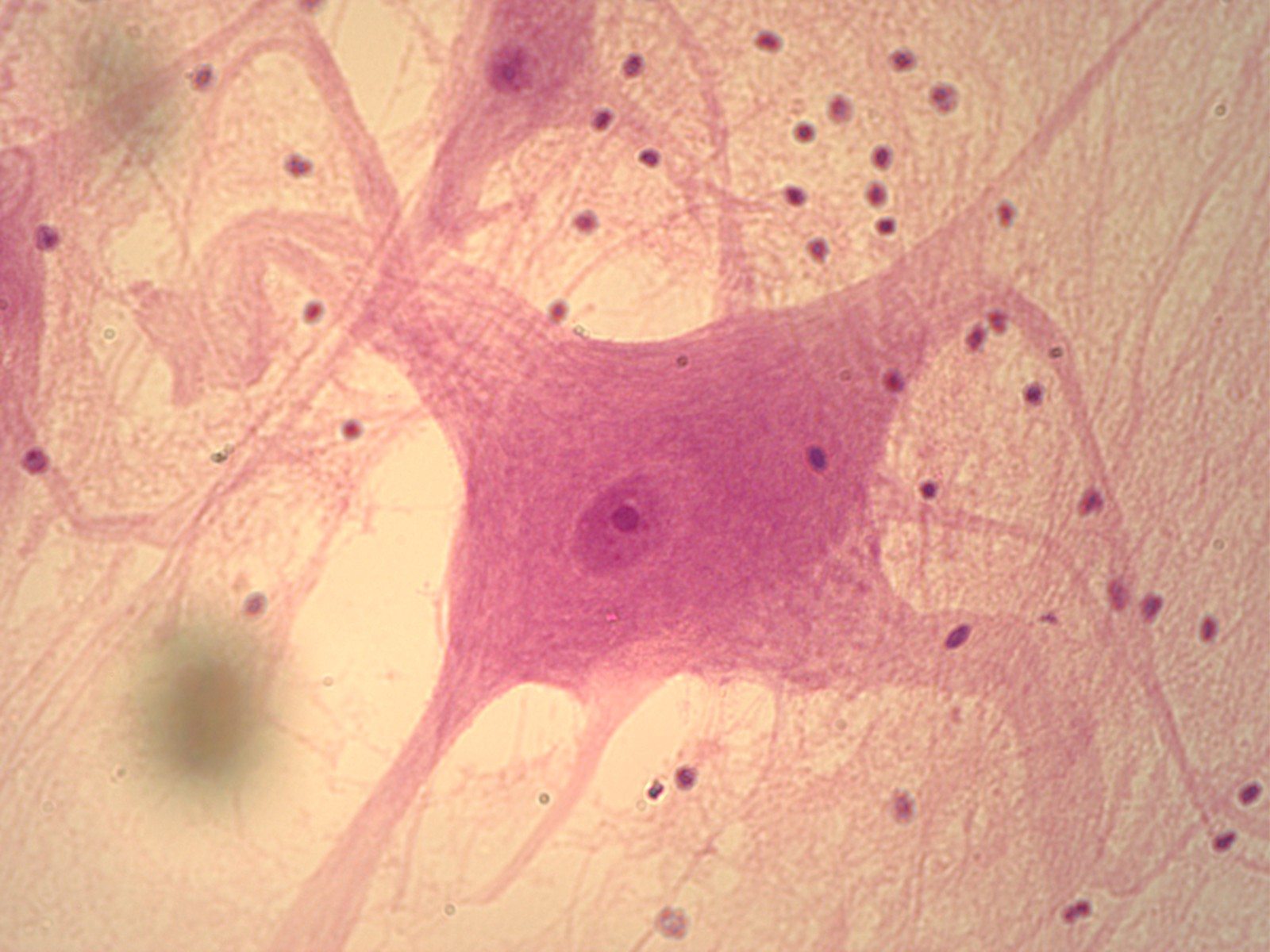
This type of tissue shown in the picture transmits information throughout the body to and from the brain.

a)

Nervous Tissue

b)

Connective Tissue

c)

Muscular Tissue

33.

What organ system includes muscles in your arms and legs?

a)

circulatory system

b)

respiratory system

c)

muscular system

d)

nervous system

e)

excretory system

34.

What is the name of the system that supports the weight of the entire body?

a)

Skeletal system

b)

Nervous system

c)

Digestive system

d)

Circulatory system

35.

Tissues are:

a)

cells that perform a specific function

b)

a collection of similar cells grouped together that perform a specific function

c)

a group of cells that perform a function

d)

Undifferentiated cells that perform a specific function

36.
Organ system that takes nutrients from your food and absorbs it into your body.
a)
Circulatory
b)
Digestive
c)
Respiratory
d)
Endocrine
37.
Organ system that SENDS and RECEIVES MESSAGES to different parts of your body.
a)
Circulatory
b)
Nervous
c)
Integumentary
d)
Digestive
38.
What do muscle cells do?
a)
receive and transmit signals
b)
carry gasses (such as oxygen)
c)
provide protection
d)
contract and relax
39.
What do red blood cells do?
a)
receive and transmit signals
b)
carry gasses (such as oxygen)
c)
provide protection
d)
contract and relax
40.
What do nerve cells do?
a)
receive and transmit signals
b)
carry gasses (such as oxygen)
c)
provide protection
d)
contract and relax
41.
What do bone cells do?
a)
receive and transmit signals
b)
carry gasses (such as oxygen)
c)
provide protection
d)
contract and relax
42.
What does muscle tissue do?
a)
carries messages to and from the brain
b)
provides structure and support
c)
causes movement
d)
forms the protective outer layer of skin
43.
What does nervous tissue do?
a)
carries messages to and from the brain
b)
provides structure and support
c)
causes movement
d)
forms the protective outer layer of skin
44.
What does the Urinary system do?
a)
send and receive messages throughout the body
b)
exchanges gasses between blood and the environment
c)
break down food and absorb nutrients
d)
filter the blood and get rid of toxins, wast and excess water
45.
What does the Respirtatory system do?
a)
send and receive messages throughout the body
b)
exchanges gasses between blood and the environment
c)
break down food and absorb nutrients
d)
filter the blood and get rid of toxins, wast and excess water
46.
What does the Circulatory system do?
a)
Protects the body and maintains temperature
b)
exchanges gasses between blood and the environment
c)
break down food and absorb nutrients
d)
transports gasses, nutrients, and hormones
47.
Which organ belongs to the digestive system?
a)
heart
b)
stomach
c)
femur
d)
brain
48.
Which organ system does the brain belong to?
a)
Reproductive
b)
Cardiovascular
c)
Integumentary
d)
Nervous
49.
Which organ belongs to the muscular system?
a)
femur
b)
humerus
c)
biceps brachii
d)
cranium
50.
Which organ belongs to the reproductive system?
a)
ovaries
b)
spleen
c)
large intestine
d)
liver
51.
Which organ belongs to the reproductive system?
a)
gluteus maximus
b)
humerus
c)
radial artery
d)
testes
52.
Which organ system do the kidneys belong to?
a)
reproductive
b)
urinary
c)
respiratory
d)
digestive
53.
Which organ belongs to the respiratory system?
a)
biceps brachii
b)
humerus
c)
stomach
d)
right lung
54.
The veins of the body belong to which organ system?
a)
nervous
b)
lymphatic
c)
digestive
d)
circulatory
55.
Which organ belongs to the urinary system?
a)
bladder
b)
spleen
c)
pineal body
d)
heart
56.

Which type of specialized cell carries oxygen from the lungs all over the body?

a)

red blood cells

b)

squamous (skin) cells

c)

muscle cells

d)

white blood cells (macrophages)

e)

nerve cells (neurons)

57.

Which type of specialized cell protects the body by destroying germs?

a)

red blood cells

b)

squamous (skin) cells

c)

muscle cells

d)

white blood cells (macrophages)

e)

nerve cells (neurons)

58.

Which type of specialized cell carries electrical signals through the body to the brain?

a)

red blood cells

b)

squamous (skin) cells

c)

muscle cells

d)

white blood cells (macrophages)

e)

nerve cells (neurons)

59.

Which type of specialized cell brings water from the roots to the leaves?

a)

xylem

b)

guard cells

c)

epidermis cells

d)

phloem

e)

root hair cells

60.

Which type of specialized cell sticks out into the soil, allowing water into the plant?

a)

xylem

b)

guard cells

c)

epidermis cells

d)

phloem

e)

root hair cells

61.

Red blood cells have a disk-shape with a lot of surface area.

a)

This statement describes a STRUCTURE.

b)

This statement describes a FUNCTION.

62.

Neurons have branches on the end of a long body.

a)

This statement describes a STRUCTURE.

b)

This statement describes a FUNCTION.

63.

Root hair cells have thin walls and stick out.

a)

This statement describes a STRUCTURE.

b)

This statement describes a FUNCTION.

64.

Root hair cells easily take in water from soil.

a)

This statement describes a STRUCTURE.

b)

This statement describes a FUNCTION.

65.
This organelle traps sunlight and uses that energy to convert it to food.
a)
Mitochondria
b)
Chloroplasts
c)
Lysosomes
d)
Chlorophyll
66.
This is a green pigment found in plants. 
a)
Chloroplasts
b)
Chlorophyll
c)
Cytoplasm
d)
MItochondria
67.
This specialized cell does not contain a nucleus to allow for transport of oxygen
a)
Nerve Cell
b)
Red Blood Cell
c)
White Blood Cell
d)
Palisade cell
68.

What is the function of red blood cells?

a)

Help to digest your food.

b)

Help you breathe.

c)

Provide nutrients to your organs.

d)

Carry oxygen throughout your body.

69.
A cell stores food, water or waste products in
a)
chloroplast
b)
nuclei
c)
ribosomes
d)
vacuole
70.

Which part of the microscope moves the stage up quickly?

a)

coarse adjustment knob

b)

fine adjustment knob

c)

diaphragm

d)

rotating nose piece

71.

what is the total magnification if the ocular lens is 10x and the objective lens is 4x?

a)

40x

b)

400x

c)

4x

d)

4000x

72.

what part of the microscope hold the slide on the stage?

a)

objective lenses

b)

stage clips

c)

rotating nose piece

d)

fine adjustment

73.

What is number 3?

a)

fine adjustment knob

b)

coarse adjustment knob

c)

stage

d)

diaphragm

74.

What is number 5?

a)

base

b)

stage

c)

light source

d)

arm

75.

What is a stage used for?

a)

lets light in

b)

where the slide is placed

c)

what holds the slide in place

d)

lets you see better

76.

What is the job of the roots?

a)

to make seeds to continue the life cycle

b)

to anchor the plant in the ground & soak up water and nutrients

c)

to help flowers reproduce

d)

to help the plant stand tall

77.

What is the job of the stem?

a)

to help plants stand tall and carry water, minerals and nutrients throughout the plant

b)

to soaks up light to make food for the plant

c)

to help anchor the plant in the ground

d)

to help flowers reproduce

78.

What is the job of the leaves

a)

to soak up water and nutrients

b)

to make seeds to continue the life cycle

c)

to soak up light to make food for the plant

d)

to help the plant stand tall

79.
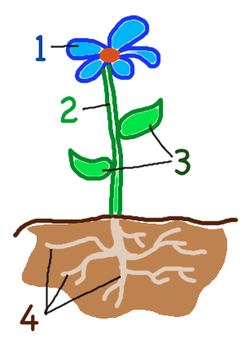
What part of the plant is #4?
a)
leaf
b)
flower
c)
stem
d)
root
80.
What part of the plant is #2?
a)
leaf
b)
flower
c)
stem
d)
root