
Font size
 Worksheets
Chapter 6 Review for test - bonding types, polarity, Lewis D
Total questions: 67
Worksheet time: 53mins
What kind of bond forms when atoms exchange or transfer electrons?
What happens when a sodium atom loses an electron? What is its charge?
To become stable and gain a full outer shell.
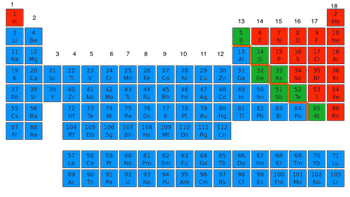
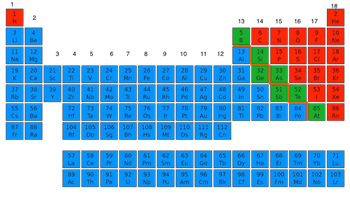
For metals (groups 1,2 and 13(3A)), its easier to _____ electrons to have a full outer shell.
gain
lose
share
For nonmetals (groups 15-17), its easier to _____ electrons to have a full outer shell.
gain
lose
share


Which type of bond has an unequal sharing of electrons between two atoms?
nonpolar covalent
polar covalent
ionic
mettalic

Which type of bond creates a "pool or sea" of electrons between atoms?
Ionic Bonds
Covalent Bonds
Metallic Bonds
Saving Bonds

How many electrons can fit in the first energy level?

An atom of nitrogen (N) has _______ open bonding sites or holes to fill?
5
4
3
8
A triple covalent bond forms when two atoms share ____________.
2 pairs of electrons
4 total electrons
3 pairs of electrons
3 total electrons
Which of the following is true about Covalent (non-polar) bonds? (select ALL true options)
High melting point
Low melting point
Can conduct electricity
small electronegativity differences
form crystal lattices

Which of the following is a covalent compound?
CaO
NaCl
CaCl2
CH4
K1+ S2-
liquid
solid
gas
an alloy
What is the 'sea of electrons'?
A wave of electrons.
Electrons surrounding positive ions in metallic bonds.
Electrons in an electron cloud.
Electrons released when atoms form ions.
What could be a charge on aluminum?
1+
2+
3+
4+
Why do metals conduct electricity?
Why are metals malleable?
They are shiny
The electrons are held tightly within the lattice structure making it strong
The electrons are delocalized and able to move between the atoms
The electrons are shared between two metal ions and this holds the atoms together
Which of these are considered properties of metals? (choose ALL that apply)
brittleness
low melting point
luster (shininess)
malleability
ductility

ΔEN If atom X has an electronegativity of 2.8 and and Y has an electronegativity of 0.4 what type of bond would that be?
Ionic
pure covalent
polar covalent

When drawing the Lewis Dot of a molecule you should try and make it
symmetrical in order to spread out the electrons as much as possible
asymmetrical so it looks balanced
exactly the same on the top and bottom only
look nice

How do you draw a dipole moment?
The arrow points to the partially negative side.
The arrow points to the partially positive side.
You always point to the right.
You always point to the left.
How many available electrons are there to share in CO2
(1 x 4) + (2 x 6) =16
(1 x 8) + (2 x 8) = 24
24-16 = 8
16-8= 8
How many electrons are shared in C2 H2 . Choose the best answer.
(2 x 4) + (2 x 1 ) = 10
(2 x 8 ) + (2 x 2) = 20
20-10 = 10
10-10 -0
When drawing a Lewis Dot of a molecule which atom never goes in the middle?
Hydrogen
Carbon
Oxygen
Fluorine
When drawing a Lewis Dot which atom goes in the middle usually?
The one missing the most electrons.
The one missing the least electrons.

The higher the electronegativity of the atom
the more negative that side of the molecule is.
the more positive that side of the molecule is.

What is the correct Lewis dot for CS2?
A
B
C
D
E

What is wrong with this Lewis Dot?
One of the hydrogen atoms has 4 electrons.
There are not enough electrons around each hydrogen atom.
Carbon doesn't have 8 valence electrons.
What type of bond is between K and Se?
ionic
covalent
metallic
What type of bond is between H and Cl?
ionic
covalent
metallic
What type of bond is between Rb and Ag?
ionic
covelant
metallic

ΔEN What would the bond type be between atom A with an electronegativity of 3.1 and atom B with an electronegativity of 2.8?
Ionic
Pure Covalent
Polar Covalent
polyatomic ions
have a charge and have more than one atom type
with (OH)−1
You need to add 1 electron to Available (A)
with (NH4)+
You need to subtract an electron from Available (A)
with (Cr2O7)−2
You need to add 2 electrons to Available (A)
with PO4−3
You need to add 3 electrons to Available (A)

What atom does this Bohr Model represent?
(a)

What atom does this Bohr Model represent?
(a)
Which is the correct Lewis dot structure for ammonia, NH3?


Which Lewis Dot Model drawing correctly shows an O2 molecule?


Which term represents the strength of the attraction an atom has for the electrons in a chemical bond?
Electrical conductivity
Electronegativity
First ionization energy
Specific heat capacity
An atom of which element has the strongest attraction for the electrons in a bond?
Aluminum
Carbon
Chlorine
Lithium
As atomic number increases within Group 15 on the
Periodic Table, atomic radius
decreases, only
increases, only
decreases, then increases
increases, then decreases
An Mg atom differs from an Mg2+ ion in that the
atom has a
smaller radius
larger radius
smaller nucleus
larger nucleus
Which statement describes the general trends in
electronegativity and first ionization energy as the
elements in Period 3 are considered in order from Na
to Cl?
Electronegativity increases, and first ionization
energy decreases.
Electronegativity decreases, and first ionization
energy increases.
Electronegativity and first ionization energy
both increase.
Electronegativity and first ionization energy
both decrease.
Samples of four Group 15 elements, antimony,
arsenic, bismuth, and phosphorus, are in the gaseous
phase. An atom in the ground state of which element
requires the least amount of energy to remove its
most loosely held electron?
As
Bi
P
Sb
Which element requires the least amount of energy
to remove the most loosely held electron from a
gaseous atom in the ground state?
bromine
calcium
sodium
silver
Based on Reference Table S, which of the following
atoms requires the least energy for the removal of
the most loosely bound electron?
Sn
Sr
Be
Br

