wayground logo

Free Printable Worksheets

NEW

Font size

S
M
L
XL
Worksheets

Biomolecules and Cell Transport 2025

Total questions: 63

Worksheet time: 1hrs 22mins
Name
Class
Date
1.
What biomolecule do enzymes belong to? 
a)
Carbohydrate
b)
Lipid
c)
Nucleic Acid
d)
Protein
2.

What are the names of the two types of cell transport shown in the picture?

a)

Passive and Active

b)

Active and Facilitated

c)

Passive and Facilitated

d)

None of the above

3.

In passive transport, substances move across the cell membrane ________ the concentration gradient

a)

AGAINST

b)

PARALLEL TO

c)

WITH

d)

BETWEEN

4.

Which example describes diffusion?

a)

Water moving across a semi-permeable membrane

b)

Baking cookies and smelling them throughout the house

c)

Ions moving through an ion channel

d)

All of the above

5.

What macromolecule is embedded into the lipid bilayer and helps to transport molecules?

a)

Carbohydrate

b)

Lipid

c)

Protein

d)

Nucleic Acid

6.

The movement of particles from an area of high concentration to an area of low concentration

a)

active transport

b)

osmosis

c)

diffusion

d)

random movement

7.

If a cell is placed in an environment with MORE oxygen OUTSIDE the cell than inside, the cell will...

a)

gain oxygen

b)

lose oxygen

c)

gain water

d)

lose water

8.

The movement of materials that does NOT require energy is called...

a)

active transport

b)

passive transport

c)

massive transport

d)

proactive transport

9.

The movement of materials that requires energy is called...

a)

active transport

b)

passive transport

c)

massive transport

d)

proactive transport

10.

The movement of materials from an area of low concentration to an area of high concentration would require...

a)

glucose

b)

energy (ATP)

c)

fish

d)

chips

11.

A process in which cells surround and engulf substances that are TOO BIG to enter the cell is known as...

a)

Pinocytosis

b)

Phagocytosis

c)

Endocytosis

d)

Receptor-mediated

12.

When a cell forms a vesicle around unwanted particles and expels it OUT of the cell.

a)

Pinocytosis

b)

Endocytosis

c)

Receptor-mediated

d)

Exocytosis

13.
What is another term for "selectively permeable"?
a)
porous
b)
completely permeable
c)
permanent
d)
semipermeable
14.
Most of the cell membrane is made of...
a)
Lipids
b)
Carbohydrates
c)
Proteins
d)
Nucleic acids
15.
What forms the channels and pumps in the phospholipid bilayer?
a)
carbohydrates
b)
proteins
c)
hydrophilic heads 
d)
lipids
16.
Which of the following is NOT part of the cell membrane?
a)
Lipids
b)
Carbohydrates
c)
Proteins
d)
Nucleic Acids
17.
Part of the plasma membrane responsible for cell recognition... 
a)
C
b)
E
c)
B
d)
D
18.
The function of the plasma membrane is....
a)
to regulate what enters and leaves the cell.
b)
fight bacteria and viruses that enter the cell.
c)
provide rigid support and protection to the cell.
d)
make sure each cell can move
19.
Hydrophilic means...
a)
water-loving
b)
water-fearing
c)
nonpolar
d)
lipid soluble
20.
Hydrophobic region of the cell membrane?
a)
E
b)
B
c)
C
d)
21.
Hydrophilic portion of cell membrane?
a)
A
b)
C
c)
D
d)
22.
A phospholipid has 2 parts. What are they called? 
a)
Hydrophilic Head, Hydrophobic Tail 
b)
Hydrophobic Head, Hydrophilic Tail 
23.
___________ strengthens and stabilizes the cell membrane.
a)
Carbohydrates 
b)
Proteins 
c)
Phospholipids 
d)
Cholesterol
24.

What forms the channels and carriers in the phospholipid bilayer?

a)
carbohydrates
b)
proteins
c)
hydrophilic heads 
d)
lipids
25.
What are the carbohydrates in the cell membrane for?
a)
to form channels and pumps
b)

to help cells identify one another (communication)

c)
to make the membrane strong
26.
Cells need to bring in molecules to carry out cellular processes. Often, this requires moving the molecules across the cell membrane against the concentration gradient. How do these molecules get into the cell?
a)
passive transport by diffusion
b)
active transport using ATP 
c)
passive transport by osmosis
d)
 osmosis
27.
 Look at the diagram of a cross-section of a cell membrane below. The cell membrane controls movement of materials into and out of the cell. The following particles are moving from high concentration to low concentration and are using a carrier protein. How would you describe this type of movement across the membrane? 
a)
simple osmosis
b)
active transport
c)
simple diffusion
d)
facilitated diffusion
28.
Look at the cross section of a cell membrane of a eukaryotic cell. H+ ions are being pumped from a low concentration to a high concentration. How do you describe this type of transport across the cell membrane?
a)
active transport
b)
passive transport
c)
facilitated diffusion
d)
co-transport
29.
The diagram below represents a cell and some molecules in its environment. Which molecule would require the use of energy in order to be brought into the cell?
a)
1
b)
2
c)
3
d)
4
30.
Which activity can occur without the use of energy?
a)
contraction of muscle tissue
b)
protein synthesis in a cell
c)
active transport of minerals
d)
movement of water across a membrane
31.
The diffusion of water across a selectively permeable membrane is called 
a)
active transport
b)
facilitated diffusion
c)
osmosis
d)
phagocytosis
32.
During diffusion molecules tend to move 
a)
   up the concentration gradient
b)
 from an area of lower concentration to an area of higher concentration
c)
 in a direction that doesn’t depend on concentration
d)
 down the concentration gradient
33.

What is it called when molecules move across the cell membrane from an area of high concentration to an area of low concentration through a channel protein?

a)
Diffusion
b)
Osmosis
c)
Active Transport
d)
Facilitated Diffusion
34.
This picture represents what type of cell transport?
a)
endocytosis
b)
exocytosis
c)
osmosis
d)
passive transport
35.
Which is true about active transport?
a)
It requires energy
b)
it does not require energy
c)
It moves substances down the concentration gradient
d)
it moves material from high to low concentration
36.
Cell membrane surrounds a particle and encloses it (for large particles)
a)
Endocytosis
b)
Exocytosis
c)
Permeable
d)
In high concentration
37.

Type of protein that spans the entire cell membrane that functions as support and shape of the cell membrane.

a)

Globular

b)

Fibrous

c)

Peripheral

d)

Channel

38.

Type of protein found on the surface of the cell membrane that functions primarily in communication and transport.

a)

globular/integral

b)

fibrous/integral

c)

fibrous/globular

d)

globular/peripheral

39.
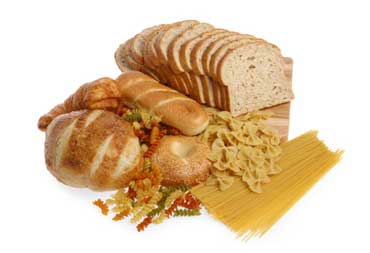
Which biomolecule is found in pasta and bread?
a)
Lipid
b)
Protein
c)
Nucleic Acid
d)
Carbohydrate
40.
Which biomolecule is a main source of quick energy?
a)
Nucleic Acid
b)
Protein
c)
Lipid
d)
Carbohydrate
41.
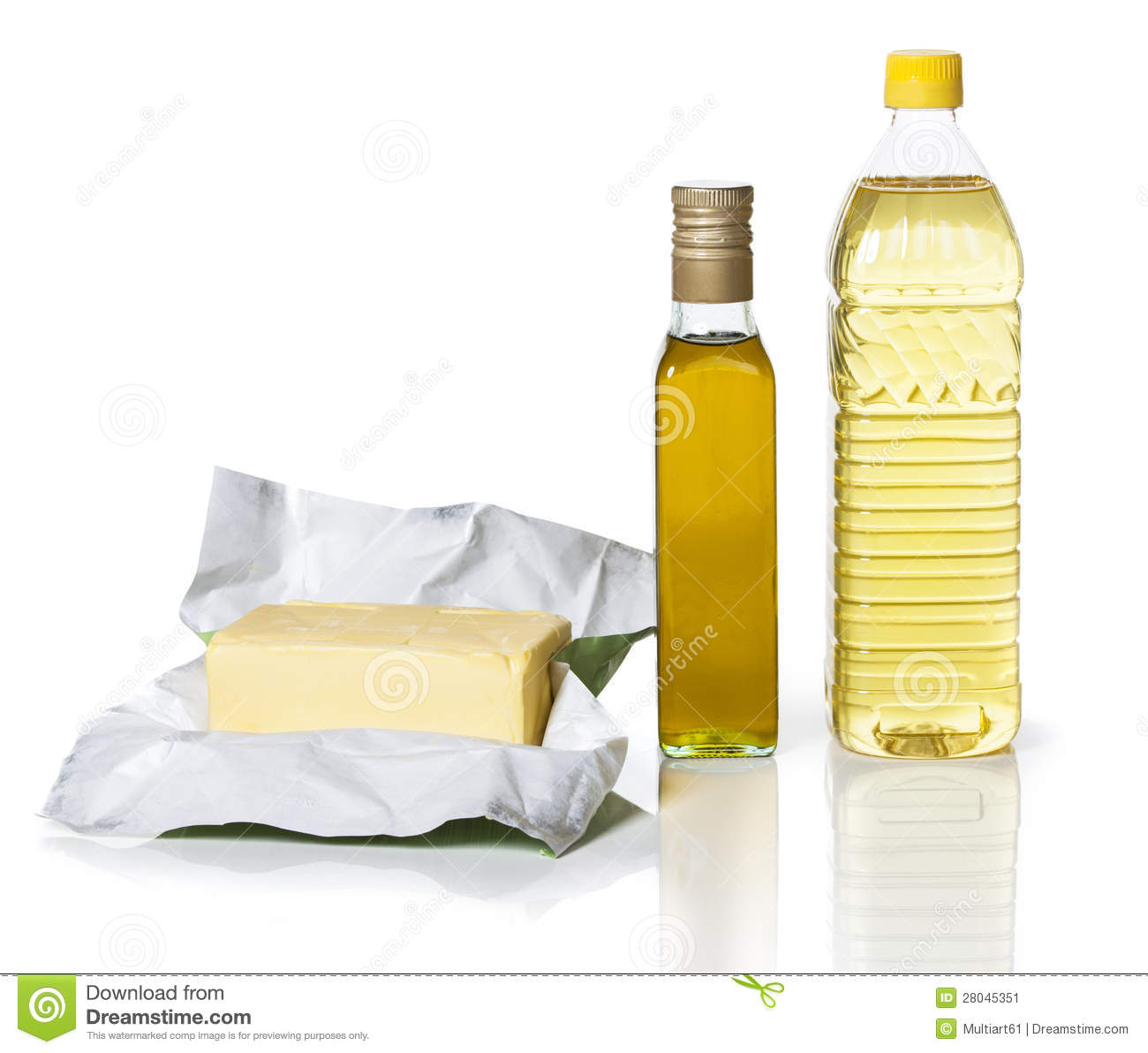
Which biomolecule is found in fats, oils, and waxes and is a source of long-term energy
a)
Proteins
b)
Nucleic Acid
c)
Lipids
d)
Carbohydrate
42.
What is the function of a nucleic acid?
a)
Stores genetic information
b)
Stores energy
c)
Quick source of energy
d)
Builds structures
43.
Carbon, Hydrogen, Oxygen and Nitrogen are elements in what biomolecule?
a)
Carbohydrate
b)
Lipid
c)
Protein
d)
Nucleic acid
44.
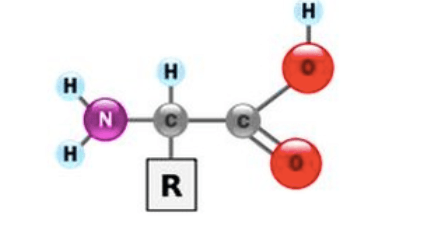
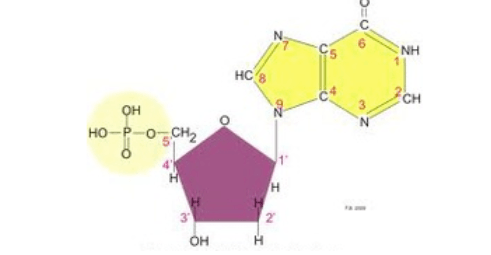
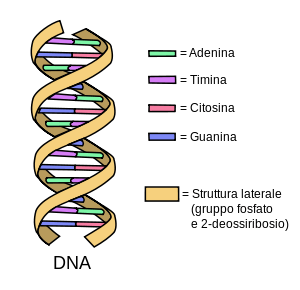
Which biomolecule is this a picture of?
a)
Protein
b)
Nucleic Acid
c)
Lipid
d)
Carbohydrate
45.
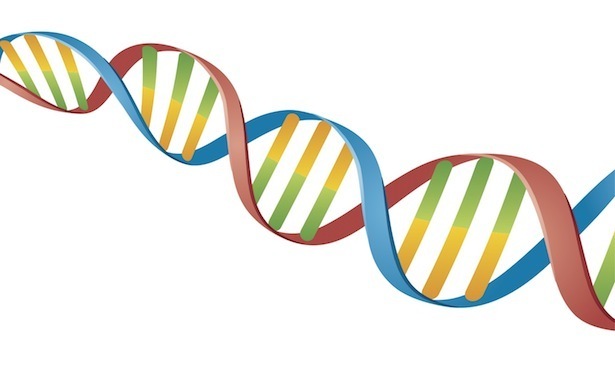
Which biomolecule is this a picture of?
a)
Protein
b)
Nucleic Acid
c)
Lipid
d)
Carbohydrate
46.
Which biomolecule is made of nucleotides and contain you DNA?
a)
Carbohydrate
b)
Lipids
c)
Protein
d)
Nucleic Acid
47.

Which biomolecule helps form muscles?

a)

Nucleic Acid

b)

Carbohydrate

c)

Protein

d)

Lipids

48.
Which biomolecule is responsible for insulation and energy storage?
a)
Protein
b)
Nucleic Acid
c)
Lipid
d)
Carbohydrate
49.
Which biomolecule has sugars and starches?
a)
Lipids
b)
Proteins
c)
Carbohydrates
d)
Nucleic Acid
50.
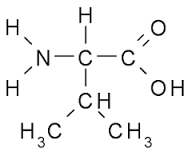
What type of molecule is this?
a)
Nucleic acid
b)
Protein
c)
Carbohydrate
d)
Lipid
51.
What elements are common to all 4 biomolecules?
a)
Carbon, hydrogen, nitrogen
b)
Carbon, Nitrogen, Phosphorus
c)
Carbon, Hydrogen, Oxygen
d)
Carbon, Hydrogen, Phosphorus
52.
A monomer is ...
a)
a single atom
b)
a building block for polymers
c)
a single element
d)
is an inorganic molecule
53.
Enzymes are considered to be 
a)
Lipids
b)
Carbohydrate
c)
Protein
d)
Nucleic Acid
54.

What type of molecule does Benedict's test detect?

a)

lipids

b)

monosaccharides (glucose, fructose)

c)

disaccharides (table sugar=sucrose)

d)

proteins

e)

polysaccharides (complex sugars, starches, etc)

55.

What type of molecule does Biuret's test detect?

a)

lipids

b)

monosaccharides (glucose, fructose)

c)

disaccharides (table sugar=sucrose)

d)

proteins

e)

polysaccharides (complex sugars, starches, etc)

56.

Steroids are:

a)

lipids

b)

monosaccharides (glucose, fructose)

c)

disaccharides (table sugar=sucrose)

d)

proteins

e)

polysaccharides (complex sugars, starches, etc)

57.

There are essential fats and essential amino acids, but there are NO essential carbohydrates.

a)

True

b)

False

58.

Overall, the researchers/scientists/doctors in the video "Fat Fiction" believe that Americans are suffering from high rates of obesity, heart disease, diabetes, and other chronic illnesses because:

a)

we eat too much fat

b)

we eat too much sugar (carbs)

c)

we eat too much protein

d)

we eat too much cholesterol

59.

Which biomolecule causes the LARGEST spike in our blood sugar levels?

a)

lipids

b)

proteins

c)

carbohydrates

60.

Which of the following is considered a fat-storing molecule?

a)

insulin

b)

cholesterol

c)

oxytocin

d)

testosterone

61.

Which of the following best represents the central argument of the documentary Fat Fiction?

a)

The obesity crisis is primarily caused by a lack of willpower and insufficient exercise

b)

Dietary fat, particularly saturated fat, is the main culprit behind chronic diseases like heart disease

c)

The prevailing low-fat dietary guidelines have inadvertently contributed to the rise in obesity and related health issues.

d)

The consumption of genetically modified organisms (GMOs) is the leading cause of the current health epidemic

62.

According to the documentary, which of the following has been a more significant factor in the decline of heart disease mortality rates since the 1970s than the low-fat diet?

a)

Widespread adoption of high-fiber diets

b)

Public health initiatives promoting more sleep

c)

The increased consumption of red meat

d)

Medical advancements and a reduction in smoking rates

63.

According to the documentary, how did the food industry respond to the low-fat dietary guidelines of the 1970s and 80s?

a)

They began producing a wider variety of whole, unprocessed foods

b)

They reformulated many products, replacing fat with sugar and refined carbohydrates to maintain palatability

c)

They launched a public campaign to educate consumers about the health benefits of saturated fat

d)

They invested heavily in research to find a way to make kids want to exercise more