wayground logo

Free Printable Worksheets

Font size

S
M
L
XL
Worksheets

PS Midterm Review

Total questions: 90

Worksheet time: 2hrs 30mins

Name
Class
Date
1.
What is a mixture?
a)
elements chemically combined
b)
a combination of different things
c)
it is found on the Periodic Table 
d)
it is made of chemical
2.
What does it mean if a mixture is heterogeneous?
a)
you can see the different parts
b)
cannot tell one part from another
c)
very well blended
d)
made of elements
3.
What does it mean if a mixture is homogeneous?
a)
you can see the different parts
b)
cannot tell one part from another
c)
chunks of particles
d)
made of elements
4.
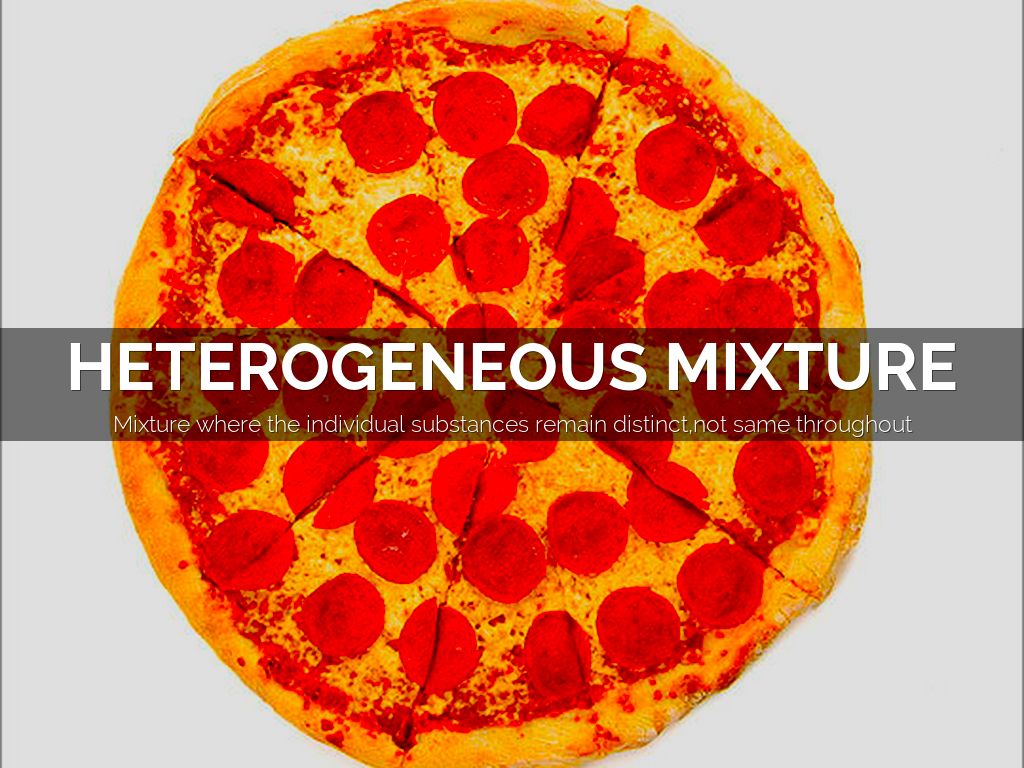
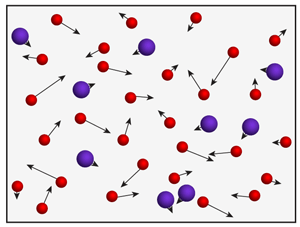
What type of mixture is this?
a)
heterogeneous 
b)
homogeneous
5.
What type of mixture is this?
a)
heterogeneous 
b)
homogeneous
6.
Sand floating in water, but most of the sand is settled at the bottom this an example of which type of mixture?
a)
A solution
b)
A colloid
c)
A suspension
d)
A compound
7.
Two classifications of a pure substance are
a)
homogeneous and heterogeneous
b)
atoms and elements
c)
elements and compounds
d)
solutions and colloids
8.
A substance that is made up of only one kind of atom is a(an)
a)
compound
b)
homogeneous mixture
c)
element
d)
solution
9.

Is NaCl an element or a compound?

a)

Element

b)

Compound

10.

What is happening at point B is heat is leaving the matter?

a)

melting

b)

freezing

c)

evaporating

d)

condensing

11.

What is happening at point B if heat is entering the matter?

a)

melting

b)

freezing

c)

evaporating

d)

condensing

12.

What is happening at point D as heat is removed?

a)

evaporating

b)

condensing

c)

boiling

d)

melting

13.

What state of matter has the weakest intermolecular forces?

a)

solid

b)

liquid

c)

gas

14.

What state of matter has the strongest intermolecular forces?

a)

solid

b)

liquid

c)

gas

15.

Dry ice changing from solid to gas is called

a)

diffusing

b)

melting

c)

condensation

d)

sublimation

16.

Water vapor changing directly into a solid is called

a)

condensation

b)

evaporation

c)

sublimation

d)

deposition

17.

Which state of matter has indefinite shape and indefinite volume?

a)

Solid

b)

Liquid

c)

Gas

d)

Idaho

18.

Which state of matter has indefinite shape and definite volume?

a)

Solid

b)

Liquid

c)

Gas

d)

Alaska

19.

Which state of matter has definite shape and definite volume?

a)

Solid

b)

Liquid

c)

Gas

d)

Arkansas

20.

Which state of matter has the least energy?

a)

Solid

b)

Liquid

c)

Gas

d)

Wyoming

21.

Which state of matter has the most energy?

a)

Solid

b)

Liquid

c)

Gas

d)

California

22.

Color is what type of property?

a)

Physical

b)

Chemical

23.

Reactivity is what type of property?

a)

Physical

b)

Chemical

24.

What is a sign of a physical change?

a)

Bubbles forming

b)

Color changing

c)

Stretching

d)

Producing heat

25.

What is a sign of a chemical change?

a)

Stretching

b)

Tearing

c)

Compressing

d)

Bubbles

26.

What happens to the atoms of a substance in a physical change?

a)

Atoms get bigger

b)

Atoms change their arrangement and motion

c)

Atoms get smaller

d)

Atoms bond together differently

27.

What happens to the atoms of a substance in a chemical change?

a)

Atoms get bigger

b)

Atoms change their arrangement and motion

c)

Atoms get smaller

d)

Atoms bond together differently

28.

Which of these observations would likely be an indication of a chemical change?

a)

A change in odor when two substances are mixed

b)

A change in temperature when a hot substance is left standing in air

c)

A change in volume as a substance is heated

d)

The disappearance of a liquid as it boils

29.

You mixed two liquids and a precipitate formed, what kind of change occured?

a)

Physical

b)

Chemical

30.

Which of the following is a type of matter?

a)

air in a balloon

b)

electricity running through a wire

c)

both air in a balloon and electricity running through a wire

d)

neither air in a balloon nor electricity running through a wire

31.

Which of the following particles is described as the basic building block of matter?

a)

atoms

b)

compounds

c)

mixtures

d)

pure substances

e)

protons, neutrons, and electrons

32.

Which of the following subatomic particles are located in the nucleus of the atom?

a)

protons and neutrons

b)

protons only

c)

neutrons only

d)

electrons only

e)

protons, neutrons, and electrons

33.

Which of the following BEST describes the location of electrons within the atom?

a)

in an electron cloud around the nucleus

b)

in orbits around the nucleus

c)

outside of the nucleus

d)

in the nucleus

34.

Use the periodic table to answer the following question. Which element has 50 protons?

a)

tin (Sn)

b)

vanadium (V)

c)

cesium (Cs)

d)

carbon (C)

35.

The atomic number of iron (Fe) is 26. What does this tell you about an atom of iron?

a)

An atom of iron has 26 protons.

b)

The sum of protons and neutrons in an atom of iron is 26.

c)

An atom of iron has 26 neutrons.

d)

The sum of protons, neutrons, and electrons in an atom of iron is 26.

36.

Which of the following statements about the masses of subatomic particles is true?

a)

Electrons have very little mass compared to protons and neutrons.

b)

Protons, neutrons, and electrons all have about the same mass.

c)

Electrons have no mass.

d)

Neutrons have very little mass compared to electrons and protons.

e)

Protons and neutrons have very little mass compared to electrons.

37.

Which of the following subatomic particles is electrically neutral?

a)

neutrons

b)

protons

c)

electrons

38.

Which of the following subatomic particles is negatively charged?

a)

electrons

b)

protons

c)

neutrons

39.

What is the significance of valence electrons?

a)

Valence electrons are involved in forming chemical bonds.

b)

Valence electrons contribute significantly to the mass of an atom.

c)

Valence electrons cause an atom to move very rapidly when it is in its gaseous state.

d)

Valence electrons have a different charge than those electrons that are closer to the nucleus.

40.

When two atoms form a chemical bond with one another, which subatomic particles are involved?

a)

electrons

b)

protons

c)

neutrons

41.
Which has the greater EN: 
Cl or Al?
a)
Cl
b)
Al
42.
Which of the following will have a larger radius than Zinc?
a)
Gallium
b)
Aluminum
c)
Magnesium
d)
Strontium
43.
Which of the following will have a higher electronegativity than arsenic (As)?
a)
Carbon (C)
b)
Neon (Ne)
c)
Antimony (Sb)
d)
Germanium (Ge)
44.
Which of the following will have a higher electronegativity than arsenic (As)?
a)
Carbon (C)
b)
Neon (Ne)
c)
Antimony (Sb)
d)
Germanium (Ge)
45.
Which of the following will have a lower ionization energy than Scandium (Sc)?
a)
Helium (He)
b)
Titanium (Ti)
c)
Calcium (Ca)
d)
Magnesium (Mg)
46.
As atoms of elements in group 16 are considered in order from top to bottom, the electronegativity of each successive element....
a)
decreases
b)
increases
c)
remains the same
d)
none of the above
47.
Which atom has the largest atomic radius?
a)
potassium
b)
rubidium 
c)
francium
d)
cesium
48.
As you move down the periodic table atoms get bigger.  This is because ____________.
a)
The atoms have more mass.
b)
The atoms have more protons.
c)
The atoms have more energy levels
d)
The atoms have more nuetrons
49.
As you move across the periodic table atoms tend to get smaller because, ______________.
a)
the atoms have more mass.
b)
the atoms have less mass
c)
the atoms have more protons.
d)
the atoms have less electrons.
50.
Which periodic group has the smallest atomic radius?
a)
Alkali metals
b)
Halogens
c)
Noble Gases
d)
Transition metals
51.
Atomic radius generally increases as we move __________.  
a)
down a group and from right to left across a period 
b)
up a group and from left to right across a period 
c)
down a group and from left to right across a period 
d)
up a group and from right to left across a period 
52.
Electronegativity __________ from left to right within a period and __________ from top to bottom within a group.
a)
decreases, increases 
b)
increases, increases
c)
increases, decreases 
d)
stays the same, increases
53.
How many electrons should Nitrogen have around its Lewis dot model?
a)
1
b)
3
c)
4
d)
5
54.
What is ionization energy?
a)
Energy needed to destroy an atom
b)
Energy required to remove an electron
c)
Energy needed to split an electron
d)
Energy required to add an electron
55.
Valence electrons are the...
a)
Innermost electrons
b)
Middle electrons
c)
Outermost electrons
d)
Any electrons
56.

For metals (groups 1-3), its easier to _____ electrons to have a full outer shell.

a)

gain

b)

lose

c)

share

57.

For nonmetals (grousp 5-7), its easier to _____ electrons to have a full outer shell.

a)

gain

b)

lose

c)

share

58.
Ionic bonds form between metals and ____.
a)
metalloids
b)
metals
c)
nonmetals
59.
What is the formula of Sodium oxide?
a)
Na2O
b)
NaO2
c)
Na2O2
d)
Na2O
60.
An ionic bond is the attraction between:
a)
oppositely charged ions
b)
similarly charged ions
c)
neutral ions
d)
neutral atoms
61.
Phosphorous trichloride
a)
PCl3
b)
P3Cl
c)
P3Cl3
d)
PCL
62.
What elements generally make a covalent bond?
a)
metal and nonmetal
b)
2 or more nonmetals
c)
metal
d)
none of the above
63.

The octet rules states that most elements want to have _____ valence electrons.

a)

2

b)

4

c)

6

d)

8

64.
Electronegativity is...
a)
how good an atom is at attracting electrons
b)
the ability of an atom to lose electrons
c)
the energy required to remove an electron from a specific atom
d)
how easy it is to make friends. 
65.
Chlorine and Fluorine are both very electronegative, as they are both missing a single electron from their valence energy level.  Why is Fluorine more electronegative than Chlorine? 
a)
Fluorine has less energy levels.
b)
Chlorine has more electrons in its outer shell
c)
Fluorine has more protons.
d)
None of these
66.
What is the basis of a metallic bond?
a)
the attraction of neutral metal atoms.
b)
the attraction between protons and neutrons.
c)
the attraction between positive metal ions and interlocking electrons.
d)
the attraction between positive metal ions and free floating electrons.
67.

Which two statements are correct about the figure shown?

a)

It is a covalent bond.

b)

Hydrogen atoms loss electrons and Carbon gains the atoms.

c)

It happens on metal and on another non-metal.

d)

The valence electrons are shared by both atoms.

68.

Which two are ionic compounds?

a)

NaCl

b)

HCl

c)

CH4

d)

CaO

69.
Which of these is covalent?
a)
NaCl
b)
Pb(NO3)2
c)
CO2
d)
AlCl3
70.
Which side of a chemical equation is the product side?
a)
Left (before the yields sign)
b)
Right (after the yields sign)
71.
Balance this equation
_N+ _H--> _NH3
a)
1,2,3
b)
1,3,2
c)
1,1,2
d)
2,1,1
72.
How many atoms of aluminum are on each side of the following equation: 4Al + 3O--> 2AlO3
a)
2
b)
6
c)
1
d)
4
73.
The blue numbers in the image below represent ________
a)
Charges
b)
coefficients
c)
subscripts
d)
none of the answers are correct
74.
Balance this equation:
P4+O2  -->  P2O3
a)
3 P4+ O--> 2 P2O3
b)
 P4+ O--> 2 P2O3
c)
 P4+ 3 O2 --> 2 P2O3
d)
 P4+ 2 O--> 3 P2O3
75.
Balance this equation,            
Al2O3 --> Al + O2 
a)
Cannot be balanced
b)
2Al2O3 --> 2Al+3O2 
c)
2Al2O3--> 4Al+3O2 
d)
3Al2O3--> 2Al+O2 
76.
What does the Law of Conservation of Mass state?
a)
Matter cannot be gained or lost in a chemical reaction.
b)
Matter can only be lost in a chemical reaction.
c)
Matter can only be gained in a chemical reaction.
d)
Matter can be gained and lost in a chemical reaction. 
77.
An element plus additional element reacts to form one product is an example of which type of chemical reaction? 
a)
combustion
b)
decomposition 
c)
synthesis 
d)
single replacement
78.
Which type of reaction takes place in the presence of oxygen and produces carbon dioxide and water?
a)
double replacement 
b)
decomposition 
c)
combustion 
d)
single replacement
79.
What is the left part of a chemical equation called?
2H2 + O2 --> 2H2O
a)
Reactants
b)
Products 
c)
Yields 
d)
Chemical Equation 
80.
What is the right part of a chemical equation called...
2H2 + O2 --> 2H2O
a)
Reactants
b)
Products 
c)
Yields 
d)
Chemical Equation 
81.
Which of the following is a chemical change rather than a physical change 
a)
boiling water at 100 C
b)
chopping up a piece of wood. 
c)
cooking a cake 
d)
ice carbon dioxide sublimating to gas 
82.
A chemical reaction is...
a)
when a substance is mixed with another substance
b)
when a substance undergoes a change to form a new substance
c)
when a substance is dissolved into another substance
d)
when a substance is heated or exposed to another substance
83.
AB + CD →AD + CB
a)
Double Replacement
b)
Single Replacement
c)
Synthesis
d)
Decomposition
84.
Identify this type of reaction,
Cl2 + 2KI -->  I2 + 2KCl
a)
Synthesis
b)
Single displacement
c)
Double displacement
d)
Decomposition
85.
2 C5H5 + Fe --> Fe(C5H5)2 
a)
single displacement
b)
double displacement
c)
decomposition
d)
synthesis
86.
2 AgNO3 + Cu --> Cu(NO3)2 + 2 Ag 
a)
single displacement
b)
double displacement
c)
decomposition
d)
synthesis
87.
NO2 →N2 + O2
a)
Synthesis (combination)
b)
Decomposition
c)
Single replacement
d)
Combustion
88.
Mg + N2 →Mg3N2
a)
Synthesis (combination)
b)
Decomposition
c)
Single replacement
d)
Combustion
89.
2NaCl →2Na +Cl2
a)
Synthesis Reaction
b)
Decomposition Reaction
c)
Single Displacement Reaction
d)
Double Displacement Reaction
90.
2 RbNO3 + BeF2 --> Be(NO3)2 + 2 RbF
a)
single displacement
b)
double displacment
c)
decomposition
d)
synthesis