
 Worksheets
11 Cardiovascular and Respiratory System Revision
Total questions: 48
Worksheet time: 22mins
What type of blood vessel returns blood back to the heart?
vein
artery
capillary
none of the above
What type of blood vessels brings blood AWAY from the heart?
Vein
Artery
Capillary
None of the above
Which component of blood helps deliver oxygen with the protein hemoglobin?
Platelet
White Blood Cell
Red Blood Cell
Plasma
Which component of blood helps stop bleeding and forms clots?
Platelets
White Blood Cell
Red Blood Cell
Plasma
What correctly describes the BOTTOM chambers of the heart?
Atrium: collect blood coming back to the heart
Atrium: pump blood out to the body or lungs
Ventricles: collect blood coming back to the heart
Ventricles: pump blood out to the body or lungs
From the RIGHT ATRIUM, where does blood flow next?
Right ventricle
Left atrium
Aortra
Pulmonary arteries
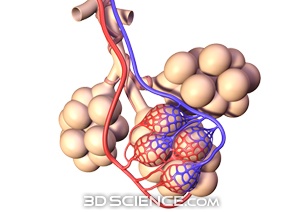
What are the tiny air sacs in the lungs that exchange gases (oxygen for carbon dioxide)?
capillary
bronchi
alveoli
bronchiole
Ventilation is:
Tidal volume x Cardiac output
Stroke volume x Heart rate
Tidal volume x Respiratory rate
Stroke volume x Respiratory rate
Movement of O2 and CO2 from an area of high concentration to an area of low concentration is:
Ventilation
Redistribution of blood flow
Pulmonary diffusion
Increased blood flow to working muscles
What Cardiovascular Acute Response does not usually increase throughout exercise?
Diastolic blood pressure
Systolic blood pressure
Stroke volume
Heart rate
Cardiac output is:
Tidal volume x stroke volume
Stroke volume x heart rate
Heart rate x ventilation
Stroke volume x venous return
What is the only Cardiovascular Acute Response that decreases during exercise?
Cardiac output
venous return
Blood volume
Stroke volume
The redistribution of blood flow during exercise increases to the:
Kidneys
Liver
Brain
Muscles
During exercise, the maximal stroke volume of an untrained individual is attained:
Immediately as exercise begins
Submaximal intensity
At maximal exercise intensity
The stroke volume remains relatively unchanged
During exercise more blood is directed to the working muscles and this is achieved via:
Vasodilation of capillaries supplying muscle
Vasoconstriction of capillaries supplying muscle
Vasodilation of capillaries supplying the heart
Vasoconstriction of capillaries supplying the heart
Blood volume decreases during exercise as:
There is an increase in O2 being delivered to working muscle
A consequence of sweating, therefore a decrease in plasma
Lactate begins to accumulate faster than removal rate
There is an oxygen deficit
Human blood vessels are
artries, capillaries, and atria
ventricles, atria and pulmonary veins
capillaries, artries, and veins
veins, artries, and aorta
The thickest and strongest blood vessel is the
vein
artery
capillary
both veins and capillaries
The blood vessel that has valves at intervals...
capillary
artery
vein
none of the above
Valves in veins
support them
protect them
prevent the backward movement inside them
provide them elesticity
These are one cell thick
arteries
capillaries
veins

Which arteriole is dilated?
1
2
3

Which arteriole is constricted?
1
2
3
Build up of blood in around the muscles due to not cooling down after exercise.
Vasoconstriction
Venous Pooling
Capillary sphincters
Vein
Vessel responsible for transfer of oxygen and nutrient into the muscle and waste products out of the muscles.
Capillaries
Arteries
Blood
Arterioles
Coronary Atertery
Supply muscles with blood
Supply the heart with blood and when blocked cause heart attacks.
Arteries that clot
Veins that collapse
5.The ______________________ is a sheet of smooth muscles located below the lungs and separates them from the abdominal cavity.
A. Lungs
B. Diaphragm
C. Alveoli
D. Bronchioles
6. During ___________________ , muscular contraction causes the walls of the chest cavity to expand so that the rib cage moves outward and upward.
A. Excretion
B. Exhalation
C. Inhalation
D. Respiration
7.During ____________, the ribs and diaphragm return to their original resting position.
A. Excretion
B. Exhalation
C. inhalation
D. Respiration
What happens when the diaphragm moves down
Diaphragm relaxes air is expired.
Diaphragm contracts air is inhaled.
Lungs get rid of air
The ribs break

lowest pressure against the blood vessels of the body. Measures between contractions
diastolic pressure
systolic pressure
hypotension
hypertension
Highest pressure against blood vessels. Represented by first heat sound
diastolic pressure
systolic pressure
hypotension
hyperstension
The composition of blood is made up of
45% solid components and 55% liquid components
55% solid components and 45% liquid components
70% liquid components and 30% solid components
50% liquid and 50% solid

What is VO2 max?
Amount be which the oxygen supply fails to meet the body's demand
Oxygen supply meets the body's exercise demands
the amount of oxygen required to restore your body to its normal, resting level of metabolic function
Maximum amount of oxygen that can be transported and utilized per minute
What happens to oxygen at the capillary/ muscular interface?
Diffusion occurs by the oxygen moving from high concentration in the lungs (Alveoli) to the lower concentration in the blood stream (through capillaries).
Diffusion also occurs with carbon dioxide moving from high concentration in the blood to low concentration in the lungs
Diffusion also occurs when carbon dioxide moves from high concentration in the muscle to low concentration in the blood (capillaries)
Diffusion occurs as oxygen moves from high concentration in the blood (capillaries) to low concentration in the muscle.
What happens to carbon dioxide at the alveoli / capillary interface?
Diffusion occurs by the oxygen moving from high concentration in the lungs (Alveoli) to the lower concentration in the blood stream (through capillaries).
Diffusion occurs as oxygen moves from high concentration in the blood (capillaries) to low concentration in the muscle.
Diffusion also occurs with carbon dioxide moving from high concentration in the blood to low concentration in the lungs
Diffusion also occurs when carbon dioxide moves from high concentration in the muscle to low concentration in the blood (capillaries)

