Wayground logo

Free Printable Worksheets

Font size

S
M
L
XL
Worksheets

Impressions

Total questions: 67

Worksheet time: 37mins

Name
Class
Date
1.
Small pieces of evidence left by the perpetrator at a crime scene or on the victim in the form of hair, paint chips (from suspect's vehicle), fibers, glass, soil is called___________________ evidence.
a)
biological
b)
direct
c)
trace
d)
documentary
2.
the spiral pattern on a fired projectile made by the lands and grooves in the barrel of a firearm
a)
rifling
b)
caliber
c)
trajectory
3.
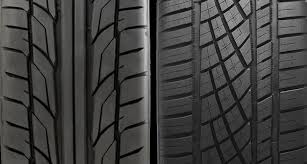
which of the following are individual characteristics of tire treads? 
a)
size, type, and model.
b)
Wear and damage
c)
shape and color 
4.
Why was rifling added to the barrels of guns?
a)
To make bullets shoot straighter
b)
To make bullets traceable at crime scenes
c)
To make bullets go faster
d)
To cause bullets to separate from the cartridge
5.
Where are breech marks left?
a)
On the top of the cartridge
b)
On the bottom of the cartridge
c)
On the top of the bullet
d)
On the bottom of the bullet
6.
Which of the following is an individual characteristic of cartridge cases?
a)
Manufacturer
b)
Composition
c)
Ejector Marks
d)
Caliber
7.
What tool is used to compare striations of fired bullets?
a)
compound microscope
b)
comparison microscope
c)
scanning electron microscope
d)
transmission electron microscope
8.
Which of these databases is used by firearms investigators?
a)
IBIS
b)
AFIS
c)
CODIS
d)
NCIC
9.
A bloody shoe print is an example of a 
a)
Patent impression 
b)
Plastic impression
c)
Latent impression
d)
Virtual impression
10.
A crack in glass that moves outward from the point of impact like spokes on a wheel is called a:
a)
compound fracture
b)
concentric fracture
c)
spoke fracture
d)
radial fracture
11.
In the lab, a Pyrex/borosilicate piece of glass was dipped in vegetable oil and disappeared from view. What does this tell us?
a)
the piece disintegrated in the oil
b)
the oil and the glass had the same refractive index
c)
the oil and the glass chemically reacted
d)
the oil and the glass have different refractive indices
12.
Which type of fracture is shown by letter B?
a)
radial
b)
concentric
c)
birefrigent
d)
none of these
13.
What tells you that this bullet has been fired?
a)
the shape
b)
the striations
c)
the type of material
d)
the shine
14.
How can you tell that this bullet has not been fired?
a)
the primer is not dented
b)
the primer is dented
c)
there are no striations
d)
the letters are still visible
15.
Bits of glass can fly backwards.  This is called:
a)
Backtrace
b)
Backspatter
c)
Backflash
d)
Backscatter
16.
Which glass break was made first?
a)
A
b)
B
17.
What type of lighting is best for taking photos of impression evidence?
a)
Direct
b)
Back
c)
Oblique
d)
Natural
18.
Who developed the system known as anthropometry? 
a)
Galton
b)
Bertillion
c)
Goddard
d)
Gross
19.

It is made of two or more panes of glass bonded by a plastic middle layer.

a)

Laminated glass

b)

Tempered glass

c)

Bullet-proof glass

d)

Glass

20.

A phenomenon where light changes direction as it passes from one medium, such as air, into another medium such as water.

a)

Reflection

b)

Shadowing

c)

Refraction

d)

Bending

21.
What do we refer to the size of a bullet as?
a)
Caliber or Gauge
b)
Radius or Diameter
c)
Groves and Lands
d)
Bore and Rifiling
22.
Firearms came from the invention of gun powder from where?
a)
England 
b)
China 
c)
General 
d)
USA
23.
What does GSR mean? 
a)
Gunshot Residue
b)
Gunshot Remains 
c)
Gummy Sugar Residue 
d)
General Service Routine 
24.

A firearm with a clip-fed mechanism that fires repeatedly as long as the trigger is pressed.

a)

Firearm

b)

Fully automatic

c)

Semiautomatic

25.

A shoe impression left in snow is an example of a

a)

Patent Impression

b)

Plastic Impression

c)

Latent Impression

d)

Composite Impression

26.

Which of the following is the tireprint database?

a)

TreadMark

b)

SoleMate

c)

TreadMate

d)

All of the Above

27.
What is the first step of processing any kind of evidence?
a)
Casting
b)
Photograph
c)
Reproduction
d)
Lifting
28.

________________ lines start at the point of impact and move outward.

a)

Concentric fracture

b)

Bullet holes

c)

Radial Fracture

d)

Secondary fracture

29.

A bullet has an angle of entry of 15 degrees and the distance to the shooter is believed to be 58 ft away. What is the height of the shooter?

a)

5 ft

b)

16 ft

c)

21 ft

d)

45 ft

30.

______________ are circles around the point of impact.

a)

Radial fracture

b)

Concentric fracture

c)

Bullet holes

d)

Primary fracture

31.

Which type of glass fractures this way?

a)

Tempered

b)

regular window glass

c)

Crystal

d)

Pyrex

32.

A bullet has an angle of entry of 15 degrees and the height of the shooter is 100 feet up. What is the distance to the shooter?

a)

5 ft

b)

27 ft

c)

246 ft

d)

373 ft

33.
What type of print is not visible but made so by dusting with powders or the use of chemicals?
a)
Patent
b)
Latent
c)
Plastic
34.
What is the most common general type of fingerprint?
a)
Arch
b)
Loop
c)
Whorl
35.
The Case of Will West caused what system to no longer be used?
a)
Herschel System
b)
Galton System
c)
Bertillon System
d)
Henry System
36.
Two things forensic examiners look for on a fingerprint are the presences of a core and a ____.
a)
Delta
b)
Ridges
c)
Pores
d)
All of these
37.

What type of fingerprint is shown?

a)

Double loop whorl

b)

Ulnar loop

c)

Radial loop

d)

Accidental whorl

38.
What type of minutiae is number 3?
a)
Crossover
b)
Bifurcation
c)
Island
d)
Crossover
39.
A loop that opens towards the pinky is 
a)
ulnar loop
b)
radial loop
40.
AFIS is a(n): 
a)
method used to determine the age of latent print
b)
computer software designed to track fingerprint evidence within the chain of custody
c)
assay technique used to identify drugs
d)
computerized system for storing and retrieving fingerprint records
41.
The most common form of developing latent prints
a)
Dusting
b)
Silver Nitrate
c)
photography
d)
Black light
42.

Identify this fingerprint

a)

Plain Arch

b)

Ulnar Loop

c)

Plain Whorl

d)

Bullseye Swirl

43.
Under which circumstances have two people been found to have identical fingerprints? 
a)
identical twins
b)
fraternal twins
c)
members of the same immediate family
d)
none to date
44.
Identical twins have the exact same fingerprints.
a)
True
b)
False
45.
Fingerprints are formed: 
a)
during fetal development
b)
by the time a child is two years old
c)
at birth
d)
during first 6 months after birth
46.
How many deltas does a loop have?
a)
1
b)
2
c)
3
d)
it's not always the same
47.
A class characteristic can do what?
a)
Connect an object to its source with a high degree of certainty
b)
Connect an object to a group of objects
c)
Connect an object to a classroom
d)
Exonerate an innocent suspect
48.

What pattern is this? (Right hand)

a)

Ulnar Loop

b)

Radial Loop

c)

Plain Whorl

d)

Tented Arch

49.

What pattern is this? (Left Hand)

a)

Radial Loop

b)

Ulnar Loop

c)

Plain Whorl

d)

Plain Arch

50.
The area indicated by "B" in the diagram is known as a(n)
a)
Core
b)
Delta
c)
Whorl
d)
Arch
51.

What pattern is this? (Right Hand)

a)

Tented Arch

b)

Plain Arch

c)

Ulnar Loop

d)

Plain Whorl

52.

What type of fingerprint is this?

a)

Central Pocket Whorl

b)

Plain Whorl

c)

Accidental Whorl

d)

Double Loop Whorl

53.

What type of fingerprint is this?

a)

Central Pocket Whorl

b)

Plain Whorl

c)

Accidental Whorl

d)

Double Loop Whorl

54.

What type of fingerprint is this?

a)

Plain Arch

b)

Tented Arch

c)

Accidental Whorl

d)

Radial Loop

55.

What type of fingerprint is this?

a)

Central Pocket Whorl

b)

Ulnar Loop

c)

Accidental Whorl

d)

Double Loop Whorl

56.

What is the name of this minutiae?

a)

Bifurcation

b)

Splitting Ridge

c)

Delta

d)

Y

57.

What is the name of this minutiae?

a)

Enclosure/Eye

b)

Island

c)

Dot

d)

Bifurcation

58.

What is the name of this minutiae?

a)

Bridge

b)

Junction

c)

Connector

d)

Zigzag

59.

Which chemical treatment produces a white-appearing latent print?

a)

superglue fuming

b)

physical developer

c)

iodine fuming

d)

ninhydrin

60.
Which of the following types of fingerprints are more likely to be found impressed in soft wax? 
a)
visible
b)
latent
c)
hidden 
d)
plastic
61.
A tool-mark expert will look at the striations (grooves) on the surface of a fired bullet. This is an example of
a)
Individual Characteristics
b)
Class Characteristics
62.

He said no two fingerprints are alike

a)

Mayer

b)

Galton

c)

Henry

d)

Grew

63.

He said our prints do not change as we age

a)

Mayer

b)

Bertillon

c)

Henry

d)

Hershel

64.
What is the difference between an entry and exit wound?
a)
entry wounds are smaller than exit wounds
b)
exit wounds are smaller than entry wounds
c)
exit wounds pull fibers into the body, entry wounds do not
d)
an exit wound can have an abrasion ring
65.

What would you expect of a close range wound?

a)

A very small bullet hole with no GSR

b)

A large wound with GSR and flash burns.

c)

A large wound with no GSR.

d)

A very small bullet hole with flash burns.
66.
What is the first step an investigator should take when collecting toolmark evidence
a)
make a mold of the toolmark
b)
collect paint samples from in side the tool mark
c)
photograph the evidence
d)
put the tool into the toolmark and see if it fits
67.

The design on the surface of a tire is known as _____________

a)

Ridge pattern

b)

Tread pattern

c)

Tire grooves

d)

Tire impressions