wayground logo

Free Printable Worksheets

Font size

S
M
L
XL
Worksheets

2A Final Exam Rvw Term 1

Total questions: 92

Worksheet time: 2hrs 19mins

Name
Class
Date
1.
-138 ≥ -6(6b − 7)
a)
b ≤ 5
b)
b ≤ -5
c)
b ≥ 5
d)
b ≥ -5
2.
2x+3=x-7
a)
x=5
b)
x=-4
c)
x=1
d)
x=-10
3.
5x+1=2x-5
a)
x=-2
b)
x=-6
c)
x=3
d)
x=.5
4.
Solve for v.
a)
60
b)
-3
c)
15
d)
3
5.
10(h+1)-4=76
a)
h=10
b)
h=4
c)
h=7
d)
h=76
6.
Solve for x.
a)
55
b)
60
c)
15
d)
35
7.

Which number is in the solution set for 6 - 2h > 30

a)

-12

b)

-11

c)

-10

d)

-13

8.
-2 (x+2) < 14
a)
x < - 5
b)
x > -5
c)
x < -9
d)
x > -9
9.
-4x + 14 ≤ 54
a)
x ≥ - 10
b)
x ≤ -10
c)
x ≥ 10
d)
x ≤ 10
10.
Solve for n:
2m - n = 8
a)
n = 2m - 8
b)
n = -2m - 8
c)
n = 2m + 8
d)
n = -2m + 8
11.
Solve:
12x - 4y = 20  ,  for   y 
a)
y = 3x - 5
b)
y = -3x + 5
c)
y = -3x - 5
d)
y = 3x + 5
12.
Which expression represents the value of x in the equation:
dx + e = f
a)
x = (f + e)/d
b)
x = (f - e)/d
c)
x = d/(e - f)
d)
x = d/(e + f)
13.
Solve for B:
A = 2/3(B + 5)
a)
B = 2/3A + 5
b)
B = 2/3A - 5
c)
B = 3/2A + 5
d)
B = 3/2A - 5
14.
Solve the literal equation for the given variable.
a)
2A/h
b)
2/(h)
c)
2Ah
d)
Ah/2
15.
Solve for a.
a)
a = pw
b)
a = p/w
c)
a = w/p
d)
a = w + p
16.
S = 3F - 24  Solve for F
a)
F = (S + 24)/3
b)
F = S/3 + 24
c)
F = 3S + 24
d)
F = 3(S + 24)
17.
a)
(2.5+h)f
b)
g=1
c)
f(5+h)/2
d)
(5f+h) / 2
18.

Which expression matches:

The sum of 6 and 5 doubled

a)

2 x 6 + 5

b)

2 x (6 + 5)

c)

6 + (5 x 2)

19.

What step would I do second?

(4 - 2) x 9 + 7 =

a)

multiplication

b)

subtraction

c)

addition

d)

dividing

20.
Match this word expression with the correct algebraic expression:
a number decreased by 9
a)
n + 9
b)
n - 9
c)
9n
d)
n/9
21.
4 times a number increased by 15
a)
15- 4n
b)
15n + 4
c)
4n - 15
d)
4n + 15
22.
Which of the following best describes the expression 4 times a number increased by 7?
a)
(x/4) + 7
b)
4x - 7
c)
4(x + 7)
d)
4x + 7
23.
Which of the following best describes the expression 8 less than the quotient of a number and 2?
a)
(x/2) - 8
b)
8 - (x/2)
c)
(x - 8)/2
d)
2x - 8
24.
What is the domain of the graph?
a)
-3 ≤ x ≤ 3
b)
3 ≤ x ≤ -3
c)
-2 ≤ x ≤ 10
d)
-3 ≤ x ≤ 10
25.

Is this mapping a function and how can you tell?

a)

Yes its a function cause all the numbers have lines

b)

No it's not a function because there a 5 in both ovals

c)

No it's not a function because the x value 5 has 2 outputs.

d)

No it's not a function because the y value 5 has 2 inputs.

26.

Is this table a function and how can you tell?

a)

Yes its a function because there are not variables for missing numbers

b)

No it's not a function because the y value 4 repeated

c)

No it isn't a function because the x value 2 is repeated

d)

No it's not a function because the x value 5 has 2 outputs.

27.
What is the range of the following graph?
a)
R:  {-5, -1,  0 , 1, 5}
b)
R:  {-4, -2, 0, 3, 6}
c)
R: (-4, 1)  ( 6, 0)
d)
R: (6, 0)
28.
For the function (0,1), (1,-3), (2,-4), & (-4,1), which choice gives the correct domain & range?
a)
D: {0, 1, 2, -4}
R: {1, -3, -4, 1}
b)
D: {-4, 0, 1, 2}
R: {-4, -3, 1}
c)
D: {0, 1, 2, 3, 4}
R: {1, -3, -4}
d)
D:  {-4, -3, 1}
R: {-4, 0, 1, 2}
29.
What is the domain of the graph?
a)
[-7, 5)
b)
(-7, 5]
c)
[-3, 1)
d)
(-3, 1]
30.
What is the range of the graph?
a)
[-7, 5)
b)
(-7, 5]
c)
[-3, 1)
d)
(-3, 1]
31.
What is the range of the relation?
a)
(-∞, ∞)
b)
(-2, 2)
c)
(-3, 3)
d)
[-4, 5)
32.
What is the domain of the relation?
a)
(-∞, ∞)
b)
(-2, 2)
c)
(-3, 3)
d)
[-4, 5)
33.
What is the Domain?
a)
{-3, -1, 1, 3, 5, 7, 9}
b)
{-3, -2, -1, 0, 1, 2, 3}
c)
-3 ≤ x ≤ 3
d)
-3 ≤ x ≤ 9
34.
g(x) = 3x + 1
g(2) = _______
a)
6
b)
7
c)
8
d)
9
35.
g(x) = x + 1
g(8) = ______
a)
9
b)
8
c)
7
d)
6
36.
g(x) = x + 1
g(10) = ______
a)
8
b)
9
c)
10
d)
11
37.
j(x) = 2x + 3
j(-1) = ______
a)
1
b)
-1
c)
5
d)
-5
38.
j(x) = 2x + 3
j(-3) = ______
a)
-9
b)
-3
c)
9
d)
3
39.
f(x) is the same thing as ______.
a)
y
b)
x
c)
input
d)
an equation
40.
What is x if
f(x) = -2?
a)
4
b)
0
c)
3
d)
8
41.
For the function f(x) = -3(x-1) find f(0).
a)
0
b)
-3
c)
3
d)
-1
42.
Evaluate f(-2) if f(x) = x + 3
a)
-1
b)
1
c)
5
d)
-5
43.
If f(x) = x - 5, what is the value of x when f(x) = 15?
a)
20
b)
10
c)
5
d)
0
44.
If f(x) = -4x - 5 and
g(x) = 3 - x,
what is g(-4) + f(1)?
a)
7
b)
-2
c)
-9
d)
-10
45.

Evaluate f(-2) if f(x) = x2+ 3

a)

-1

b)

1

c)

7

d)

-7

46.

Given g(x) = 4x - 7, find g(-9).

a)

g(-9) = 29

b)

g(-9) = -43

c)

g(-9) = 43

d)

g(-9) = -29

47.
What is f(1)?
a)
1
b)
5
c)
0
d)
4
48.
Complete the function notation below
f(____) = 214
a)
1990
b)
1991
c)
1989
d)
1994
49.
a)
Function
b)
Not a Function
50.
Which graph is not a function?
a)
Graph 1
b)
Graph 2
c)
Graph 3
d)
Graph 4
51.
All of the x values or inputs are called what?
a)
Domain
b)
Range
c)
Relation
d)
Function
52.
a)
f(8) = 8
b)
f(8) = 0
c)
f(8) = 3
d)
f(8) = -2
53.
Find the product:
(5n-8)(5n+8)
a)
25n2-64
b)
10n2
c)
5n2+16
d)
16
54.
Find the product:
(2x+3)2
a)
2x+3+2x+3
b)
4x2+12x+9
c)
4x2+9
d)
16x2+9
55.
Find the sum.
(3y2 + y3 - 5) + (4y2 -4y + 2y3 + 8)
a)
3y+ 7y- 4y + 3
b)
4y2 + 3y3 - y + 3
c)
-y4 + 2y-y - 4
d)
4y+ 3y-3y + 1
56.
Find the difference. 
(3- 2x + 2x2) - (4x -5 +3x2)
a)
x2 + 6x + 8
b)
2x+ 5x - 7
c)
-x2 -6x + 8
d)
-2x2 + 11x - 4
57.
Simplify the expression.
-3x2( 7x- x + 4)
a)
-21x4 + 3x3 -12x2
b)
7x2 - x + 4 (-3x2)
c)
21x+ 3x+ 12x2
d)
-12x+ 3x-21x4
58.
What is the degree of the polynomial:
7x3 – 8x2 + 9
a)
5
b)
2
c)
6
d)
3
59.
What is the perimeter for the given rectangle:
a)
6x3 - 9x2 + 10x - 15
b)
6x2 + 1x - 15
c)
6x2 + 4x + 4
d)
6x3 + 1x2 - 15x
60.
Find the perimeter of the rectangle
a)
P= 10x + 2
b)
P= 12x
c)
P = 12
d)
P = 6x2 + 3x
61.
(2x - 1)(x + 2)
a)
2x2 + 3x - 2
b)
2x2 - 5x - 2
c)
2x2 + 3x + 2
d)
2x2 - 5x + 2
62.
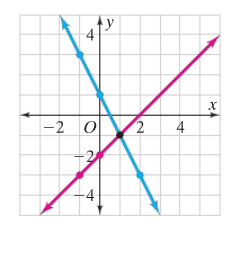
The perimeter of the
 triangle is 10x+20. Find the length of the missing side
a)
6x+10
b)
15x+30
c)
5x+10
d)
5x-10
63.
If a system of equations has no solution, what does the graph look like? 
a)
intersecting lines
b)
parallel lines
c)
skew lines
d)
intersecting lines
64.
What is the solution?
a)
(1, -1)
b)
(-1, 1)
c)
(0, -2)
d)
(0, 1)
65.
How many solutions does this system of equations have?
a)
One Solution
b)
No solution
c)
Infinitely Many Solutions
d)
Two Solutions
66.
Solve the system of equations.
y = 4x+1
3x + 2y = 13
a)
(1, 5)
b)
(5, 1)
c)
(0.25, 2)
d)
67.
Solve the system of equations by elimination.
-x + y = -13
-8x - 4y = -8 
a)
(5, 8)
b)
(5, -8)
c)
(-5, -18)
d)
(-5, 8)
68.
Alexandra finds that she can give 3 haircuts and 2 hair dyes in 315 minutes. Giving 2 haircuts and 4 hair dyes takes 450 minutes.  Which system of equations represents the situation?
a)
3x + 2y = 315
2x + 4y = 450
b)
3x + 2y = 450
2x + 4y = 315
c)
2x + 2y = 315
3x + 4y = 450
69.
Alexandra finds that she can give 3 haircuts and 2 hair dyes in 315 minutes. Giving 2 haircuts and 4 hair dyes takes 450 minutes.  How long does it take her to do a haircut?
3x + 2y = 315
2x + 4y = 450
a)
45 minutes
b)
90 minutes
2x + 4y = 315
c)
60 minutes
3x + 4y = 450
d)
30 minutes
70.
Some students want to order shirts with their school logo. One company charges $9.65 per shirt plus a setup fee of $43. Another company charges $8.40 per shirt plus a $58 fee. Which equation represents the number of shirts when both companies charge the same amount? 
a)
y = 9.65 + x
y = 8.40 + x
b)
y = 9.65x + 43
y = 8.40x + 58
c)
y =9.65x
y = 8.40x
d)
y = 9.65x - 43
y = 8.40x - 58
71.
Solve for x and y.
y = 2/3x - 2
y = -x + 3
a)
(0,3)
b)
(0,-3)
c)
(3,0)
d)
(-3,0)
72.
What 3 terms come next in the sequence? 
2, 4, 8, 16
a)
32, 64, 128
b)
18, 20, 22
c)
24, 28, 32
d)
32, 60, 120
73.
What 2 terms come next in the sequence? 
15, 12, 9, 6 
a)
6. 3, 0
b)
3, 6
c)
6, 3
d)
3, 0 
74.
The explicit formula is used to find a specific term in a sequence.
a)
True
b)
False
75.
The recursive formula can only be used if you know the previuos term
a)
True
b)
False
76.
What are the next 3 terms in this sequence of terms?     3, 7, 11, 15
a)
18, 22, 26
b)
19, 21, 23
c)
19, 23, 27
d)
18, 21, 24
77.

Write the first 5 terms represented by the equation f(x)=3x+2

a)

2, 5, 8, 11, 14

b)

5, 8, 11, 14, 17

c)

3, 5, 7, 9, 11

d)

2, 6, 18, 54,162

78.
What is the common difference?
15, 9, 3, ...
a)
6
b)
not arithmetic
c)
(-6)
d)
15
79.
What is the common difference?
20, 29, 38, ...
a)
38
b)
20
c)
9
d)
not arithmetic
80.
What is the common difference?
5, 9, 12, ...
(Hint:  Write your formula and then simplify it.)
a)
3
b)
4
c)
not arithmetic
d)
5
81.

What does r represent?

a)

Radical

b)

Common difference

c)

Common ratio

82.

What does a1 represent?

a)

Any term

b)

First term

c)

Last term

83.
Find the common ratio for the geometric sequence.
a)
10
b)
1/2
c)
2
d)
4
84.
Write the recursive formula for 4, 8, 12...
a)
an=an-1-7
b)
an=an-1-4
c)
an=an-1+3
d)
an=an-1+4
85.
Which kind of sequence has a common difference?
a)
Arithmetic
b)
Geometric
86.
Write the recursive rule for the arithmetic sequence
-49, -35, -21, -7, ...
a)
a1=-49; an = an-1 + 10
b)
a1=-7; an = an-1 + 14
c)
a1=-49; an = an-1 + 14
d)
a1= -49; an = an-1 -14
87.
Write the explicit rule for the arithmetic sequence
-10, -3, 4, 11,...
a)
an = 10n + 17
b)
an = 7n - 17
c)
an = -7n + 17
d)
an = 7n + 3
88.

What does a1 represent?

a)

Any term

b)

First term

c)

Last term

89.

What does r represent?

a)

Radical

b)

Common difference

c)

Common ratio

90.
Write the explicit formula for the geometric sequence.
a)
an = 4(3)n-1
b)
an = 3(4)n-1
c)
an = -4(3)n-1
d)
an = 3(-4)n-1
91.
Find the first four terms of the sequence given the rule:
an = 4(5)n-1
a)
20, 100, 500, 2500
b)
5, 20, 80, 320
c)
4, 20, 100, 500
d)
4, 9, 14, 19
92.
This image shows how a certain bacteria grows in a petri dish. What is the common ratio of this sequence?
a)
4
b)
3
c)
2
d)
6