wayground logo

Free Printable Worksheets

Font size

S
M
L
XL
Worksheets

Sustainability & Catastrophic Events

Total questions: 75

Worksheet time: 57mins

Name
Class
Date
1.
Which is not an impact to the ecosystem after a drought?
a)
Water is scarce and causes organisms to find new sources of water elsewhere.
b)
Floods will wipe out all the vegetation
c)
Herbivores will have to leave and find food elsewhere
2.
Which of these is not an impact to the ecosystem after a hurricane?
a)
Fires throughout the area
b)
Poor water quality in the area
c)
Erosion of beaches
d)
Massive flooding
3.
A recent flood in the area has caused many short term changes to the ecosystem. Which is a long term change?
a)
Standing water in the streets and sewers
b)
Temporary displacement of organisms
c)
Permanent change in the landscape
d)
Poor water quality in rivers and streams
4.
Which is the best synonym for catastrophic?
a)
Advantageous
b)
Successful
c)
Disaster
d)
Fortunate
5.
Lava or ash spewing from a mountain vent.
a)
Earthquake
b)
Flood
c)
Drought
d)
Volcano
6.
Caused by an unusually large amount of water for an area
a)
Earthquake
b)
Flood
c)
Drought
d)
Volcano
7.
A long period with no rain
a)
Earthquake
b)
Flood
c)
Drought
d)
Volcano
8.
A spinning funnel cloud which causes much destruction
a)
Tornado
b)
Hurricane
c)
Tsunami
d)
Meteor
9.
A large wave created by an underwater earthquake
a)
Tornado
b)
Hurricane
c)
Tsunami
d)
Meteor
10.
Starts by lightning or a camper
a)
Wildfire
b)
Blizzard
c)
Meteor
d)
Hurricane
11.
Where are hurricanes most likely to do the most damage?
a)
Near the coast
b)
In the forest
c)
In a desert
d)
On the North Pole
12.
what is this
a)
tornado 
b)
landslide
c)
typhoon 
d)
hurricane
13.
a)
Usually the result of human negligence, but can also be caused by lightning
b)
Created by a weakness in the Earth's crust.  Magma rises up from mantle
c)
Storm surge causes massive flooding.  Wind damage causes structural damage to homes and businesses
d)
High winds cause destruction to everything in its path.
14.
What causes damage in a hurricane?
a)
Winds
b)
Flooding
c)
Storm Surge
d)
All of the above
15.
What catastrophic event would be of greatest risk to a grassland?
a)
hurricane
b)
flood
c)
tsunami
d)
wildfire
16.
A long high sea wave caused by an underwater Earthquake, landslide or underwater volcanic
a)
Typhoon
b)
Flood
c)
Tornado
d)
Tsunami
17.
Which of the following natural disasters have had the LEAST impact on TEXAS
a)
hurricanes
b)
floods
c)
tornadoes
d)
earthquakes
18.
What are the two most destructive parts of a hurricane?
a)
wind and water
b)
wind and debris
c)
debris and lightning
d)
lightning and wind
19.

When a tornado forms, it can be seen as a __________?

a)

a funnel cloud

b)

a giant cloud

c)

a dark colored cloud

20.

Wildfires can move quickly and destroy large areas of land in a few minutes.

a)

True

b)

False

21.
What is the shaking of the Earth’s crust caused by a release of energy?
a)
Earthquake
b)
Epicenter
c)
Fault
d)
Plate
22.

Catastrophic events impact ecosystems as well as people

a)

True

b)

False

23.

Ecosystems with high biodiversity have higher sustainability to stress such as catastrophic events

a)

True

b)

False

24.
An explosive discharge of magma, rock, ash, and gases
a)
Earthquake
b)
Asteroid Impact
c)
Volcanic Eruption
d)
Cyclone
25.
a)
Total destruction of landscape including entire ecosystems.  Air quality is damaged over a large area.
b)
Everything in the path can be burned and all organisms are forced to leave the immediate area.
c)
Extensive damage to roads and structure from violent shaking.  Landscapes may change.
d)
Total destruction of landscape.  Can cause an extinction event if large enough.
26.
A long period with no rain is called a...
a)
Earthquake
b)
Wildfire
c)
Drought
d)
Tornado 
27.
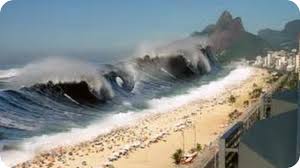
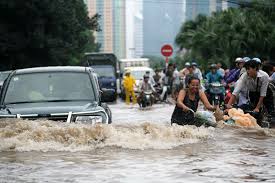
The catastrophic event shown here is a/an_________
a)
hurricane
b)
flood
c)
tsunami
d)
tornado
28.
The catastrophic event shown here is a/an_________
a)
volcano
b)
wildfire
c)
ash
d)
smoke
29.
What catastrophic event does this picture depict? 
a)
Tsunami
b)
Tornado
c)
Hurricane
d)
Earthquake
30.
What catastrophic event does this picture depict? 
a)
Tsunami
b)
Tornado
c)
Hurricane
d)
Earthquake
31.
A large storm associated with low pressure, forms over water is called...
a)
Flood
b)
Hurricane
c)
Tsunami 
d)
Blizzard
32.

Tornadoes are catastrophic events that create change in ecosystems in which of the following ways?

a)

Heavy flooding increases areas where trees can grow.

b)

High winds damage areas of important plant life.

c)

Wildfires started by lightning reduce carbon dioxide.

d)

Saltwater kills many ground-dwelling animals.

33.

The extremely strong winds associated with a tornado will have the greatest negative effect on which of the following kinds of organisms?

a)

Fish that feed around coral reefs

b)

Smaller mammals that burrow underground

c)

Birds and other animals that use trees for shelter

d)

Organisms that feed on decaying plants and animals

34.
Barnacles create home sites by attaching themselves to whales. This relationship neither harms nor benefits the whales. 
a)
parasitism
b)
commensalism
c)
mutualism
35.
Yucca flowers are pollinated by yucca moths. The moths lay their eggs in the flowers where the larvae hatch and eat some of the developing seeds. Both species benefit. 
a)
parasitism
b)
commensalism
c)
mutualism
36.
Remoras attach themselves to a shark’s body. They then travel with the shark and feed on the leftover food scraps from the shark’s meals. The relationship neither harms nor benefits the shark. 
a)
parasitism
b)
commensalism
c)
mutualism
37.
Oxpeckers feed on the ticks found on a rhinoceros. The oxpeckers get a meal and the rhinoceros is helped by the removal of the ticks.
a)
parasitism
b)
commensalism
c)
mutualism
38.
Mistletoe extracts water and nutrients from a spruce tree. The spruce tree is harmed. 
a)
parasitism
b)
commensalism
c)
mutualism
39.
 The stork uses it saw-like bill to cut up the dead animals it eats. As a result, the dead animal carcass is accessible to some bees for food and egg laying. The relationship neither harms nor benefits the stork.
a)
parasitism
b)
commensalism
c)
mutualism
40.
 A flea feeds on a mouse’s blood and harms the mouse.
a)
parasitism
b)
commensalism
c)
mutualism
41.
 Hermit crabs live in shells made and then abandoned by snails. This relationship neither helps nor harms the snails.
a)
parasitism
b)
commensalism
c)
mutualism
42.
Ostriches and gazelles feed next to each other. They both watch for predators and alert each other to danger. Because their visual abilities are different, they can identify threats that the other animal would not see as readily. 
a)
parasitism
b)
commensalism
c)
mutualism
43.
Honey guide birds alert and direct badgers to bee hives. The badgers then expose the hives and feed on the honey first. Next the honey guide birds eat. Both species benefit. 
a)
parasitism
b)
commensalism
c)
mutualism
44.
A cuckoo may lay its eggs in a warbler’s nest. The cuckoo’s young will knock the warbler’s eggs out of a nest and the warbler will raise the cuckoo’s young.
a)
parasitism
b)
commensalism
c)
mutualism
45.
As bison walk through grass, insects become active and are seen and eaten by cowbirds. The relationship neither harms nor benefits the bison.
a)
parasitism
b)
commensalism
c)
mutualism
46.
Ticks will feed on a deer’s blood and harm the deer.
a)
parasitism
b)
commensalism
c)
mutualism
47.
Wrasse fish feed on the parasites found on the black sea bass’s body. The wrasse fish get a meal and the black sea bass is helped by the removal of the parasites.
a)
parasitism
b)
commensalism
c)
mutualism
48.
Heartworms develop inside a dog’s heart. The worms cause health problems and may result in death. 
a)
parasitism
b)
commensalism
c)
mutualism
49.
Orchids grow inside a bromeliad plant. The orchid obtains water and nutrients from the bromeliad, but does not help or harm it.
a)
parasitism
b)
commensalism
c)
mutualism
50.
A sparrow will build its nest under the nest of an osprey. The smaller birds get protection because other predators will not mess with the osprey. The osprey are not helped nor harmed by the sparrow.
a)
parasitism
b)
commensalism
c)
mutualism
51.
A wasp lays its eggs on a caterpillar. When the wasp eggs hatch, the larva will eat the caterpillar and kill it. 
a)
parasitism
b)
commensalism
c)
mutualism
52.
A __________________ is a type of animal that hunts other animals to eat. 
a)
prey
b)
herbivore
c)
predator
d)
producer
53.
A consumer gets energy by doing what?
a)
Making it themselves.
b)
Breaking down biotic wastes and dead organisms and returning raw materials to the ecosystem.
c)
Soaking it up from the ground.
d)
Feeding on other organisms.
54.
A food chain is?
a)
Overlapping food chains in an ecosystem.
b)
The amount of energy that moves from one feeding level to another in a food web.
c)
A series of events in which one organism eats another and obtains energy.
d)
biotic and abiotic factors in an area.
55.
This diagram shows the amount of energy that moves from one feeding level to another in a food web.
a)
Energy Pyramid
b)
Food Web
c)
Ecosystem
d)
Food Chain
56.
The energy role that break down biotic wastes and dead organisms is?
a)
Consumer
b)
Producer
c)
Scavenger
d)
Decomposer
57.
Which one is NOT an example of a decomposer?
a)
mushroom
b)
leaves
c)
mold
d)
worm
58.
Grass is considered a ...
a)
consumer
b)
producer
c)
decomposer
d)
composers
59.
An organism that uses sunlight to create its own food is known as a:
a)
Producer
b)
Heterotroph
c)
Consumer
d)
Decomposer
60.

Which of these two ISN'T part of a ecosystem?

a)

Fabric

b)

Flower

c)

Bear

d)

Flour

61.
An organism that can make its own food is called?
a)
Consumer
b)
Producer
c)
Decomposer
d)
Herbivore
62.
A carnivore eats only other animals. What is an example?
a)
Bison
b)
Elephant
c)
Caterpillar
d)
Coyote
63.
This type of consumer eats both other consumers and producers to obtain energy. It's name means "ALL" or "WHOLE" in latin.
a)
Carnivore.
b)
Herbivore.
c)
Omnivore
d)
Scavenger.
64.
Name the tertiary consumer?
a)
snake
b)
fungi
c)
hawk
d)
mouse
65.
shows a series of organisms that eat other organisms.  *It follows a strait line, like a rope
a)
food chain
b)
food web
c)
energy pyramid
66.
is made up of many food chains in an ecosystem.  *It branches out and connects many organisms
a)
food chain
b)
food web
c)
energy pyramid
67.

All herbivores are _____.

a)

producers

b)

primary consumers

c)

secondary consumers

d)

tertiary consumers

68.

A rat that eats seeds ins an example of a _________.

a)

primary consumer

b)

producer

c)

secondary consumer

d)

tertiary consumers

69.

A group of clown fish living in a coral reef is an example of a.

a)

community

b)

ecosystem

c)

population

d)

organism

70.

Any living thing, such as a fox, mouse, plant, bacteria, is an example of an ________.

a)

organism

b)

pet

c)

abiotic factor

d)

ecosystem

71.

A snake that eats a mouse which feeds primarily on seeds is an example of a

a)

tertiary consumers

b)

primary consumer

c)

secondary consumer

d)

producer

72.

All the living things in an ecosystem are the _______ of an ecosystem.

a)

ecosystem

b)

abiotic factors

c)

biotic factors

d)

plants

73.

Many populations of animals and plants living together in a forest is an example of a _________.

a)

producer

b)

population

c)

abiotic factors

d)

community

74.

The sun, water, oxygen, and climate are all examples of _____.

a)

biotic factors

b)

abiotic factors

c)

plants

d)

producers

75.

As energy makes its way up the food pyramid only ______ of energy from one organism gets passed on to the next organism.

a)

10%

b)

20%

c)

30%

d)

40%