wayground logo

Free Printable Worksheets

NEW

Font size

S
M
L
XL
Worksheets

Cells Practice Quiz Structure, Function, Plant vs. Animal

Total questions: 51

Worksheet time: 1hrs 3mins

Name
Class
Date
1.
Plants and animal cells both have a nucleus.
a)
True
b)
False
2.
Directs all cell activities "Brain or Control Center of cell"
a)
Lysosomes
b)
Nucleus
c)
ribosomes
d)
Mitochondria
3.
Is this made of plant cells or
animal cells?
a)
Plant
b)
Animal 
c)
Neither
4.
Is this made of plant cells or
animal cells?
a)
Plant 
b)
Animal 
c)
Neither
5.
Is this made of plant cells or
animal cells?
a)
Plant
b)
Animal
c)
Neither
6.
a single celled organism is called
a)
multicellular
b)
bicellular
bicellular
c)
polycellular
d)
unicellular
7.
Which of the following structure can be found in a plant cell but NOT an animal cell?
a)
vacuole
b)
nucleus
c)
chloroplast
d)
mitochondria
8.
Which 2 organelles are in plants and animals?
a)
cell wall and cytoplasm
b)
nucleaus and plastids
c)
cell membrane and cytoplasm
d)
cell membrane and chlorophast
9.
Which of the following is a characteristic of both Eukaryotic and Prokaryotic cells?
a)
ribosomes
b)
nucleus
c)
membrane bound organelles
d)
simple
10.
Prokaryotic cells include bacteria.
a)
True
b)
False
11.

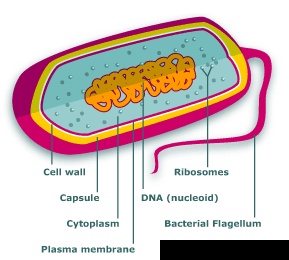
Which type of cell is shown in this diagram?

a)

Prokaryote

b)

Eukaryote

12.
Both prokaryotes and eukaryotes have a nucleus.
a)
True
b)
False
13.
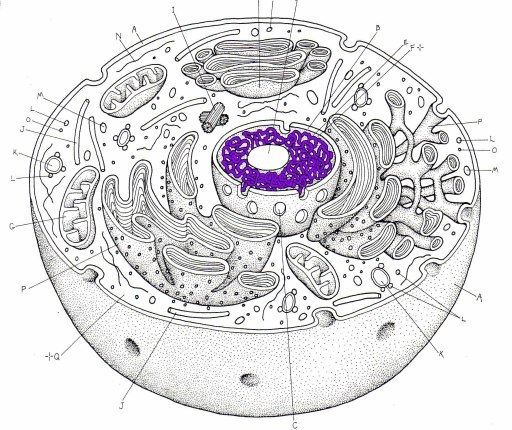
What kind of cell is this?
a)
Eukaryotic
b)
Prokaryotic
14.

You look at a cell under a microscope and see a purple nucleus with no cell wall. What type of cell are you looking at?

a)

plantae

b)

bacteria

c)

fungi

d)

animal

15.
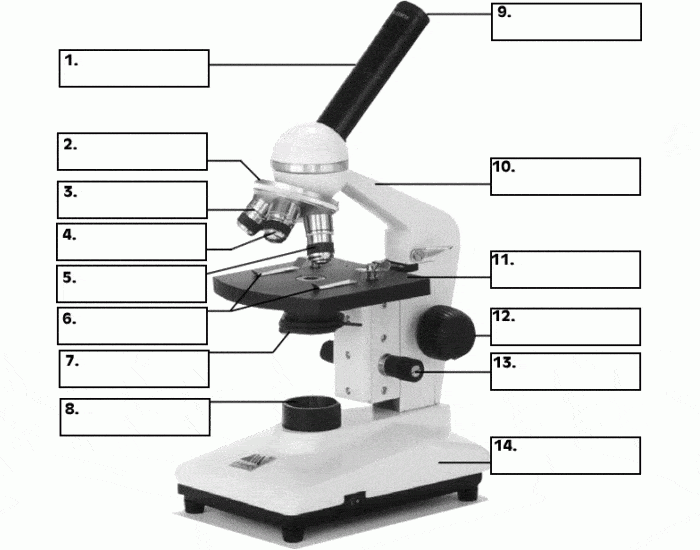
Part 12
a)
Fine Adjustment Knob
b)
Coarse Adjustment Knob
c)
Diaphragm
d)
Objective
16.
Used to control the amount of light reaching the specimen
a)
Illuminator
b)
Stage
c)
Eyepiece
d)
Diaphragm
17.
What do scientists call the parts of a cell?
a)
Pieces
b)
Sections
c)
Organelles
d)
None of the above
18.
The DNA of a cell is found in the __________.
a)
mitochondria
b)
lysosome
c)
nucleus
d)
vacuole
19.
What do you call the gooey liquid in a cell?
a)
Lysosome
b)
Mitochondria
c)
Chloroplast
d)
Cytoplasm
20.
Which of these organelles do animal cells not have?
a)
Nucleus
b)
Chloroplasts
c)
Cell membrane
d)
Lysosome
21.
This organelle is often referred to as the power house of the cell.
a)
Mitochondria
b)
Lysosome
c)
Chloroplast
d)
Vacuole
22.
This organelle is the trash and recycling center of a cell.
a)
Mitochondria
b)
Lysosome
c)
Chloroplast
d)
Vacuole
23.

Which of the following organelles stores water and waste in both animal and plant cells?

a)

Vacuole

b)

Cell wall

c)

Nucleus

d)

Ribosomes

24.

What is D?

a)

Ribosomes

b)

Vacuole

c)

Nucleus

d)

Mitochondria

25.

What is H?

a)

Vacuole

b)

Ribosomes

c)

Mitochondria

d)

Chromosomes

26.

What is A?

a)

Chloroplast

b)

Vacuole

c)

Cell membrane

d)

Nucleolus

27.

What organelle makes proteins for the cell?

a)

Vacuole

b)

Chloroplast

c)

Ribosomes

d)

Cell wall

28.
Under a microscope, a student observes a specimen containing a cell wall, nucleus, and chloroplasts. Which of the following could the specimen being observed belong to?
a)
oak tree leaf
b)
human
c)
bacteria
d)
cat hair
29.

Which of the following would help you determine if the image shown comes from a plant or an animal?

a)

the presence of chloroplasts

b)

the size of the vacuole

c)

the presence of a cell wall

d)

all of these could be used

30.
Which organelle belongs in plant cells only?
a)
Cytoplasm
b)
Mitochondrion
c)
Cell Wall
d)
Nucleus
31.
Which organelle belongs in both plant and animal cells?
a)
Chloroplast
b)
Mitochondrion
c)
Large Central Vacuole
d)
Cell Wall
32.
What are tiny organelles that convert glucose into ATP?
a)
Ribosomes
b)
Vesicles
c)
Cytoskeleton
d)
Mitochondria
33.
The vacuoles in ________ cells are smaller.
a)
Animal
b)
Plant
34.
The ___________ is the basic unit of life
a)
organ
b)
cell
c)
atom
d)
tissue
35.
Tiny cell structures that carry out specific functions within the cell.
a)
membranes
b)
nucleus
c)
organelles
d)
animalicules
36.

The illustration below shows an organism from the Protista Kingdom.


This is an example of which type of protist?

a)

ameoba

b)

coccus

c)

euglena

d)

paramecium

37.

How does this protist obtain food?

a)

Engulfing using cilia

b)

Engulfing using pseudopods.

c)

Cilia push food into an oral groove (mouth).

d)

Flagella push food into an oral groove (mouth).

38.

Th single-celled organism lives in a moist environment. What is the main function of the whipped like structure on this organism? 

a)

absorbing water 

b)

removing wastes

c)

helping with motion

d)

It has no function. 

39.

What is the name of the body part that helps an amoeba move to obtain food called?

a)

flagella

b)

cilia

c)

pseudopods

d)

tail

40.

What is the name of this protists?

a)

paramecium

b)

ameoba

c)

euglena

d)

bacteria

41.

What is the name of the body structure this protest uses to move and gather food?

a)

cilia

b)

pseudopods

c)

flagella

d)

tail

42.

What is the name of the body structure this protest uses to move and gather food?

a)

cilia

b)

pseudopods

c)

flagella

d)

tail

43.

Which of the following would be the best example of a protein?

a)

Butter

b)

Steak

c)

Bread

d)

Strawberries

44.

Which biomolecule would DNA be considered?

a)

Carbohydrates

b)

Lipids

c)

Proteins

d)

Nucleic acids

45.

What are the four biological molecules?

a)

proteins, carbohydrates, lipids, nucleic acids

b)

A, T, C, G

c)

water, air, earth, and fire

d)

nucleus, ribosome, mitochondria, cell wall

46.
Which biomolecule group includes fats, oils, and waxes?
a)
Proteins
b)
Nucleic Acid
c)
Lipids
d)
Carbohydrate
47.

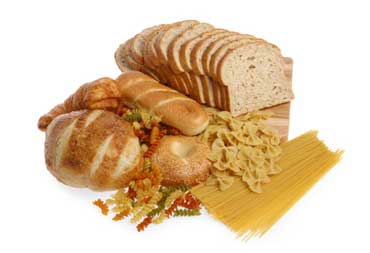
Which biomolecule is found in pasta and bread?

a)

Lipid

b)

Protein

c)

Carbohydrate

48.

What is the function of Lipids?

a)

Speeding up reactions

b)

Storing genetic information

c)

Quick Energy

d)

Long Term Energy & Insulation

49.

structure that packages and modifies proteins

a)

smooth ER

b)

golgi apparatus

c)

rough ER

d)

lysosome

50.

This organelle absorb sunlight and uses it to produce food for plant cells

a)

Ribosomes

b)

Endoplasmic Reticulum

c)

Mitochondria

d)

Chloroplasts

51.

All of these statements are part of cell theory, EXCEPT

a)

All living things are composed of cells

b)

Cells are the basic unit of structure and function

c)

New cells come from existing cells

d)

Cells are really small