
NEW
Font size
 Worksheets
Moon
Total questions: 78
Worksheet time: 28mins

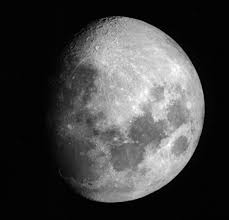
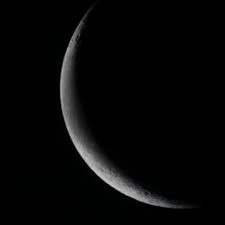


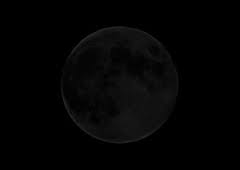

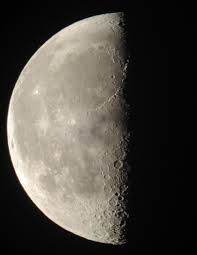
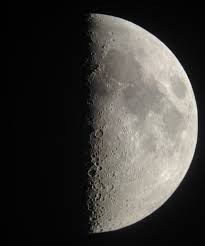


How was the moon formed?
The moon has always been there
Giant impact
Capture of an asteroid
A great wizard magically made it
a large, bowl-shaped cavity on the surface of the moon is called a...
Maria
Ray
Phase
Crater
Maria is...
lines created by a meteorite impact.
a large hole on the moon's surface.
the dark, smooth spots on the moon's surface.
My grandmother's name.
It takes the moon _______ to orbit around the Earth
20 weeks
27 days
24 hours
30 days
Which phase occurs when the Moon is between the Sun and Earth?
First Quarter
Full Moon
New Moon
Third Quarter

What moon feature is this?
highlands (mountains)
crater
maria

What moon feature is this? The was formed when material was thrown up after the crater was made.
highlands (mountains)
crater
maria
What causes craters?
lightning bolts
comets
asteroids
bulldozer
An orbit is
the way something spins
asteroid hitting the moon
the path an object moves in space
light shining off of something else
What was unique about the rocks from the moon that were brought back to Earth?
They were very high in iron.
The were very similar to the crust of the Earth.
They were very similar to the core.
They had water in them.
What did the composition of the moon rocks tell us about how the object that impacted the Earth?
The impact occurred 1000 years ago.
The impact took part of the core
The impact was a head-on impact.
The impact took mostly the crust of the Earth.
Which of these people was the first to set foot on the Moon?
Neil Armstrong
Jim Lovell
Luke Skywalker
Orville Wright
Which phenomenon does the Moon affect on Earth?
The seasons
Tree growth
Mountain erosion
The tides
How old is the moon?
100 years
5.4 billion years
4.5 billion years
10 billion years
During which phase of the Moon can we sometimes have solar eclipse?
New moon
Full moon
First quarter
Last quarter
A lunar eclipse occurs at which moon phase?
quarter moon
new moon
crescent moon
full moon
A lunar eclipse occurs about
once in 3 years
twice a year
once a month
once in 5 years
When there is a lunar eclipse, we can expect
a solar eclipse 2 weeks before or after.
the world will come to a fiery end.
birds to fall from the skies.
an earthquake
During a lunar eclipse
Earth's shadow covers the moon
the sun's shadow covers the moon
the moon covers the sun
Earth's shadow covers the sun
The position of the Earth, moon and Sun during a lunar eclipse is
sun--moon--Earth
Earth--sun--moon
sun--Earth--moon
moon--sun--Earth
The reason there isn't a lunar eclipse every month is because
the moon only gets full every few months, so there can't be eclipses more often.
the moon gets frightened after an eclipse and stays away from Earth, but it forgets soon.
there isn't enough planets and moons in the solar system for it to happen more.
the moon's tilted orbit doesn't put it in Earth's shadow very often.

What is shown in the diagram?
Solar Eclipse
Lunar Eclipse
New Moon
Nebula

What is being shown in the diagram?
Solar Eclipse
Lunar Eclipse
Full Moon
Supernova
The moon formed its lava flows from
meteor bombardment
plate tectonics
friction due to gravitational pull
high core tempertures
The moon is ____ the size of the Earth.
1/2
1/3
1/4
1/5
Maria hs ____ lava.
light basaltic
dark basaltic
light granitic
dark granitic
We see
different side of the moon every 24 hours.
different side of the moon every 2 weeks.
different side of the moon once a month.
the same side of the moon all the time

Ancient solidified lava channels on the Moon's surface are called ___.
maria
canals
rilles
scarps

Bombardment by huge meteorites and asteroids created the dark areas or ___ that we see today.
rilles
maria
craters
crustal thickness

The Moon's surface cooled faster than Earth's after formation because it is larger.
True
False

Compositional differences between the Earth & Moon show that the
Earth has less water at the poles.
Moon is less dense due to a much smaller amount of iron.
lunar rocks could not have come from the mantle.
lunar orbit is not the same as its rotation.

What was discovered about the far-side of the Moon when it was first mapped in 1959?
it was even more heavily cratered with no major maria
pyramids were first seen
the far-side was about the same as the near-side
there were very few mountains

What is meant by the Moon having a "synchronous orbit?"
its orbit matches that of Earth going around the Sun
both the Earth & Moon orbit each other
daylight hours are the same on both the Earth & Moon
the Moon's spin is equal to its revolution around the Earth
A new moon will rise at...
Sunrise
Sunset
Noon
Midnight
A full moon will rise at...
Sunrise
Sunset
Noon
Midnight
A first quarter moon will rise at...
Sunrise
Sunset
Noon
Midnight

Which letter represents Mare Imbrium?
I
P
S
T
Which letter represents Mare Procellarium?
I
P
S
T
Which letter represents Mare Serenity?
T
C
S
F
Which letter represents Mare Crisis?
T
C
S
F
Which letter represents Mare Tranquility?
T
C
S
F

Which number represents a central uplift?
1
4
2
3
Which number represents a floor?
1
4
2
3
Which number represents a rim?
1
4
2
3
Which number represents ejecta?
1
4
2
3

