
NEW
Font size
 Worksheets
Energetic Connections Study Materials
Total questions: 36
Worksheet time: 20mins

At point 1, ________ energy is present
potential
kinetic
potental and kinetic
At point 2, ________ energy is present
potential
kinetic
potental and kinetic
At point 3, ________ energy is present
potential
kinetic
potental and kinetic
At point 4, ________ energy is present
potential
kinetic
potental and kinetic
Choose the BEST answer that is an example of an energy transformation from potential energy to kinetic energy.
a ball rolling down a ramp
a picture hanging on the wall
a coat hanging on a hook
a dog barking at a log

Wind up toys are an example of....
Gravitational Potential Energy
Magnetic Potential Energy
Elastic Potential Energy

The Flipping Frogs are an example of-
gravitational potential energy
magnetic potential energy
elastic potential energy
_______________ is often described as “stored energy.”
Kinetic Energy
Potential Energy
Mechanical Energy
Heat Energy
The ______ of an object remains the same no matter what the gravitational pull.
mass
weight
potential energy
kinetic energy
______ is the measure of the amount of matter in an object.
Graham
Mass
Weight
Energy
________ is the form of energy related to the distance between magnetic materials.
Gravitational potential energy
Magnetic potential energy
Elastic potential energy
What is kinetic energy?
moving energy
potential energy
stored energy
renewable energy

At what point does Potential Energy transform into Kinetic Energy?
Point A
Point B
Point C
Point D
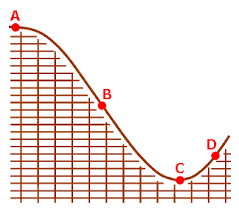
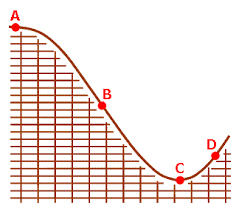


Which of the following BEST describes the change in energy that occurs as a roller coaster travels from position X to position Y?
Kinetic energy increases while potential energy decreases.
Kinetic energy decreases while potential energy increases.
Kinetic energy increases and potential energy increases.
There is no change in energy.
Which of the following BEST describes the change in energy that occurs as a roller coaster travels from position Y to position Z?
Kinetic energy increases while potential energy decreases.
Kinetic energy decreases while potential energy increases.
Kinetic energy increases and potential energy increases.
There is no change in energy.
True or False. Energy cannot be created or destroyed, rather it is transformed from one energy type to another.
True
False
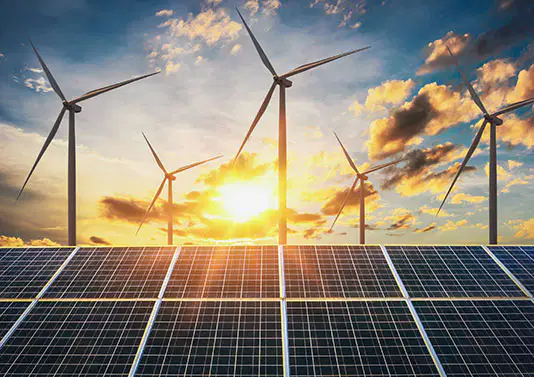
A change in form of energy, or a movement from one place to another
energy transfer
mechanical energy
Law of Conservation of Energy
Joule
elastic energy
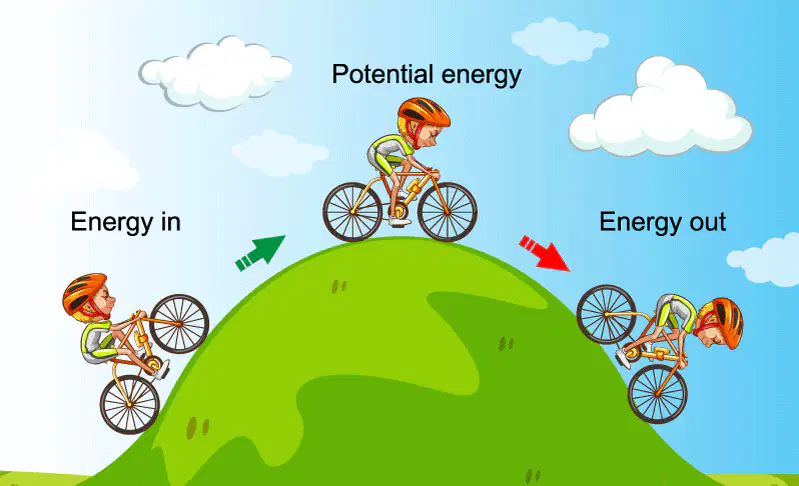
Energy cannot be created or destroyed
Law of Conservation of Energy
energy transfer
Joule
mechanical energy
radiant energy

potential energy of an object that is stretched or compressed
elastic energy
electrical energy
sound energy
gravitational potential energy
mechanical energy

The scientific definition of energy is the ability to...
change shape
cause a change in health
change states of matter
the ability to do work or cause a change

If two objects with different weights are moving at the same speed, the lighter object has...
less energy than the heavier object.
more energy than the heavier object.
an unpredictable amount of energy.
the same amount of energy as the heavier object.

When an object moves slower, its energy of motion...
does not exist
decreases
increases
stays the same

How can a ball be given stored energy?
Roll it down a hill.
Lift it up to a high shelf.
Drop it from the top of a ladder.
Throw it to another person.

What happens when two objects collide?
Energy is changed into force.
Energy is transferred from one object to another.
Energy is created and the objects move faster.
Energy is destroyed and the objects move slower.

