Wayground logo

Free Printable Worksheets

Font size

S
M
L
XL
Worksheets

Atomic Structure Quiz

Total questions: 30

Worksheet time: 22mins

Name
Class
Date
1.
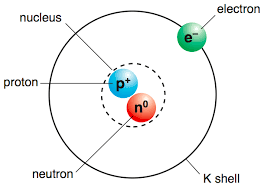
What subatomic particles would you find in the nucleus of an atom?
a)
Protons only
b)
Protons and Neutrons
c)
Neutrons and Electrons
d)
Protons and Electrons 
2.
What subatomic particle(s) would be found orbiting the nucleus?
a)
Neutrons only
b)
Electrons only
c)
Protons and Neutrons
d)
Protons and Electrons
3.
The positive particles of an atom are 
a)
electrons 
b)
positrons 
c)
neutrons 
d)
protons 
4.
How many protons does this atom have?
a)
2.5
b)
6
c)
5
d)
10.811
5.
In order for me to find the number of neutrons, I must round the atomic mass and then do what?
a)
atomic number-atomic mass
b)
atomic number x atomic mass
c)
atomic mass + atomic number
d)
atomic mass - atomic number
6.

What is the atomic number of this atom?

a)

2

b)

4

c)

6

d)

8

7.

What is the mass number of this atom?

a)

1

b)

3

c)

4

d)

7

8.

How many valence electrons?

a)

2

b)

4

c)

6

d)

8

9.

How many valence electrons are in the atom pictured?

a)

4

b)

2

c)

8

d)

0

10.

The number "18" in the periodic table square shows:

a)

atomic mass.

b)

atomic number.

c)

elemental name.

d)

elemental symbol.

11.
The postively charged particles in an atom are: 
a)
protons
b)
electrons
c)
neutrons
12.
The particles of an atom which have no charge are: 
a)
protons
b)
neutrons
c)
electrons
13.
How many neutrons are contained in a neutral atom of: 
a)
7
b)
14
c)
8
d)
9
14.
The atomic mass of an atom equals _ + _
a)
protons + neutrons
b)
protons + electrons
c)
neutrons + electrons
d)
nucleus + electron cloud
15.
How many protons are in EVERY atom of the following; 
a)
21
b)
45
c)
44
d)
24
16.
Valence electrons are: 
a)
Electrons farthest away from the nucleus
b)
Electrons closest to the nucleus
c)
Electrons that just come and go - they don't stay with the atom
17.
Which subatomic particles contribute the most to the mass of an atom?
a)
Protons, Neutrons, Electrons
b)
Protons only
c)
Protons and Electrons
d)
Protons and Neutrons
18.

The particles which revolve around the nucleus are called

a)

protons

b)

neutrons

c)

atom

d)

electrons

19.

A proton has approximately the same mass as

a)

a neutron.

b)

a beta particle.

c)

an alpha particle.

d)

an electron.

20.

What is the nucleus made of?

a)

protons, electrons and neutrons

b)

protons and electrons

c)

protons and neutrons

d)

electrons and neutrons

21.

How many Hydrogen atoms are in 4H2O?

a)

6

b)

8

c)

2

d)

4

22.

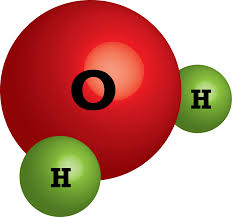
How many Oxygen atoms are in H2O?

a)

1

b)

2

c)

0

d)

4

23.

How many Magnesium atoms are in 10MgCl2?

a)

10

b)

5

c)

20

24.
How many elements are in C6H12O6?
a)
1
b)
2
c)
3
d)
4
25.

How many atoms are there TOTAL in H2SO4 ?

a)

6

b)

5

c)

7

d)

3

26.

How many Sodium atoms are in 6NaCl?

a)

1

b)

12

c)

6

27.

How many Nitrogen atoms are in (NH₄)₂CrO₄?

a)

1

b)

2

c)

8

d)

16

28.

What is C2H8O ?

a)

Element

b)

Letters

c)

Numbers

d)

Compound

29.

How many atoms of Hydrogen are in this compound?

a)

1

b)

2

c)

3

d)

4

30.
Which is the correct formula for:
 three hydrogen (H)
one sulfur (S)
four oxygen (O)

a)
H3SO4
b)
HSO4
c)
H4S3O
d)
H2O