
NEW
Font size
 Worksheets
20-21 1st Quarter Review
Total questions: 70
Worksheet time: 40mins
About how long does it take the moon to make one complete cycle around the earth?
1 day
1 week
1 year
1 month


Why does the Moon have phases?
The moon reflects light from the sun. As the moon revolves around the Earth, we see the moon from different angles.
Only part of the moon is turned on and shining at a time.
The Earth is blocking the moon when we don't see it.
The moon moves out of sight.


What position is the Northern Hemisphere in when it is in the middle of Winter?
Nearest to Jupiter
Nearest to the moon
Tilted towards the Sun
Tilted away from the Sun


What season is the Southern hemisphere in when the North Pole is tilted toward the Sun?
Summer
Fall
Winter
Spring

What would be the result if the Earth's axis was not tilted but straight up and down?
The Earth would always be eclipsed by the moon
There would be no seasons
Days would get longer
The Equator would burn up and the poles would freeze
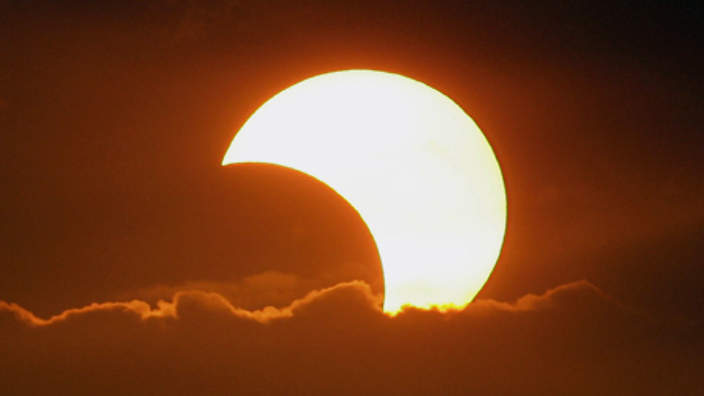
This image is an example of
Lunar Eclipse
Full Moon
Waning Crescent
Solar Eclipse
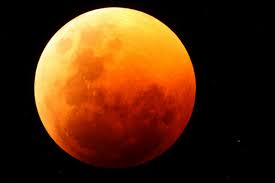
This image is an example of
Lunar Eclipse
New Moon
Solar Eclipse
Waxing Gibbous
Why isn't there an eclipse every month?
Because the moon orbits earth once a week.
Because the Earth's orbit and the moon's orbit are at the same angle, flat plane.
Because the moon's orbit is tilted at an angle, it does not go straight around the center of Earth.
Because the lunar cycle is longer than a month.

What happens during a solar eclipse?
The sun blocks the moon from Earth.
The moon blocks the light from the sun from Earth.
The Earth blocks the moon from the sun.
The Earth blocks the light from the sun on the moon.

This is a diagram of what?
Lunar Eclipse
Solar Eclipse
Waxing Gibbous
Waning Gibbous

This is a diagram of what?
Lunar Eclipse
Solar Eclipse
Waxing Gibbous
Waning Gibbous
PATTERNS help us do what?
Understand paranormal activity
See how change happens randomly
Make predictions and understand cause-and-effect relationships
Count how many grains of sand are in 1 cubic foot of sandbox
What percentage of the moon is always illuminated by the sun?
25%
50%
75%
100%
Our eclipse, moon phases, and seasons unit is a part of which Cross-Cutting Concept?
Structure & Function
Causality
Scale, Proportion & Quantity
Patterns
What is the male part of a flower?
pistil
petal
stamen
stigma
The transfer of pollen, containing the reproductive cells, to the female part of the flower.
seed dispersal
fertilization
germination
pollination
Which is NOT a way that plants attract pollinators?
Color
Shape/Structure
Smell
Magnetism
Moths and bats are attracted to flowers of which color?
Red
Blue
White
Purple
Bees see this color as black.
Red
Yellow
Blue
Purple
One reason for the decline of bees is the use of these pesticides.
nectarines
neonicotinoids
nutmeg
neuropharmacists
Which is NOT a part of the pistil?
stigma
style
ovary
anther
An animal that transfers pollen from plant to plant is known as a...
pollinator
pollen carrier
pollock gator
pollen transferrer
The rafflesia flower smells like rotting meat and dung. This helps attract _____________.
flies
bees
butterflies
bats


The leaves of a flower are scientifically known as...
petals
sepals
filaments
stigma
A pollinator benefits from a flower because it receives nutrients from the ____________.
nectar
petals
electrolytes
honey
A flower benefits from a pollinator because the flower will be able to __________________.
reproduce
change color
grow thistles
speak
Pollination is the process by which the pollen grains are transferred from the ________ to the _________.
sepal... ovary
stamen ... pistil
stigma ... petal
pistil ... filament
The prefix "photo" means...
small
light
image
picture
The suffix "synthesis" means...
putting together
music
small
cold
Which element is NOT involved in photosynthesis?
nitrogen
carbon
oxygen
hydrogen
What energy source powers the process of photosynthesis?
Sunlight
Wind
Water
Electricity
What two materials are TAKEN IN by a plant during photosynthesis?
Glucose & Water
Carbon Dioxide & Water
Carbon Dioxide & Oxygen
Glucose & Oxygen
What two materials are CREATED during photosynthesis?
Glucose & Oxygen
Carbon Dioxide & Water
Oxygen & Water
Carbon Dioxide & Glucose
Of the two materials created during photosynthesis, which does a plant use for food?
glucose
oxygen
water
carbon dioxide
Of the two materials created during photosynthesis, which is a waste product that humans end up breathing in?
glucose
oxygen
carbon dioxide
water
CO2 stands for what material?
oxygen
glucose
water
carbon dioxide
H2O stands for what material?
carbon dioxide
water
glucose
oxygen
C6H12O6 stands for what material?
glucose
carbon dioxide
water
oxygen
CO2 and O2 enter and exit through tiny holes on the underside of a leaf called what?
chloroplasts
chlorophyll
glucose
stomata
Water enters a plant through what structure?
stomata
pistil
roots
stamen
What is the name of the sugar that a plant creates for food during photosynthesis?
glucose
nectar
honey
sucrose
What part of a plant cell takes in sunlight to power the process of photosynthesis?
mitochondria
stamen
style
chloroplast
6 atoms of carbon go into the process of photosynthesis. How many are there as a result?
1
6
12
18
What word means "made by combining two or more things"?
hybrid
yield
adaptation
cellular
What word means "amount of crop produced"?
yield
drought
hybrid
acid
What is NOT one of the 4 main factors that affect plant growth?
Light
Temperature
Water
Nutrition/Soil
Color
What is the #1 state in total crop value?
California
Iowa
Nebraska
Idaho
What is the #2 state in total crop value?
Iowa
Texas
California
Kansas
A long period of low or no precipitation
adaptation
yield
drought
hybrid
rain, snow, sleet, or hail that falls to the ground
precipitation
anticipation
constipation
hibernation
A change in an organism that helps it to better survive in its environment
photosynthesis
drought
adaptation
migration

