
Font size
 Worksheets
Sci 8 Fronts 23-24
Total questions: 56
Worksheet time: 53mins
Movement of air masses causes changes in the ______________.
weather
climate
In the continental United States, weather moves from the southwest to the __________________.
northeast
northwest
southeast
southwest
A(n) _____________ is the boundary where two air masses meet.
air mass
storm
collision
front
Fronts are associated with
low pressure, slower winds & clouds
high pressure, faster winds & precipitation
low pressure, faster winds, clouds & precipitation
Lousy/Bad weather = ____________ pressure
low
high
Which is the correct symbol for a warm front?


Which is the correct symbol for a cold front?
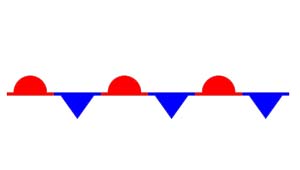




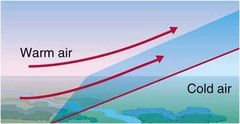
When a cold front is approaching, what happens?
warm air is pushing under cold air causing humid weather and lower temperatures
warm air is pushing under cold air causing humid weather and higher temperatures
warm air rises over the cold air and clouds form leading to rain and thunderstorms
cold air is pushed over warm air causing rain and thunderstorms
When a cold air mass moves into an area with a warm air mass, temperatures get colder and we will have severe weather or thunderstorms. What type of front is this?
When a warm air mass gently slides on top of a cold air mass, and you have light rain followed by warmer temperatures, what type of front is it?


What kind of weather is usually associated with a high pressure system?
Clear skies, cool, dry weather
Precipitation (rain, snow, etc.)
A location near a high pressure area experiences ____________ skies.
clear
cloudy

What type of weather usually goes with this symbol?
Clear skies
Cloudy skies
Hot temperature
Thunderstorms

What type of weather is Texas (where the star is) likely experiencing in this image?
Clear, sunny skies and cool weather
High winds and thunderstorms
Hot weather with a warm front
Cloudy skies with high winds


What type of weather is associated with a cold front?
heavy rain, thunderstorms, or snow for short periods of time
Steady, light rain or snow can occur for longer periods of time

Which cities below would be experiencing precipitation based on the location of the front?
A and B
B and D
C and B
D and A

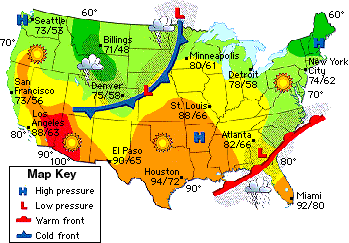

Using the weather map for Friday, choose the best forecast for Los Angeles on Saturday.
high pressure

Based on the weather map for Friday, choose the best forecast for Dallas on Saturday.
thunderstorms and cooler temperatures

Based on the weather map for Friday, choose the best forecast for Minneapolis on Saturday.

A cold front is approaching Minneapolis. What will happen to the air temperature?
stay the same
increase
decrease

Why do you see precipitation near the L on the weather map? (select 2 answers)
L represents low pressure which means the air is rising and forming clouds.
Because rain always happens in that part of the country,
Because L means the air is sinking leading to clouds.
There are fronts coming out of the Low pressure area and precipitation occurs at fronts when warm air rises over cold, leading to cloud formation.

Which two cities are most likely to experience clear, dry weather?
Seattle & San Francisco
Chicago & Minneapolis
Chicago & Nashville
Dallas & Houston
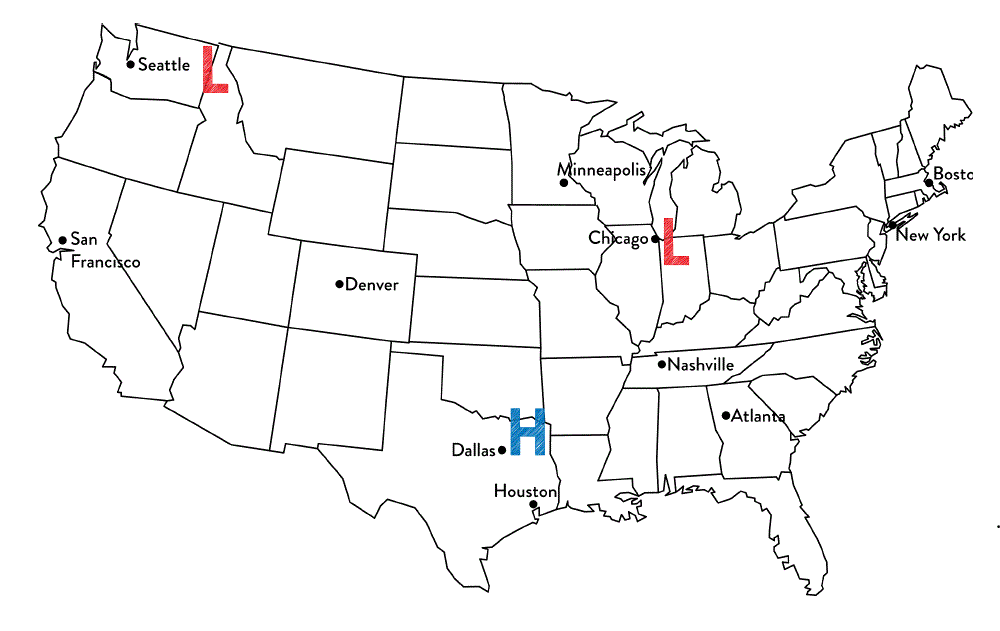
Tim said that Chicago is most likely to experience rainy weather. Jennifer thinks that Dallas is most likely to experience rainy weather.
Which student is correct?
Tim - because Chicago is the closest to a low pressure system which produces stormy conditions.
Jennifer - because high pressure systems produce precipitation
Both students are correct because all systems produce precipitation
Neither of the students are correct because the cities are not close enough to the system.

What type of weather is Minneapolis most likely experiencing?
light/drizzly rain
severe thunderstorms
sunny skies
cloudy skies, light precipitation

What type of weather is Denver most likely experiencing? Notice the type of front that has just passed through.
Wet conditions with cooler temperatures
Dry conditions with cooler temperatures
Rainy, cold weather
Rainy, humid weather

Why does city "B" have clear skies?
It is in North America
There is not a front moving through city "B"
Clouds do not form in the West
It is located near a high pressure system

Which location was just passed by a warm front?
Location A
Location B
Location C
Location D
Cold fronts = move __________ than warm fronts
slower
faster
What type of front forms when a cold front catches up to the warm front? _______________ front
occluded
stationary
Weather in the US moves from SW to ________ due to the SW Planetary Wind belt.
SW
NE
NW
SE
Air masses are classified based on their _____________
feelings
source region
Air masses: POLAR =
cold
warm
Air masses: TROPICAL =
cold
warm
Air masses: MARITIME =
dry
humid
Air Masses: CONTINENTAL =
dry
humid
An airmass coming from Central Canada =
continental tropical
continental polar
maritime tropical
maritime polar
An airmass coming from the Gulf of Mexico is:

A _____________ weather front occurs when a cold air mass and a warm air mass meet, but cannot move one another so they both stay still for several days.
Cold
Warm
Stationary
Occluded

