wayground logo

Free Printable Worksheets

Font size

S
M
L
XL
Worksheets

Energy Transfer TWIZZ Review

Total questions: 51

Worksheet time: 34mins
Name
Class
Date
1.
At higher temperatures
a)
particles in an object have less energy
b)
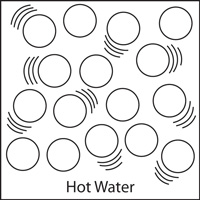
particles in an object move faster
c)
a gas contracts
2.
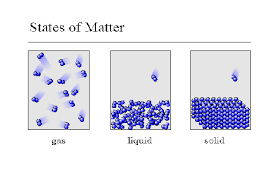
Which state of matter has tightly packed molecules?
a)
solid
b)
liquid
c)
gas
3.
The speed of the molecules determines the _____.
a)
volume
b)
density
c)
pressure
d)
temperature
4.
The slower the particles in a substance move,
a)
the colder it is.
b)
the warmer it is.
c)
the more energy it has.
d)
the less energy it has.
5.
Thermal energy is...
a)
heat energy.
b)
the energy of motion
c)
energy of nuclear processes.
d)
an indication of physical change.
6.
Conduction is heat transfer by -
a)
Touch
b)
Circles
c)
Waves
7.
Convection is heat transfer by-
a)
Touch an object
b)
The heating and cooling of a fluid
c)
Electromagnetic Waves
8.
Warm air rises and the cool air sinks demonstrates this type of heat transfer. 
a)
conduction
b)
convection
c)
radiation
d)
Insolation 
9.
The heat from a hot burner to a pot is transferred by ______.
a)
convection
b)
insulation
c)
radiation
d)
conduction
10.
When the 2nd story of a house is warmer than the 1st floor of a house is heat transfer through 
a)
conduction
b)
convection
c)
radiation
d)
thermal equilibrium
11.
The sun warming your skin is an example of heat transfer through 
a)
conduction
b)
convection
c)
radiation
d)
thermal electricity
12.
Heat transfer through electromagnetic waves is called 
a)
conduction
b)
convection
c)
radiaton
d)
thermal
13.
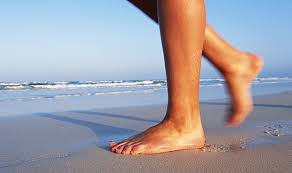
Walking on the warm sand sand with your bare feet demonstrates this type of heat transfer. 
a)
conduction
b)
convection
c)
radiation
14.
A group of friends gather around a fire to stay warm.
a)
conduction
b)
convection
c)
radiation
15.
Hot coffee is stirred with a spoon; the spoon gets hot due to
a)
conduction
b)
convection
c)
radiation
16.
What type of heat transfer takes place in solids?
a)
Conduction
b)
Convection
c)
Radiation
17.

What type of heat transfer takes place in liquids and gasses?

a)

Conduction

b)

Convection

c)

Radiation

d)

Thermal Equilibrium

18.
As you touch a hot stove the heat transfers -
a)
from your hand to the stove
b)
from the stove to your hand
c)
It doesn't transfer
19.
Which is more dense?
a)
Hot Liquid
b)
Cold Liquid
20.
Heat transfer always goes from-
a)
Cold to Hot
b)
Hot to Cold
c)
Heat doesn't transfer
d)
Freezing to Cold
21.
What happens to particles as they heat up?
a)
They slow down
b)
Nothing
c)
They don't move
d)
They speed up
22.
What happens to particles as they cool down?
a)
They slow down
b)
Nothing
c)
They don't move
d)
They speed up
23.
Mittens help keep your hands warm in winter because:
a)
They are conductors of heat.
b)
They are fuzzy.
c)
They are conductors of electrical energy.
d)
They are insulators.
24.
Conductors are materials that...
a)
Allow heat to pass through
b)
Stop heat from passing through
c)
Allow cold to pass through
d)
Stop cold from passing through
25.
An object that doesn't conduct heat well is known as:
a)
a conductor
b)
an insulator
c)
conduction
d)
insulation
26.
Conduction, Convection and Radiation are three types of...
a)
Electrical energy
b)
Thermal Energy
c)
Chemical Energy
d)
Sound Energy
27.

What is the equation for calculating calories?

a)

cal = m x change in Temp

b)

m = calories x change in Temp

c)

change in Temp = m X cal

d)

What's a calorie?

28.
Convert 0* C to Kelvin
a)
-273 K
b)
273 K
c)
0 K
d)
100 K
29.

When particles of matter move more quickly they:

a)

feel warmer to the touch.

b)

have a higher temperature.

c)

have more kinetic energy.

d)

all of the above

30.

Thermal energy is transferred between substances only when they have different

a)

masses.

b)

volumes.

c)

temperatures.

d)

none of the above.

31.

A chair placed several feet from a fireplace gets warm on the side facing the fire.

a)

Conduction

b)

Convection

c)

Thermal Radiation

32.

Warm air over the beach rises while cooler dense air from the ocean rushes in.

a)

Conduction

b)

Convection

c)

Radiation

33.

In a lava lamp, the liquid forms globs that break off and rise to the top of the liquid due to heating from the bottom.

a)

Conduction

b)

Convection

c)

Radiation

34.

The metal skewer gets so hot that you drop your marshmallow in the campfire.

a)

Conduction

b)

Convection

c)

Radiation

35.

Hot coffee is stirred with a spoon and the spoon becomes hot.

a)

Conduction

b)

Convection

c)

Radiation

36.

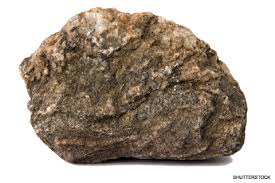
A huge rock at the state park gets so hot during the day that you can’t sit on it.

a)

Conduction

b)

Convection

c)

Radiation

37.

Convert 0 Kelvin to degrees Celsius.

a)

273

b)

-273

c)

0

d)

100

38.

Convert 0 degrees Celsius to Kelvin.

a)

273

b)

-273

c)

0

d)

100

39.

Convert 100 degrees Celsius to degrees Fahrenheit.

a)

100

b)

112

c)

200

d)

212

40.

If body temperature is 98.6 degrees Fahrenheit, what would that be in degrees Celsius?

a)

23

b)

37

c)

50

d)

77

41.

Room temperature is 23 degrees Celsius, what is that in degrees Fahrenheit?

a)

23

b)

68

c)

100

d)

212

42.

Does melting an object cause the molecules to gain or lose energy?

a)

gain

b)

lose

43.

Does freezing an object cause the molecules to gain or lose energy?

a)

gain

b)

lose

44.
If your cup of hot chocolate is really hot that means it has a lot of this type of energy.
a)
Chemical
b)
Thermal
c)
Electrical
d)
Potential
45.

Heat always travels from...

a)

Warm to cool

b)

Cool to warm

c)

Warm to warm

d)

Cool to cool

46.

Thermal energy that is transferred from one substance to another.

a)

heat

b)

temperature

c)

thermal energy

d)

radiation

47.

Which of the following is an example of a Thermal Conductor?

a)

Plastic

b)

Styrofoam

c)

Wood

d)

Copper

48.

Which of the following is an example of a Thermal Insulator?

a)

Iron

b)

Aluminum

c)

Wood

d)

Copper

49.

Calorie is a measure of

a)

Energy

b)

Weight

c)

Distance

d)

Volume

50.

When material stretches when the temperature is increased is known as

a)

thermal expansion

b)

temperature increase

c)

thermal stretch

d)

thermal widening

51.

What energy of transfer can happen in a vacuum?

a)

conduction

b)

convection

c)

radiation

d)

all of them