
Font size
 Worksheets
chemistry + human body
Total questions: 60
Worksheet time: 2hrs 0mins
The quantity of matter present in an object is called its:
Weight
Gram
Mass
Density


Which structure in male reproductive system produce sperm?
Scrotum
Testis
Urethra
Seminal Vesicle
Which is the function of semen, produced by prostate glands?
to produce sperms
to protect the testis
to provide nutrients to sperms
to transport sperms
Which structure in male reproductive system that transport the sperm out of the body?
Testis
Sperm duct
Urethra
Seminal vesicle
Sperm is male gamete and cannot swim by its own.
True
False
Which structure in female reproductive system produce ovum?
Fallopian tube
Ovary
Uterus
Cervix
Ovum is female gamete and cannot move by its own.
True
False
Which structure in female reproductive system where the fertilisation occur?
Uterus
Ovary
Vagina
Fallopian tube
The uterus play important parts in reproductive system because :
place where embryo is implanted
produce sex hormone like estrogen
place where foetus will develop
secretes mucus to help movement of sperms
Symbol of copper is
Co
Cu
Ca
Sulphur shows valencies
2
4
both
The molecular formula for Ammonium carbonate is
(NH4 )2CO3
(NH4 )CO3
(NH4 )2CO
Name the elements present in Ammonia
nitrogen
hydrogen
both nitrogen and hydrogen
A description of an object’s position should include which three things?
reference point, distance, and direction
reference point, speed, and distance
What does the head of the arrow show if motion is represented by an arrow?
direction
position
Which word could be used to describe the direction of a moving object?
fast
forward
What does a reference point help identify?
acceleration
position
What is the SI unit for speed?
m/s
s/m
What is your average speed if you travel 500 kilometers in 5 hours?
250 km/h
5 km/h
100 km/h
In order to calculate acceleration, what three quantities must be known?
initial speed, final speed, total time
initial speed, starting time, final location
starting location, final location, total time
starting location, final speed, total time
Objects moving at the same velocity have the same:
speed and direction
size and distance
direction and distance
size and speed
Which of the following is the best definition of deceleration?
zero acceleration
changing distance
negative acceleration
Complete the sentence. Acceleration occurs whenever an object ____.
changes velocity
moves
decreases distance
What is the acceleration of a bicycle that goes from 1 m/s to 3 m/s in 2 seconds?
1.0 m/s2
1.5 m/s2
3.0 m/s2
Motion can be described through a change in _____.
temperature
distance
position
speed
Which endocrine glands are found in the brain?
Pituitary
Hypothalamus
Thryroid
Adrenal
Pancreas
The pituitary gland releases these hormones.
Adrenaline
Insulin
Growth Hormone
Thyroid Stimulating Hormone

Identify this gland.
Adrenal
Thyroid
Pancreas
Testes
The thyroid produces thyroid hormone called
thyroxine.
parathyroid hormone.
insulin.
thyroid stimulating hormone.
The thyroid controls
respiration.
growth.
all metabolic processes.
locomotion.
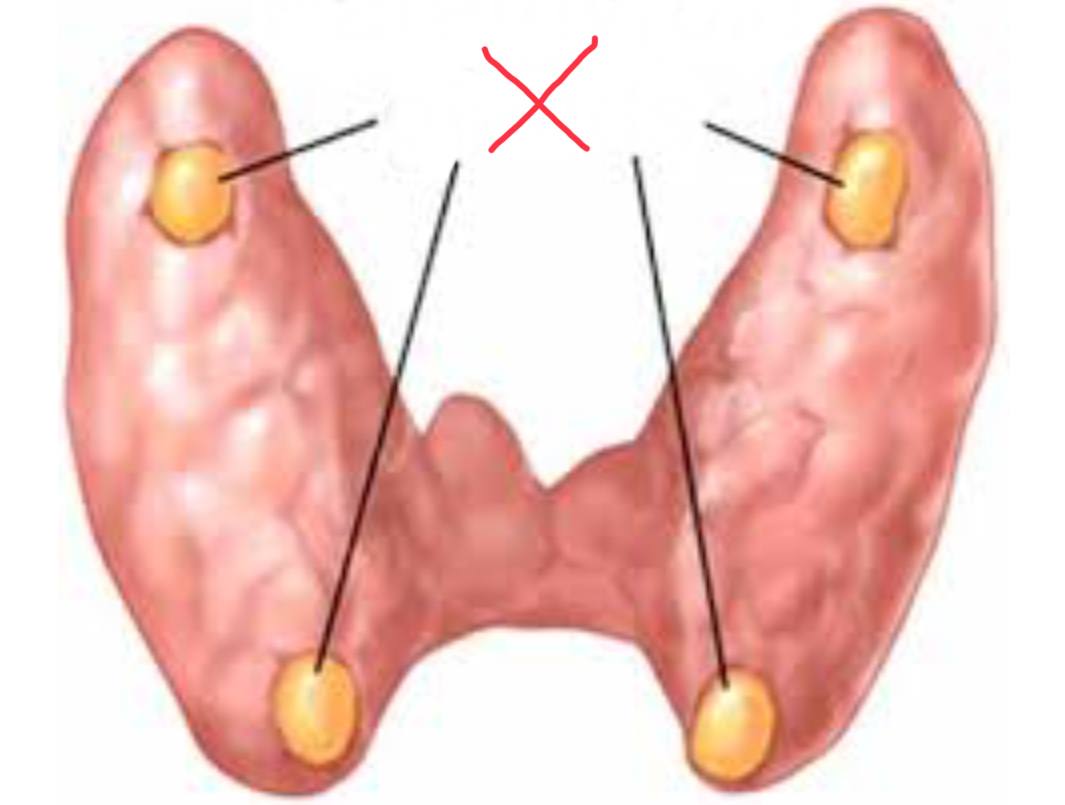
Identify the glands labeled “X.”
Pancreas
Testes
Tyroid
Parathyroid
Parathyroid hormone controls
metabolism.
water levels.
calcium levels.
secondary sex characteristics.
These hormones are produced by the pancreas.
Thyroxine
Insulin
Adrenaline
Glucagon
Testosterone

What is the name of the gland
(a)

Pancreas is located at the .......... of the stomach
Back
Front

Name the glands that located above kidney
(a)
What is the function of the hormone insulin?
Increase blood sugar level.
Decrease blood sugar level.
Regulate calcium levels.
Regulate water levels.
Which of the following is an effect of adrenaline?
“Fight or flight”
Increase in blood pressure
Increase in breathing rate
Increase in heart rate
This hormone causes an increase in blood sugar level.
Insulin
Estrogen
Glucagon
Growth hormone
Which hormone is made by the testes?
Testosterone
Estrogen
Progesterone
Growth hormone
Which of the following hormones are produced by the ovaries?
Testosterone
Estrogen
Growth hormone
Progesterone
Which of the following hormones controls secondary sex characteristics such as sperm production, egg maturation, and the menstrual cycle.
Progesterone
Growth hormone
Oxytocin
Testesterone
Estrogen
How do hormones travel around the body?
Along nerve cells
Through ducts
Through blood
Through the digestive system
What type of product is secreted by endocrine glands?
Sweat
Hormones
Saliva
Tears
___ takes place when blood travels from the heart, through the lungs, and back to the heart.
pulmonary circulation
systemic circulation
___ takes place when oxygen-rich blood travels to all body tissues except the lungs.
pulmonary circulation
systemic circulation
___ is a group of organs and tissues that act as transfer stations carrying needed materials to cells and removing their waste products.
circulatory system
respiratory system
nervous system
How does the Circulatory System work with the Respiratory System?
In order create movement in the muscles, they need oxygen. The body's oxygen transport system takes oxygen to the working muscles.
The circulatory system supplies oxygen and nutrients to our bodies, without oxygen there would be no possible way for humans to live
Without messages from the brain the Circulatory system would not be able to work
How many chambers are in the heart?
6
2
4
3
What is the purpose of heart valves?
keep blood flowing in one direction
pump the blood

