
 Worksheets
Benchmark # 1 - Review of Questions
Total questions: 162
Worksheet time: 4hrs 41mins

The table shows the masses and velocities of four moving objects. Which object has the most kinetic energy?
Object A
Object B
Object C
Object D

Examine the images. Which table correctly identifies the type of potential energy in each image?
- Elastic
- Electric
- Gravitational
- Gravitational
- Electric
- Elastic
- Electric
- Gravitational
- Elastic
- Elastic
- Gravitational
- Electric
Which example best shows heat transfer by conduction?
A boy’s skin warms up by standing in the sunlight.
Hot air rises from a heating vent on the floor.
A metal spoon gets cold when placed in a container of ice cream.
A girl’s hand feels warm when placed near a lamp that is turned on.
On Earth, the ocean waters at the North and South Poles receive less direct sunlight than other ocean waters located closer to the equator. As a result, sea ice forms. Sea ice is frozen fresh water that floats on top of the ocean in long, flat, white sheets. As the temperature changes throughout the year, the sea ice thaws and refreezes repeatedly. About 15% of Earth’s oceans are covered by sea ice for part of the year.
Which argument supports the idea that sea ice and climate are related?
Sea ice is frozen fresh water; therefore, sea ice stores a high amount of solar energy from the Sun for summer months.
Sea ice freezes and thaws repeatedly; therefore, ocean water refreezes to create the same amount of ice every winter to cool the air in the atmosphere.
Sea ice has a white surface; therefore, sea ice reflects a large amount of sunlight up into the atmosphere and back into outer space.
Sea ice covers part of Earth’s oceans; therefore, ocean water remains colder than land across the world and keeps coastline temperatures moderate throughout the year.

A student creates a model to explain the formation of a desert near 30°N latitude.
Which statement best describes the student’s model?
Air near the equator is warmed by sunlight and blows northward, creating a desert at 30°N latitude.
Air near the equator and air at 30°N latitude are warmed by sunlight, and the cycling of warm air creates a desert at 30°N latitude.
Warm, moist air rises near the equator and releases rain as it cools. The cool, dry air falls near 30°N latitude, promoting the formation of a desert.
Cool, moist air rises near the equator and releases rain as it warms. The warm, dry air falls near 30°N latitude, promoting the formation of a desert.

A diver jumps off a tall diving board into the air and completes a spin before falling into a swimming pool.
Between which points does kinetic energy transform into gravitational potential energy?
points 1 and 2
points 2 and 3
points 3 and 4
points 3 and 5

Which data is added to Model 2 to make it different from Model 1?
atmospheric temperatures
Earth’s rotation
change in seasons throughout the year
equal heating of Earth’s surface
Carbon dioxide is a solid at temperatures below -78.5°C. A sample of solid carbon dioxide is placed on a table near a window inside a classroom. The temperature in the classroom is 22°C. Students observe that the solid changes directly into a gas within a few minutes.
Which statement best explains the students’ observation?
The air warms the sample by conduction, and sunlight warms the sample by radiation.
The air warms the sample by convection, and sunlight warms the sample by conduction.
The air warms the sample by radiation, and sunlight warms the sample by convection.
The air warms the sample by radiation, and sunlight warms the sample by conduction.

A student designs two different insulated bottles using household items to keep drinks warm. Each bottle is filled with 300 mL of water at 70°C. The diagram shows the different designs, and the table shows the starting and final temperatures of the water after 30 minutes.
The effect of which factor in the design can be determined by analyzing the results?
amount of water
presence of a lid
material of the bottle
thickness of the rubber sheet

The graph shows the relationship between salinity and depth in the ocean for three different locations during the month of August.
How does the data provide evidence for the formation of ocean currents?
The data shows that different areas of the ocean have water at different depths, influencing the global movement of water in ocean currents.
The data shows that different areas of the ocean have water with similar salinity, influencing the global movement of water in ocean currents.
The data shows that water from different areas of the ocean has different densities, influencing the global movement of water in ocean currents.
The data shows that water from different areas of the ocean has similar temperatures, influencing the global movement of water in ocean currents.

An experiment is conducted by dropping two different objects, A and B, from 45 meters above the ground. The graph shows the changes in kinetic energy of each object as it falls.
Which statement explains why Object A and Object B have different amounts of kinetic energy right before hitting the ground?
Object A is a different shape than Object B.
Object A is a smaller size than Object B.
Object A has a slower speed than Object B.
Object A has a larger mass than Object B.
It takes 2.5 seconds for the arrow to hit the target after it is released. Which data table best explains the transformation of energy on the arrow from after its release to before it hits the target?


A student heats a pan with water over a burner. Labels P, Q, and R represent locations of different types of heat transfer.
Which table best matches the method of heat transfer shown at each location?
P. Conduction
Q. Radiation
R. Convection
P. Conduction
Q. Convection
R. Radiation
P. Convection
Q. Radiation
R. Conduction
P. Convection
Q. Conduction
R. Radiation

Which statement about the energy of the cart is true?
The cart’s kinetic energy increases, and its gravitational potential energy remains the same as it moves along the track.
The cart’s gravitational potential energy increases, and its kinetic energy remains the same as it moves along the track.
Both the cart’s kinetic energy and gravitational potential energy remain the same as it moves along the track.
Both the cart’s kinetic energy and gravitational potential energy change as it moves along the track.
Which option correctly shows atmospheric circulation near the ocean?


What do thermal energy and kinetic energy have in common?
Thermal energy and kinetic energy are both present in all particles and objects.
Thermal energy and kinetic energy are both stored in particles or objects.
Thermal energy and kinetic energy are both destroyed by collisions of particles and objects.
Thermal energy and kinetic energy are both related to the motions of particles or objects.

Which two actions from the model will decrease the salinity of ocean water?
Evaporation and Icebergs melting
Freezing of seawater and rainfall
Icebergs Melting and rainfall
Mineral salt runoff and freezing of seawater

A spring with an object attached is stretched, compressed, and released.
When is elastic potential energy in the spring transformed into kinetic energy?
when the spring is most stretched
when the spring is most compressed
when the spring is compressed and holds the object
when the spring is released and moves the object

The diagram shows climates on both sides of a mountain.
Which statement correctly explains the difference in climates?
Sunlight falls on only one side of the mountain.
The high mountain stops wind from reaching one side of the mountain.
Cool air near the top of the mountain causes more rainfall on one side of the mountain.
Access to warm ocean water causes more wind on one side of the mountain.

A playground designer is concerned that certain materials outside in the sunlight may get too hot for children. The designer investigates different building materials by recording the changes in temperature of each material outside in sunlight over 4 hours. The table shows the results.
The designer decides to avoid using metal for handrails on the playground. How does the data support the designer’s decision?
Metal releases the most thermal energy from sunlight and can transfer the most heat through convection to a child’s hand.
Metal absorbs the most thermal energy from sunlight and can transfer the most heat through conduction to a child’s hand.
Metal creates the most thermal energy from sunlight and can transfer the least heat through convection to a child’s hand.
Metal stores the most thermal energy from sunlight and can transfer the least heat through conduction to a child’s hand.

A student performs an activity in which a large tank is filled with salt water. An ice block is placed at one end and a heat lamp at the other end. The student adds a drop of color dye in the water near the ice block. The color dye sinks near the ice block and rises near the heat lamp, as shown by the arrows.
Which conclusion can be made about ocean currents from the activity?
Surface wind changes the density of water in the ocean, causing ocean currents to sink.
Heat from Earth’s interior creates pockets of warm air, causing ocean currents to circulate.
Ice found near Earth’s poles adds more salt to the ocean, forming ocean currents.
Energy from the atmosphere causes convection of water, forming ocean currents.

A person rolls a bowling ball to try and knock down 10 pins.
Which two changes will increase the kinetic energy of the bowling ball before it hits the pins?
decrease the size of the bowling ball and decrease the number of pins
increase the mass of the bowling ball and increase the velocity of the bowling ball
decrease the number of pins and increase the mass of the pins
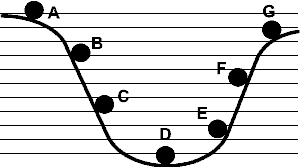

At which position does the child on the swing have the most gravitational potential energy?
W
X
Y
Z
What is elastic potential energy?
energy stored in stretched or compressed elastic materials
energy that comes from the temperature of matter
energy transferred through the substance in a wave
energy stored in the height of the object off the ground
Which statement is true?
Oranges contain Elastic Energy
Food contains Chemical Energy
Phone on the table doesn't contain Gravitational Energy
Radiator contains Nuclear Energy
What is an example of Electric Energy
Apple
Rubber Bands
Car Battery
Table

Which 2 types of energy does the object in the image use?
Electric and Thermal
Nuclear and Elastic
Chemical and Mechanical
Sound and Elastic
The measure of the amount of matter in an object
mass
force
speed
acceleration
The energy an object has due to its motion is called
elastic potential energy
potential energy
kinetic energy
gravitational potential energy
The energy that results from the position (height off the ground) or shape (stretched or compressed) of an object is called
elastic potential energy
potential energy
kinetic energy
gravitational potential energy
Energy is directly related to an object's height off the the ground
elastic potential energy
kinetic energy
potential energy
gravitational potential energy
Energy that is due to an object being compressed or stretched is called
elastic potential energy
kinetic energy
potential energy
gravitational potential energy
The energy of electric charges is called
mechanical energy
thermal energy
nuclear energy
electrical energy
This type of energy is a form of potential energy that is stored in chemical bonds between atoms.
electromagnetic energy
energy transformation
chemical energy
law of conservation of energy
The rule that energy cannot be created or destroyed is
electromagnetic energy
energy transformation
chemical energy
law of conservation of energy
Which answer choice best describes thermal energy?
energy an object has due to its height
energy an object has due to the motion of its molecules
energy an object has due to being stretched or compressed
energy an object has due to its mass and speed

Which 2 types of energy are being used by the bungee jumper in the image?
Elastic
Chemical
Gravitational
Thermal
What type of energy does pizza provide for us?
Pizza is chemical potential energy that is transformed to kinetic energy later on, as we move.
Pizza is gravitational potential because our body will digest it.
Pizza is elastic potential because the cheese stretches out of its normal position.
Pizza is chemical potential energy that is later destroyed in our bodies.

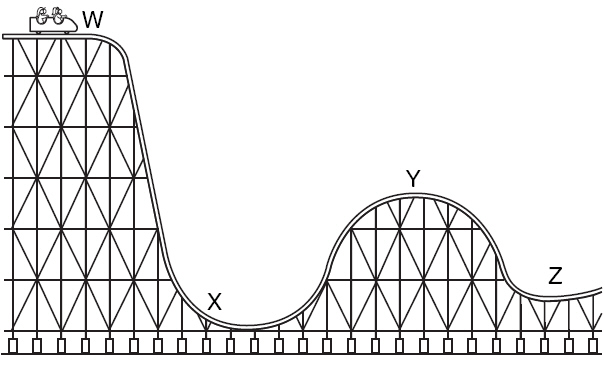
Holding a marble at the top of a ramp
Potential
Kinetic
A slinky moving down a set of stairs
Potential Energy
Kinetic Energy
A boy standing on top of a slide
Potential Energy
Kinetic Energy
If these are all moving at the same speed, the vehicle with the greatest KE would be
(Think about their sizes)


Determine whether the following example is Potential Energy (PE) or Kinetic Energy (KE):
flashlight turned off
Potential Energy
Kinetic Energy
The more mass an object has the _____________ kinetic energy it has
more
less
If two objects with different masses are moving in the same direction and at the same speed, what will happen to the kinetic energy?
Both objects will have the same kinetic energy because they are traveling at the same speed
The object with less mass will have greater kinetic energy
The object with greater mass will have greater kinetic energy
We can’t tell which has greater kinetic energy from this information
Speed is...
how much an object weighs.
how much matter is in an object.
the rate at which an object moves.
how much kinetic energy an object has.
Which of the following is an example of convection?
the rays of the Sun warming the earth
hot air rising and cooler air falling
a hot object transferring heat to a cooler one
a hot oven warming the air around it
Heat is the transfer of _______ energy.
mechanical
chemical
thermal
electrical
Lakelynn pours hot coffee into a cold mug. A few moments later, she picks up the mug, and it is now warm.
What is the main form of energy transfer involved in heating the mug?
conduction
radiation
convection
all of the above
Once heat from the Sun penetrates the Earth's atmosphere, the heat is circulated as warm air rises and cold air sinks. What is this process called?
radiation
conduction
convection
reflection
Which of the following is an example of heat transfer by radiation?
the Sun warming the Earth
an electric space heater warming a room
a fire warming a group of campers
all of the above
Heat can be transferred through conduction, convection, and radiation. What is necessary in order for heat to be transferred by conduction?
The substances must be liquids or gases
The objects must be in direct contact with one another.
Heat must be transferred through space.
Heat must be transferred in the form of currents
1. Rob and his team have been chosen to build a wind turbine at a local ski resort that needs to generate electrical energy and withstand the harsh environment of the mountains. Rob and his team have done their research on the problem. What would be the next step for the team?
Create a prototype of the wind turbine
Develop possible solutions(s) for the turbine and how it will fit the criteria needed
Test the wind turbine on the mountains during the harsh winter months
Redesign a new solution for this turbine
A company is designing a new automobile brake system. After repeated testing of the brake system prototype, engineers presented a report to their company explaining that they discovered a major problem in the system.
Which of the following should the engineers do next?
redesign the brake system
build a full-scale version of the brake system
identify the reasons for building the brake system
evaluate the quality of the report about the brake system
Cold water near the ocean floor often flows in deep-water currents. The cold water flows toward the deepest regions of the ocean because
it is more dense than the warm water above it.
the water above it is frozen in icebergs.
the water above it contains less algae
it is warmer than the cold water above it.
Water is cooler near the poles and warmer near the equator. Movement of cooler and warmer water from these regions moderates the global climate. Which of the following describes the movement of water between the poles and the equator?
evaporation
gravity
ocean currents
tides

The image above shows part of an ocean current in the Pacific Ocean. The blue line represents the motion of deep, cool water. The red line represents the motion of warm surface water. What most likely causes the current to behave as shown in the image?
When the deep water is cooled, it loses energy and becomes denser.
When the surface water is heated by the Sun, it becomes denser.
When the cold water evaporates, less dense water rises to take its place.
When the water is heated, it becomes less dense and rises

The ocean's currents are driven by differences in temperature and density. Different masses of water are warmer and less dense than other masses. This water tends to move along the ocean's surface in surface currents. Colder masses and more dense masses of water tend to sink and move along the ocean floor in deep-water currents. As shown in the diagram above, at several locations warm, less dense water cools, becomes more dense and falls to the ocean floor. At other locations, cold, dense water warms, becomes less dense and rises back to the surface.
This cycling of ocean water along currents is an example of _______.
absorption
convection
conduction
radiation

A student puts water in a long glass tank to make a model of ocean currents. He heats the left side of the tank and cools the right side. This heating and cooling produces a current of water in the tank. Which diagram correctly shows the flow of the water?
W
X
Y
Z
The currents of the Earth's oceans are caused by
global winds and differences in temperature and salinity.
waves and earthquakes along tectonic plate boundaries.
disturbances by submarines and large ships.
marine organisms and volcanic eruptions.

The following image shows the Earth's jet streams. In this picture, most of the United States lies in the yellow zone between the polar jet and the subtropical jet streams. The United States is marked with an X. Based on the directions in which air moves in the jet streams, how would you expect weather patterns in the United States to move?
from east to west
from south to north
from west to east
from north to south

A student wants to model the Coriolis effect. She spins a globe and then uses a marker to draw a line on it while it spins. She begins drawing near the North Pole and moves her hand directly toward the Equator.
Which diagram best represents the line drawn on the globe?
W
X
Y
Z
Which of the following factors drives all the weather on Earth, including large-scale storms and local weather systems?
The greenhouse effect ensures that some thermal energy will always be trapped near the Earth's surface.
The Sun heats up the air at different rates, and the atmosphere undergoes changes to equalize temperatures and pressures.
The Coriolis effect curves the motion of wind due to the Earth's rotation.
The ocean holds thermal energy more efficiently than land.

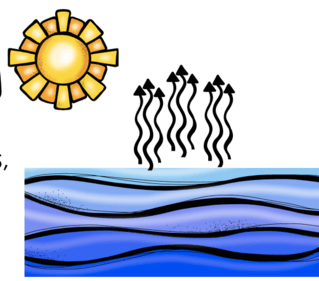
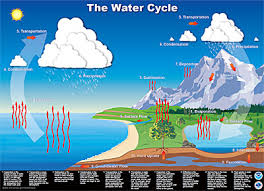
The water cycle is the earth's way of
Getting rid of water
Recycling water
Using up all of our water
None of the above
Where does the energy that powers the water cycle come from?
Plants
Animals
Electric outlets
The sun
Most of the earth's fresh water is beyond our reach because it is
Buried deep within the earth.
frozen into glaciers and polar caps.
Taking up most of the ocean
In the sky in the form of clouds

How could pesticides get into lakes and streams?
too much pesticide could be sprayed and it runs off
it could be sprayed too close to a stream
rain could wash pesticides into a lake
all of the above
Which practice could humans do to save or manage water usage?
restrict irrigation (watering lawns & crops)
redirect the flow of a river
drain the wetlands
build a hydroelectric dam
Which side of the mountain usually gets deserts and why?
windward, because of rising, moist air
leeward, because of rising, dry air
windward, because of sinking, moist air
leeward, because of sinking, dry air
Which side of a mountain range is closer to the ocean?
leeward side
rain shadow side
windward side
downwind side

Why would places near the north with the same latitude have very different climates?
One place is near a warm ocean current.
It is not possible
Because of La Nina
Because of El Nino

After the rain falls down onto Earth's natural surfaces, what most likely happens next?
Most of the water is infiltrated into the ground.
Groundwater starts to evaporate
Transpiration happens to the plants.
The liquid turns into an gas or an water vapor
97% of the Earth's water is accumulated and located in....
ground wat
the ocean
lakes, rivers, and streams
glaciers
What is a layer of rock or sediment that pools and stores water underground?
glacier
well
aquifer
natural spring
Which answer choice best describes humidity?
the force exerted onto a surface by the weight of the air
the amount of water vapor (moisture) in the air
measurement of how fast the air is moving
the direction the wind is moving
A barometer measures…
Direction of the wind
How fast the wind is moving
Temperature
Air pressure
A hygrometer measures…
Wind speed
Air pressure
Humidity level
Temperature
A wind vane shows…
Direction of the wind
Humidity level
Temperature
Air pressure
How does air pressure affect weather?
High air pressure means “lousy” weather such as rain or storms.
High air pressure means “happy” weather such as clear skies.
Low air pressure means “lousy” weather such as sunny skies.
Low air pressure means “happy” weather such as rainy conditions.
Which of the following weather conditions can you predict with the following data?
Air Pressure- decreasing
Temperature-75°F
Humidity - rising from 60%
Warm and rainy
Cold and rainy
Cold and foggy
Warm and snowing
Which weather conditions can be predicted using the following data?
Temperature- 75 degrees
Humidity- 50%
Air Pressure- moving from high to low
Wind speed- 4 mph
Cold and clear
Warm and clear
Cool and foggy
warm and rainy
11. The following weather conditions are forecasted for Knoxville, TN today. What type of weather should we expect?
Air pressure: High Humidity: 17%
Temperature: 25 F Wind Speed: NE at 7mph
clear and warm
clear and cold
cloudy and cool
snowy and cool
12. Based on the data in the graph, which statement best explains the relationship between the data provided and fall bird migration?
When average monthly temperatures begin to decrease, migration should begin.
When average monthly temperatures are constant, migration should begin.
When the temperatures are highest for the year, it means migration should begin.
When the temperatures are above or below the shaded region indicating average temperature, it means migration should begin.
Which is the process by which liquid changes to a gas?
condensation
evaporation
infiltration
precipitation
Snow, sleet, hail, and rain are all examples of ________________.
evaporation
condensation
accumulation
precipitation
During evaporation, water changes from a _________ to a __________.
liquid, solid
solid, liquid
gas, liquid
liquid, gas
During ________________, water vapor cools into water droplets, which causes the formation of clouds.
evaporation
condensation
precipitation
runoff (collection)
What might happen to the gorilla population if the Leopard population was over-hunted?
The gorilla population would increase.
The gorilla population would decrease.
The gorilla population would stay the
same.
The gorilla population would become extinct.
When two air masses meet, there is a _____, or boundary.
thunderstorm
watch
front
cloud




1. What are organisms that eat both producers and consumers classified as?
producers
omnivores
carnivores
herbivores
Which answer is the correct order for a food chain?
sun --> producers --> scavengers --> herbivores
consumers --> sun --> producers --> decomposers
sun --> decomposers --> producers --> consumers
sun --> producers --> consumers --> decomposers

1. Which organisms are receiving the greatest amount of energy according to the energy pyramid?
Buzzards and Foxes
Berries and plantains
Dragonflies and rabbits
Frogs
Which of the following is an abiotic factor in a desert?
cactus
heat
scorpions
fox
Which one of the following is a biotic factor of the taiga?
cold temperatures
snow
seal
rich soil
A worm that breaks down a zebra’s body when it dies is considered a …
consumer
decomposer
producer
scavenger

Which answer is a true statement? Use the food chain to answer the question.
The mushrooms break down the mountain lion because it is a scavenger
The mountain lion eats the deer and is a carnivore
The plant is a producer and gives energy directly to the carnivore
The deer is an omnivore because it eats only plants
Which 2 answers are true statements about energy pyramids?
As you go up the pyramid, energy passed on greatly increases
As energy is passed from one trophic level to the next, 90% is used up through activity, or transformed into heat
As you go up the pyramid, energy passed on greatly decreases
Producers pass on only 10% of their energy to carnivores
Which of the following answer choices best describes the difference between a food chain and a food web?
A food chain shows a more accurate representation of energy flow
A food chain shows how energy passes from one organism to another, which is more accurate than a food web
A food web better demonstrates the flow of energy through an ecosystem because it shows multiple feeding relationships
In a meadow ecosystem, a population of rabbits increases. What populations are most likely to increase as a result?
foxes, hawks, and other predators of the rabbits
leafy plants that rabbits eat
rabbits that live elsewhere
worms that live in the meadow soil
All the living and nonliving things in an area make up a/an
community.
ecosystem.
population.
environment.
A ________ is all the members of one kind of plant or animal in a community.
ecosystem
environment
population
community

In a forest ecosystem, which of the following are the best examples of limiting factors for a rabbit population? SELECT TWO.
Squirrel Population
Sunlight
Grass available
Fungi growth
foxes


Which graph matches what would happen with a population of mice and a population of owls?


The taiga
a cold, treeless, desert-like biome found near the North and South Poles
found mostly in Africa
a cold forest biome covered by coniferous trees, such as pine and spruce
a dry, rocky biome found in the central part of South America.
One abiotic feature of the tundra is that only the surface thaws in the summer and refreezes in the winter, leaving a permanently frozen subsoil that plant roots cannot penetrate. This characteristic is known as
winter frost
Glaciation
Permafrost
Crystallization
Which of the following in a coastal ecosystem is classified as a biotic factor?
Rock
Sand
Wind
Palm Tree
Which of the following in the desert is an abiotic factor?
Sunlight
Cactus
Scorpion
Snake
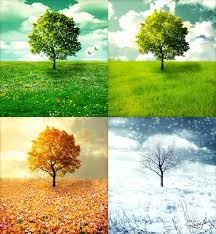

How does light, soil composition, and temperature influence most land biomes?
They cause the ecosystem to become extinct
They cause water in the ecosystem to be polluted
They don't influence a land biome
They help determine what types of plants and animals that live in the biome
Which biome would have large herbivores, few trees, wildfires, and seasonal rainfall?
Tundra
Savanna
Rainforest
Taiga

Which biome does this climate graph belong to?
Desert
Deciduous forest
Grasslands
Tundra
What biotic and abiotic factors are found in a Marine biome? (Choose 3)
Freshwater
Saltwater
water depth
water temperature
song birds

What biome is represented here?
Desert
Taiga
Rainforest
Savanna

Habitat fragmentation occurs when…
An ecosystem is able to recover, or adjust easily to change
The temperature of ocean water causes algae to leave coral reefs.
Smaller fragments of a habitat join to make a large habitat
A large area of habitat is broken up into smaller isolated areas
Why is habitat fragmentation hazardous to animals?
Animals may not thrive in their new habitat
If coral reefs die, so will many fish species that depend on them
Habitat fragmentation causes loss of habitat for many organisms
Habitat fragmentation does not pose a threat to animals.
A resilient ecosystem…(2 answers)
Is able to recover from, or adjust easily to change.
Has less biodiversity due to invasive species.
Has been impacted by a natural disaster such as a tornado.
Is more likely to have greater biodiversity
What is the environmental variable that caused The Great Smoky Mountains to be less resilient during the 2016 fire?
Hurricane
Tornado
Drought
Earthquake
What happened as a result of The Great Smoky Mountains 2016 fire?
$1 million worth of damage, 1,000 acres burned, injuries, decreased biodiversity
$ 8 million worth of damage, 5, 000 acres burned , increased biodiversity
$ 10 million worth of damage, 8,000 acres burned, increased biodiversity
$ 500 million worth of damage, 17, 000 acres burned, decreased biodiversity

Human activities such as deforestation, transportation, and industry are causing…
Increased biodiversity in many ecosystems
Increased carbon dioxide levels in the atmosphere
more resilient ecosystems
None of the above

Why are coral reefs so important to our ocean ecosystems?
Many other species depend on them for a habitat
Many tourist travel to see the coral reef, and spend money supporting local economies
Many endangered fish species eat coral skeletons for their main source of nutrients
They are beautiful, and surrounded by diverse fish species
Biodiversity refers to…
variety of abiotic factors in an ecosystem
nonrenewable resources
the rate of species decline
the variety of species in an ecosystem

