Wayground logo

Free Printable Worksheets

Font size

S
M
L
XL
Worksheets

SBI3C Exam Review

Total questions: 41

Worksheet time: 35mins

Name
Class
Date
1.

Blood pressure is recorded as

a)

Hydrostatic /diastolic

b)

Diastolic/ hydrostatic

c)

Systolic/diastolic

d)

heterogeneous/homologous

2.
Which of the following is the smallest unit of life that can carry out all life functions?
a)
the mitochondria
b)
the vacuoles
c)
the nucleus
d)
the cell
3.
Chloroplasts in plant cells allow the plant to perform a function that animal cells cannot do.  What is the main function of the chloroplasts found in plant cells?
a)
to absorb light energy and manufacture food
b)
to remove waste materials by active transport
c)
to manufacture chemical energy from food
d)
to control the shape of the cell
4.
All cells need energy to function.  Which cell organelle is responsible for producing energy in the cell?
a)
chloroplasts
b)
mitochondria
c)
nucleus
d)
vacuoles
5.
Cells with a nucleus and membrane-bound organelles are called ____________________.
a)
prokaryotes
b)
eukaryotes
c)
bacteria
d)
protists
6.

Monosaccharides are what kind of macronutrients?

a)

Carbohydrates

b)

Lipids

c)

Proteins

d)

Nucleic Acids

7.
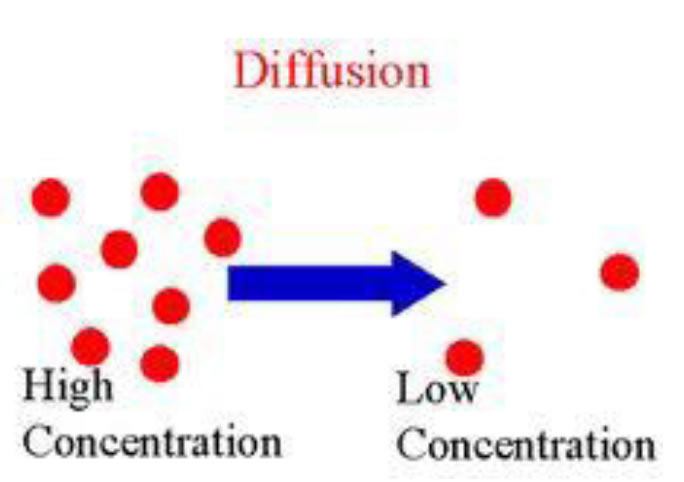
Movement of particles from high to low concentration. 
a)
Passive Transport
b)
Active Transport
8.
What is the purpose  of an enzyme?
a)
give permission for the reaction
b)
raise activation energy
c)
speed up reactions
d)
control how many reactions occur
9.
What is a way to become immune to a disease without first having the disease?
a)
antibiotics
b)
Anti-retroviral drugs
c)
Vaccinations
d)
Exposure Therapies
10.
What is the first step of the virus reproduction cycle?
a)
The viruses genetic material (DNA) starts to take over the functions of the cell
b)
The host cell bursts open, releasing the new viruses
c)
The virus injects its genetic material into the cell
d)
A virus attaches to the surface of a host cell
11.
What part of a fungus is described as long, thread-like structures that absorb nutrients?
a)
roots
b)
fruit body
c)
hyphae
d)
spores
12.
Which type of protist is shown in the picture?
a)
euglena
b)
paramecium
c)
amoeba
d)
autotroph
13.
What are the possible blood types of the offspring of a cross between individuals that are type AB and type O?
a)
AB or O
b)
A,B, or O
c)
A or B
d)
A, B, AB or O
14.
Brown fur is dominant to white fur in dogs. A homozygous dominant dog is crossed with a heterozygous dog. What are the percentages of the possible genotypes?
a)
100% BB
b)
75% BB and 25%Bb
c)
50 % BB and 50% Bb
d)
50% Bb and 50% bb
15.
Hemophilia is a recessive x-linked disorder.
Which genotype represents a female who is a carrier for hemophilia?
a)
XHXh
b)
XhXh
c)
XHXH
d)
XhY
16.
What process creates daughter cells that are diploid?
a)
Meiosis
b)
Mitosis
c)
Transplantation
d)
Division
17.

Different versions of the same gene are called _______.

a)

Sister chromatids

b)

Genes

c)

Alleles

d)

Chromosomes

18.
The physical appearance of an organism based on traits
a)
Genotype
b)
Phenotype
c)
Meiosis
d)
Genetics
19.
What does heterozygous mean?
a)
An organism that has the same genes for a trait (TT or tt)
b)
An organism that has different genes for a trait (Tt)
c)
When neither gene is fully dominant; offspring is a mixture of both
d)
the different forms of a trait (hair color--> brown, blonde, red
20.
In Meiosis if the parent cells has 40 chromosomes, then how many will the daughter cells have 
a)
40
b)
10
c)
20
d)
18
21.
The process on the left is:
The process on the right is:
a)
Left: meiosis
Right: meiosis
b)
Left: meiosis
Right: cloning
c)
Left: mitosis
Right: meiosis
d)
Left: mitosis
Right: mitosis
22.

Sperm and egg cells are?

a)

haploid

b)

Diploid

c)

Meiosis

d)

homozygous

23.
a)
Metaphase I
b)
Metaphase II
c)
Anaphase I
d)
Anaphase II
24.

What is it called when chromosomes do not separate properly and stick together?

a)

nondisjunction

b)

independent assortment

c)

sister chromatids

d)

cytokinesis

25.
The enzyme active in the mouth is
a)
amylase
b)
pepsin
c)
trypsin
d)
bolus
26.
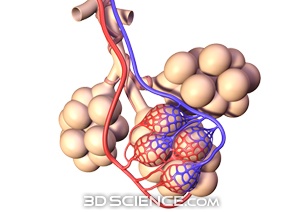
The air sacs that are covered with capillaries where gas exchange takes place
a)
bronchi
b)
lungs
c)
oxygen
d)
alveoli
27.
Flap of skin that covers the opening to the windpipe during swallowing
a)
Stomach
b)
Trachea
c)
Pancreas
d)
Epiglottis
28.

The ______________ leads directly from the left ventricle and branches into many arteries that carry blood around the body.

a)

aorta

b)

vena cava

c)

pulmonary artery

d)

pulmonary veins

29.
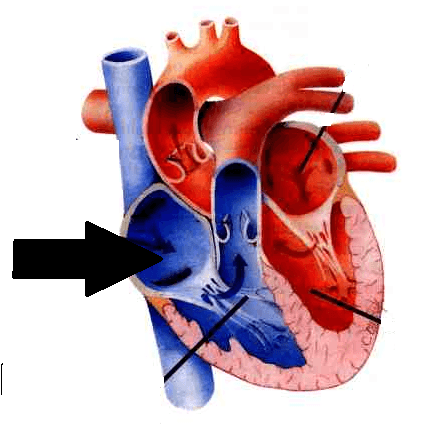
Identify
a)
Left atrium
b)
Right atrium
c)
Left ventricle
d)
Right ventricle
30.
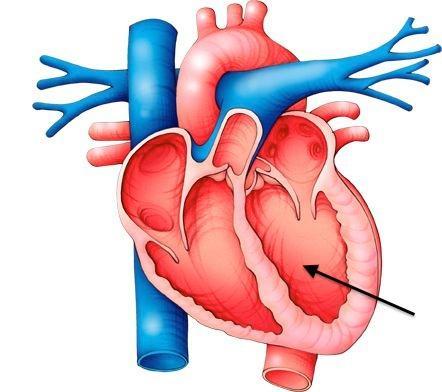
Identify
a)
Left atrium
b)
Right atrium
c)
Left ventricle
d)
Right ventricle
31.
Which chambers of the heart are the thickest and strongest?
a)
Atria
b)
Ventricles
c)
Valves
d)
Aorta
32.

The blood in the vena cava is...

a)

oxygenated, returning to the heart

b)

deoxygenated, returning to the heart

c)

oxygenated, leaving the heart

d)

deoxygenated, leaving the heart

33.
Root hairs help a plant
a)
transport food to the root
b)
absorb water and nutrients
c)
protect the root
d)
store food
34.

Plants need ________ to conduct photosynthesis

a)

Oxygen

b)

Soil

c)

Carbon dioxide

d)

Sugar

35.
Which of the following is the correct equation for PHOTOSYNTHESIS?
a)
CO2 + light + H2O --> O2 + Sugar
b)
CO2 + sugar + H2O --> O2 + light
c)
O2 + light + H2O --> CO2 + Sugar
d)
CO2 + O2 + H2O --> Light+ Sugar
36.
These blood cells are the protectors and help fight off disease.
a)
Red blood cells
b)
White blood cells
c)
Plasma
d)
Platelets 
37.
Directs all cell activities through the DNA located there.
a)
Lysosomes
b)
Nucleus
c)
ribosomes
d)
Mitochondria
38.
If you go to a doctor and are prescribed antibiotics you probably have an illness cause by a 
a)
virus
b)
bacteria
c)
host cell
d)
macrophage
39.
The wildcat's scientific name is Felis silvestris. What taxonmic levels do the scientific name include?
a)
genus & species
b)
phylum & genus
c)
kingdom & phylum
d)
class & species
40.
The purpose of cellular respiration is to 
a)
make water
b)
make ATP
c)
make glucose
d)
make  oxygen
41.
What is the correct equation for cellular respiration?
a)
6O2 + C6H12O6 -> 6CO2 + 6H2O + Energy
b)
6O2 + C6H12O6 + Energy -> 6CO2 + 6H2O
c)
6CO2 + 6H2O -> 6O2 + C6H12O6 + Energy
d)
6CO2 + 6H2O + Energy -> 6O2 + C6H12O6