wayground logo

Free Printable Worksheets

NEW

Font size

S
M
L
XL
Worksheets

Volcanoes

Total questions: 56

Worksheet time: 2hrs 47mins

Name
Class
Date
1.
__________ volcanoes are usually steep sided. They are formed from layers of ash and lava.
a)
Shield
b)
Cone
c)
Dormant
d)
Extinct
2.
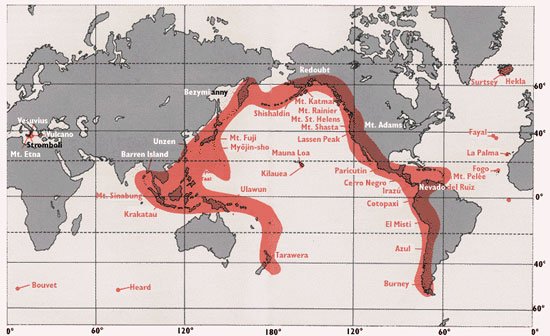
This plate is involved in all of the Ring of Fire Volcanoes.
a)
The Nazca Plate
b)
The North American Plate
c)
The Pacific Plate
d)
The Indian Plate
3.
What percent of the Earth's volcanoes reside in the Ring of Fire?
a)
75%
b)
100%
c)
90%
d)
0%
4.
The loudest sound ever recorded was...
a)
Mt. Vesuvius erupting
b)
Mt. Krakatoa erupting
c)
Mt. Kilauea
d)
A mouse whispering in the forest.
5.
A subduction zone is...
a)
plates pull apart.
b)
the continental plate slides under the oceanic plate.
c)
where the oceanic plate slides under the continental plate.
d)
plates slap each other a high five.
6.
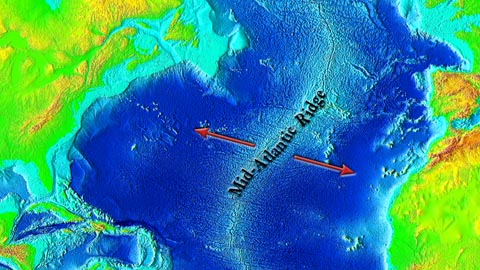
Where can you find a rift or divergent area of volcanism?
a)
Mid-Atlantic Ridge
b)
Pacific Ocean
7.
What is molten rock that has formed deep within the Earth?
a)
Hot Spot
b)
Magma
c)
Lava
d)
Volcano
8.
What is molten rock that has reached the Earth's surface?
a)
Aa
b)
Lava
c)
Magma
d)
Pahoehoe
9.
As magma rises towards the surface it collects in a 'room' called a _____ _____ . 
a)
magma chamber
b)
side vent
c)
main vent
d)
lava chamber
10.
Vocanoes are found...
a)
on land
b)
under water
c)
on islands
d)
all of the above
11.
Where is the largest volcano?
a)
Africa
b)
Indonesia 
c)
Wyoming
d)
Hawaii
12.
The difference between magma and lava is _____
a)
where it is found (above or below the surface)
b)
how hot the molten rock is (lava is hotter than magma)
c)
 the type of boundary where it forms
d)
the viscosity of the molten rock (lava has a lower viscosity)
13.
Where are most volcanoes found?
a)
Southern Hemisphere
b)
Ring of Fire
c)
Mid-Atlantic Ridge
d)
Hot Spots
14.
What is / are sign(s) that a volcano may erupt soon?
a)
Earthquake activity in the area
b)
Changes in the shape of the volcano
c)
Different amounts of gas being produced
d)
All of these are signs
15.
What is the definition of dormant?
a)
sleeping
b)
extinct
c)
active
d)
invisible
16.
What are scientists that study volcanoes called?
a)
doctor
b)
vet
c)
volcanologist
d)
volcano scientist
17.
What is the opening that extends from the magma chamber to the top of the volcano called?
a)
magma
b)
lava
c)
vent 
d)
crater
18.
A volcano that has gentle sloping sides and is formed from runny lava
a)
Shield volcano
b)
Cinder cone
c)
Composite
d)
None of these
19.
When an explosive eruption  forms a mixture of hot rock, ash, and gas, this material is called a...?
a)
Land slide
b)
Lava
c)
Eruption trail
d)
Pyroclastic flow
20.
This is the name for the chain of volcanos around the edge of the Pacific Plate.
a)
Circle of Fire
b)
Ring of Lava
c)
Ring of Fire
d)
Circle of Magma
21.
A volcano that has steep sides and is formed from lava chunks is called
a)
a shield volcano
b)
a cinder cone volcano
c)
a composite volcano
22.
A volcano that is made from layers of both runny lava and lava chunks is called 
a)
a shield volcano
b)
a cinder cone volcano
c)
a composite volcano
23.
Dormant volcanoes might erupt in the future.
a)
True
b)
False
24.
Where is Mt. St Helens located?
a)
New Jersey
b)
Nebraska
c)
Washington state
d)
I didn't learn this so I give up 
25.
This city was destroyed in 79 A.D. by the eruption of Mt. Vesuvius.
a)
Rome
b)
Munich
c)
Pompeii
d)
Naples
26.

A combination of explosive and quiet eruptions will create a

a)

composite volcano

b)

shield volcano

c)

cinder cone volcano

27.

Where are volcanoes most likely to form?

a)

along plate boundaries

b)

near the center of continents

c)

near water

d)

on the moon

28.

A bowl shaped area that may form at the top of a volcano around the central vent

a)

crater

b)

vent

c)

tube

d)

leftovers

29.

An area where material from deep within Earth's mantle rises through the crust and melts to form magma.

a)

hot spot

b)

rift zone

c)

hot soup

d)

hot mamma

30.

Which theory helped scientists understand how and where volcanoes erupt?

a)

Theory of Plate Tectonics

b)

Theory or Relativity

c)

Theory of the Rock Cycle

d)

Big Bang Theory

31.

Which type of volcano if found in the Hawaiian Islands with thick flowing, slow moving lava? This is the most common type of volcano on earth.

a)

Cinder Cone

b)

Composite

c)

Lava Dome

d)

Shield

32.

Which type of volcano is currently resting, but could erupt sometime in the future?

a)

Active

b)

Dormant

c)

Extinct

d)

All of the above

33.

An active volcanic area on earth is found at_______.

a)

Diverging Boundaries

b)

Converging Boundaries

c)

Hot Spots

d)

All of the above

34.

Large projectiles thrown through the air during an eruption are called

a)

Volcanic bombs

b)

Hot Spot

c)

Lava

d)

Magma chamber

35.

Which type of volcano is the most explosive?

a)

Shield

b)

Cinder cone

c)

Composite/Stratovolcano

36.

Volcanoes can form either from a plate subjecting under another plate (convergent boundary) OR...

a)

Transform boundaries

b)

Hot spots

c)

Earthquakes

37.

Which type of volcano is Mount St. Helen's in Washington state?

a)

Shield

b)

Cinder cone

c)

Composite/stratovolcano

38.

Which type of volcano is Mount Fuji in Japan?

a)

Shield

b)

Cinder cone

c)

Composite/stratovolcano

39.

Which type of volcano has a short life span?

a)

Shield

b)

Cinder cone

c)

Composite/stratovolcano

40.

Where do convection cycles happen?

a)

core

b)

mantle

c)

crust

41.

Convection cycles move in the mantle. How does this affect the crust?

a)

crust has no motion

b)

crust moves in random direction

c)

crust moves in same direction convection cycle moves

42.

What is magma made of?

a)

solid rock

b)

melted rock

c)

small pieces of sediment

43.

Density has to do with what two things?

a)

Material and Volume

b)

Mass and Volume

c)

Mass and Density

d)

Material and Density

44.

Which state of matter is least dense?

a)

Solid

b)

Liquid

c)

Gas

45.

If magma increases in temperature (get hot) what will happen?

a)

It moves down (sinks)

b)

It moves up (rises)

46.

How does density relate with viscosity?

a)

more dense, higher the viscosity

b)

less dense, higher the viscosity

47.

Which has a higher viscosity?

a)

Oil

b)

Honey

48.
The composition of magma determines its _____.
a)
viscosity
b)
darkness
c)
color
d)
none of the above
49.
This volcano is most likely which type of volcano?
a)
Felsic
b)
Composite
c)
Shield
d)
Cinder cone
50.
Highly explosive volcanoes tend to have what type of magma?
a)
magma with high silica, high viscosity, and higher gas content
b)
magma with low silica, low viscosity, and lower gas content
c)
magma with low silica, high viscosity, and lower gas content
d)
magma with no silica, high viscosity, and no gas content
51.
The particles produced in volcanic eruptions are called ____.
a)
laccoliths
b)
pyroclastic material
c)
calderas
d)
volcanic stocks
52.
What is the term for a fluid's tendency to resist flow?
a)
Movement
b)
Silica
c)
Pressure
d)
Viscosity
53.
TRUE OR FALSE:  A substance that flows quickly has high viscosity...
a)
True
b)
False
54.
Cinder cones can be described as...
a)
Very large with gentle slopes and eruptions of low viscosity magma
b)
Large with steep slopes and violent eruptions of very viscous magma
c)
Small and clustered in groups with steep slopes and firey eruptions that occur only once
55.

TRUE or FALSE: Volcanoes form along the mid-ocean ridges, where two plates move together.


If false change the underlined word to make it true.

a)

TRUE

b)

FALSE: apart

c)

FASLE: past each other

56.
The image shows the Mid Atlantic Ridge. Which type of boundary occurs at this ridge where the ocean floor is spreading apart? 
a)
convergent
b)
divergent 
c)
transform fault