wayground logo

Free Printable Worksheets

NEW

Font size

S
M
L
XL
Worksheets

Cell & Molecular Biology

Total questions: 60

Worksheet time: 5hrs 39mins

Name
Class
Date
1.

This enzyme is capable of breaking Hydrogen bonds found between the bases of DNA

a)

Topoisomerase

b)

DNA Helicase

c)

DNA Polymerase

d)

Exonuclease

2.

This enzyme is used to remove short RNA bases

a)

Topoisomerase

b)

DNA Helicase

c)

Exonuclease

d)

Telomerase

3.
What do we call DNA replication since new DNA has 1 parent strand and 1 new strand?
a)
Conservative 
b)
Semiconservative 
c)
Dispersive
4.
Which enzyme seals okazaki fragments together on the lagging strand?
a)
Topoisomerase
b)
Helicase
c)
Polymerase
d)
Ligase
5.
What is the purpose of DNA replication?
a)
Cut the DNA 
b)
Make more cells
c)
Apoptosis
d)
Duplicate the DNA
6.
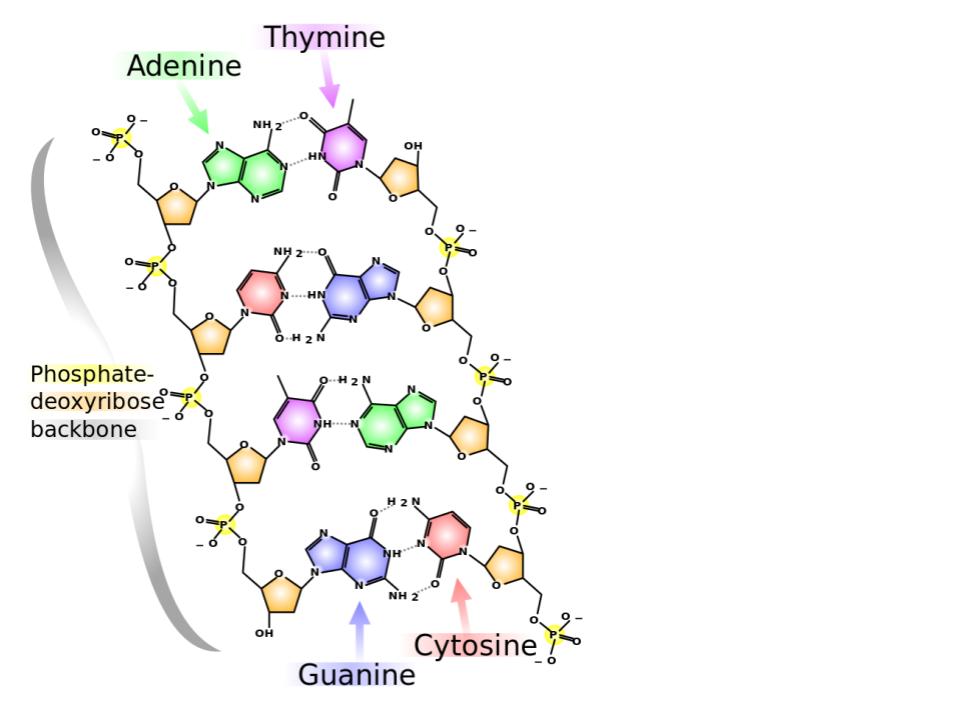
What is the backbone of DNA made of?
a)
Nitrogen bases
b)
Amino acids
c)
Double H
d)
Sugar & Phosphate
7.
Which enzyme is responsible for adding nucleotides?
a)
Topoisomerase
b)
DNA Polymerase
c)
Ligase
d)
Primase
8.

The separation of the two single strands of DNA creates a ‘Y’ shape called:

a)

enzyme attachment section

b)

unzipped section

c)

replication fork

d)

leucine zipper

9.

This enzyme helps helicase unzip DNA by relieving supercoiling

a)

Topoisomerase

b)

Exonuclease

c)

DNA Primase

d)

DNA Polymerase

10.

This enzyme synthesizes short RNA sequences to guide DNA Polymerase

a)

Primers

b)

DNA Primase

c)

DNA Polymerase

d)

Topoisomerase

11.

Which enzyme is responsible for checking DNA for errors, and fixing it?

a)

DNA Polymerase I

b)

DNA Primase

c)

DNA Polymerase alpha

d)

RNA Polymerase

12.

In what direction does the Leading strand run?

a)

3' ----> 5'

b)

5' -----> 3'

c)

upstream

d)

Both directions

13.

Which enzyme is responsible for checking DNA for errors, and fixing it?

a)

DNA Polymerase

b)

DNA Primase

c)

DNA Helicase

d)

RNA Polymerase

14.

Each DNA molecule created contain one NEW strand and one OLD strand

a)

True

b)

False

15.

Okazaki fragments are the same as the _______________ strand

a)

Leading strand

b)

Lagging strand

c)

coding strand

d)

template strand

16.

This enzyme ONLY works in one direction which is 5'------> 3'

a)

DNA Polymerase

b)

DNA Helicase

c)

Topoisomerase

d)

Telomerase

17.

Okazaki fragments are unified into a single continuous strand by the use of this enzyme

a)

DNA Helicase

b)

DNA Ligase

c)

Topoisomerase

d)

Telomerase

18.

The replication occurs within a small opening of the DNA helix called as ________.

a)

Replication fork

b)

Replication zip

c)

ori

d)

Replication knife

19.

Formation of new strand requires a primer,which is a short stretch of_____.

a)

DNA

b)

RNA

c)

Protein

d)

Vitamin

20.

The enzyme DNA polymerase can only add nucleotides to the _________ position.

a)

3' phosphate

b)

5' carbon

c)

3' carbon

d)

5' phosphate

21.
The two strands of DNA are held together by:
a)
Hydrogen Bonds
b)
Phosphodiester Bonds
c)
Glycolsyl Bonds
d)
Glycosidic Linkages
22.
The term used to describe DNA Replication is:
a)
Semi-Conservative
b)
Conservative
c)
AntiParallel
d)
Dispersive
23.
A scientist observes a base sequence of AGCTAGCTAGCT.  Which of the following would be the complimentary strand?
a)
TGCATGCATGCA
b)
TCGATCGATCGA
c)
TAGCTAGCTAGC
d)
TTAAGGCCTTCC
24.
DNA replication results in two DNA molecules,
a)
each one with two original strands
b)
each one with two new strands
c)
each one with one new strand and one original strand
d)
one with two new strands and the other with two original strands
25.
What is A?
a)
Leading strand
b)
Lagging strand
c)
Okazaki Fragments
d)
DNA plymerase
26.

What strand is copied faster?

a)

Leading

b)

Lagging

c)

Coding

d)

Template

27.
If a strand reads:
3' A A A T T T C 5'
The matching strand would read...
a)
5' T T T A A A G 3'
b)
3' T T T A A A G 5'
c)
5' A A A T T T C 3'
d)
3' U U U A A A G 5'
28.
Which of the following must happen first in order for DNA replication to occur?
a)
DNA polymerase binds to the leading strand
b)
DNA is unwound
c)
Hydrogen bonds form between bases
d)
chromosomes condense
29.
Which of the following is required for DNA replication to occur?
a)
DNA helicase
b)
DNA ligase
c)
DNA polymerase
d)
all of these
30.

Which enzyme proofreads and removes RNA Primase

a)

Ligase

b)

Polymerase 1

c)

Polymerase 3

d)

Helicase

31.

Structure E is

a)

helicase

b)

primase

c)

primer

d)

lagging sequence

32.
In a molecule of double-stranded DNA, the amount of Adenine present is always equal to the amount of
a)
cytosine
b)
guanine
c)
thymine
d)
uracil
33.
Which sequence of DNA bases would pair with this partial strand
CAT TCA CTG
a)
ATG TGA CAG
b)
TAC ACT GTC
c)
GTA AGT GAC
d)
CAT TCA CTG
34.

What are the three components of a nucleotide?

a)

sugar, hydrogen, nitrogen base

b)

sugar, oxygen, nitrogen base

c)

sugar, phosphate, nitrogen base

d)

sugar, phosphate, protein

35.
If DNA Polymerase is reading the following sequence: 3'-AATCGC-5' what will the enzyme add to the growing DNA strand?
a)
5'-GCGATT-3'
b)
5'-TTAGCG-3'
c)
5'-AATCGC-3'
d)
3'-AATCGC-5'
36.

Below are the enzymes involved in DNA Replication, EXCEPT

a)

DNA helicase

b)

Sucrase

c)

Primase

d)

DNA Polymerase III

37.

DNA Replication occur during

a)

G 1 phase

b)

S phase

c)

G 2 phase

d)

Mitotic phase

38.

DNA Polymerase III responsible for....

a)

Formation of water

b)

Adding free DNA nucleotide to old of strand of DNA

c)

Formation of primase

d)

Formation of ligase

39.
Before the cell divides, what process needs to happen?
a)
Transcription
b)
Translation
c)
Replication
d)
Protein synthesis
40.
Which RNA bases would pair with TACGAA in transcription
a)
AUGCUU
b)
ATGCTT
c)
GCATCC
d)
GCAUCC
41.

Where does transcription take place?

a)

nucleus

b)

cytoplasm

c)

ribosome

d)

cell membrane

42.
_______ is made during transcription and ________ is made during translation.
a)
mRNA / a protein
b)
a protein / mRNA
c)
Ribosome / Nucleus
d)
mRNA / tRNA
43.
How many amino acids are coded for by this sequence of nucleotides:
ATG GGA ACT CCA
a)
4
b)
2
c)
6
d)
12
44.
Which enzyme is responsible for making RNA?
a)
DNA polymerase
b)
RNA enzymase
c)
RNA polymerase
d)
RNA proliferase
45.
The process represented in the diagram produces a molecule that is complementary to the template strand of DNA. What type of molecule is produced?
a)
New DNA
b)
Polypeptide
c)
Messenger RNA
d)
Carbohydrate
46.
When DNA is transcribed to RNA.... 
a)
A pairs with U
b)
G pairs with U
c)
C pairs with T
d)
A pairs with C
47.

Which of the following descriptions of genetic information flow best illustrates the central dogma of biology

a)

protein to RNA to DNA

b)

protein to DNA to protein

c)

RNA to DNA to protein

d)

DNA to RNA protein

48.

During transcription

a)

protein is synthesized from amino acids.

b)

DNA is replicated.

c)

protein is synthesized from DNA.

d)

RNA is synthesized from DNA.

49.

To express a gene, DNA is first transcribed into a corresponding strand of

a)

mRNA.

b)

mtDNA.

c)

rRNA.

d)

tRNA.

50.

The nitrogenous base that is in RNA but not in DNA is

a)

urea.

b)

uracil.

c)

thymine.

d)

thiamine.

51.

A codon consists of three consecutive

a)

DNA bases.

b)

tRNA bases.

c)

mRNA bases.

d)

amino acids.

52.

Parts of an mRNA molecule that are removed before protein synthesis are called

a)

promoters.

b)

exons.

c)

introns.

d)

exomes.

53.
In eukaryotic cells, transcription cannot begin until 
a)
the two DNA strands have completely separated and exposed the promoter.
b)
several transcription factors have bound to the promoter.
c)
the 5' caps are removed from the mRNA.
d)
the DNA introns are removed from the template.
54.
The production of mature mRNA in eukaryotes involves
a)
cutting introns out and spicing exons together
b)
adding the 5' cap
c)
adding the 3' poly A tail
d)
all of these are correct
55.

Which of the follwoing best describes the significance of the TATA box in eukaryotic promoters?

a)

it is the recognition site for a specific transcription factor at -10 position

b)

it is the recognition site for a specific transcription factor at -35 position

c)

it is the recognition site for ribosomal binding

d)

it signals the end of the nucleotide sequence of the gene

56.
In eukaryotes, functional messenger RNA molecules are made from
a)
exons spliced together after introns are removed
b)
introns spliced together after eons are removed
c)
exons spliced together with introns
d)
long pieces of RNA shortened by the Dicer enzyme
57.
Promoters are
a)
genes that code for individual proteins
b)
proteins that bind with DNA and prevent transcription
c)
DNA sequences near operons that regulate transcription
d)
small molecules that bind with repressor proteins
58.
Which of the following describes RNA?
a)
RNA is usually double-stranded and contains the base thymine
b)
RNA is usually single-stranded and contains the base uracil
c)
RNA is longer than DNA and uses five bases to encode information
d)
RNA is made in the nucleus of eukaryotic cells and stays there to carry out its functions
59.

Which type of cell is this?

a)

Prokaryote

b)

Eukaryote

60.

Which choices describe DNA replication?

a)

semiconservative

b)

produces two pieces of DNA identical to the original

c)

products are half original and half new

d)

all of the above